The score layer decides staffing, party throughput and whether stroke data ever reaches your reports. This page compares manual cards and automatic scoring in the columns an operator decides on, with the hardware audit pointed at its own page.
The score layer is the layer of your mini golf floor that guests remember longest and argue about never: it is how a player turns strokes into a number, and how your floor turns that number into a rematch, a leaderboard and a reason to book again. A course can be physically perfect and still under-earn because its score layer forces guests to do arithmetic at minute forty of a family visit, or forces your staff to run the pencil-and-card economy that was fine at thirty turns a day and is not fine at two hundred.
This page compares the two published patterns a venue can buy: manual scoring (cards, pencils, the host tallying a party by hand) and automatic scoring (sensor cups, ball-tracking, app and screen layers), and it does so in the columns an operator actually decides on: what the hardware costs to run, what the staff absorbs, what happens to party throughput, what the guest walks away with, and whether the data comes back to your floor at all.
The comparison only makes sense once the columns are concrete, so here is the axis in one table. Neither column is a straw person: manual scoring runs entire established courses (including competition minigolf, which keeps paper cards by rule), and automatic scoring is the direction every high-throughput venue brand has published its intent in.
| Column | Manual (cards + host) | Automatic (sensor or tracking) |
|---|---|---|
| Hardware to run | Pencils, printed cards, a pencil cup; nothing electronic | Smart cups or tracking per hole, plus screens or an app layer |
| Staff absorbed | One person explains, hands out cards, and settles disputes | One person hosts the flow; the system tallies |
| Party throughput | Card math at the end of every round; disputes eat minutes | Scores land without math; the party table clears faster |
| Guest takeaway | A physical card is memorable; it photographs well | A live scoreboard and leaderboard is what groups photograph |
| Failure mode | Lost pencils and bad handwriting; zero silent failures | A dead sensor or screen; you keep a manual fallback layer |
| Data value | Zero; the card leaves the building | Stroke data feeds games modes, leaderboards and upgrade decisions |
On the automatic side, the published record is the direction of travel. Puttshack, the highest-profile indoor mini golf operator, publishes its Trackaball technology as following the ball and keeping score automatically (strokes, hazards and bonus points), and Putt Mania sells a self-scoring interactive layer as a retrofit to an existing indoor course. Both are vendor statements about their own products rather than industry statistics, and the honest read is exactly that: a first-party capability claim, published, that you can go and watch run before you buy anything.
On the manual side, the honest word is that it is the default minigolf competition method and the cheapest thing in your budget that a guest can still keep as a souvenir. Paper carries zero software risk, no sensor calibration, no screens to wipe, and it survives the one thing electronics do not: a spilled soda on the eighteenth tee. What it costs you is the dispute resolution minutes and the data.
The staffing column decides most purchases, so it gets its own section and the arithmetic is housed with its assumptions. Our own course-solution model publishes the smart-cup line: with auto scoring at the cup, one staff member can run an 18-hole course. The planning question is what that one person would be doing instead: under a manual layer, the same floor runs a second implicit role (host-tally, card runner, dispute settler) whose peak lands exactly when your revenue peaks.
Read the chart as a staffed-hour statement: the automatic layer does not remove the hosting job, it moves the host from card arithmetic to guest flow, which is the part of the role that sells the next round.
Four named questions separate a manual floor from an automatic one, and the answers are cheap to get before ordering. Question one: who resets the layer, and how long does one reset take (screens and cups are as resettable as any other venue wipe-down). Question two: what does the party-slot look like at peak, because the score layer is the difference between a party table that clears at minute 90 and one that clears at minute 105 (our birthday-pricing page prices that table in per-head math). Question three: what happens when the layer fails, and is the fallback a pencil. Question four: what data lands in your reports, and who owns it.
The buying checklist for an automatic scoring system (sensor types, firmware, service terms, uptime language and the service-hours question) is fully owned by the buying-checklist page on this site; this page only frames the axis, and the two pages pair cleanly: read this one to pick the layer, read that one to audit the hardware.
If the verdict is manual for now (budget first, hardware risk second, seasonality third), the honest plan is a manual layer with a designed exit: keep the floor layout and party flow the same for a sensor retrofit, so the upgrade is a plug decision, not a redesign. Our venue-assessment page walks the operating-load row that decides this quietly, and our maintenance guide prices the electronics upkeep that comes with the other choice.
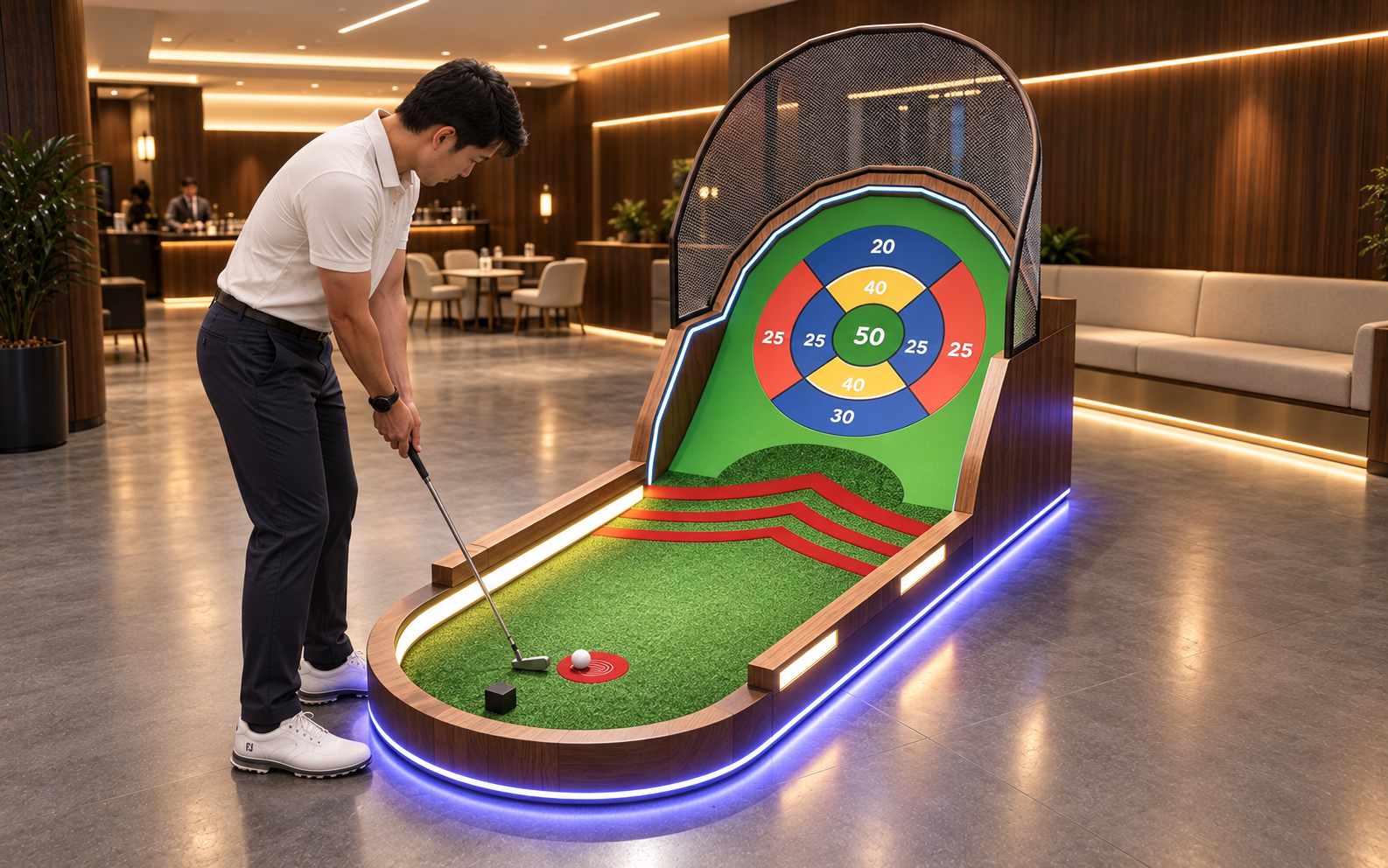
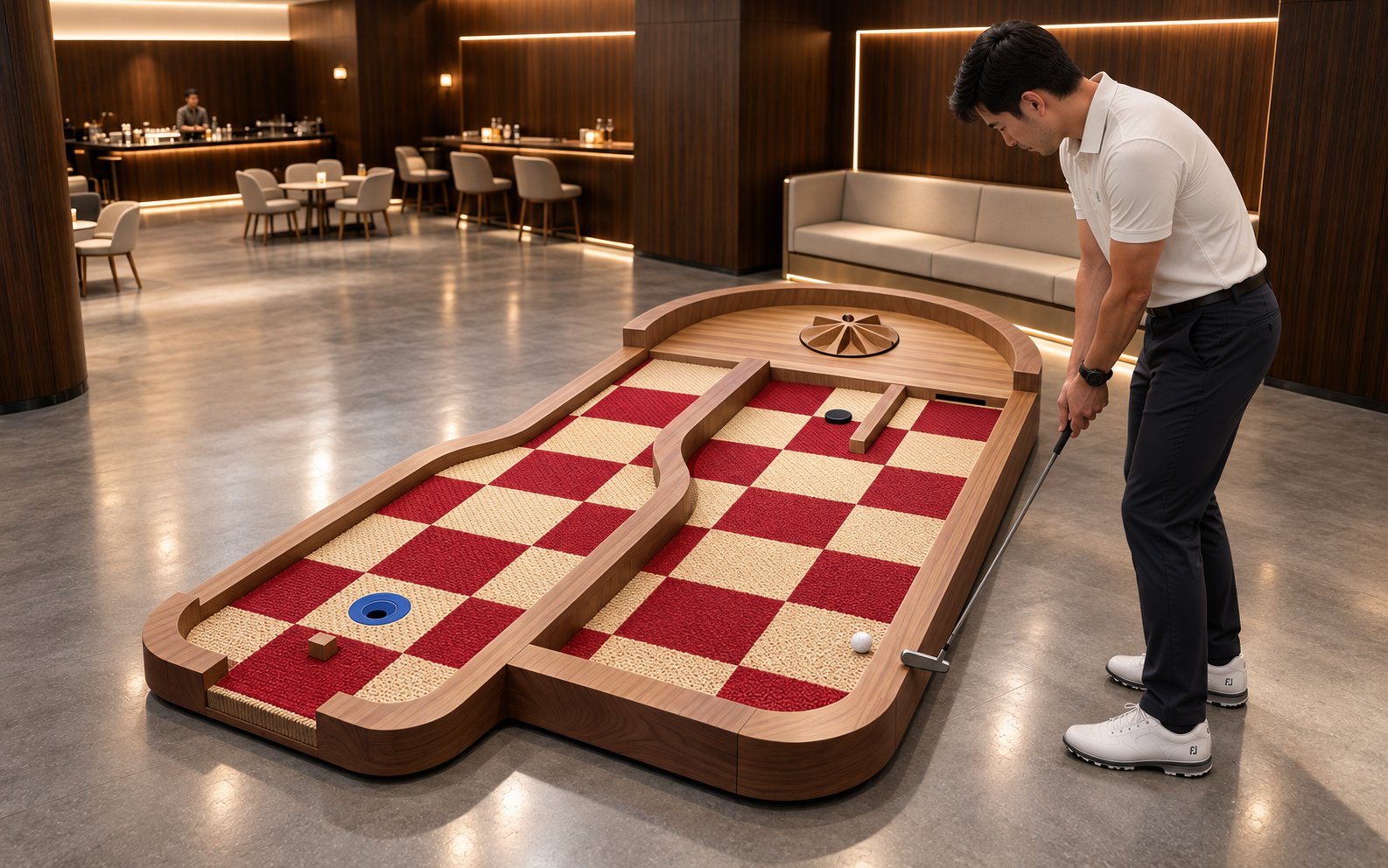
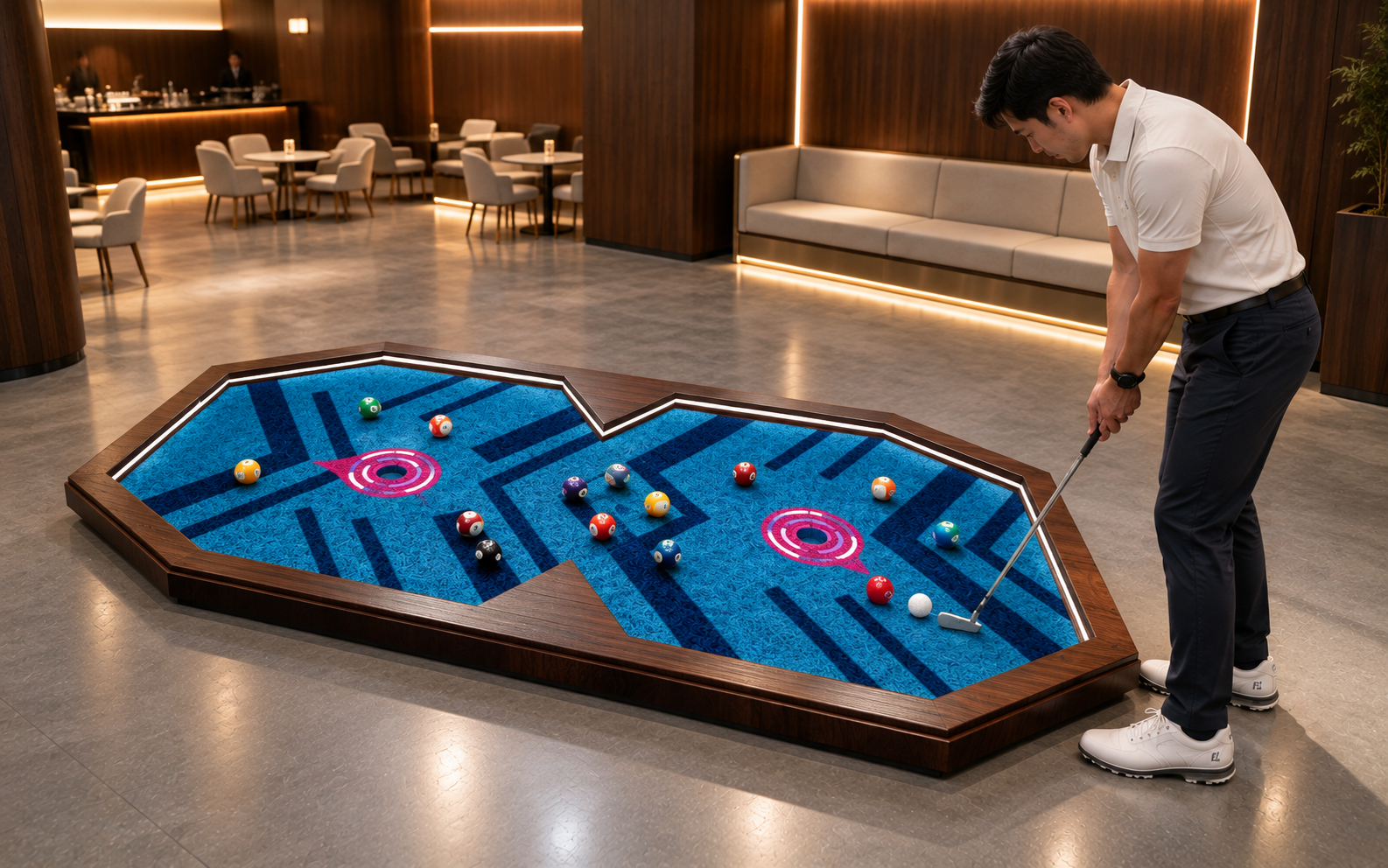
Three of this catalog's holes carry a score-layer opinion. The golf target shooting hole page reads as a manual-friendly target game: the score is one number visible to the whole group, and the card stays meaningful. The lucky disc golf hole page is the family-pace choice whose light reset pairs as naturally with auto cups as with cards. And the billiard golf hole page is the crossover where the game itself keeps the group talking, which is the party-throughput column in product form. When you are ready, the free 3D layout service prices the layer into a floor drawn to your room.
Two boundaries. First, this page does not audit a specific scoring product: the hardware-level checklist (sensors, firmware, service hours, uptime language) lives on the buying-checklist page cited above, and this page never re-opens it. Second, no published page owns a venue-level survey of manual-versus-automatic outcomes; every number on this page is either a vendor's published claim (named as one) or our own model (marked), and neither is a standard.
It moves the load rather than erasing it: the published vendor record and our own model both put one staff member on an 18-hole auto-scored course; the same floor under a manual layer adds a host-tally role whose peak matches your revenue peak.
Yes. Manual cards are the minigolf competition standard, cost the least, carry no electronics risk, and the card is a souvenir groups photograph. The cost is dispute minutes and zero data.
Retrofits are a published product pattern (Putt Mania sells a self-scoring interactive layer as a retrofit), and the honest design move is to keep your hole geometry and party flow retrofit-ready when you order the course.
Stroke data at the hole level feeds leaderboards, game modes and refresh decisions; manual cards leave the building in a guest's pocket. That reports layer is a real column of the decision, not a nice-to-have.
A pack of printed cards and a pencil cup per hole costs almost nothing, and it keeps the scoring layer from ever leaving you stuck. Every automatic layer should have a pencil answer on the shelf.
Send your floor plan and expected party mix, and our 3D layout service prices the score layer, cups and hosting flow together.