Putt putt and mini golf are one family: the true difference is the obstacle axis and the 1954 brand history, and indoors the difference becomes a planning question between throughput and dwell. Ends at the hole mix that buys some of each.
The two words get used interchangeably at the front desk of every course in the world, and the confusion is understandable: putt putt and mini golf are one family of play. But the two words point at different branches of that family, and the difference is not academic folklore; it decides what the hole in front of you looks like, how long a round runs, and what a venue actually needs to buy when it wants one of them indoors.
This page separates the three things people confuse: the family (mini golf), the branch called putt putt (short geometric lanes, par-2 style holes, minimal obstacles), and the themed mini-golf branch (whimsical obstacles, set pieces, interactive layers). It ends at the question that matters to a buyer: which shape earns attention indoors, and where the two shapes meet on a modern floor.
Put the three shapes side by side and the axis is visible: the additive layers are obstacles and theme, and each layer spends time and buys attention.
| Feature | Traditional Golf | Putt Putt style | Themed Mini Golf |
|---|---|---|---|
| Lane length | Full outdoor course | Short, indoor-friendly | Short to medium, indoor-friendly |
| Obstacles | Terrain itself | Minimal, geometric (rails, gates) | Whimsical and interactive (windmills, set pieces) |
| Par on a hole | 3 to 5 typical | 2 typical per published guides | 2 to 6 by hole type |
| Round time | Hours | 30 to 60 minutes planned | 45 to 90 minutes planned |
| Skill floor | Learned swing | One putter, first-timer friendly | One putter, first-timer friendly |
| Where it lives | Golf clubs, outdoor | Arcades, FECs, malls, bars, hotel floors | FECs, centers, event venues |
Two published sources anchor the axis, and both keep the same shape. A regional feature contrasts the putt-putt branch as small hills, pipes and blockers against themed obstacles like water hazards, windmills and bridges, with putt-putt holes at par 2 and mini golf holes ranging par 2 to 6. A history page at a golf-center venue makes the same split with the brand story: Putt-Putt as a name that started as a single center in Fayetteville, North Carolina in 1954, versus mini golf with its creative and often whimsical designs.
The brand history is the part people least expect. Putt-Putt was not a generic descriptor that drifted; it started as ONE operator's brand as far back as 1954 in Fayetteville, North Carolina, and it grew into a chain whose holes are famously geometric and par-2 style. That is why the word reads as a brand name to operators and as a synonym for miniature golf to everyone else: two communities, one word, and both are right from their own chair.
The obstacle axis is the practical difference. On a putt-putt style lane, the challenge is geometry: rails, gates and pipe bends that the ball has to respect, which is why the format runs faster and reads easier for first-timers. On a themed course, the challenge is the set piece on top of the geometry: a windmill, a loop, a spinning blocker, a sensor-triggered gate, which is more attention per hole at the price of more minutes per hole. Neither is better; they weight the same visit differently, and modern indoor floors usually buy some of both precisely because a tier spread serves both.
Indoors, the split has planning consequences, and this is where the words stop being trivia. A putt-putt weighted course is the throughput shape: short lanes, quick reads, generous turn rate, and the option to run a 6-hole express loop beside the main card. A themed course is the dwell-and-photograph shape: longer rounds, higher per-visit impression, and the premium justify for ticket pricing. Our indoor definition page prices and defines that indoor experience fully (and the beginner walkthrough owns the play pattern), so this page stays on the planning axis rather than re-telling the product.
Three site levers decide which of these a venue should lean into. Lever one is dwell ceiling: how many minutes per visit your floor can absorb on a golf lane without slowing its other attractions. Lever two is the refresh story: modular relocatable holes keep both shapes servable, which matters when a format has to serve several years of events. Lever three is the interaction budget: how much of the build should buy the premium themed moments, and which of them must stay static and fast.
On a modern floor, the formats stop competing because the hole mix absorbs both. Course side, the theme comes from the design conversation, and our design guide and theme guide both treat the theme as a layout variable rather than a paint job. Obstacle side, the static-versus-moving question is the same trade in miniature: every moving blocker buys attention with maintenance and pace.
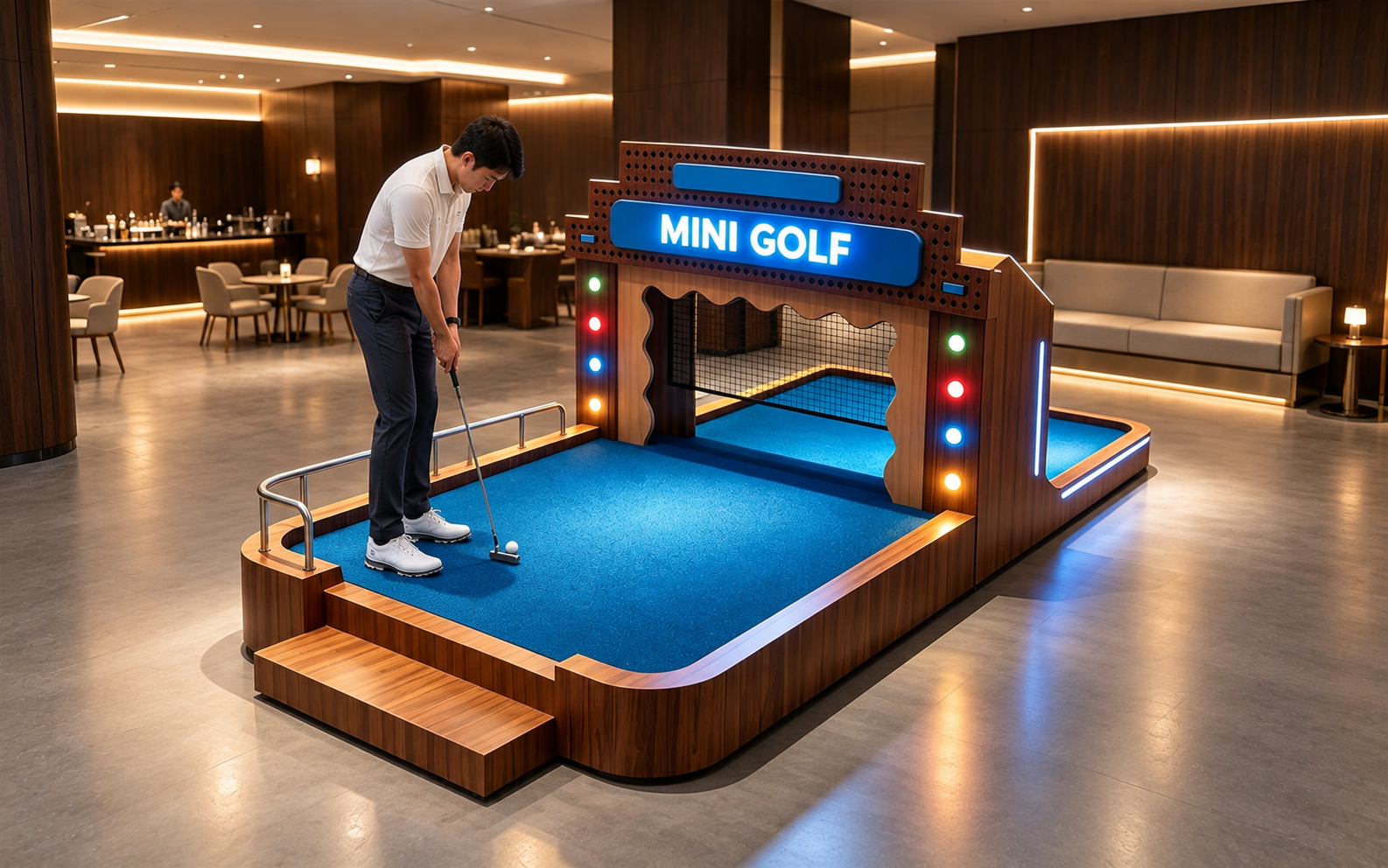
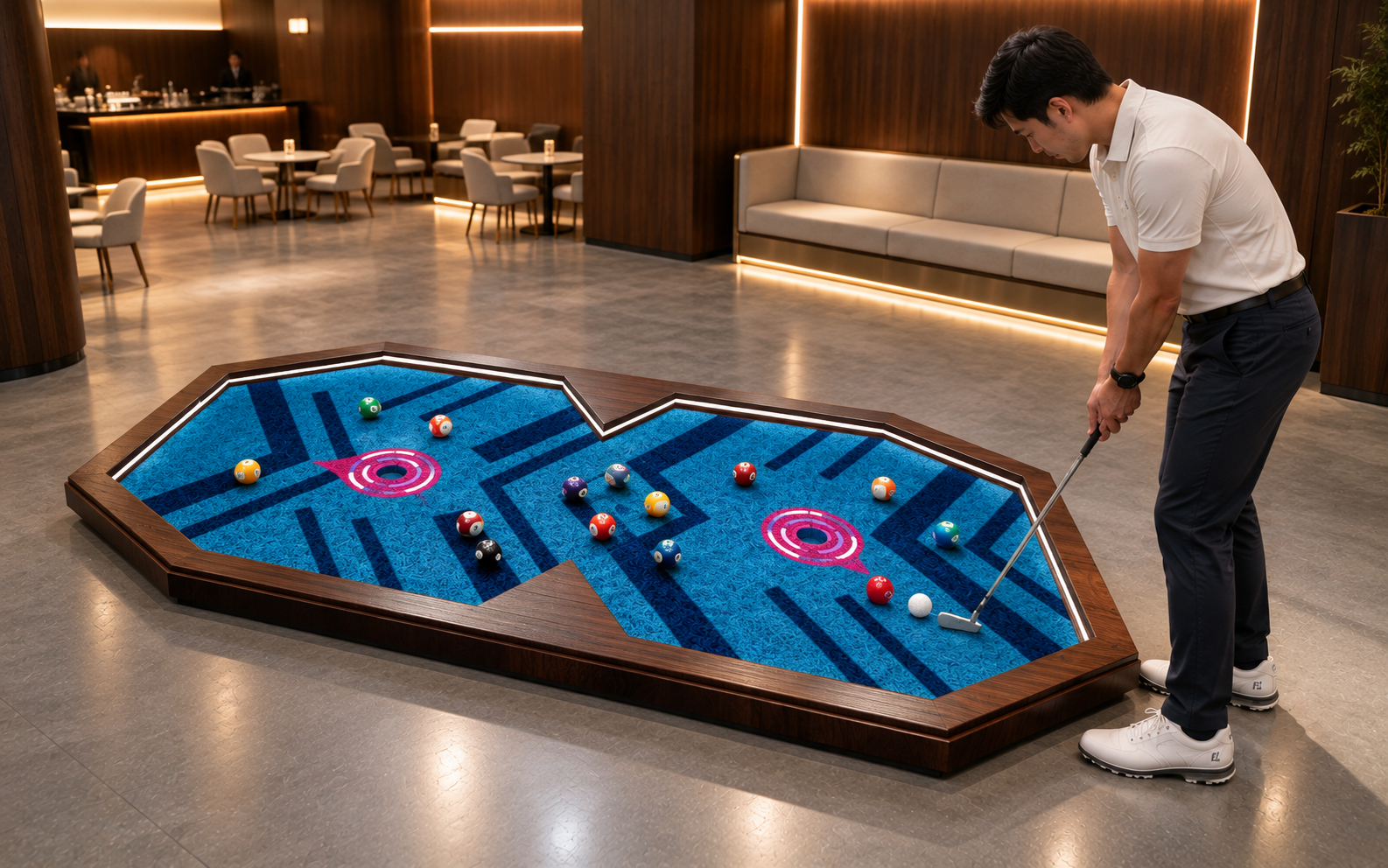
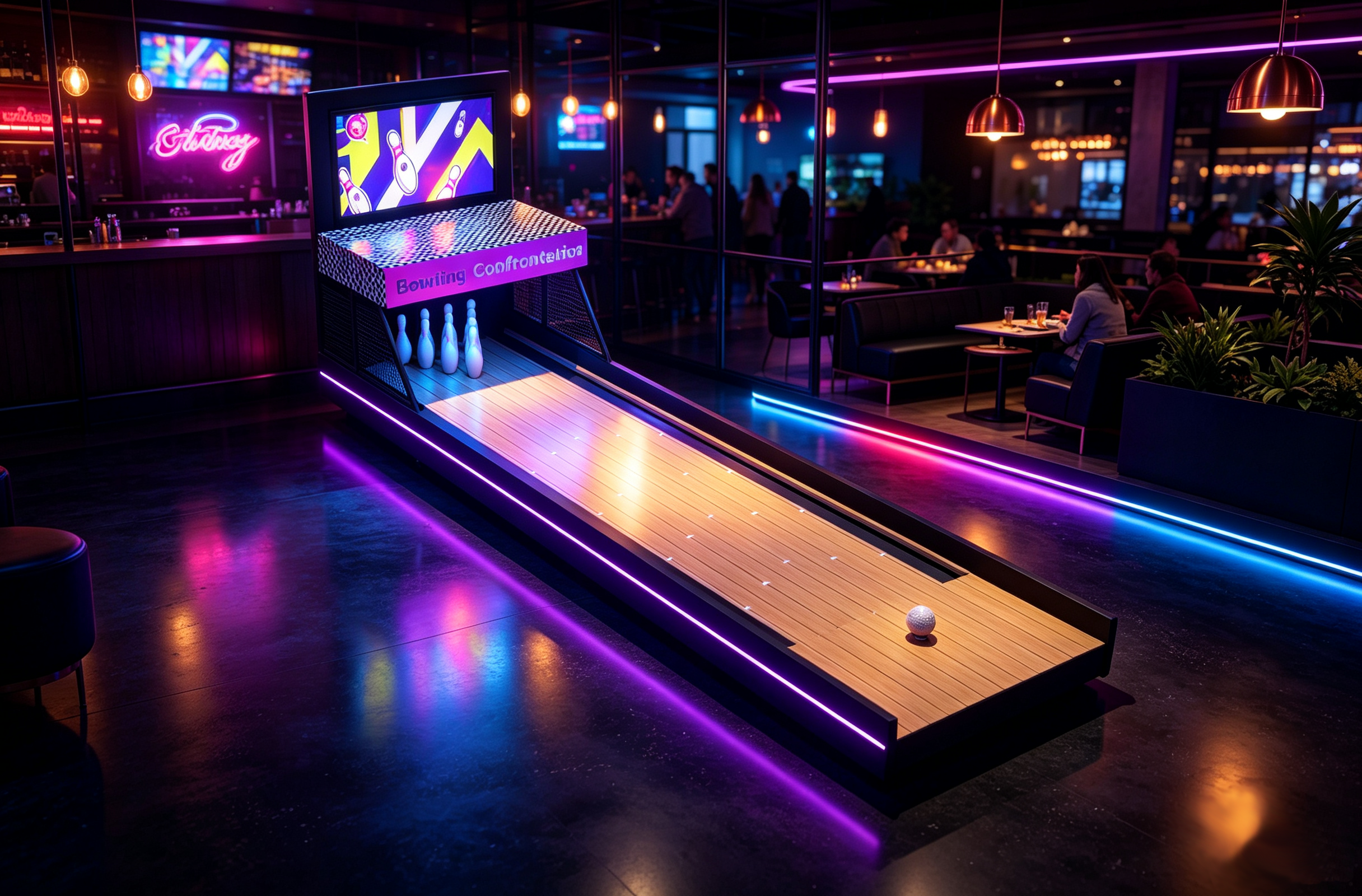
The catalog way to see it is by product: three hole styles cover the axis. The golf treasure hunt hole page is the theme-narrative branch, holes built around a hunt story; the billiard golf hole page is the crossover branch, a mini-golf lane playing by another game's rules; and the bowling theme challenge page is the social-format branch, where the obstacle is a group game rather than a structure. On one card those three reads as variety, which is the name the variety page gives the whole game-mode layer of course refresh.
Two boundaries. First, the price and the per-hole mechanics of an indoor mini golf course live on our indoor definition page, which is where a beginner should go once the naming question is settled. Second, the naming history here is quoted from two independent published pages, both of which date the Putt-Putt brand to 1954 in Fayetteville, North Carolina; no source on this page owns that fact alone, and no trademark advice is implied (the brand question belongs to counsel, not to a course-design page).
Same family of play, two branches: putt putt reads as the short-lane geometric branch (and as a brand name from 1954), while mini golf is the umbrella term. This page walks the naming and the obstacle axis.
Neither, on the beginner's card: both run one putter and a per-hole stroke cap. A putt-putt style lane is easier to read, a themed course has heavier holes mid-card, and the tier spread is how a course keeps both friendly.
Because the first Putt-Putt Fun Center opened in 1954 in Fayetteville, North Carolina, and the brand grew into a chain whose holes are famously par-2 geometric lanes. The word stuck as a synonym and never fully split from the brand.
Fewer, and simpler: published comparisons describe putt-putt holes as rails and pipes and blockers rather than windmills and set pieces. The trade is pace: geometric holes read in one look and finish faster than themed holes.
It leans by what the floor needs, not by the word: throughput-leaning floors buy a putt-putt weighted mix, dwell-and-photograph floors buy themed moments, and the strongest indoor cards run a tier spread of both. Our indoor definition page prices the indoor round in full.
Send your floor plan and we walk the tier mix together through the free 3D layout service, or take it straight to a quote.