LASER CS PRICING, PARTY PACKAGES AND OFF-PEAK FILL
Laser CS Pricing & Party Packages: Filling Off-Peak Hours With League Nights and Leaderboard Returns
A revenue-side operating model for laser CS arena owners whose weekend is full and weekday is empty: the pricing ladder with a product per segment, the party package that owns the birthday half, the league and themed nights that buy back the weekday valley, and the three-tier leaderboard plus player management that turns walk-ins into returning regulars.
Pricing ladder Party engine League nights Themed nights Leaderboard loop Seven-day calendar
~50%
Birthday Share of Laser Traffic
$249+
Party Package Entry Anchor
$20+$12
League Season Registration and Match
$3K-12K
Monthly Revenue Range, Busy Venue
1. One Ticket Is Why the Saturday Is Full and the Tuesday Is Empty
The pattern is so common it sounds like a law: the laser arena packs eight sessions on Saturday and runs two on Tuesday, and the owner calls it a seasonal business. It is not a demand problem. The demand is the same human who is throwing a birthday next month, playing a league game next spring and watching the leaderboard from the lobby on a random weeknight. What the venue sold is the problem: one walk-in ticket, sold one way, at one price, to three completely different customers. The operating database behind the category says it plainly. According to the LASERWAR operator data, birthday parties account for roughly half of laser venue traffic, corporate and team building for about 23 percent, and friends and small groups for about 22 percent; the same source prices a typical group around USD 200 and a busy venue between roughly USD 3,000 and USD 12,000 a month in laser revenue alone. Three customer segments, one price, one product: that is the arithmetic of an empty Tuesday.
The fix is not "charge less for Monday". The fix is to build a pricing system where every segment buys a product designed for it. The party customer buys a two-hour birthday package with food, drinks and a host; the corporate customer buys a buyout block with tournament brackets; the walk-in customer buys a single session or a three-game pass; the league customer buys a season with registration and a weekly match fee. Each of those products has a published operator anchor somewhere in the market, so the pricing system is not invented: it is assembled from anchors that are already being charged and paid. This article turns those anchors into a framework, because the SERP is full of single-venue price lists and empty of a method. The cost guide already established what the build costs; this one establishes what the built venue should be priced to do.
The capacity article in this batch (laser CS arena capacity and throughput) sized the boxes: how many players per session, how many sessions per day, and the utilization multiplier that swings the monthly line from about USD 22,000 to about USD 52,000. This article fills the boxes: the pricing ladder that sets the ticket, the party product that owns the birthday half of traffic, the league and themed nights that buy back the weekday valley, and the leaderboard and membership loop that makes the customers come back without a paid ad. The two articles are one model split in half, and the monthly revenue formula they share is the official one published on the Infinite Laser Tag solution page: Players x Price x Sessions x Operating Days x Utilization.
Where laser venue traffic comes from (LASERWAR operator data)
Birthday parties
about 50%
Corporate / team building
about 23%
Friends and small groups
about 22%
Three segments buy the same arena for three different reasons. Each segment earns a different product and a different price; bars are normalized to the 100 percent value. Source: LASERWAR operator database (typically about USD 200 per group, roughly USD 3K-12K monthly laser revenue at a busy venue).
The empty-weekday diagnosis: one product and one price sold to three segments. Birthday traffic is roughly half of laser visits, corporate and friends split the other half; the revenue fix is a pricing system with a product per segment, not a discount for Monday.
Source basis: the birthday/corporate/friends traffic split, the roughly USD 200 typical group and the USD 3K-12K monthly laser revenue range follow the LASERWAR operator database entry (vendor-reported, reconciled through the NextPlay vendor registry), attributed inline as of September 2026. The revenue formula follows the official Infinite Laser Tag solution page. No new statistics.
2. The Pricing Ladder: Single, Pass, Group, Party and Season
A single "one game costs this much" sign is the cheapest thing a venue can sell, and it prices the venue at its worst moment. The ladder method runs five rungs, each sold to the segment that benefits from committing further: the single session is the low-friction discovery price; the multi-game pass raises the spend of the walk-in who is already in the building; the group and buyout product sells the arena as a private event; the party package owns the birthday half; and the league season converts the regular into a returning ticket. The anchors below show that every rung is already being paid somewhere in the market, which means the ladder is a structure, not a ceiling.
| Product rung |
What the customer buys |
Published anchor (2026) |
Segment it serves |
| Single session |
One walk-in game |
Ultrazone single about USD 10; LazerX USD 25-27 |
Discovery, casual |
| Multi-game pass |
Three games, one visit |
Ultrazone three-game about USD 25 |
Walk-in up-sell |
| Group / buyout |
Private arena block |
LazerX private up to 18 players about USD 518; Laserdome buyout about USD 750-900 up to 35 |
Corporate, large groups |
| Party package |
2 hours, food, host |
Ultrazone party packages from about USD 249 |
Birthday engine |
| League season |
Registration plus weekly match |
Laser Storm registration about USD 20 plus USD 12 per match |
Returning regular |
The ladder is read two ways. Vertically, it is the same arena sold at rising total prices: a casual single around USD 10 in one market anchors the entry, while a private buyout shelves at USD 750 to USD 900 for the same floor. Horizontally, it is the day of the week: the single and the pass fill the weekend, the buyout and the party own the Saturday shower of parties, and the league season owns the Tuesday that used to close. The revenue consequence is that the venue stops selling "laser games" and starts selling scheduled units, which is the same thought the capacity article (the throughput model) puts on the supply side. Price anchors are market archaeology, not recommendations for any specific building: every local market negotiates its own numbers, and the pricing method below is what stays portable.
Source basis: Ultrazone single/three-game/party anchors follow the Ultrazone pricing page, LazerX single and private buyout anchors follow the LazerX Arena pricing page, Laserdome buyout and party anchors follow the Laserdome Plus pricing page, and the Laser Storm league structure follows the Laser Storm league registration page, all read 2026-09-21 and attributed inline. Operator pages are used as evidence of what the market already charges; they are not linked in the body and not quoted as universal prices.
3. The Party Package: Engineering the Birthday Engine
Birthday traffic is the biggest single slice of the category, so the party product deserves the most engineering, not the most discounting. Start with what a birthday group actually is. According to the wearecreativeworks birthday analysis, the average party assembles about 12 participants; according to the LASERWAR data, birthdays are roughly half of a laser venue bookings. A 12-person group, paying a package price with room for the parent, is exactly what the 16-player pack in the capacity article seats in one clean rotation, which is why the pack size and the party product are the same decision. The party volume is also the sticky volume: it books ahead, it arrives on schedule, it fills the arena in off-peak daylight, and it brings the adults who become the after-hours audience.
The published party anchors define the honest contents. According to Laserdome Plus, a two-hour birthday package includes the pizza, the drinks and a party host, on top of the arena time; according to Ultrazone, party packages start around USD 249 and climb with the glow and spectacle tiers. That package structure is the point: the food and the host are what push the per-person spend above the walk-in ticket, and they are the same minutes of arena time sold once to twelve people. The LazerX private buyout of up to 18 players around USD 518 shows the high-ticket end of the same product family. A laser venue that prices the teen walk-in at USD 25 and the birthday product at USD 400 plus is not "charging extra for birthday"; it is selling a produced event to the segment that comes back every week of the year.
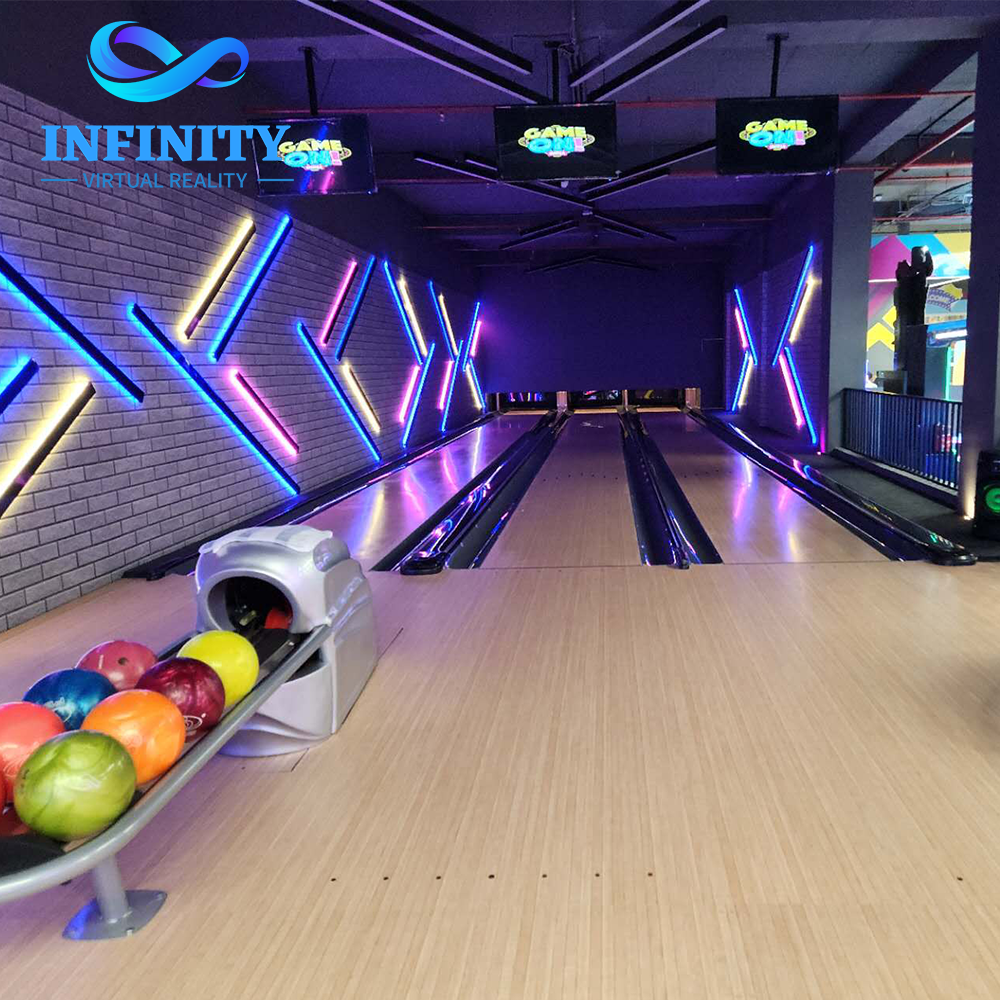
The party engine only works if the booking calendar does, which is where the theme matters less than the clock. The party lane needs slots it can promise: the two-hour block, the separate party room, the food counter that is staffed at the same hour the arena turns. The how-a-session-works family guide documents what those slots feel like for the guest; the operations question here is that a party package is a calendar product, and the price ladder above is what pays for the calendar. When the party lane is full on the weekends, the same 16-pack and the same package format migrate to the school holidays and the weekday afternoons, which is how a seasonal business stops being seasonal. A duckpin bowling lane gives that two-hour party block a second scored activity, so the package can alternate arena rounds with a round of bowling instead of ending at minute ninety.
The party package is the volume engine, not a discount: roughly 50 percent of laser traffic is birthday, an average party assembles about 12 participants, and the proven package is 2 hours plus food, drinks and a host. The 16-player pack seats the birthday unit in one rotation.
Source basis: the approximately 12-person average party follows the wearecreativeworks birthday analysis; the approximately 50 percent birthday share follows the LASERWAR operator database; the two-hour package structure follows Laserdome Plus; the from-about-USD-249 party tier follows Ultrazone pricing; the up-to-18-player private buyout near USD 518 follows LazerX pricing. All attributed inline, read 2026-09-21. No new statistics.
4. Buying Back the Weekday: League Nights and Themed Nights
The weekday valley is not a pricing problem you solve with a Tuesday discount sign; it is a programming problem you solve with a product that only exists on Tuesday. The league is the strongest of those products because it turns the empty night into a standing appointment. The operating example is fully documented. According to Laser Storm in Pittsburgh, the 2026 season runs four league seasons a year on a registration fee around USD 20, then a per-night match fee around USD 12 for two games, structured as a round-robin, followed by a double-elimination bracket, a playoff and a season banquet. Behind that structure sits the simple arithmetic of a return visit: twenty registered league players, coming back every league night through the season, are the arena booked and paid on the one night of the week nobody used to walk in.
The themed night does the same job for the nights the league does not own. According to Arena 51 in Cleveland, the Thursday Teen Night runs unlimited play around USD 15, Friday after 7pm runs unlimited around USD 20, an overnight event on the last Friday of the month runs 11pm to 5am around USD 29.50 for ages 13 and up, and a Toddler Time runs around USD 15 in the daytime slots. Read those as blocks, not discounts: every themed night is a fixed-price session product that fills a specific calendar hole, from the toddler slot on a weekday morning to the overnight that packages the whole arena as one late-night event. The official product side supports the same playbook: the Infinite Laser Tag event kits ship the league, the themed night and the party package as programming modules the operator switches on, with the tournament mode on the console and the leaderboard to track the season.
The weekday fill pays for itself in the truest sense, because the hours are already paid rent. The per-square-meter comparison prices the idle square meter; the ROI blueprint (how profitable a laser tag arena is) prices the idle weekday; the capacity model (the sessions-per-day thread) shows how one extra weekday session adds to the 22-day month. Add the themed nights to the league night and the calendar starts to look like the table below, which is the seven-day skeleton a venue adapts to its own market. None of the programming requires new hardware: it requires the event kits, the console and the schedule, which is why it is the cheapest utilization lever in the whole model.
| Day of week |
Programming block |
Pricing anchor model |
What it fills |
| Monday |
League registration and practice night |
League season fee structure |
The deep weekday |
| Tuesday |
League match night |
Laser Storm USD 20 season plus USD 12 match model |
Returning regulars |
| Wednesday |
Corporate and team-building buyout |
LazerX group buyout model |
Off-peak group revenue |
| Thursday |
Teen night, unlimited session |
Arena 51 USD 15 unlimited model |
Volume at the margin |
| Friday |
Open play plus late evening |
Weekend single and unlimited models |
Peak weekend revenue |
| Saturday |
Party lane plus open play |
Party packages from USD 249 plus mixed play |
Maximum capacity |
| Sunday |
Family early + birthday day-part |
Daytime slot and party models |
Family base load |
Source basis: the Laser Storm league format (USD 20 registration, USD 12 per two-game match, round-robin through double-elimination to playoff and banquet) follows the Laser Storm league registration page, Pittsburgh, read 2026-09-21. The Arena 51 themed-night prices (Teen Night USD 15, Friday unlimited USD 20, overnight USD 29.50, Toddler Time USD 15) follow the Arena 51 pricing page, Cleveland, read 2026-09-21. The seven-day skeleton is a synthesized planning format derived from those anchors and the official event-kits capability; it is not a claim about any specific venue revenue. No new statistics.
5. Leaderboard and Membership: the Repeat-Visit Loop
The last engine is the one that compounds. Every pricing and programming decision above brings a customer once; the leaderboard and membership loop brings the same customer many times, at zero marginal acquisition cost. The official system ships the loop as a feature: a three-tier leaderboard running store, city and national rankings, with real-time leaderboards on the screen, tournament mode on the console, and a player-management backend that files profiles, memberships, returns and up-sells. The league night seeds the loop: every match writes a ranked result, every ranked result moves a player on the board, and every move on the board is a reason to come back and defend it. A venue that runs the leaderboard nationally ties its local Tuesday to every other venue with the same system, which is a retention lever no local competitor can copy overnight.
The category has already measured what this loop does, on the combat-room side. The why free-roam VR arenas hold guests 40 extra minutes article and the 60-square-meter combat room day-rate case document how group combat plus a screen showing the result turns a walk-in into a regular in the same building. The laser CS arena runs the identical psychology with better economics: the three-tier leaderboard is persistent, the league season gives the score a deadline, and the player-management backend turns the ranking into the booking. The known category evidence is that a visible result plus a group memory is what creates the repeat visit; the leaderboard is that memory made structural.
The membership layer closes the loop into revenue. The player profile the backend files is the segmentation the pricing ladder sells to: the birthday booker, the walk-in, the league regular and the corporate buyer all sit in the same customer file with their own product. A birthday guest converts to a league player; a league player converts to the corporate buyer when their employer books the venue; the ranking renews the membership. The Custom Interactive Sportainment format extends the same file to the whole floor, adding scored stations the corporate group can rotate through on the same booking. The cost article (how much a laser CS arena costs) priced the assets; this section prices the second sale they exist to create. A venue that sells the same square meter twice, once to the walk-in and once to the returning regular, is operating the repeat-visit loop, and the board on the wall is the cheapest CRM the FEC industry has.
The repeat-visit loop: league match writes a ranked result, the three-tier leaderboard (store, city, national) makes it visible, the ranking renews the visit, and the player-management backend files the profile that the pricing ladder sells to next. Same arena, same staff, compounding without a paid ad.
Source basis: the three-tier leaderboard (store/city/national), real-time ranking, tournament mode, player-management backend and event kits follow the official Infinite Laser Tag solution page. The 40-extra-minutes and USD 1,200-a-day evidence follow the two published VR cluster articles (why-do-free-roam-vr-arenas-hold-guests-40-extra-minutes; how-does-a-60m-vr-arena-hit-1200-a-day), deep-linked above. No new statistics.
6. Five Steps to a Seven-Day Pricing and Programming Calendar
- Set the ladder, not the sign: pick the single-session entry price from the local market, add a multi-game pass that raises the walk-in spend, and define the group buyout rung so the arena has a price for an empty block.
- Engineer the party product first: build the two-hour package with food, drinks and a host around the average birthday group near 12, price it above the sum of its parts, and protect party slots on the calendar before open play is scheduled.
- Book the weekday with programs, not discounts: pick a league night with the season structure (registration plus a weekly match fee, round-robin to playoff), and fill the other quiet nights with themed formats at fixed block prices.
- Switch on the repeat-visit loop: launch the store leaderboard the first month, run a national ranking where the system provides it, and use the player-management backend to file the profiles the pricing ladder sells to next.
- Measure the month, not the weekend: track utilization per day against the official formula (Players x Price x Sessions x Operating Days x Utilization), and read the utilization gaps directly against the pricing and programming calendar you just built.
The five steps are the operational half of the two-article model. Step one prices the ladder, step two owns the birthday half of traffic, step three buys back the weekday valley, step four compounds the return visit, and step five closes the loop by measuring the month against the formula. The reference front end is the Infinite Laser Tag solution page with its event kits, tournament mode and player-management backend; the product envelope that carries them all is the one in the cards below. Read the two halves together: the capacity article (how many players per hour and what a 16-player system earns) sizes the supply, and the pricing calendar here schedules the demand against it.
The five-step calendar: set the ladder, engineer the party product, book the weekday with programs, switch on the repeat-visit loop, and measure the month against the official formula. Every step runs on the event kits, the console and the leaderboard already in the system.
Source basis: the step framework is synthesized from the official product capabilities (event kits, tournament mode, three-tier leaderboard, player-management backend), the published operator anchors (Laser Storm, Arena 51, Laserdome, Ultrazone, LazerX) and the published cluster articles (cost, ROI, per-square-meter, capacity sister). All vendor figures remain inline attributed as of September 2026. No new statistics.
Key takeaways in four lines: (1) sell segments, not sports - birthday is roughly half of laser traffic, corporate roughly 23 percent, friends roughly 22 percent, and each segment needs its own product and price; (2) build the ladder - single, pass, group buyout, party package and league season are all anchored by prices already being paid; (3) program the weekday, do not discount it - a league night plus themed block nights buy back the valley; (4) compound with the leaderboard - the three-tier store/city/national ranking plus the player-management backend turns the walk-in into the league regular at zero acquisition cost.
7. Laser CS Pricing and Party Package FAQ
The pricing and operations questions operators ask when they build the weekday, answered with the same anchors the body uses.
How much should a laser tag session cost?
Single-session anchors in the market range from about USD 10 (Ultrazone) to USD 25-27 (LazerX), and the league match price anchors around USD 12 for two games (Laser Storm). The method is to set the entry price from the local market, then build the multi-game pass, the group buyout and the party product above it.
What should a laser tag party package include?
The proven format is a two-hour package with food, a drink option and a party host on top of the arena time (Laserdome Plus), with party packages starting around USD 249 in the Ultrazone tier. An average birthday group assembles about 12 participants, which fits the 16-player pack in one rotation.
How often should a laser tag league run?
The documented example runs four seasons a year on a registration fee around USD 20 and a weekly two-game match around USD 12, structured round-robin to playoff and a season banquet (Laser Storm). A league is a recurring weekly product that owns one weekday night; pick the night your calendar shows as the deepest hole.
Do leaderboards actually drive repeat visits?
The same visible-result mechanics measured on the combat-room category keep guests and bring them back: the published VR articles document 40 extra minutes and a USD 1,200 day-rate in a 60-square-meter room. The three-tier store/city/national leaderboard makes that mechanic persistent, and the player-management backend files the profiles that convert the ranking into bookings.
What do I do about the empty weekday?
Do not discount the day; program it. A league night owns one weekday, theme nights fill the others as fixed-price blocks (Arena 51 runs teen, Friday-late and overnight formats), and the corporate buyout sells the off-peak block to groups. The capacity sister article shows what one added weekday session does to the monthly line.
8. Featured NextPlay Active Gaming Equipment

The pricing and retention engine for the arena
Infinite Competition
The Infinity Laser CS arena system with the operations stack the pricing calendar runs on: event kits for league, themed night and party blocks, tournament mode, a three-tier store/city/national leaderboard, player-management backend, and the 10/12/14/16/18/20 player pack the party lane seats.
View Details ›
The second revenue lane beside the laser floor
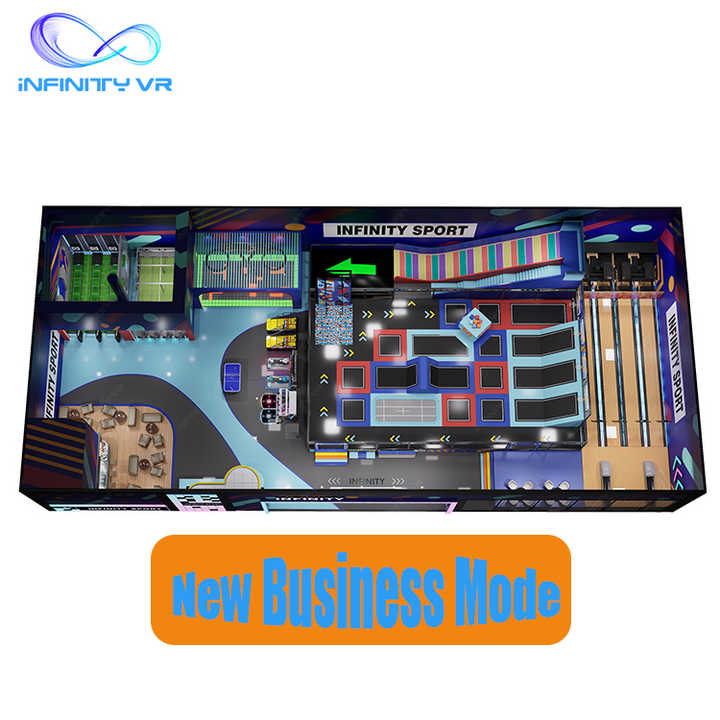
Custom Interactive Sportainment
A whole-floor interactive equipment program that adds score-based stations around the laser arena, giving the weekday calendar more zones to rotate through for the same rent, staff and bookings.
View Details ›
The second attraction for the party lane
Duckpin Bowling System
A space-saving duckpin bowling system sized for bars and boutique venues: the complementary second attraction that turns a booking into a dual-activity party package and gives the corporate buyer an after-laser block.
View Details ›
Build Your Laser CS Pricing Calendar
Send us your arena size, staff roster and target booking mix: we will return the pricing ladder, the party package structure, the league and themed-night format and the leaderboard setup that match your market, on the Infinite Competition system with its event kits and player management - then read the ROI blueprint to close the plan.

