VR CHAIR MAINTENANCE - WHAT BREAKS AND HOW TO FIX IT
VR Chair Maintenance: What Breaks and How to Fix It
A maintenance guide for VR motion chairs: what actually breaks (the motion base, the headset hygiene loop, the control electronics), the daily-weekly-monthly routine, the shelf-box spare parts that make failures same-day fixes, and what skipped maintenance costs against the ride rate.
What breaks first Motion base wear Headset hygiene loop Electronics faults The routine Spare parts
12-16/hr
Rides the Routine Protects
3 Surfaces
Base + Headset + Cabinet
1 Shelf Box
Same-Day Spare Parts
1. VR Chair Maintenance: Why the Simplest Simulator Still Needs a Routine
VR chair maintenance is the difference between a motion ride that runs every hour of a 300-day season and a seat that sits dark behind an out-of-order sign. A VR motion chair is mechanically simpler than most arcade hardware - the published rotating-chair explainer (how a rotating VR motion chair works) counts the whole machine as an electric motion base, a VR headset, a control cabinet and a seat, with no hydraulic lines, no pneumatic supply and no traditional coin path - but the parts it does have are exactly the parts guests touch, wear and sweat on. What breaks follows that split: a small list of mechanical wear points, a headset hygiene loop, and a short tail of electronics faults.
The maintenance story also frames the purchase. The published profitability analysis (whether a VR chair is profitable for an arcade) prices a commercial 360 chair at roughly USD 6,000 to 12,000 or more with the seat earning its keep at 12 to 16 rides per hour on a 2-to-3-minute cycle, and the published ceiling-and-power guide (the ceiling and power requirements for 360 VR chairs) adds the install checks - about 3.8 m of clear height for the rotating envelope and the rated electrical load on a dedicated circuit. Every one of those numbers assumes the machine is running; the maintenance routine is what keeps the assumption true.
A VR chair has three maintenance surfaces: the motion base and its moving joints, the headset and hygiene loop, and the control electronics. Two of the three are handled by floor staff in minutes; only the motion base needs a real technician.
| Maintenance surface |
What wears or breaks |
Who fixes it |
Cadence |
| Motion base |
Rotary bearing, drive belt, pitch actuator, fasteners |
Venue technician |
Weekly listening pass + torque check |
| Headset and hygiene |
Lenses, face pads, strap cable, liners |
Floor staff |
Between rides + daily wipe |
| Control cabinet |
Dust, cooling fans, e-stop circuit, terminals |
Venue technician |
Monthly open-and-inspect |
| Content and profiles |
Library rotation, ride-profile calibration |
Floor staff |
Monthly, after every update |
The Asset the Routine Protects: Cost Anchors of One 360 Chair (USD)
Commercial chair, hardware
USD 6-12K
First seat all-in
USD 10-18K
Published anchors from the VR cost guide and the profitability analysis. Bars indexed to the USD 18,000 upper all-in anchor (bar width = top of band / 18,000). The ride rate and cycle lines above are per-unit performance figures and share no unit with price, so they stay in the text.
2. What Breaks First: The Motion Base and Its Moving Joints
The motion base is the only part of a VR chair with real mechanical wear, and it breaks in predictable places. The rotating platform spins on yaw and tilts on pitch - the published explainer (how a rotating VR motion chair works) describes the 360-degree yaw and the pitch axis that give the ride its roller-coaster feel - so the wear points are the rotary bearing, the drive belt or gear that turns the platform, and the pitch actuator. The failure signature is always audible first: a new grinding or knocking noise during rotation means the bearing or the drive wants attention this week, not next quarter.
The fix pattern is inspection and adjustment, not replacement. A weekly walk-down that spins the empty platform through its full rotation and listens at each axis catches bearing noise, belt slack and actuator hesitation before they become downtime, and the fasteners holding the seat and the safety restraint need a torque check on the same schedule because a ride that rotates its passengers is a ride whose fasteners work loose. The published 360-chair specification (the VR 360 motion chair product) puts the single-seat footprint at roughly 1.2 by 1.2 m with the rotating envelope around it, which leaves the technician room to reach every fastener from standing height - the layout decision (how many VR chairs fit in 50 square meters) that made the service corridor possible is what makes the 15-minute inspection possible too.
Electrical supply faults round out the mechanical list. The published ceiling-and-power guide (the ceiling and power requirements for 360 VR chairs) records the difference between the rated draw of the chair and the circuit capacity the install must reserve, and most power-related faults in the field are connection problems - a loose connector at the base, a cable run that a vacuum cleaner or a rolling ball cart has dragged - rather than failures inside the drive electronics. Reseating connectors and checking cable dressing belong on the same weekly walk.
Source basis: the motion-base architecture (electric base, headset, control cabinet, seat; 360-degree yaw and pitch axis) follows the published rotating-chair explainer (how-a-rotating-vr-motion-chair-works). The USD 6,000-12,000-plus commercial price, 12-16 rides per hour and 2-3 minute cycle follow the published profitability analysis (is-a-vr-chair-profitable-for-an-arcade). The 3.8 m clear height and rated-vs-circuit electrical split follow the published ceiling-and-power guide (what-ceiling-and-power-do-360-vr-chairs-need). The 1.2 by 1.2 m single-seat footprint and rotating envelope follow the first-party product specification (VR 360 Motion Chair, verified-facts-registry 2026-09-13). No new statistics.
3. The Headset and Hygiene Loop: The Part Every Guest Touches
The headset is the highest-touch component on the machine and the one that fails most in revenue terms - a chair with a scratched, fogged or drifting headset still moves, but it does not sell. The maintenance loop is hygiene first: face pads and the headset shell wipe down between sessions on a rotation, and the published motion-sickness analysis (whether VR chairs reduce motion sickness) explains why the loop also protects throughput - the visual-vestibular match that makes a motion chair comfortable depends on clean lenses and correct interpupillary adjustment, and a headset nobody maintains produces the blurred, mis-fitted experience that guests read as the ride making them sick.
The fix list is small and daily. Lens cleaning with the proper cloth, face-pad rotation so each pad rests between sessions, cable checks at the headset strap where flex fatigue starts, and a weekly full headset swap into the rotation so one unit is always the known-good spare. The published egg-chair experience guide (what a VR egg chair feels like) describes the closed-capsule ride where the guest is sealed into the seat with the headset for the whole 2-to-3-minute cycle, which is exactly why the hygiene loop is a between-every-ride discipline and not an end-of-day chore.
Headset replacement is a planned line, not a surprise. Commercial headsets run a finite life at venue duty cycles, and the operator who prices a headset refresh into the annual budget keeps the ride selling while the operator who runs the headset to failure buys downtime at the published 12-to-16-rides-per-hour rate (the VR chair profitability analysis). The same logic applies to the hygienic liners and the disposable face covers that high-traffic venues run on weekend peaks.
Treat the headset like the glassware a bar serves in: cleaned on a rotation, inspected daily, and replaced on a planned cycle. A scratched lens costs the ride its reviews long before it costs a repair invoice.
4. Electronics and Software: The Faults That Need the Cabinet Open
The control cabinet holds the failures that floor staff cannot fix, but the list is short and mostly seasonal. Drive electronics inside the motion base run cool at ride duty cycles, and the field faults are the boring ones: dust in the cabinet filters at the seasonal changeover, a cooling fan that has stopped spinning, an emergency-stop circuit that has never been tested since install, and loose terminal screws that walk loose with the vibration the platform itself produces. The published explainer on the ride loop (how a rotating VR motion chair works) maps the control path from the cabinet to the motion base to the headset, and every fault above sits at a point along that path that a scheduled open-and-inspect catches.
Software maintenance is the other half of the electronics story. The content library needs its rotation kept current - the published game-library analysis (the VR chair immersive-gaming guide) ties repeat play to the library guests find on the day - and the ride profile for each film is calibrated to the chair motion, which is why the operator should test one full ride after every software update rather than opening the doors on an unverified build. License renewals and save-file backups ride on the same monthly schedule.
The discipline that prevents the second call-out is a maintenance log. Each chair gets a sheet or a line in the POS system: date, ride count, what was inspected, what was replaced. The log is what turns a repair from a mystery into a schedule, and it is also the document that protects the resale value of the chair when the operator upgrades to a two-seat V2 platform like the VR 360 motion chair two-seat V2 and rotates the single seat out.
Source basis: the control-path map (cabinet to motion base to headset) follows the published rotating-chair explainer. The repeat-play-to-library link follows the published VR chair guide (vr-chair-ultimate-guide-more-immersive-vr-gaming). The 2-3 minute ride cycle follows the published profitability analysis. The two-seat V2 platform reference follows the first-party product page (VR 360 Degree Motion Chair V2, HTTP 200 verified). No new statistics.
5. The Routine: Daily, Weekly, Monthly and the Spare-Parts Shelf
The whole maintenance program compresses into three checklists a floor team can actually run. Daily, before opening: one empty test ride per chair, lens wipe, face-pad check, restraint latch function. Weekly: full-platform rotation listening pass, fastener torque check, connector and cable-dressing inspection, headset swap into rotation, emergency-stop test. Monthly: cabinet open-and-inspect for dust and fans, content update and ride-profile verification, maintenance-log review and ride-count read against the revenue report. The published profitability analysis (whether a VR chair is profitable for an arcade) shows why the schedule pays: the model that makes the chair earn is built on rides per hour, and every checklist line above is priced at minutes against a downtime line priced in lost afternoons.
The spare-parts shelf is the other half of the program. The parts that end a revenue day if they fail - face pads, lens cloths, restraint latches, the fuses and connectors the cabinet consumes, one known-good headset - fit in a single shelf box, and the venues that stock them make every failure a same-day fix. The published egg-chair comparison (the VR egg chair vs 9D cinema formats guide) makes the same point at fleet scale: a multi-seat capsule room and a row of chairs share the same shelf-box logic, and the format that wins on uptime is the one whose consumables the staff can swap without a call.
When the fault is beyond the shelf box - a drive fault in the motion base, a headset hardware failure, an emergency-stop circuit that will not clear - the manufacturer service path takes over, and this is where the buying decision matters as much as the routine. The VR 360 motion chair single seat and the two-seat V2 roller-coaster platform ship with the commissioning documentation and the parts support that let a venue technician own the routine, and the VR Starship U2 9D cinema chair carries the same discipline into the two-player capsule format.
Daily: one test ride and the hygiene wipe. Weekly: listen to the rotation and torque the fasteners. Monthly: open the cabinet and read the log. Everything on the shelf box is a same-day fix; everything beyond it should already have a service number on the wall.
6. VR Chair Maintenance FAQ
The questions operators ask when they build a VR chair maintenance program, answered with the published references.
What breaks first on a VR motion chair?
The highest-touch parts fail first in revenue terms: the headset (scratched lenses, worn face pads, strap-cable flex fatigue) and the hygiene items. The motion base is the main mechanical wear list - rotary bearing, drive belt and pitch actuator, usually audible before they stop the ride. Electronics faults are the smallest group, mostly dust, fans and connection problems.
How often should a VR chair be serviced?
Daily: a test ride, lens wipe and restraint check before opening. Weekly: a full-rotation listening pass, fastener torque check, connector inspection and headset swap. Monthly: cabinet open-and-inspect, content and ride-profile verification, and a log review. The full loop is minutes per day, not hours.
What spare parts should a venue keep on the shelf?
Face pads and hygienic liners, lens-cleaning supplies, restraint latches, cabinet fuses and connectors, and one known-good headset in the rotation. The shelf box covers the failures that would otherwise end a revenue day, and every swap on it is a same-day fix by floor staff.
How does maintenance affect the ride experience?
Directly. The comfort of a motion ride depends on the visual-vestibular match between the picture and the chair motion, which clean optics and correct headset fitting preserve; a scratched or mis-adjusted headset produces the blur and mis-fit that guests report as sickness. Hygiene is therefore a throughput discipline, not just a courtesy.
Do VR chairs need a technician on staff?
No, but they need a trained floor team for the daily and weekly loop and a service path for motion-base electronics. The machine was designed to run without hydraulic or pneumatic service - the moving parts an operator maintains are a bearing, a belt, an actuator and the fasteners around them.
How much does skipped maintenance cost?
The chair earns at 12 to 16 rides per hour on a 2-to-3-minute cycle; every downtime afternoon prices itself at that rate. A planned headset or belt replacement is minutes of scheduled downtime; the unplanned version is the Saturday peak lost behind an out-of-order sign plus the call-out invoice.
7. Featured NextPlay Active Gaming Equipment
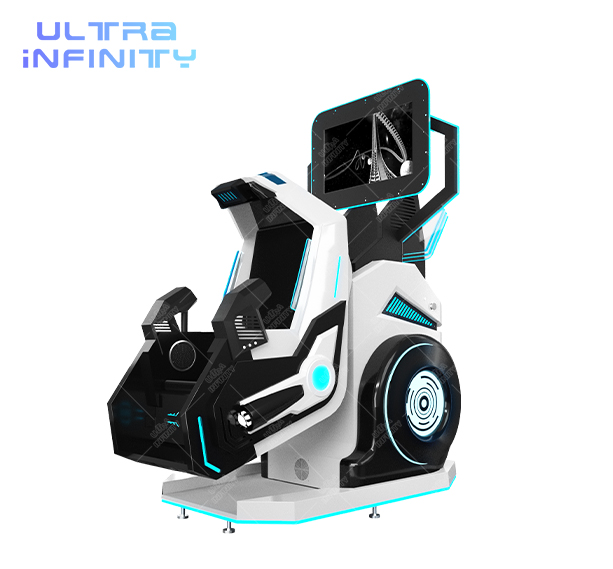
The 360-degree solo ride
VR 360 Motion Chair - Single Seat
A single-seat 360-degree rotating VR motion chair with an electric base built for the maintenance loop: a 1.2 by 1.2 m footprint, floor-staff daily checks, and a drive train a venue technician can own.
View Details ›
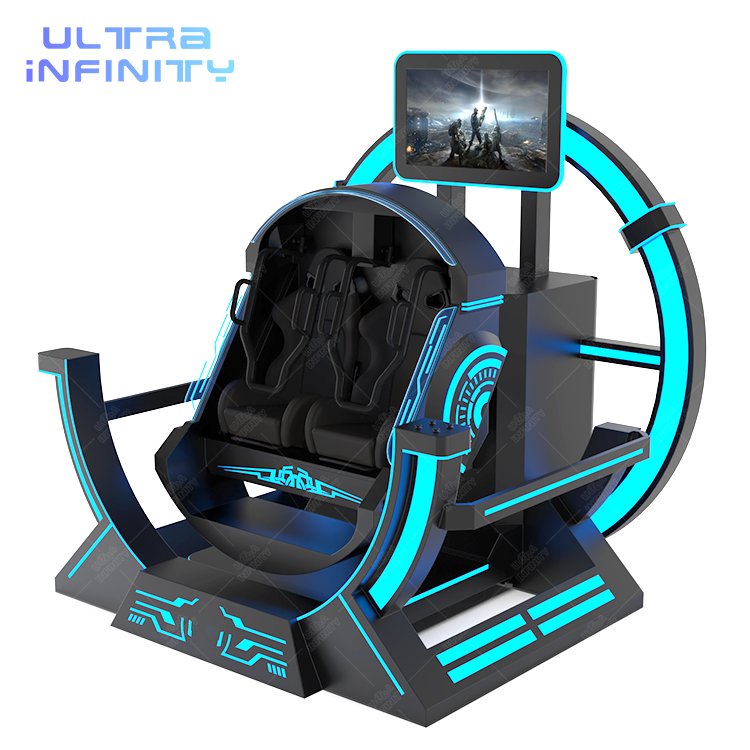
The roller-coaster twin ride
VR 360 Degree Motion Chair - V2 Two-Seat Platform
The two-seat V2 rotating platform that carries pairs through the same roller-coaster motion profile, with the commissioning documentation and parts support that keep the fleet on its maintenance schedule.
View Details ›

The two-player capsule
VR Starship U2 - 9D Cinema Gaming Chair
A two-player 9D cinema capsule that shares the chair maintenance discipline at capsule scale: sealed ride experience, headset hygiene loop, and the same shelf-box spare-parts logic.
View Details ›
8. Key Takeaways: A Chair That Runs Is a Chair That Earns
Five lines to carry into a VR chair maintenance program.
- Split the machine into three surfaces - motion base, headset hygiene loop, control electronics - and give each its own checklist instead of one vague service plan.
- Run the loop daily-weekly-monthly: test ride and wipe, rotation listening pass and torque check, cabinet inspect and log review.
- Stock the shelf box: face pads, restraints, fuses, connectors and one known-good headset turn most failures into same-day fixes by floor staff.
- Protect the experience: clean optics and correct headset fitting are what keep the visual-vestibular match that makes the ride comfortable and repeatable.
- Log everything: ride counts, inspections and replacements turn repairs into schedules and protect the resale value when the fleet rotates to V2.
Plan the room so the routine is possible: check the clearances with the free 3D layout design, then spec the fleet from the VR 360 motion chair single seat, the two-seat V2 roller-coaster platform and the VR Starship U2 capsule, and read the VR chair profitability analysis to see how the ride count the maintenance protects turns into revenue.

