HOW MUCH IS A GAME OF BOWLING - PER-GAME PRICES EXPLAINED
How Much Is a Game of Bowling? Per-Game Prices and What Drives Them Up or Down
A price guide to a game of bowling: the USD 4 to 8 per-person anchor, shoes at USD 3 to 6, the USD 22 to 60 lane-hour alternative, the price ladder by venue type and daypart, when per-hour beats per-game, and how an operator sets the rate from the lane cost structure.
Per-game anchor Price ladder Per game vs per hour Shoes and packages Family budgets Operator rate card
$80-140
Family of Four, Off-Peak
1. How Much Is a Game of Bowling? The Short Answer
A game of bowling costs about USD 4 to 8 per person per game at most commercial centers, with shoe rental adding USD 3 to 6 per pair, and the same lane available by the hour at roughly USD 22 to 60 depending on the day and the venue. Those ranges come straight out of the published night-out budget analysis (the bowling night-out budget guide), which prices a normal bowling night at USD 20 to 35 per person with food, or USD 12 to 20 for lanes and shoes alone. For a guest planning a first visit, the per-game number is the anchor: a family of four plays two games each, adds shoes and a shared pizza, and lands in the USD 80 to 140 range the budget guide models.
The number moves for reasons worth knowing before you book. Time of day is the biggest lever - the same lane that costs USD 22 on a Tuesday afternoon runs toward the USD 60 end on a Saturday evening - and venue type is the second: a family entertainment center, a boutique bar with duckpin lanes and a competition ten-pin center price the same game differently because they sell different evenings around it. The rest of this guide walks the ladder: what a game costs by venue and daypart, when per-hour beats per-game, what the shoes really add, and how an operator decides where on the ladder to set rates.
The short answer: USD 4 to 8 per person per game, USD 3 to 6 for shoes, or USD 22 to 60 per lane-hour. Book off-peak and the whole night lands at the bottom of every range.
| Price line |
Typical range |
Notes |
| Per game, per person |
USD 4-8 |
The anchor number at most commercial centers |
| Shoe rental |
USD 3-6 per pair |
Sanitation requirement; rarely bundled away |
| Per lane-hour |
USD 22-60 |
Daypart and venue type set the end of the range |
| Full night with food |
USD 20-35 per person |
The published night-out budget anchor |
| Party package |
USD 15-45 per head |
Games, shoes, food and sometimes a host |
A Night Out: Family of Four, Off-Peak vs Peak (USD)
Off-peak, lanes and shoes only
USD 80-140
Peak rates, same group
USD 120-200
Party of 8, typical
USD 160-280
Party of 12, typical
USD 240-420
Published group tables from the bowling night-out budget guide. Bars indexed to the USD 420 upper party-of-12 anchor (bar width = top of band / 420).
2. The Price Ladder: Venue Type and Daypart
The per-game price is a ladder, not a single number. At the bottom sits the weekday off-peak game at a family entertainment center - often sold as part of a bundle or a promotion - and at the top sits the Saturday night peak game in a premium venue, where the lane itself is the scarce asset. The published budget guide (the bowling night-out budget guide) maps the middle of the ladder in its group tables: a typical off-peak evening for four lands near USD 80 all in, the same group at peak rates runs USD 120 to 200, and party packages that bundle games, shoes, food and a host price at USD 15 to 45 per head depending on the group size and the day.
Venue type moves the ladder as much as the clock. A competition ten-pin center charges for the sport - regulation 26 m lanes, certified scoring and league-grade conditions. A boutique bar with duckpin lanes sells a shorter, lighter game wrapped in food and drinks, where the published bar-fit analysis (duckpin bowling for bars) records lane fees around USD 2,800 a month and event averages near USD 1,500 a month - revenue structures that let the bar price the game lower on paper and earn on the tab beside it. The duckpin format also turns over faster: the published format analysis (the most profitable bowling format comparison) benchmarks a duckpin lane at about USD 198 per day at 70 percent utilization on a footprint of about 80 square meters, numbers that only work because the game itself is quick.
Daypart promotions are how venues manage the ladder. Weekday evenings, student sessions and Sunday family blocks all trade price for utilization - a lane earning USD 22 an hour on a slow afternoon is worth more than a dark lane - and the same logic runs in reverse at the peak, where the Saturday 8 pm lane prices at the top of the range because the queue says it can. The published revenue-lift analysis (the two-lane revenue-lift analysis) shows the utilization lever at venue scale: under 50 percent utilization two lanes stop paying for themselves, which is exactly why the off-peak discounts exist.
Source basis: the USD 4-8 per person per game, USD 3-6 shoes, USD 22-60 lane-hour, USD 20-35 per person with food, USD 12-20 lanes-and-shoes, USD 80-140 family-of-four, USD 120-200 peak group and USD 15-45 party-package figures follow the published night-out budget guide (how-much-does-bowling-cost-night-out-budget). The USD 2,800 monthly lane fee and USD 1,500 monthly event average follow the published bar-fit analysis (duckpin-bowling-for-bars). The USD 198 per day at 70 percent utilization follows the published format-profitability comparison. No new statistics.
3. Per Game or Per Hour: Which Price Pays for the Same Lane
Most centers sell the same lane two ways, and the published pricing comparison (the per-game vs per-hour pricing analysis) shows the crossover that decides which one favors the guest. Per-game pricing rewards slow, deliberate groups - a casual family frames out in 10 to 12 minutes per game per lane, so four people sharing one lane play four games in an hour and pay four game fees. Per-hour pricing rewards fast groups and league players who keep the ball return moving: the same lane sold by the hour at USD 22 to 60 beats the game count as soon as the group finishes more games than the hourly rate covers.
The practical rule for guests: a small group on a quiet lane should compare the hourly rate against the game count they actually finish, and a big group on a busy Saturday has no choice - peak hours are usually sold by the lane-hour precisely because demand fills the lane either way. For the operator, the same crossover is the pricing decision itself, and the published analysis walks the revenue math on both sides: per-game protects revenue when the pace is slow, per-hour caps it when the pace is fast, and hybrid schemes (hourly off-peak, per-game at peak) harvest both.
Shoes sit outside both schemes and are worth a separate line because guests ask about them every time. The USD 3 to 6 per pair the budget guide records is one of the few genuinely unavoidable costs of the sport - rental shoes are a sanitation requirement at any public center - and it is also one of the highest-margin lines on the counter, which is why centers rarely bundle it away. Family venues sometimes fold shoes into a per-head package; a guest doing the math on a cheap Tuesday game should still expect the shoe line at the till.
Per-game favors slow groups, per-hour favors fast ones, and peak nights are sold by the lane regardless. Add USD 3 to 6 per pair for shoes in every scheme - it rarely goes away.
4. What the Per-Game Price Means for an Operator Setting Rates
The same question runs the other direction for the venue owner: the per-game price is an output of the lane cost structure, not an input. The published complete cost guide (the bowling alley cost guide) breaks the build into equipment, fit-out and opening budgets, and the published maintenance budget (the string pinsetter maintenance-cost analysis) adds the annual operating lines a lane must cover - a string lane at roughly USD 2,700 per lane per year at the line-item level against roughly USD 9,400 for a free-fall machine. The lane rate has to clear those lines at realistic utilization, which is the arithmetic behind every price board.
The format decision shapes the rate card. A string lane holds the game price down because its maintenance floor is low; a duckpin pair earns on turn - the published bar-fit analysis (duckpin bowling for bars) prices the two-lane build at USD 60,000 to 90,000 installed with a payback of 14 to 18 months against a USD 2,800 monthly lane fee plus the drink margin around it; a full ten-pin deck prices its game at the premium end because the 26 m lane and the free-fall machine line cost the most to install and run. The published buy-side guide (the bowling alley cost guide) walks the full procurement route behind those numbers.
For the operator choosing the equipment that fits a target price point, the catalogue splits cleanly: the commercial 2-lane string bowling equipment anchors the volume price point, the duckpin bowling system fits the bar and boutique price points where the game is one part of a bigger tab, and the standard 10-pin bowling alley carries the premium per-game price of the regulation sport. Plan the lanes onto the actual floor with the free 3D layout design and the rate card follows the room.
Source basis: the string-vs-free-fall annual line items (about USD 2,700 vs USD 9,400 per lane per year) follow the published maintenance-cost analysis (can-string-pinsetters-cut-bowling-maintenance-costs-by-75-1). The USD 60-90K installed two-lane duckpin build, 14-18 month payback and USD 2,800 monthly lane fee follow the published bar-fit analysis. The equipment, fit-out and opening budget structure follows the published complete cost guide (how-much-does-a-bowling-alley-cost-complete-guide). No new statistics.
5. Bowling Game Price FAQ
The questions guests and operators ask about the price of a game of bowling, answered with the published references.
How much is one game of bowling per person?
About USD 4 to 8 per person per game at most commercial centers, with shoe rental at USD 3 to 6 per pair. The same ranges appear in the published night-out budget guide, which prices a full night at USD 20 to 35 per person with food or USD 12 to 20 for lanes and shoes only.
Is it cheaper to pay per game or per hour?
It depends on the pace. Per-game favors slow groups that finish few frames per hour; the published pricing comparison shows the hourly rate at USD 22 to 60 per lane beating the game count once a group finishes enough games to cover it. Peak nights are usually sold by the lane-hour either way.
How much is a night of bowling for a family of four?
The published budget guide models a family of four at two games each with shoes and shared food at about USD 80 to 140 all in, with the same family at peak rates running USD 120 to 200. Off-peak booking with a promotion lands at the bottom of the range.
Why do shoes cost extra?
Rental shoes at USD 3 to 6 per pair are a sanitation requirement at any public bowling center and one of the few genuinely unavoidable lines. They are also high-margin, which is why centers rarely bundle them away except in per-head party packages.
What does a bowling party package cost?
The published budget guide records party packages at about USD 15 to 45 per head depending on group size and day, bundling games, shoes, food and sometimes a host. Per-head bundles smooth the per-game price and are the standard format for weekend birthday business.
How does a venue decide what to charge per game?
The rate has to clear the lane cost structure at realistic utilization: the published maintenance analysis puts a string lane at about USD 2,700 per lane per year against about USD 9,400 for free-fall, and the format comparisons show duckpin earning on turn and ten-pin pricing at the premium end. The per-game price is the output of those lines, not a guess.
6. Featured NextPlay Active Gaming Equipment
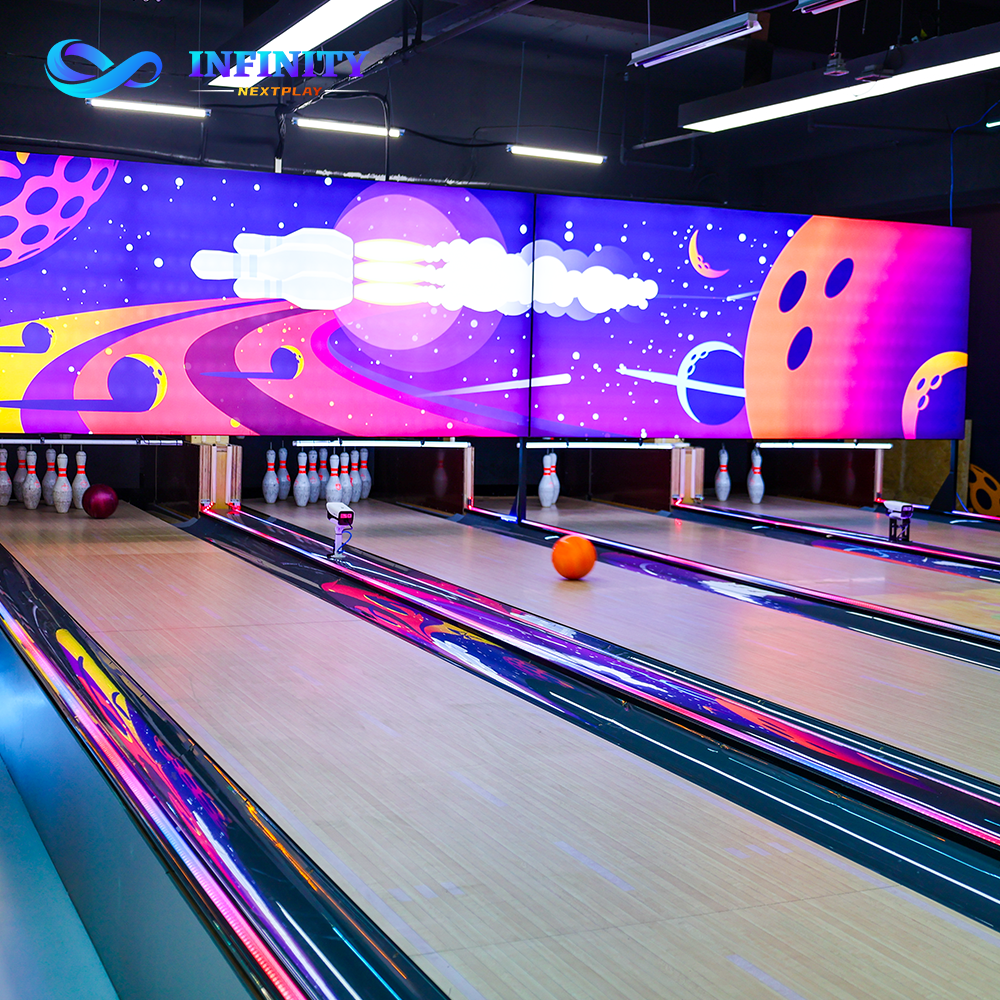
The premium regulation game
Standard 10-Pin Bowling Alley
The 26 m international-standard ten-pin system that anchors the premium end of the per-game price ladder: automatic pinsetting, synthetic lanes and league-grade scoring for centers selling the sport.
View Details ›
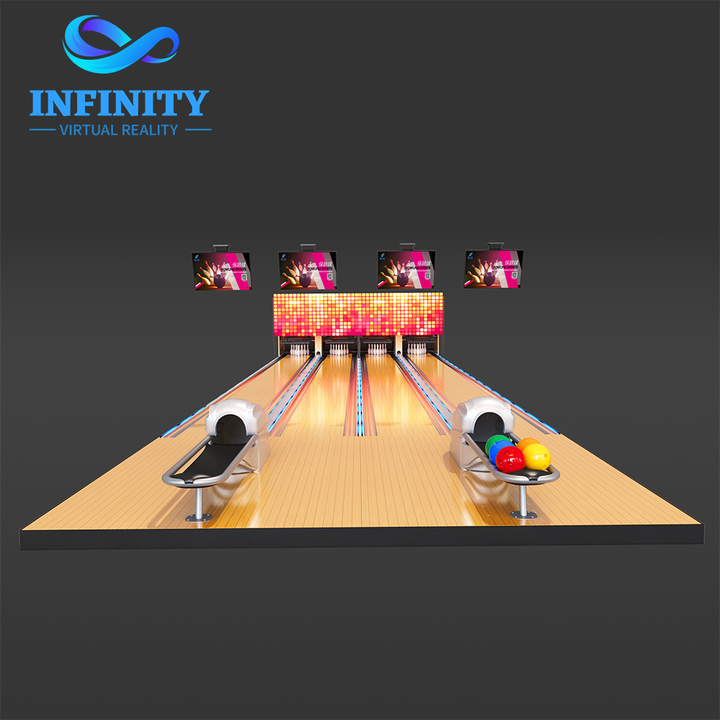
The volume price point
Commercial 2-Lane String Bowling Equipment
A two-lane string pinsetter room whose low maintenance floor keeps the per-game price accessible: about USD 2,700 per lane per year at the line-item level, with the full scoring stack included.
View Details ›
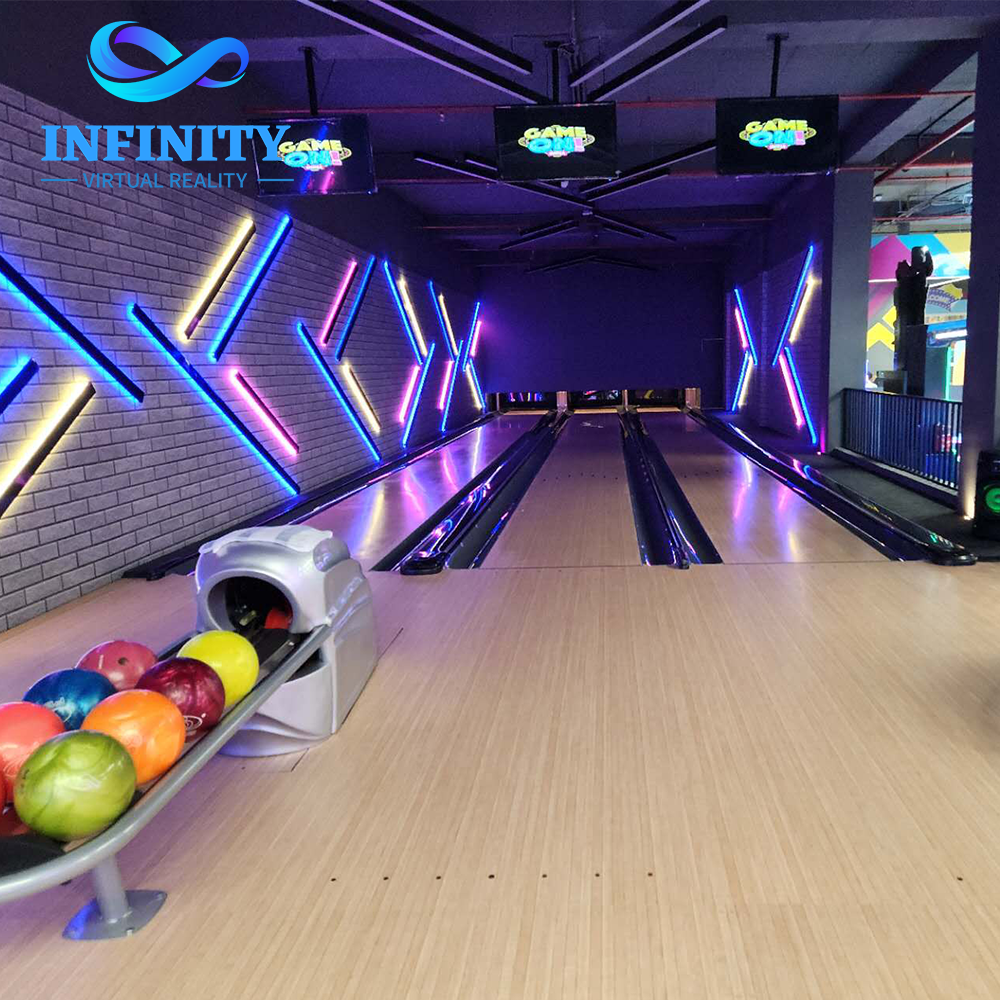
The bar-format price point
Duckpin Bowling System
A space-saving duckpin pair for bars and boutiques where the game is one line on a bigger tab: USD 60-90K installed, 14-18 month payback and a faster game that turns the lane over all night.
View Details ›
7. Key Takeaways: The Price of One Game, Ladder by Ladder
Five lines to carry into the price question, whether you are booking a lane or setting the board.
- The anchor numbers: USD 4 to 8 per person per game, USD 3 to 6 for shoes, USD 22 to 60 per lane-hour, USD 20 to 35 per person for a full night with food.
- The ladder has two axes: venue type (family center, boutique bar, competition ten-pin) and daypart, with peak Saturdays at the top and weekday bundles at the bottom.
- Per-game favors slow groups and per-hour favors fast ones; the crossover is the published pricing comparison, and peak nights are sold by the lane regardless.
- A family of four lands at USD 80 to 140 off-peak and USD 120 to 200 at peak; party packages run USD 15 to 45 per head.
- For operators, the price is an output: lane cost lines of about USD 2,700 (string) vs USD 9,400 (free-fall) per lane per year set the floor under every rate card.
Take the next step from either side of the counter: guests can budget the whole evening with the bowling night-out budget guide and the per-game vs per-hour pricing comparison, while operators start from the commercial 2-lane string bowling equipment, the duckpin bowling system or the standard 10-pin bowling alley with the floor plan behind the rate card drawn by the free 3D layout design.

