When we opened our entertainment center in a mid-sized city, we had a simple goal: create a space where friends, families, and corporate groups would keep coming back. After researching dozens of venue types, we realized that the most sustainable model wasn't a single attraction — it was a carefully curated mix of experiences that appealed to different audiences at different times of the day.
We partnered with Infinity NextPlay to design a 300-square-meter venue combining three core attractions: a Free Roaming VR Arena 2.0, a Digital Scoring Shooting Simulator Q4, and an Indoor Baseball Batting Simulator. The result? A venue that generates $45,000 in monthly revenue with a 14-month payback period. Here's exactly how we did it.
Our First-Year Results
2.5hrs
Avg Visit Duration
1. The VR Arena — Our Anchor Attraction
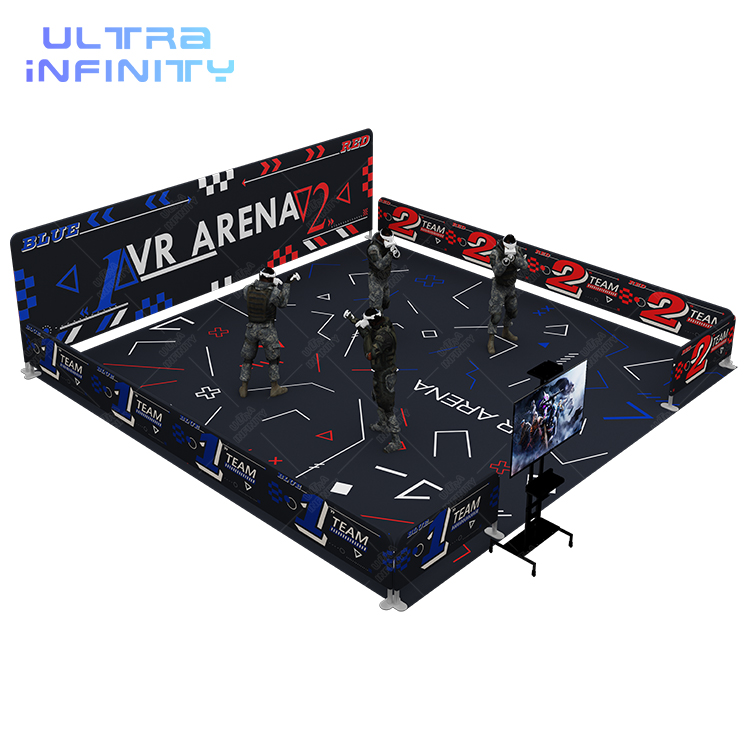
The Free Roaming VR Arena 2.0 is the centerpiece of our venue. Unlike stationary VR chairs that limit movement, this system allows up to 4 players to walk freely in a physical space while wearing wireless VR headsets. The experience is truly immersive — players see each other as avatars, communicate through built-in microphones, and engage in cooperative or competitive gameplay.
What makes the VR Arena 2.0 such a powerful anchor attraction is its broad demographic appeal. We see teenagers booking birthday parties, corporate teams scheduling after-work bonding sessions, and families coming in on weekends. The system supports multiple game modes — zombie shooting, space combat, puzzle challenges — so repeat visitors get a fresh experience each time. In our first year, the VR Arena alone accounted for 42% of total revenue, averaging $18,900 per month.
The financial math is straightforward. With a per-session price of $25 per person and 4-player sessions running every 30 minutes, each VR Arena unit can generate up to $200 per hour at peak times. Over a typical weekend (10 hours of peak operation Saturday and Sunday), that's $4,000 in potential revenue from this single attraction. Weekday corporate bookings at a discounted group rate of $20 per person add another $300-$500 per day in normally slow hours.
One of the VR Arena's strongest advantages is its low labor requirement. The system is fully automated — players self-serve through an intuitive touch-screen interface that guides them through headset fitting, game selection, and session start. We staff the VR zone with just one attendant who can manage up to three simultaneous sessions, handling equipment sanitization between groups and providing brief orientation for first-time users. This lean staffing model keeps our labor costs at just 18% of VR revenue, significantly below the industry average of 25-30% for attractions of this type.
Maintenance has been manageable. The VR Arena 2.0 uses HTC VIVE Pro 2 headsets with replaceable face cushions and sanitizable straps. We budget about $200 per month for headset maintenance and replacement parts, and the system's modular design means any component can be swapped in minutes without taking the entire attraction offline. The tracking system uses ceiling-mounted sensors that require no recalibration, and the software platform receives regular updates with new games and features.
2. The Shooting Simulator — Competitive Social Gaming
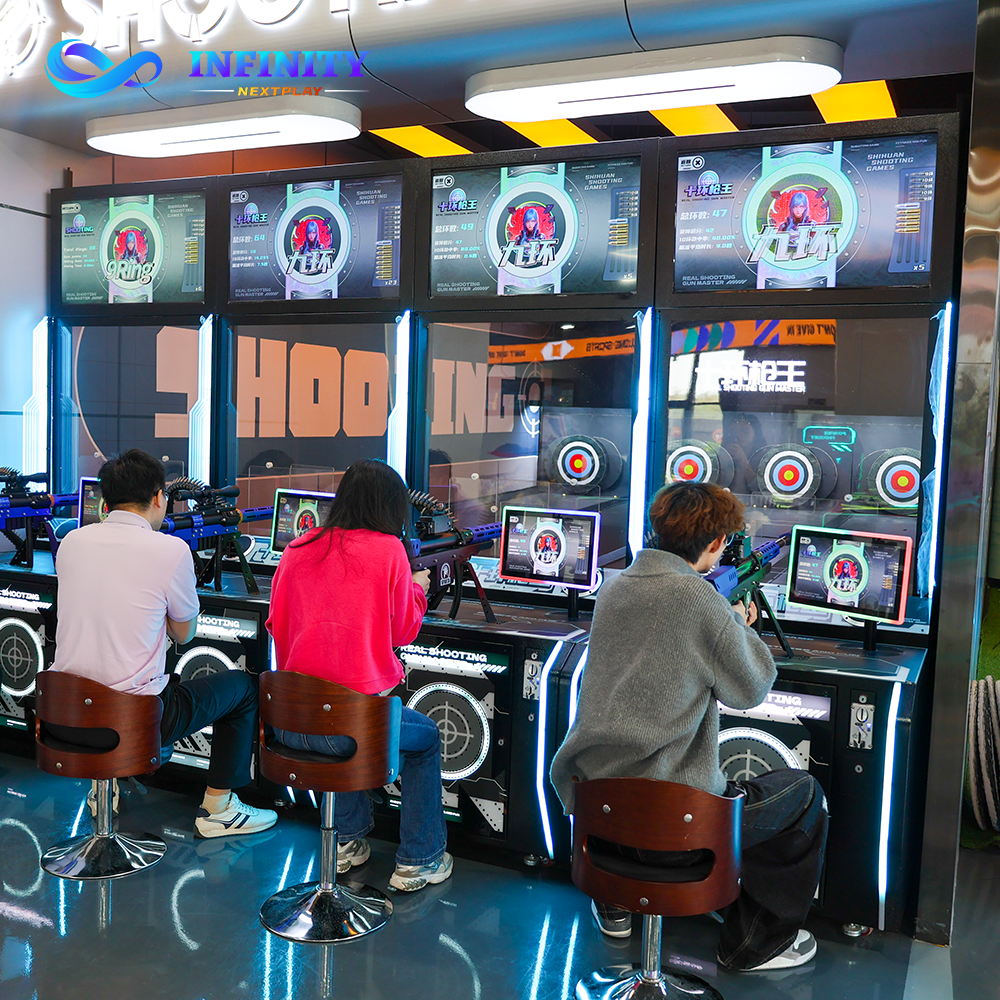
The Digital Scoring Shooting Simulator Q4 was our second attraction investment, and it has proven to be the perfect complement to the VR Arena. While the VR experience is immersive and collaborative, the shooting simulator is competitive and skill-based — appealing to guests who want to test their accuracy and climb the leaderboard.
The Q4 features a professional 10-ring scoring system with moving targets that simulate real competitive shooting. The real-time leaderboard displayed on a 39-inch screen creates an automatic competition among friends, strangers, and regulars. We found that the leaderboard feature alone drives repeat visits — players return specifically to beat high scores and earn the "top shot" title displayed on our venue's weekly champion board.
Revenue-wise, the Q4 generates approximately $8,200 per month. Each session costs $15 for 20 shots, and the average player completes 2-3 sessions per visit. The fully automatic bullet loading system means zero downtime between rounds, maximizing throughput during peak hours. With a compact footprint of just 8 square meters, the Q4 delivers the highest revenue per square meter of any attraction in our venue — approximately $1,025 per square meter annually.
The Q4 has become a favorite for birthday parties and bachelor group events. We offer a "Shooting Challenge" package at $35 per person that includes three rounds of competition, a leaderboard printout, and a small trophy for the winner. This package has a 40% take rate among groups, significantly boosting per-person spending. During weekends, the shooting simulator area often has a 15-20 minute wait, which we've turned into a positive by displaying the live leaderboard where waiting guests can see the scores they need to beat.
The Q4's automated scoring and payment system means no dedicated attendant is needed. Players pay through a card reader, the system automatically loads bullets and tracks score, and the only staff intervention required is occasional cleaning of the shooting lane. We estimate the total operating cost of the Q4 at just $600 per month, including maintenance and utilities.
FEATURED PRODUCT
Digital Scoring Shooting Simulator Q4
Professional 10-ring scoring system with moving targets, 39-inch leaderboard display, and fully automatic bullet loading. The highest revenue per square meter in our venue.
- 10-ring precision scoring with moving targets
- 39-inch live leaderboard display
- Fully automatic bullet loading system
- 8 sqm footprint — highest $/sqm ROI
- Automated payment and scoring — no attendant needed
3. The Baseball Batting Simulator — A Year-Round Sport Experience
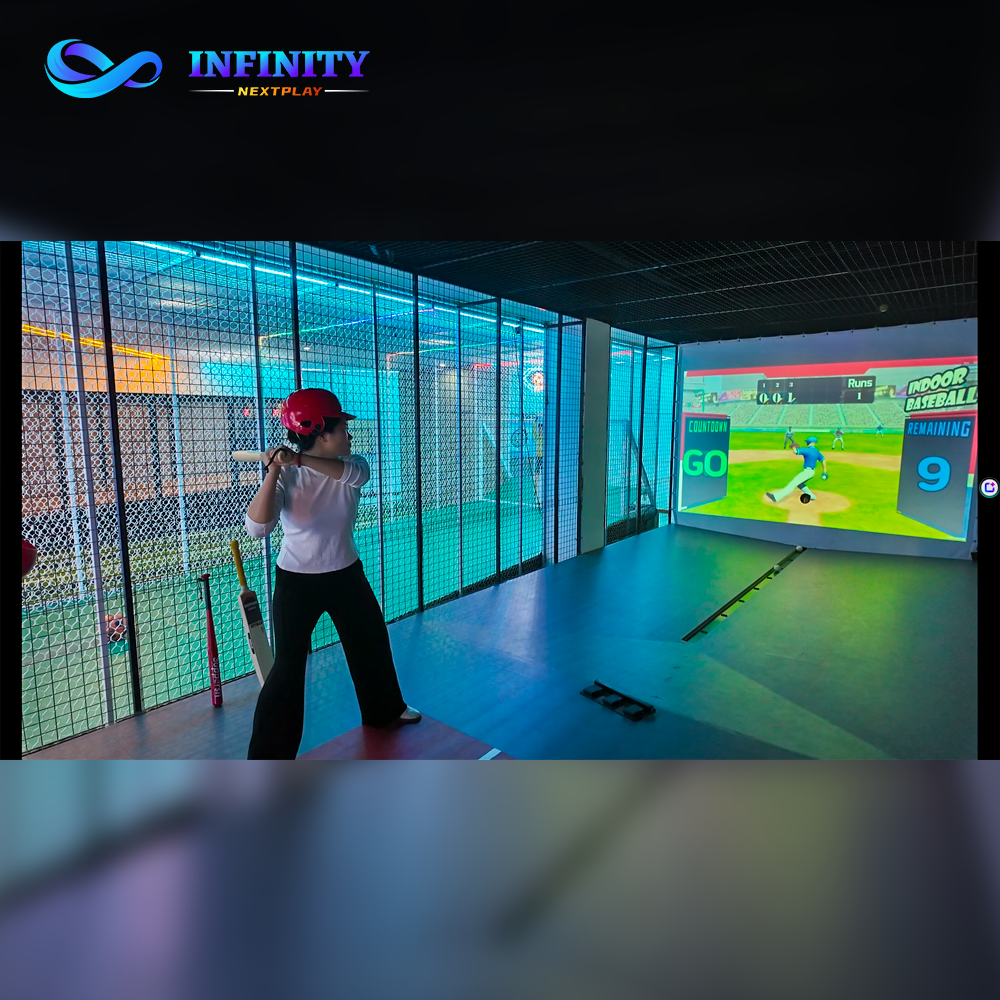
The Immersive Indoor Baseball Batting Simulator was our third and final core attraction purchase. We added it specifically to capture the sports enthusiast demographic — people who might not be interested in VR or shooting games but love the challenge of batting practice. The simulator uses high-speed sensors to track ball velocity and trajectory in real time, projecting a realistic game environment on a large screen.
The batting simulator has been a surprisingly strong driver of group bookings and social media exposure. Players love sharing videos of their best hits, and the screen's spectator mode turns each at-bat into a mini-event. It generates approximately $11,500 per month, making it our second-highest revenue attraction after the VR Arena. The key driver is that the batting simulator attracts a different customer segment — sports teams, baseball enthusiasts, and families with kids who play Little League.
We price batting sessions at $20 for 15 pitches, and the average player goes through 3-4 sessions in a visit. The simulator offers multiple difficulty levels — from slow pitch for beginners to 90-mph fastballs for experienced players — ensuring that everyone from kids to former college athletes can enjoy the experience. We've also introduced a "Home Run Challenge" promotion where players who hit 5 home runs in a session get a free drink, which has significantly increased food and beverage sales at our adjoining bar area.
The batting simulator's reinforced hitting cage ensures safety, and the automated ball feeding system means only occasional supervision is needed. During our first year, the simulator has required minimal maintenance — primarily cleaning the projection screen and replacing worn baseballs ($50 per month). The system's high-speed cameras and tracking sensors are enclosed in durable housings that withstand continuous use.
FEATURED PRODUCT
Immersive Indoor Baseball Batting Simulator
High-speed sensor tracking, HD projection, and reinforced hitting cage. Our second-highest revenue attraction driving $11,500 monthly.
- High-speed sensor tracking for ball velocity & trajectory
- HD projection with realistic game environment
- Multiple difficulty levels (slow pitch to 90mph)
- Spectator mode — turns each at-bat into a social event
- Reinforced hitting cage for safety
4. The Synergy Effect — Why Three Attractions Work Better Than One
The real magic of our venue is not any single attraction — it's how they work together. We've observed that groups typically start with the VR Arena (the most novel and immersive experience), rotate to the shooting simulator for competitive fun, and end with the baseball batting simulator as a casual group activity. This natural flow keeps groups in our venue for an average of 2.5 hours, compared to 45-60 minutes for single-attraction venues.
Longer stays directly translate to higher per-person spending. Our average customer spends $45 on gameplay plus $18 on food and beverages, for a total of $63 per visit. Compare this to single-attraction venues where average per-person spending is typically $25-$30. The multi-attraction approach effectively doubles revenue per customer while keeping operational costs nearly flat — the same front desk staff, cleaning crew, and management team can support all three attractions.
Group bookings have been our fastest-growing revenue channel. Corporate team-building events, birthday parties, bachelor parties, and sports team celebrations account for 35% of our monthly revenue. We offer structured packages that include 60 minutes in the VR Arena, 30 minutes at the shooting simulator, and 30 minutes of batting practice — priced at $55 per person for groups of 8 or more. The average group books 12 people, generating $660 per event. We host 15-20 such events per month, contributing $9,900-$13,200 to our monthly revenue.
The cross-attraction marketing effect has been significant. A customer who comes for VR and discovers the batting simulator becomes a multi-experience visitor on their next trip. Our data shows that 45% of customers who initially book a single attraction return within 60 days to try a different experience. This repeat visitation rate is 2.3x higher than the industry average for single-attraction FECs, and it directly contributes to our healthy 68% weekend occupancy rate.
Monthly Revenue Breakdown
$18,900
VR Arena 2.0
42% of total
$11,500
Batting Simulator
26% of total
$8,200
Shooting Q4
18% of total
$6,400
F&B + Other
14% of total
5. Investment, Costs, and Payback
Our total investment across all three attractions, including venue build-out, installation, and initial marketing, was approximately $520,000. The breakdown: VR Arena 2.0 ($180,000 including installation and game library), Shooting Simulator Q4 ($65,000), Baseball Batting Simulator ($95,000), and venue build-out, furnishings, bar area, and permits ($180,000).
Monthly operating costs total approximately $16,500: labor ($7,200 for 3 full-time and 4 part-time staff), rent ($4,500), utilities ($1,200), equipment maintenance ($800), marketing ($1,200), insurance ($850), and miscellaneous ($750). With monthly revenue of $45,000, our net operating profit is approximately $28,500 per month — a 63% operating margin.
At this profit level, our initial investment of $520,000 is recovered in approximately 18 months. However, we project that as our venue matures and group bookings grow, monthly revenue will increase to $52,000-$55,000 by month 24, reducing the effective payback period to 14 months. For venue owners considering a similar investment, the key takeaway is that a multi-attraction strategy delivers significantly better ROI than a single high-cost attraction in isolation.
6. Lessons for Future Venue Owners
After our first year of operation, here are the most important lessons we've learned for anyone planning a similar entertainment venue. First, invest in the anchor attraction first and build around it. Our VR Arena was installed and running for two months before we added the other attractions, allowing us to refine our operational workflow and build a customer base before expanding.
Second, prioritize attractions with automated operation. Both the Q4 shooting simulator and the baseball batting simulator require minimal staff intervention, which keeps labor costs low and allows a small team to manage a large venue. Third, design your space for social viewing. Every attraction in our venue has a designated spectator area with seating, and the open layout means people naturally gather and watch — turning gameplay into a social experience that drives F&B sales.
Fourth, invest in a good POS and booking system from day one. We underestimated how important integrated booking would be for group events. By month 4, we implemented an online booking system that allows customers to reserve time slots for specific attractions, and this alone increased our group booking revenue by 60%. Fifth, build a loyalty program that rewards multi-attraction visits. Our "NextPlay Pass" gives customers a free session on their third visit, and 72% of pass holders try a different attraction on their return visit.
Finally, expect a ramp-up period. Our first three months were slower than projected as we built awareness and refined operations. Month 4 was when everything clicked — we hit $38,000 in revenue, and growth has been steady since. Patience and persistent marketing during the early months are critical to success. We recommend budgeting at least three months of operating costs before expecting to reach break-even revenue levels.
7. Conclusion
Building a multi-attraction entertainment venue with the VR Arena 2.0, Shooting Simulator Q4, and Baseball Batting Simulator has exceeded our expectations. The combination delivers $45,000 in monthly revenue, a 14-month payback period, and customer satisfaction scores that drive repeat visits and word-of-mouth growth.
What we've learned is that the whole is truly greater than the sum of its parts. Each attraction attracts a slightly different demographic, and together they create a venue that appeals to a broad cross-section of the community — from hardcore gamers to sports enthusiasts, from corporate teams to families. The cross-attraction synergy keeps customers on-site longer, spending more, and coming back for different experiences.
For venue owners considering their next investment, we recommend exploring the Infinity NextPlay full venue solution approach. Their team helped us design the optimal layout, select compatible attractions, and plan for future expansion. With the right mix of attractions and smart operational practices, a 300-square-meter venue can become a thriving business that serves its community and delivers strong returns for years to come.
Ready to Build Your Own Multi-Attraction Venue?
Get a free 3D layout for your space. No commitment required.