PREMIUM SPORTS CLUB EQUIPMENT - MEMBERSHIP STACK PLAYBOOK
What Equipment Does a Premium Sports Club Need to Justify Membership Dues? The Multi-Sport Stack Playbook
How membership tiers map to equipment stacks, where initiation and capital assessments pay for machines, and a 12-line operator checklist for Social, Sports, Full and Premium add-on clubs.
Tier dues ladders Capital vs operating Build order Leagues that renew Operator checklist
54.1%
Dues Share of Club Operating Revenue (CMAA 2021)
83%
Say Lasting Memories (KAM May 2025)
$25/mo
Harbour Capital Fund Fee from 2026-03-01
4 Tiers
Social / Sports / Full / Premium
1. Why Dues Buy Rights, Not Just Access
If your renewal conversation keeps sliding into discounts, the problem is rarely the price. It is that the floor looks exactly the same every month. Members do not renew for a photo wall of treadmills nobody touches. They renew when dues map to privileges they can name on a Tuesday night: a booking window that opens before the public, a league that posts a leaderboard, a lounge that still works when they are not playing, and a bay that feels like status rather than a rental. That is the premium sports club equipment question in one sentence: every machine either unlocks a right or it is furniture.
A premium sports club is a membership product first and a gym second. The Club Management Association 2021 Finance and Operations Executive Summary puts membership dues at about 54.1 percent of club operating revenue, with a full family median annual dues of 7,140 dollars across all clubs (7,878 for golf and country clubs; 4,828 for city and athletic clubs). If dues are more than half the P and L, the machines members see, book and compete on are not decoration - they are the product line that either justifies the next increase or invites the next cancellation. Premium sports club equipment only earns its place on the balance sheet when it shows up in that renewal math.
The competitive socialising data says the same thing in consumer language. KAM Competitive Socialising Customer Insight Report (May 2025) reports 83 percent saying the format gives more lasting memories and 76 percent feeling closer to their friends. Multi-attraction beats single-sport when time is short in the same research line our full-venue planning already deep-links. Read that as an operator: if your Social tier is only a small gym and a code on the door, you are selling access. If your Sports tier runs scored nights on machines people can watch, you are selling rights.
| Club |
Tier ladder (initiation / monthly dues as published) |
What the ladder unlocks |
| Lakewood Ranch Golf and Country Club (2026 packet) |
Top golf tier 95,000 / 1,360; Sports 15,000 / 430; Social 6,000 / 185 |
Amenities gated by tier: golf courses vs tennis, pickleball, fitness, aquatics vs dining and social |
| River Hills Country Club (2026 guide) |
Full 20,000 / 635; Sports 12,000 / 399; Social 6,000 / 288 |
Tee-time advance days scale 7 / 5 / 3 by tier |
| The Club at Midtown (Wilmington, 2026-09-11 page) |
One-time 15,000; Gold 425 per month |
Courts plus simulators; 60-day risk-free initiation refund less 250 |
| Packers Athletic Club |
Green 134; Gold 169; initiation 79 for all |
Gold gates Recovery Suite appointments (8 per month) vs Green base access |
| Sporting Club at The Bellevue (spring offer) |
Club 205 + 425 initiation; Executive 375 + 675 |
Executive adds private locker lounge; golf simulator reservation is an additional fee even for members |
Dues ladder source and date: Lakewood Ranch 2026 Membership Packet, River Hills 2026 Membership Guide, The Club at Midtown page dated 2026-09-11, Packers Athletic Club published rates, Sporting Club at The Bellevue spring offer page - all read 2026-09-23. NextPlay publishes no dues schedule of its own; every figure above is a named club as printed.
Two patterns jump off that table before any machine is chosen. First, initiation and monthly dues move together but not proportionally - Social clubs can open at five figures of initiation while top golf tiers ask six. Second, the perks that survive scrutiny are time and status: longer booking windows, gated recovery suites, members-only lounges. Machines enter the story when they create those perks (a priority lane, a scored night, a bay that members book before the public), not when they simply fill square footage.
Put against our own cluster: model comparison between membership and pay-as-you-go is already covered in membership versus pay-as-you-go retention; how to open a general social sports club sits in how to build a social sports club in 2026. This page is the missing middle - which equipment family belongs in which tier, and which capital lever is supposed to write the cheque for the machines.
Operator rule in one line: if you cannot point at a machine and say which tier it serves, which privilege it unlocks, and which funding lever paid for it, it is not ready for the dues conversation.
2. The Four-Tier Equipment Map
Members notice four things long before they notice square footage: can I play, can I see a score, can I book before everyone else, does this place feel like a club. Map every machine to those four signals and the tier structure writes itself. The matrix below is the premium sports club equipment build sheet - default stack by tier, and the metered exception that protects Premium add-on economics.
| Tier |
Member promise |
Default equipment stack |
Metered exception |
| Social |
Lounge floor that works even when nobody is competing; free play hours that build habit |
Dual-screen electronic dart machines (spectator effect while others throw); low-friction practice stations |
None at open - Social is habit, not gold-mine capacity |
| Sports |
Scored leagues, visible rankings, events members bring friends to |
Commercial two-lane string bowling (leaderboards); archery system with automatic voice scoring and dual display; online dart rankings (X7 class) |
Peak tournament nights can be members-first without metering hours |
| Full |
Anchor capacity plus the longest booking window (River Hills 7 / 5 / 3 day pattern) |
String pair upgraded toward full depth or standard 10-pin hybrid; priority booking on lanes and courts |
Guest passes priced above member rate (Dockside 12 vs 16 pattern) |
| Premium add-on |
Paid bay hours and status experiences that never feel included by default |
AR golf hit bay (7 x 12 x 4 m class, dual high-speed cameras); premium event rooms |
Bay hours metered even for members - Bellevue simulator reservation fee pattern |
Tier names and meter pattern: synthesis from the research dossier read 2026-09-23 (Lakewood Ranch, River Hills, Bellevue, Pulaski Sportsplex Essential / Plus / Elite). First-party machine specs from NextPlay catalog: string 3.45 x 26 m full class with short 9.7 to 13 m options; archery A6 auto voice scoring dual display 1v1 online; dart X3 W65 T60 H250 cm dual 19-inch LCD 110 W; AR golf full set hit bay 7 x 12 x 4 m six players 3000+ FPS.
Why dual-screen darts sit on Social, not Premium: the dual high-definition screens create a spectator wall. People who are not throwing still watch. That is lounge gravity, and lounge gravity is what keeps a Social member on property long enough to upgrade into Sports when a league night opens. Premium would meter that same machine and kill the free habit loop - wrong lever for the wrong tier.
Why scored bowling and archery sit on Sports: leagues need published scores, not vibes. Automatic voice scoring and dual displays turn a practice hit into a match someone can film. Online global play on the dart class extends a Tuesday night beyond the four walls. Sports members renew because the calendar has their name on a board.
Why the bay stays Premium and metered: Bellevue still charges a simulator reservation fee to members. That is not hostility - it is protecting the one machine whose cost per hour is highest and whose scarcity creates status. If you give bay hours away inside Full, Full becomes your new ceiling and Premium has nothing left to sell.
Footprint honesty before you fall in love with the matrix: full-depth string lanes want the long dimension; the short class (about 9.7 to 13 m) is what lets a multi-sport floor keep a bowling anchor without surrendering the lounge. Zone math and square-footage planning already live in how to plan a sports hall full-venue solution and how to plan a multi-attraction indoor entertainment venue - this page does not re-derive meters; it assigns tiers. For premium sports club equipment selection inside those zones, keep the tier home from the matrix above and treat depth class as a constraint, not a preference.
Pulaski County Sportsplex (release 2026-07) is the clean three-tier proof that equipment can split without confusing members: core cardio, strength, track, pickleball and gym open to Essential / Plus / Elite; Plus adds member lounge and premium lockers with towel service; Elite adds unlimited group fitness, InBody scans and a Family Play Care Pass. Same building, different rights - the machines do not change tier, the privileges do.
Inline anchors for the Sports stack if you are specifying this quarter: archery system with automatic voice scoring for the league floor and dual-screen dart machines for the Social lounge that still earns when nobody is competing. Full product hrefs for the membership stack sit in the hardware section at the end of this page.
3. Capital vs Operating: Where the Machine Budget Comes From
The dues table above shows what members pay. This section shows what the building pays. Clubs that confuse the two end up either under-investing in the stack (members notice) or stuffing five-year machine capex into monthly operating dues (members resign at the first increase). The published mechanisms cluster into four levers.
| Funding lever |
Named example |
What it is meant to pay for |
Member friction |
| Initiation matched into capital |
Cincinnati Sports Club Club Vision 2040: each initiation dollar received is matched by local owners and invested back into the club experience |
Capital improvements, including visible equipment refresh |
High entry, lower annual surprise |
| Separate capital assessment |
Bear Hill Golf Club 2026: annual capital assessment, golf family 60 dollars per month (720 per year), social family or individual 30 dollars per month (360 per year) |
Buildings and machines on a multi-year clock |
Transparent line item members can see working |
| Capital fund fee inside dues |
Harbour Club State of the Club Spring 2026: from 2026-03-01 all membership levels include a 25 dollar monthly Capital Fund Fee solely for capital projects, after more than 800,000 dollars reinvested in 2025 |
Named fund, not a vague dues creep |
Small, continuous, easier than a surprise assessment |
| Operating dues share |
CMAA 2021: membership dues about 54.1 percent of club operating revenue; full family median 7,140 dollars |
Run rate: staff, utilities, consumables, routine service |
Every unsourced capex stuffed here shows up as churn |
Capital lever sources read 2026-09-23: Cincinnati Sports Club Club Vision 2040 statement; Bear Hill Golf Club 2026 dues, initiation and capital assessment schedule; Harbour Club State of the Club Spring 2026; CMAA 2021 Finance and Operations Executive Summary. GCMA Kevin Fish (2024-02-06) frames the same trade for UK clubs: a typical 500-member club with about 6 percent resignation and roughly 30 joiners per year can treat a 1,000 pound entry fee as about a 30,000 pound capital pot, or an all-member 250 pound annual as about 125,000 pounds - entry fees funding reinvestment.
Cincinnati is the sentence to steal for your board deck when someone asks why initiation is high: the initiation fees finance capital improvements, and each dollar is matched and reinvested. That is not marketing fluff - it is a capital policy. Bear Hill does the same thing as a visible monthly line. Harbour Club folded a named Capital Fund Fee into every membership level so the 25 dollars never disappears into operating. Pick one lever, publish it, and let the machines show up on schedule.
What operating dues should not carry: the five-year AR golf bay, the second string pair, the LED refresh on the lounge wall. Those are capital events. CMAA also shows dues growth of roughly 3 percent from 2019 to 2020 in the same executive summary - if machine capex keeps riding the operating line, your increases will outpace member perception of a better floor. Older framing still useful as a shape check: a 2016 country club income mix had dues at 53 cents, food and beverage at 31 cents, golf at 13 cents and other sports at 3 cents of every revenue dollar (print as 2016).
Athletic Business fee-setting guidance dated 2014-10-02 (label the year) still describes the ladder honestly: low-priced clubs around 10 to 20 dollars per month with limited equipment, mid-market 30 to 70 as features add, high-end saunas and plush lockers toward 100 dollars per month, with enrollment fees mirroring the monthly structure and high-end clubs keeping high enrollment for exclusivity. Premium sports club equipment is the feature column that justifies climbing that ladder - not the lobby plants.
GAP honesty line, print it in your internal diligence if not on the page: NextPlay sells equipment, not memberships. We publish no dues schedule. Every dues, initiation and assessment figure on this page is a named third party as printed on 2026-09-23. If a number has no name, it does not ship.
Board test: name the capital lever before you name the machine. Initiation match, separate assessment, named fund fee, or (weakest) operating dues. If the answer is only dues, expect members to price the next machine into their renewal math.
Related build finance context for the full venue, including why zone sequencing protects cash, is already on the site in the social sports club venue guide - keep capital policy here, full-venue sequencing there.
4. Build Order by Footprint and Member Perceived Value
Capital approved, matrix agreed - now sequence the buy. Two clocks run at once: footprint you can actually build (depth, ceiling, power) and perceived value members feel in week one. The order below optimises both. It is the default build order we specify for a membership multi-sport floor under capital discipline, and it is the premium sports club equipment purchase sequence we hand operators who ask where the first cheque should clear.
| Step |
Machine |
Footprint class (first-party) |
Tier home |
Why members feel it |
| 1 |
Commercial two-lane string bowling |
Full 3.45 x 26 m class; short options about 9.7 to 13 m |
Sports / Full anchor |
Visible anchor people photograph; leaderboards feed leagues |
| 2 |
Dual-screen electronic dart machines (X3 class) |
W65 x T60 x H250 cm; 110 W; dual 19-inch LCD |
Social lounge |
Spectator effect when nobody is throwing - lounge gravity |
| 3 |
Scored archery or online dart system (A6 / X7 class) |
A6 auto voice scoring dual display 1v1 online; X7 global play auto scoring |
Sports leagues |
Published scores and rankings - the renewal calendar |
| 4 |
AR golf hit bay (full set class) |
7 x 12 x 4 m; six players; 3000+ FPS dual cameras |
Premium add-on metered |
Status bay - scarce, bookable, never assumed free |
| 5 |
Optional 10-pin or expanded string capacity |
Standard 10-pin lane 22 to 26 m; accelerated return 7 to 8 s |
Full / hybrid public plus member |
Capacity for peak and events once dues ladder is live |
Footprint and spec sources: NextPlay first-party product specifications and sports hall research (2026-09-14) read again 2026-09-23 for this page. Depth classes are catalog ranges, not a site survey - confirm against your slab and column grid before ordering. Free 3D layout remains the planning step, not a contract.
Step 1 first because the string pair is the only machine that is both a photo object and a scoring object at once. Short class keeps the lounge intact; full class becomes the Full tier statement when depth allows. Step 2 before more scoring hardware because Social churn kills Sports before Sports ever starts - dual screens give the lounge a reason to stay after work even on nights with no league.
Step 3 is the dues engine. Auto voice scoring and dual displays turn practice into match footage. Online global play on the dart class means a member in a secondary city still feels attached on travel weeks. If capital is tight, swap A6 for A4 practice lanes and add X7 online nights - the principle is scored visibility, not one SKU.
Step 4 only after the dues ladder publishes a Premium add-on line. AR golf is the highest cost-per-play bay in the stack and the easiest to give away by accident. Bellevue still meters simulator reservations for members; copy that fence before the bay opens, not after members have habituated to free hours.
Step 5 is capacity, not identity. Add 10-pin or expand string lanes when booking windows are already full and members are complaining about scarcity - scarcity that never resolves becomes resentment; scarcity with a published expansion plan becomes status for Founding members. Full venue zone sequencing (which wall moves before which machine lands) is in designing around customer flow and the multi-attraction planner above.
Planning services that belong in this step, not in a hard sell mid-paragraph: venue planning that evaluates your available space and a free 3D layout design. Use them to test depth class and lounge adjacency before the capital packet goes to the board. When the layout is locked, the three product cards below are the exact hrefs we would put on a membership-floor purchase order: Commercial 2 Lane String Bowling, the archery scoring system, and the online dart class.
Power and ceiling notes that gate steps: dart walls want clean circuits and sightlines; string pairs want depth and return paths; AR bays want camera clearance and acoustic separation from the lounge. None of that belongs in dues policy - all of it belongs in the order of operations so a late discovery does not push step 4 into step 1 budget.
5. Programming That Renews Dues (Equipment Is Not Enough Alone)
Machines do not renew memberships. Calendars do. The same two-lane string pair can be a photo prop or the reason a Sports member does not cancel in March - difference is whether you published a league, posted a leaderboard, and gave Social a free reason to watch. Programming is where the tier map stops being a spreadsheet and starts being a Tuesday night.
Scored machines are the minimum viable programming surface: string bowling leaderboards, archery automatic voice scoring with dual display, online dart rankings that extend past closing time. Publish the night. Protect the board. Film the final. None of that requires another machine - it requires an owner of the calendar.
Hour-bank memberships are the access model when you do not want open-ended free play. McDivot's Indoor Sports Pub publishes Club membership at 3,500 dollars per year for 100 simulator hours then 25 percent off hourly, Junior at 1,000 dollars for 50 hours, and Founding at 10,000 dollars lifetime for ten seats. That structure tells members exactly what dues buy and tells you what a heavy user actually costs. Dockside Entertainment publishes the price fence in the other direction: member lane rates at 12 dollars per hour versus non-member 16 dollars Monday to Thursday (shoes in), multi-sport sim member 20 versus 30 - access rights with a discount, not a blank cheque.
PowerPlay Indoor Sports lists Individual at 150 dollars per month and Team at 275 with unlimited rentals through a member portal, lesson and clinic discounts and 5 to 20 percent retail - rights stacked on top of access. T's Sports Club keeps memberships limited and gives golf members any three simulators plus a putting area while all members get The Lounge with cornhole, darts and Golden Tee. Different machines, same principle: the lounge is shared, the scarce hours are gated, the community is scheduled.
Archery GB club guidance names the failure mode out loud: downtime that does not feel social leaves a group that feels like "a group of people that shoot arrows" rather than a club. That quote is the brief for Social tier programming. If the dual-screen dart wall has no house tournament and no watchable feed, you bought furniture, not a club asset.
Volume proof when the board asks whether multi-attraction membership works at scale: Albatross Entertainment reported more than 360,000 guests, more than 210,000 mini-golf rounds and 200,000 bowling games in its first year (Amusements and Attractions, 2026-08-14). Hollywood Bowl opened its first XL in Cardiff (2026-07-20) with 20 lanes, interactive darts, electric go-karting, pre-bookable VIP lanes and premium diners and bars. Spinners raised 4 million pounds (The Caterer / H and C News, 2025-06-05) across bowling, crazy golf, darts, shuffleboard and virtual clay shooting. Poolhouse took 34 million dollars seed (Morning Advertiser, 2025-04-14) near Liverpool Street. Capital follows stacks that program; single-machine clubs do not get those rounds. Research access for every figure on this page: 2026-09-23 unless a publication date is printed next to the number.
Where revenue model sits beside membership: why multi-attraction venues out-earn single-attraction floors - deep-link the model, keep programming tactics here.
Renewal test: write next month's league schedule before you write next year's dues letter. If the calendar is empty, no matrix table will save the increase.
6. What Not to Put in the Base Tier Plus a 12-Line Operator Checklist
Base tier fails in two ways: it promises gold-mine capacity it cannot staff, or it decorates with machines nobody programs. Protect Social as habit, Sports as scored calendar, Full as capacity and window, Premium as metered status. Then run the checklist before the dues packet ships.
Do not put the bay in base. Bellevue charging a simulator reservation fee even to members is the published pattern. Do not put decorative-only cardio in the dues justification - contrast KAM's most loved games order as printed: arcades first, ten-pin bowling second, crazy or adventure golf third, darts seventh (May 2025 report). Members renew for playable, watchable, bookable equipment. A row of unused machines is not a premium signal; it is a maintenance line waiting for a story.
Do not give Premium away inside Full by accident. Unlimited bay hours, unlimited guest passes on the anchor lanes, or booking windows that collapse to parity all erase the ladder. River Hills scaling tee advance 7 / 5 / 3 days is the clean example: same club, different rights, no confusion about who paid for what.
- Write a one-sentence member promise for each of Social, Sports, Full and Premium add-on.
- Map every machine to exactly one tier home plus its metered exception, if any.
- Name the capital lever before the machine list: initiation match, capital assessment, named fund fee, or (weakest) operating dues share.
- Put scored machines on a public league calendar in week one - leaderboard owner named.
- Set the member versus non-member rate fence (Dockside 12 versus 16 pattern) and publish it at the door and on the app.
- Write a guest policy that protects status without killing FOMO - priced guests beat banned guests.
- Meter premium bay hours before opening, not after members habituate (Bellevue simulator fee pattern).
- Design a lounge floor that still works when nobody is playing - dual screens, sightlines, soft F and B.
- Give Full the longest booking window that scales down by tier (River Hills 7 / 5 / 3 pattern).
- Use a named dues comparator from a real club; never invent a NextPlay dues schedule.
- Print a GAP line wherever a number lacks a named source and date.
- Book the free 3D layout and WhatsApp the layout questions early - low pressure, high information.
One more boundary: capacity machines that only run on events (large team nights, corporate archery) can live in Sports as events rather than open hours - that keeps operating dues honest while still filling the calendar. Member versus non-member economics for walk-in style venues also publish mandatory memberships as access tickets (for example Danvers Indoor Sports at 50 dollars individual / 80 dollars family annually funding admin and facility and equipment upkeep, with a member walk-in rate framed at 15 dollars per hour) - useful when Social tier is open access with a paid key rather than a country-club ladder.
Checklist synthesis from the research dossier (access 2026-09-23): Pulaski Sportsplex tier split 2026-07; Bellevue meter; Dockside rates; River Hills windows; Bear Hill and Harbour capital levers; CMAA dues share; KAM May 2025 game order; Archery GB social failure quote; Sport80 framing that retained members are the consistent dues stream (no percentage claimed).
If you want the full venue flow version of layout and customer path - queues, lounge adjacency, how people meet the machines - start with how to design a venue around customer flow rather than re-reading it here. Membership versus pay-as-you-go model comparison stays in membership versus pay-as-you-go retention; this page owns the tier-to-machine map only.
| Checklist line |
Publishable signal |
Named pattern |
| Member promise per tier |
One sentence a member can repeat |
Social habit / Sports scored calendar / Full window / Premium metered bay |
| Capital lever named |
Board line before machine list |
Cincinnati initiation match; Bear Hill assessment; Harbour Capital Fund Fee |
| Rate fence published |
Member vs guest at the door |
Dockside 12 vs 16 Mon-Thu |
| Bay metered |
Premium never assumed free |
Bellevue simulator reservation fee even for members |
| League calendar live |
Scored machines get an owner of the calendar |
String leaderboards; A6 voice scoring; X7 online rankings |
| Booking window scales |
Full longest, Social shortest |
River Hills tee advance 7 / 5 / 3 days |
Checklist table synthesised from the research dossier (access 2026-09-23). Patterns are published by the named clubs and operators; this page does not invent a NextPlay dues schedule.
Where Club Money Lands (Dues Share of Operating Revenue)
Membership dues (CMAA 2021)
54.1%
Food and beverage (2016 mix)
31%
Other sports (2016 mix)
3%
Sources: CMAA 2021 Finance and Operations Executive Summary (dues share of club operating revenue, read 2026-09-23) and a 2016 country club income mix (dues 53c, F&B 31c, golf 13c, other sports 3c of every revenue dollar - printed as 2016). Bars are percentage points of revenue, not a budget recommendation. The point for equipment: dues are the majority line, so the machines members renew for are product, not overhead.
Checklist exit test: every machine on the floor has a tier home, a privilege it unlocks, a capital lever that paid for it, and a calendar that shows it this month. Four yes answers or it does not go in the dues packet.
7. Premium Sports Club Equipment FAQ
The six questions that come up before the dues packet ships, answered with the named clubs and first-party specs from this page.
How much equipment does a premium sports club need to open?
Stack by tier and footprint, not by a wish list. Premium sports club equipment for a Social club can open with a lounge floor of dual-screen darts plus free play hours. A Sports tier adds scored machines that run leagues: a two-lane string bowling anchor and an archery system with automatic voice scoring. Full tier adds capacity and priority booking windows. Premium add-on holds the paid bay. The first purchase under tight capital is the short-footprint string pair plus the lounge darts, not the AR golf bay. Send the floor plan for a free 3D layout before the board packet freezes the depth class.
Which machine belongs in which tier?
Social owns the lounge floor (dual high-definition dart screens that still work when nobody is throwing). Sports owns scored leagues (string bowling leaderboards, archery auto scoring, online dart rankings). Full owns the anchor capacity and the longest booking window. Premium add-on owns the metered bay hours. Every machine gets exactly one tier home and, if it is gold-mine capacity, one metered exception.
Should dues or initiation pay for machines?
Initiation and capital levers should carry multi-year machine capex; operating dues should carry the run rate. Cincinnati Sports Club states that each initiation dollar is matched by local owners and invested back into the club experience. Bear Hill publishes a separate annual capital assessment (golf family 60 dollars per month; social 30). Harbour Club added a 25 dollar monthly Capital Fund Fee from 2026-03-01 solely for capital projects after reinvesting more than 800,000 dollars in 2025. CMAA puts membership dues at about 54.1 percent of club operating revenue - do not bury five-year machine depreciation in that line forever. Named clubs as published on 2026-09-23; NextPlay does not publish a dues schedule of its own.
Do members need unlimited free bay hours?
No. Unlimited hours erase the Premium add-on tier and train heavy users to treat your most expensive bay as included. Bellevue charges a simulator reservation fee even to members. Dockside fences value with a member rate of 12 dollars per hour against a non-member 16 dollars on Monday to Thursday. Meter the bay, publish the fence, and keep free hours on the machines that build habit rather than the machines that build your highest cost per play.
How do multi-attraction clubs keep members versus single-sport clubs?
Because members buy memory and social status, not access to one machine. KAM Competitive Socialising (May 2025) reports 83 percent saying competitive socialising gives more lasting memories and 76 percent feeling closer to friends. Albatross Entertainment printed more than 360,000 guests, more than 210,000 mini-golf rounds and 200,000 bowling games in year one (Amusements and Attractions, 2026-08-14). A single-sport club has one reason to show up; a stack has a calendar.
What is the first purchase if capital is limited?
Commercial two-lane string bowling in the short footprint class first - it is the visible anchor members photograph - then dual-screen darts for lounge gravity, then a scored archery or online dart system for leagues. Hold the AR golf bay until the dues ladder is live and a capital lever (initiation match, assessment, or fund fee) is writing the cheque for the bay rather than the operating budget.
8. Hardware for the Membership Stack
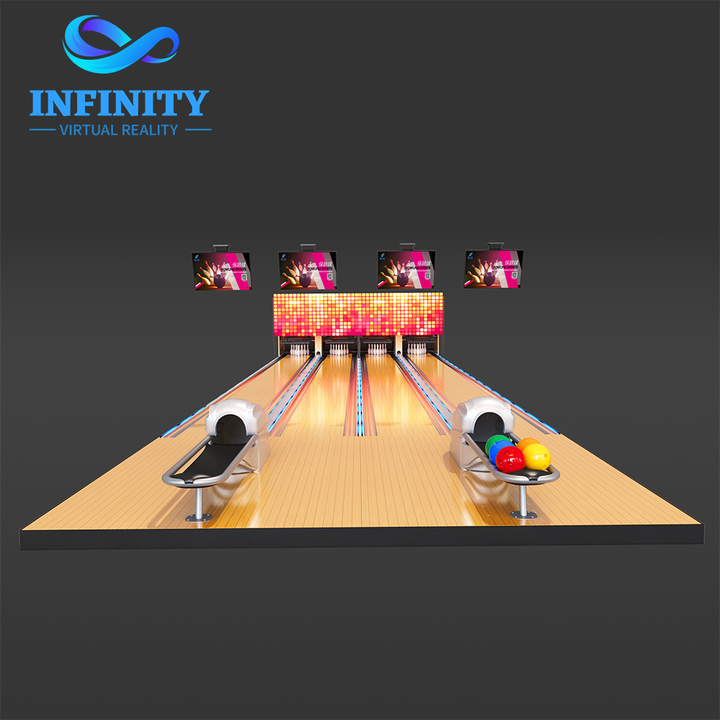
Sports / Full tier anchor
Commercial 2 Lane String Bowling Equipment for Indoor Entertainment Center Turnkey Project Solution Bowling Alley Supplier
Two-lane string bowling is the visible anchor members photograph and the leaderboard that feeds a Sports-tier league. Full class runs the long dimension; the short class keeps the lounge intact on a multi-sport floor.
View Details ›
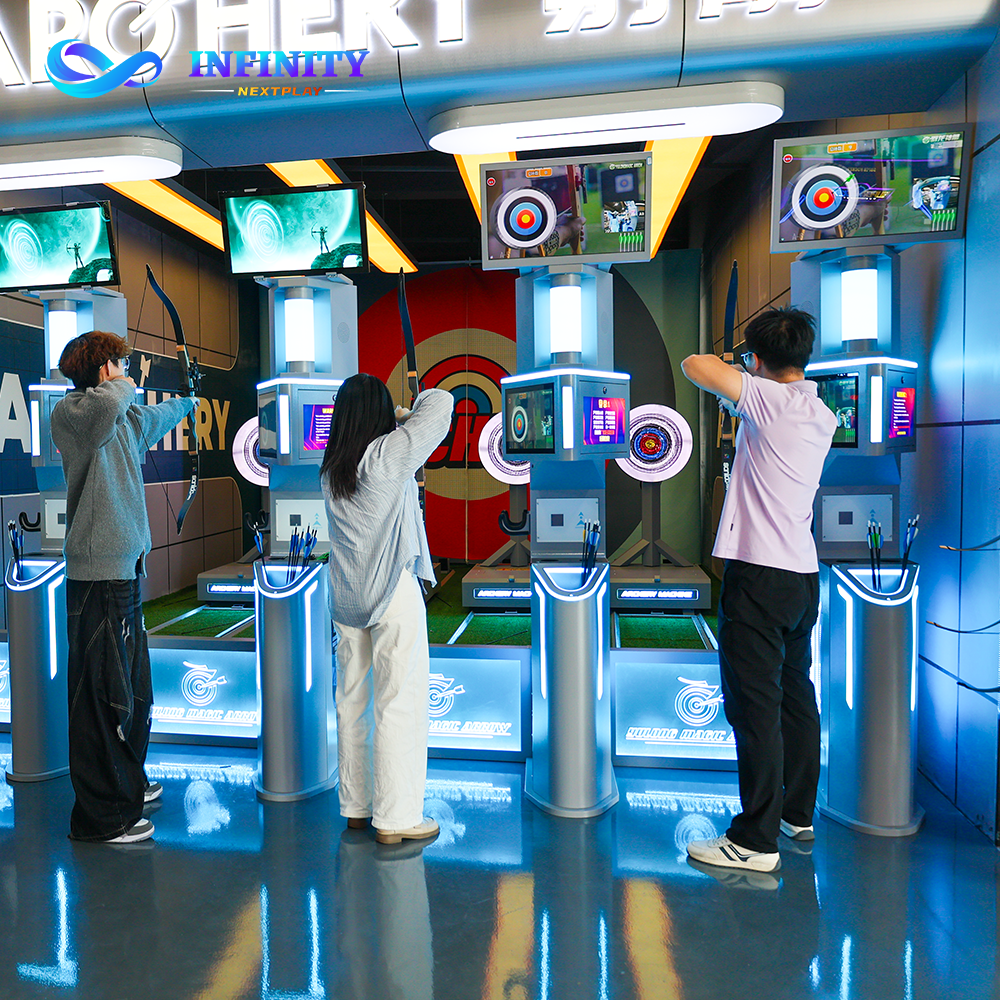
Sports tier scored calendar
Professional Arcade Archery System for Full Venue Solution - Auto Voice Scoring & Dual Display - Ideal for Large FECs and Amusement Parks - A6
Automatic voice scoring and dual display turn practice into match footage. One-to-one online play extends a Tuesday night past the four walls - the renewal calendar machines sit here.
View Details ›
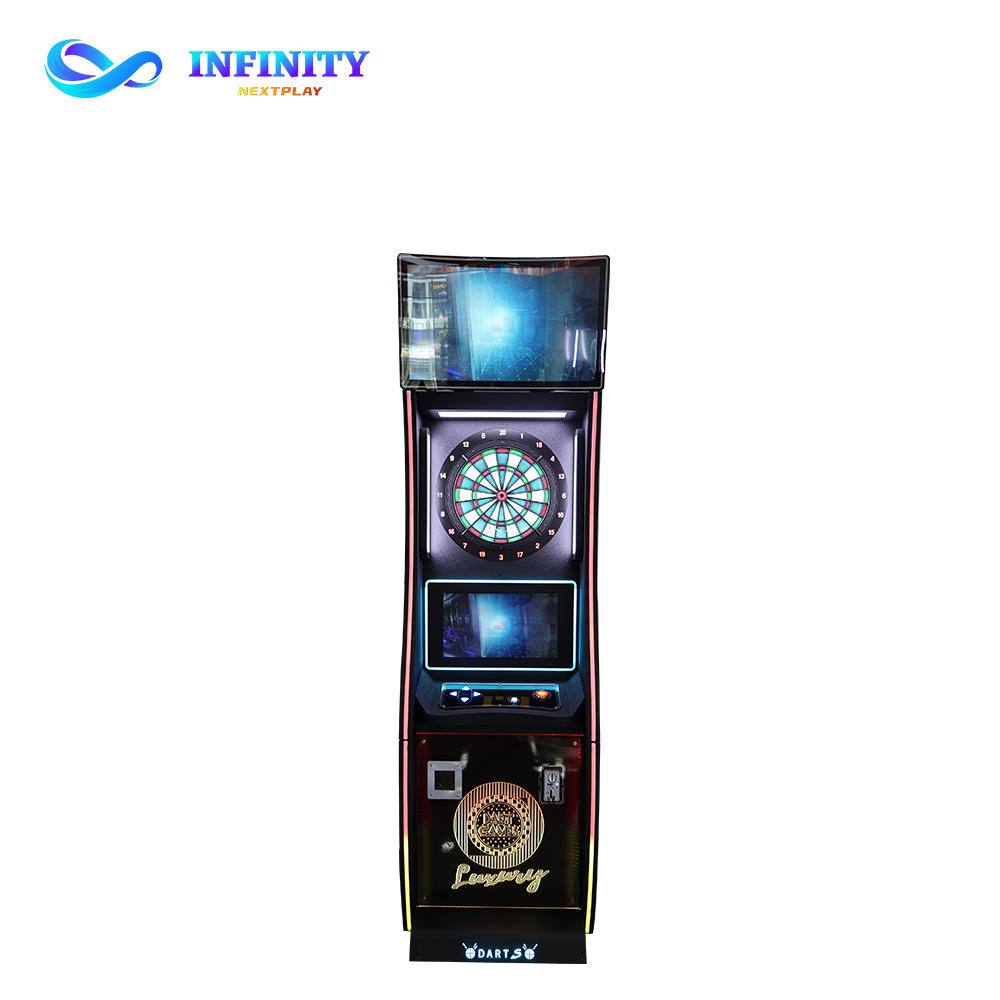
Sports league nights online
Online Electronic Dart Machine for Full Venue Solution - Global Play & Automatic Scoring - Ideal for Clubs and Competitive Gaming Venues - X7
Global play and automatic scoring keep rankings live after close. Pairs with dual-screen X3 lounge gravity on Social so the wall still earns when nobody is throwing.
View Details ›
Map Your Floor to a Tier
Send the footprint, the tier promises and the capital lever you plan to use: we will return the machine-to-tier map and the free 3D layout design so the dues packet matches the floor that members will actually walk.

