Two paths to a mini golf floor: factory-built relocatable holes or a poured custom build. This page compares calendar, budget shape, refresh and exit value, and names the five questions that break the tie.
A mini golf course reaches your floor down one of two paths. The system path is factory-built: holes manufactured to a standard language, shipped, assembled and playable as quickly as the freight schedule allows, and relocatable when the room changes its mind. The custom path is build-the-room: poured, painted, themed in place, unique on every line, and permanent in every sense the word carries. Both exist because both earn their floor in different buildings.
This page reads the two paths in the columns a budget and a lease actually decide on: how fast money turns into open lanes, how the cash flow lands, what the refresh story is, what the exit value is, and how much of the uniqueness a venue needs to buy on purpose. It ends at the honest middle-of-the-path note: many real floors are built as a system spine with a few custom moments layered on top.
The two columns are not virtues; they are trades. The table below states the trades, and the sections underneath put numbers and published pages on the rows that carry them.
| Column | Modular / factory system | Custom poured build |
|---|---|---|
| Calendar to open | Freight + assembly weeks; timeline owned by the factory schedule | Site works, paint and theme curing; calendar owned by trades |
| Budget shape | Equipment purchase quote + install; payment rhythm can buy evidence | Contractor spend over months; variable site-work surprises |
| Footprint fit | Published bands per hole (12-48 square meters), configurable to the room | Anything the room gives; uniqueness is the product |
| Refresh story | Swap or upgrade holes; game modes upgrade in software | Renovation project each time; theme locked in place |
| Exit value | Relocatable; holes move to a second site or reconfigure inside the lease | Asset lifts the room but stays; value ends at handover |
| Risk profile | Catalog risk (you can see it running); fewer surprises | Craft risk (does the builder run courses?); site surprises |
The calendar row is where the paths separate hardest, and it is the row our published pages measure directly. The construction-timeline page owns the full factory-to-opening sequencing for the system path (survey, manufacture, freight, install, handover), and the system path earns most of its budget-versus-timeline advantage exactly there: the factory builds during your lease negotiations instead of after them.
The budget row is where the paths trade shape rather than total. A system purchase lands as an equipment contract with a payment rhythm you can set to buy evidence at stages (the proposal-review page walks what to demand at each stage), while a custom build lands as contractor spend that accelerates in the months your room is dark and wet. Neither is cheaper as a rule; a price comparison only means something against a real quote, which the quote-comparison page owns.
The refresh row is the quiet winner for the system path in a multi-year lease. A factory course can swap or upgrade holes (our refresh page audits a course without replacing it), and game-mode upgrades land as software rather than renovations. The relocation row is the same point at lease end: our relocation page answers exactly what travels and what does not, and the honest summary is much of a modular course travels, which is exit value a poured build does not carry.
The uniqueness row is where the custom path earns its keep: a course built in place can wrap a ramp around a real pillar, put a waterfall past your bar, and use the room as part of the design. The theme-design page treats theme as a layout variable; this row renders it as a path decision: does the room itself carry design value worth building into the floor, or does the catalog read the room better than the room reads itself. Dense commercial-themed demand (tourism-heavy blocks, competitive formats) usually wants some of both.
Five questions break the tie for most venues, in the order they bite. Question one: does the lease term pay for permanence (a poured course under a two-year lease is a different product than under a ten-year one). Question two: does the opening date move (system path moves best). Question three: does the cash flow prefer a staged contract orpaced trades, which the quote-comparison page makes readable. Question four: does the floor pitch carry brand value worth building in place (theme-design conversation). Question five: does the room have site-work surprises (drainage, load, ceiling) that a contractor would price later and a factory plan prices now.
When the answers stack toward modular, the practical path is short: reserve the footprint against the published bands, close the contract through the proposal-review rows, and schedule the handover against the acceptance checklist. When they stack toward custom, the same three documents still apply, and the landlord or design-builder conversation moves into the room-specific site rows of those pages.
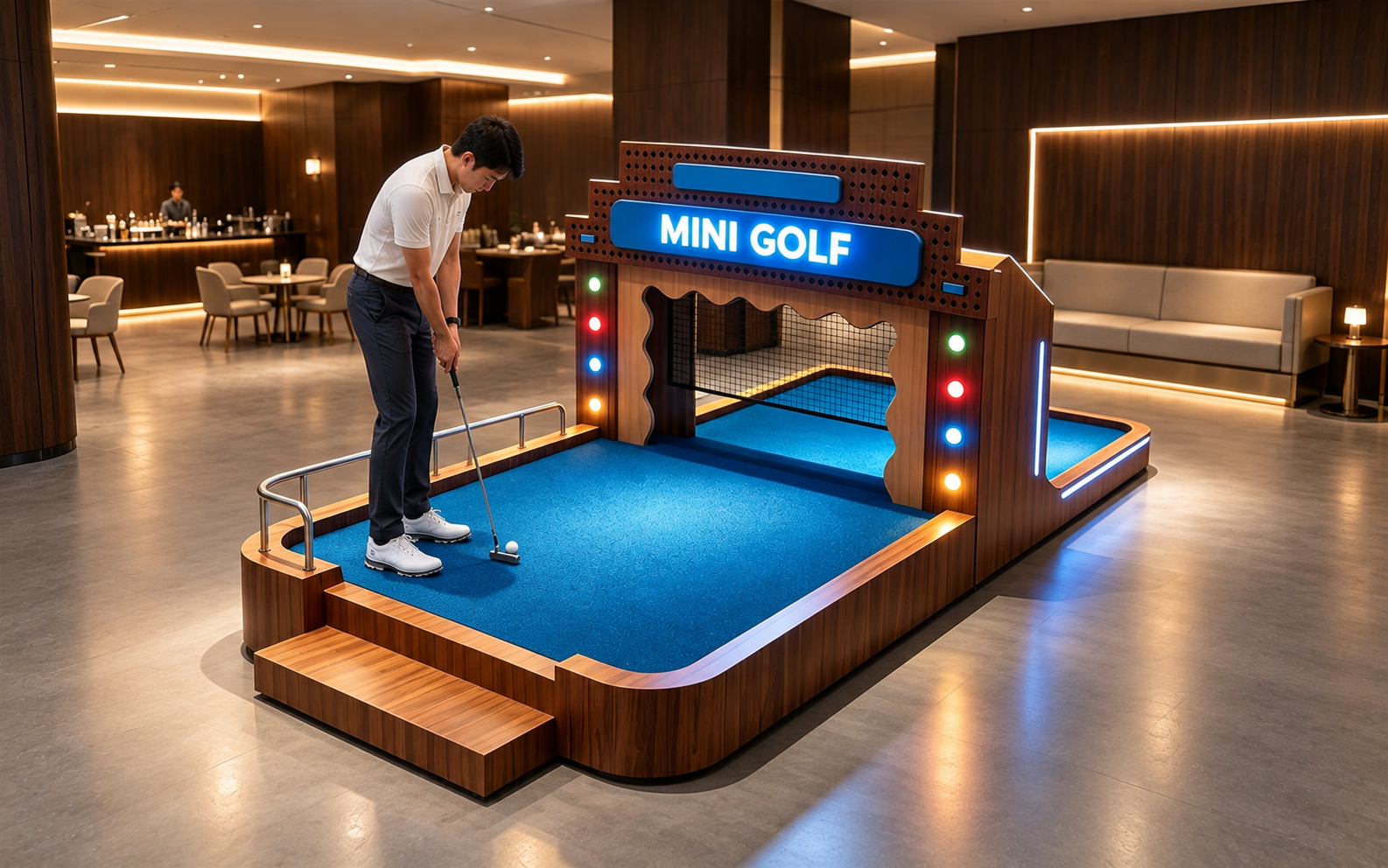
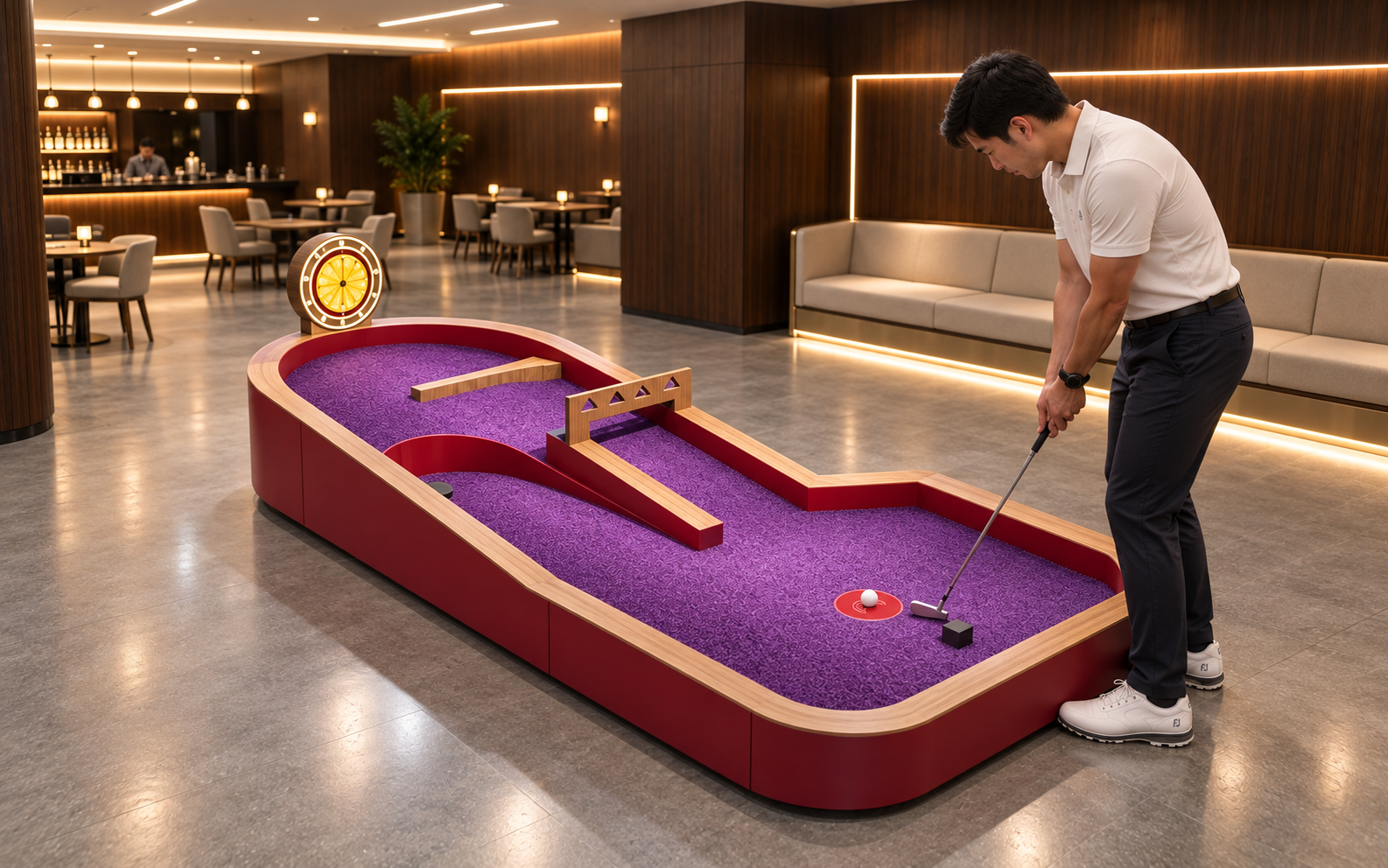
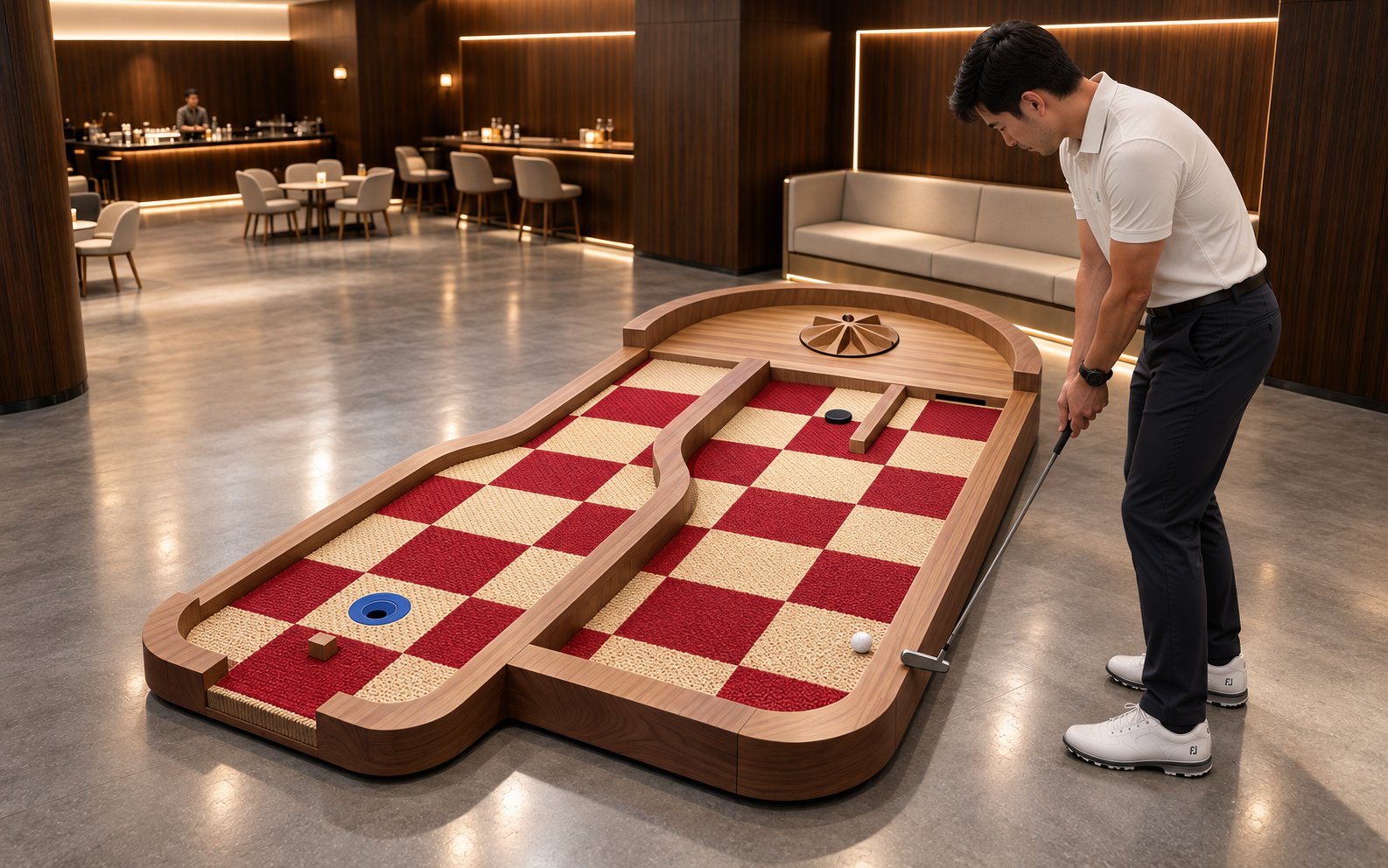
Three catalog holes make the system path concrete: the golf treasure hunt hole page shows how much theme a factory hole can carry before the word custom is even needed; the balance challenge hole page is the durable general-purpose hole most floors anchor their tier mix on; and the lucky disc golf hole page is the family-pace hole that keeps a mixed audience playing the same card. The indoor mini golf solution page walks what a system-tier project contains end to end, and the 3D layout service sizes it to your room.
Two boundaries. First, this page publishes no SKU price comparison between paths: prices only mean something against a quote, and the quote-comparison page owns that document line by line. Second, the relocation and refresh mechanics are owned by their own pages (cited above); this page reads them as decision columns, never as installation manuals.
The system path, by construction: the factory builds holes during your lease and paperwork window, then freight and assembly finish the calendar. A custom build moves at the trades' pace after your room is committed.
Less every year: factory holes now carry full theme treatment (our treasure-hunt hole is the proof), and the catalog tier mix reads as a designed course rather than a product row. The uniqueness trade is the real row to read, not the word generic.
Much of it travels: our relocation page owns exactly what moves and what stays, which is exit value a poured build does not carry. That answer is worth pricing into the decision before you sign.
Yes, and many strong floors do: a system spine with a few custom moments around the bar or the entrance. The planning question is which floor zones earn pouring, which is the footprint conversation.
Against a real quote rather than an article: the quote-comparison page walks the line-by-line columns that make two bids readable, whatever path each bid represents.
Send the floor plan and lease term, and our 3D layout service sizes the system path against your calendar, or frames the custom zones worth pouring.