MINI GOLF COACHING 3/3 - TEN MINUTES TO A REAL STROKE
Mini Golf Putting Technique: Grip, Stance and Stroke for First-Timers
Grip low-level-light, eyes over the ball, shoulders swing and the club stops at the ball: three checkpoints that stop three-putting within one round.
3 grip checkpoints Eye-line self-check Metronome two-beat stroke Finish at the ball 10-minute first-visit routine
3
Checkpoints (Grip/Stance/Stroke)
4/10
Grip Pressure (EXAMPLE)
2
Beats Per Putt (EXAMPLE)
10min
First-Visit Routine (EXAMPLE)
1. Ten minutes of technique, a whole round of payoff
Mini golf tolerates bad technique - the holes are short, the putters are forgiving, and everyone gets a lucky bounce. But the same tolerance hides the fastest upgrade in the game: a beginner who sets a neutral grip, a quiet stance and a shoulder-driven stroke usually stops three-putting within a single round. Nothing here needs practice greens or lessons; it needs ten minutes and three checkpoints.
The order matters: grip first (it shapes everything downstream), stance second (it makes the line visible), stroke third (it makes the pace honest). Reading the carpet and banking off walls - covered by the sibling guides in this series - only pay once the ball goes where you send it. This piece sends it there.
The promise, plainly: ten minutes on three checkpoints turns a flailer into a putter. Not a pro - a putter, whose first attempt at least threatens the hole.
2. Grip: low, level and light
Take the putter with both hands low on the grip, palms facing each other like clapping, thumbs running straight down the flat front of the shaft. Slide the bottom hand down until both arms hang relaxed - mini golf putters are long for adults, and a grip held high forces a hunched, arms-only stab. Check three things: palms level with each other, thumbs down, and grip pressure light - roughly a 4 out of 10 (EXAMPLE scale).
Why light wins: tension in the hands travels up the forearms and turns a smooth swing into a jab. The ball on carpet is light; it does not need force, it needs the face delivered square. The published scoring guide sees the scoreboard version of the same truth - stabbed putts rattle rims, and rim-outs are where casual rounds quietly bleed five strokes.
3. Stance: eyes over the ball, weight forward
Set your feet about shoulder width, parallel to the start line, with the ball slightly forward of center (opposite the back heel). Bend from the hips enough that your eyes sit directly over the ball - the fastest self-check is to drop a ball from your eye line and see if it lands on or beside the ball you are putting. Keep the putter head flat on the carpet and the shaft vertical; a leaned shaft aims the face somewhere else without telling you.
Weight favors the front foot slightly, which stills the hands and anchors the stroke to the big muscles. The published equipment guide notes that venue putters come in one or two lengths for everyone - so expect to adjust your stance to the club, not the club to your stance: bend a little more for a long putter, stand a touch taller for a short one. The published bars-format guide is built on beginners making this exact adjustment in under a minute between drinks and putts.
EXAMPLE backswing height vs putt distance (putter-head units)
EXAMPLE calibration: backswing grows with distance, tempo stays constant. Most short putts miss because the backswing was already too long.
4. Stroke: shoulders swing, wrists obey
The stroke is a pendulum: arms and shoulders form a triangle, the triangle swings back a set height, then swings through, and the club stops at the ball - no follow-through chase. Wrists stay out of it; they hold shape, they do not add speed. Count a two-beat rhythm on every putt - back on one, through on two - at the same tempo whether the putt is one meter or five; distance comes from backswing length, not from swinging faster.
| Checkpoint |
Self-check |
Common failure |
| Grip |
Palms level, thumbs down, light 4/10 pressure |
Strangle grip - tense jab putts |
| Stance |
Drop a ball from your eye line - it lands on the ball |
Eyes inside the line - aim lies to you |
| Stroke |
Two-beat tempo, club stops at the ball |
Long accelerating follow-through - rim-outs |
The finish-at-the-ball habit is the single change that most improves beginner pace control. A long accelerating follow-through is invisible on the backswing but lands the ball at the hole with escape velocity - and a ball that reaches the hole fast does not drop, it attacks the rim. The published capacity material prices this in rounds: first putts that finish near the hole are the difference between an hour round and an afternoon.
EXAMPLE first-visit practice split (minutes)
- Grip checkpoints 2
- Stance + eye line 3
- Metronome stroke on flat putts 5
EXAMPLE ten-minute session: run it on the first flat stretch of any course, then play. Two-beat tempo on every putt, backswing carries the distance.
5. The first-round routine, and where it meets the course
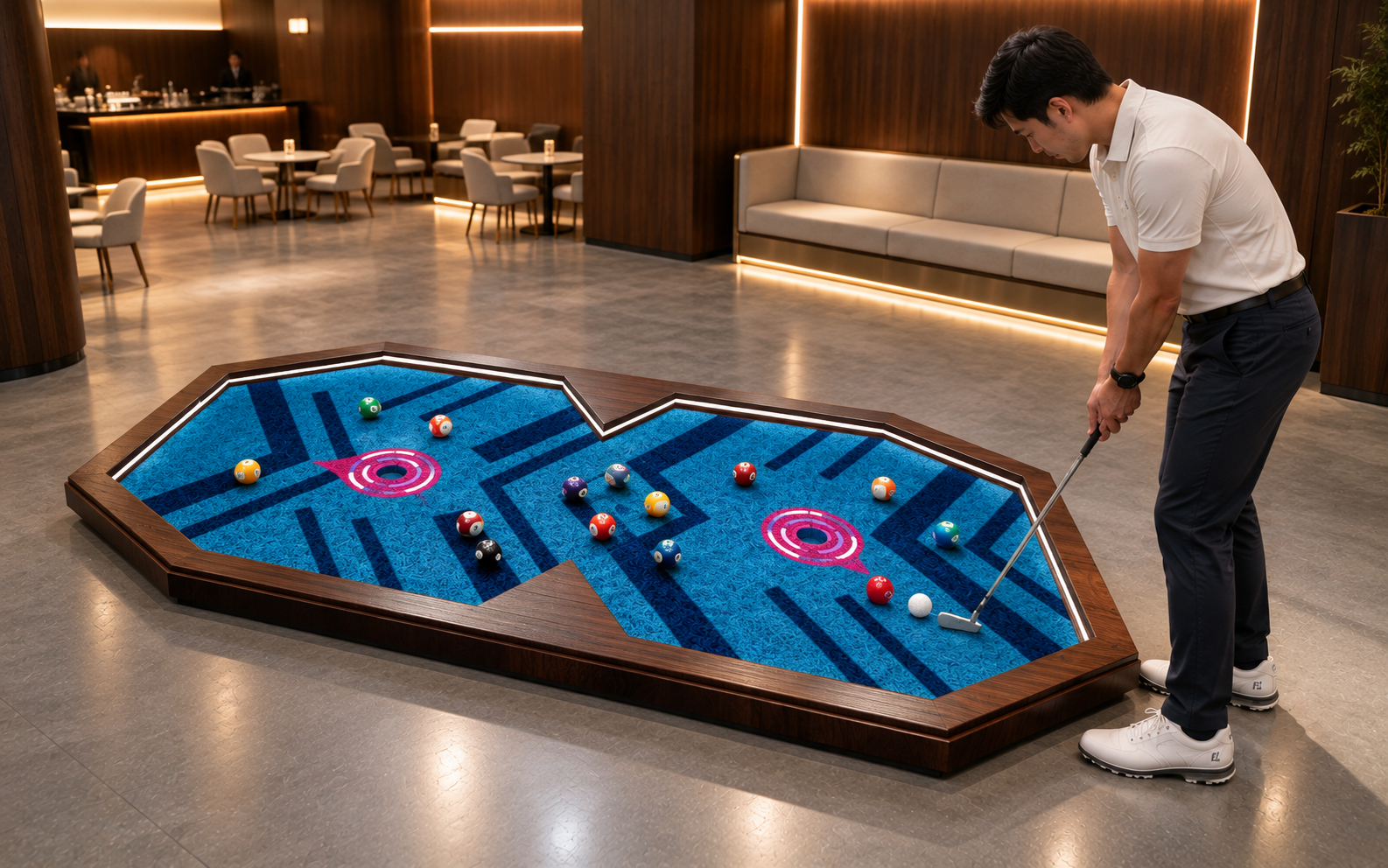
Play your first hole as the practice hole: one putt with grip-check only, one with the eye-line drop, one metronome putt at three meters. By hole two the checkpoints compress into a glance - palms level, eyes over ball, two beats - and by the back nine they are simply how you putt. The drill transfers to every hole family in the catalog: flat geometry holes like the Golf Target Shooting reward the straight metronome stroke, bank-built holes like the Billiard Golf Hole reward honest pace, and redemption formats like the Golf Treasure Hunt reward all of it under a little pressure.
Depth from the family: the mini golf primer covers rules and equipment you will meet at the counter, the sibling guides cover the read (green reading and bank play), and the tournament guide is where a reliable stroke starts winning scorecards. Operators picking putter stock and hole mixes for first-timers can shortlist via the equipment buying guide or test a floor with the free 3D layout service.
The defended summary: grip low-level-light, eyes over the ball, shoulders swing and the club stops at the ball. Ten minutes buys the stroke; the read and the banks cash it in.
Player takeaway: the ball only knows three things - where the face pointed, how fast it arrived, and nothing else. Give it a square face at honest pace and let the checkpoints carry you.
6. Frequently Asked Questions (FAQ)
How do you grip a mini golf putter?
Both hands low and level, palms facing each other, thumbs straight down the flat of the grip - the same neutral hold a coach would give a golfer, simplified. Keep your grip pressure light, around a 4 out of 10 (EXAMPLE scale): strangling the putter tenses your forearms and turns every stroke into a stab. The published primer covers the rules around equipment; the hold itself is just three checkpoints - palms level, thumbs down, shoulders relaxed.
What is the correct stance for mini golf putting?
Feet about shoulder width, ball slightly forward of center, eyes over the ball, and the putter head flat on the carpet with the shaft vertical - no lean toward the target. Weight favors the front foot a touch, which quiets the hands. If your eyes are not over the ball, the line looks different from above than it plays from the floor; fixing the eye line fixes more putts than any other single change.
Should the putt come from the arms or the shoulders?
The shoulders. Hands and wrists only deliver the swing the shoulders make - the classic triangle shape (arms plus shoulders) swings back and through together, like a pendulum. Wristy strokes add speed nobody asked for and send the ball bouncing; shoulder strokes keep the face square through contact, which is what straight putts and honest banks both need.
How hard should you hit a mini golf putt?
Match the distance, then add nothing. EXAMPLE calibration: a putt from one meter needs a backswing of about the putter-head height; three meters wants roughly double; anything past that is pace territory covered by the speed test in the green-reading guide. The single most common beginner error is a long, accelerating follow-through - it sends the ball at the hole fast enough to rattle out. Small backswing, smooth through, stop the club at the ball.
How do you stop flipping your wrists at the ball?
Shorten the backswing and slow the rhythm. The flip is almost always a panic move the body makes when the stroke feels too short for the distance - give it a real backswing and the wrists quiet down. The metronome drill fixes the rest: count one-two on every putt at the same tempo regardless of length, and let the backswing length - not the speed - carry the distance.
Does technique matter more than course knowledge?
They stack. Technique makes the ball do what you chose; reading (the sibling guide) chooses the right thing. A first-timer who spends ten minutes on grip, stance and stroke typically stops three-putting inside one round - and the published capacity math is built on exactly that progress: rounds that finish at pace are rounds where first putts stay near the hole.
7. Featured NextPlay Active Gaming Equipment

The metronome hole
Golf Target Shooting Hole
Straight, pace-true putting that pays exactly what a clean stroke puts in.
View Details ›
The pace exam
Billiard Golf Hole
Bank lines that punish wristy stabs and reward the pendulum.
View Details ›

The pressure round
Golf Treasure Hunt Hole
Bonus-route decisions under a ticking group - where technique cashes in.
View Details ›
Stock Putters People Can Learn On
Outfitting a course instead of learning one? The free 3D layout design plans the hole mix where beginner strokes turn into returning customers.

