MULTIPLAYER VR SHOOTING - THE REPEAT-VISIT CALENDAR
How to Increase Repeat Visits with Multiplayer VR Shooting
The operational calendar behind the published 65% repeat pattern: the rematch choreography, season ladders, league-night math with the basis stated, pass tiers that sell rhythm instead of discount, and the scoreboard that sells the next mission while the group is still high.
65% repeat (published) 60-70% rematch loop League-night math Pass tiers on rhythm Scoreboard choreography Win-back with dates
65%
Published Repeat Rate
60-70%
Published Rematch Loop
24-40/hr
Published Throughput
2,160
League Season Player-Visits (Example)
1. What It Is: The Arena as a Repeat-Visit Machine
A multiplayer VR shooting arena is the rare FEC attraction whose core loop already is a repeat loop: the published pattern books 24-40 players per hour on a 100-200 square meter block, holds guests 35-50 minutes per session, and watches 60-70% of players take the rematch the scoreboard sells them - with 65% returning across visits. The question for the operator is never whether the format repeats; it is whether the calendar catches the repeat. This guide runs that calendar: season ladders, league math with its basis stated, scoreboard choreography, pass tiers and win-back sequences - the operational schedule that turns first missions into bookable Thursdays.
The planning anchors first: the published rates above, waves of four to ten players (published group patterns), the 57% multi-activity preference (n=600, published) that puts the arena inside a day out rather than beside it, and the spectator-screen drink lift (+30%, published) that makes watching part of the product. The published group-size economics shows why wave composition decides which repeat levers apply; this guide decides when they fire.
In one line: the arena already repeats - 60-70% rematch, 65% return - so the operator's job is calendar, not persuasion: give satisfied players a dated reason to come back and a scoreboard that sells it.
2. How It Works: The Repeat Levers, Season by Season
Lever one is the rematch, already priced in: 60-70% of players (published) take a second mission when the scoreboard posts, and the choreography that protects it is turnaround speed - the five-zone flow in the published arena layout guide exists so the next slot is bookable while the group is still high. Lever two is the season ladder: monthly seasons with named winners, division promotions, and a ladder page the venue actually maintains. Lever three is league night: teams of four to six (inside the published wave patterns) on a fixed weekday, which fills the calendar's thinnest hours - the exact play the published karting profitability guide documents, and the arena version runs it harder because teams share one mission instead of one lane.
Lever four is content rotation on a schedule: new missions, limited modes and themed weeks give satisfied players a dated reason to return, and they cost planning time rather than capital - the published arena build guide sequences them alongside install and training. Lever five is the pass, sold as rhythm rather than discount: the tier table below keeps margin and schedules returns. Lever six is the scoreboard itself - the published session-stages arc ends there, and what the screen shows (team and player splits, mission time, next-slot availability, the ladder) is what the 60-70% rematch decision actually reads.
| Lever |
Cycle |
What it schedules |
Example frame (EXAMPLE) |
| Rematch loop |
Same visit |
Second mission at the scoreboard |
60-70% take rate (published) |
| Season ladder |
Monthly |
Ranked identity, promotion nights |
4 seasons/year, named winners |
| League night |
Weekly |
8 teams x 6 rounds fills a weekday |
2,160 player-visits/season (Example) |
| Content rotation |
6-8 weeks |
New missions, limited modes |
Themed weeks before school holidays |
| Flex pass |
Per visit rhythm |
10 visits + 1 free + birthday perk |
Standard rate, margin kept (Example) |
| Win-back |
Quarterly |
Lapsed-group email with a date attached |
Ladder start dates as the hook |
Planning assumptions, stated in one place: the Example frames interpolate across the published rates for a mid-band arena (150-200m2, two rotation tracks); league capacity assumes 24-40 players per hour holds on league nights; pass pricing keeps the standard rate and gives rhythm, not discount depth. These are operational references, not guarantees - the forbidden-claim list applies to us too.
3. How It Works: League Night Math With the Basis Stated
The arithmetic a buyer can check. Basis one: the published throughput band runs 24-40 players per hour, so a four-hour league evening on one rotation track books 96-160 player-visits of headroom. Basis two: an eight-team league at four to six players per team (inside the published wave patterns) books 32-48 players per round. Basis three: six weekly rounds, and the season books 192-288 team-player visits - roughly one to two operating hours of headroom per week, which is why league night costs the calendar almost nothing and fills the weekday almost entirely.
Concrete scenario (EXAMPLE): eight teams of six, six weekly Thursday rounds on one rotation track - 2,160 player-visits of league inventory across the season, absorbed by a calendar that holds 240-400 player-visits per four-hour evening at the published rates. Layer the spectator side: families and teammates watch, and the published +30% drink lift converts the watching into counter revenue. The league is the cheapest weekday fill the arena format offers, and it compounds: each season graduates teams into the next one, which is the ladder working.
Where League-Night Inventory Goes (EXAMPLE split, 8-team league)
- League rounds 40
- Open play 35
- Parties and events 15
- Win-back and promos 10
Source: worked scenario (EXAMPLE) - inventory split of a sample league-season calendar on one rotation track, anchored to the published 24-40 players per hour band. Shares are planning references, not prescriptions.
Scenario Weekly Player-Visits by Lever Mix (EXAMPLE planning frame)
Source: worked scenario (EXAMPLE) - non-monotonic planning frame across a sample week, mapped to the published 24-40 players per hour band. The published band anchors each lever; the mix is interpolated.
The wait belongs to the same system: between-wave minutes are return-visit sales time, and the published grid-room pattern ($80 per 15 minutes) shows the wait monetized one zone over - while the spectator approach sells the next mission to the people watching this one, the lift the published spectator-screen study measures at +30%.
4. Who It Is For and Where It Fits: Operators, Calendars, Next Steps
Who it is for: the operator past opening - the arena is built (the published build guide handled that), the floor is planned (the published layout guide handled that), and the format compares well against cabins (the published free-roam vs cabins comparison settled that) - now the calendar needs to earn back the investment. The levers stack in order: rematch choreography first (it is free), league night second (it fills weekdays), content rotation third (it renews the reasons), passes fourth (they schedule rhythm), win-back last (it recovers lapses).
Where it fits: the repeat system plugs into the party engine - the published VR birthday playbook is the group-size source this calendar is built on, and every league graduate is a corporate-event or birthday prospect. Close the loop the practical way: pick the weekday, name the season, train the operator to book the next mission at the scoreboard, and let the published 60-70% rematch rate and 65% return pattern do what they already do - the calendar just stops wasting them.
The operator's one-line brief: the arena repeats by design - build the calendar that catches it: rematch at the scoreboard, league on the thin weekday, seasons on the ladder, passes on rhythm.
5. Frequently Asked Questions (FAQ)
What is a good repeat-visit rate for a VR arena?
The published pattern puts repeat visits around 65% for free-roam arenas and the rematch loop at 60-70% - meaning most players who finish one mission are candidates for the next. A venue far under that band usually has a calendar problem, not an equipment problem: the mission ended and nothing re-booked the group before they left the building.
How do leagues increase repeat visits?
A league converts a one-time visit into a season: eight teams, six weekly rounds, and the Example math in this guide books 2,160 player-visits against a 24-40 players per hour calendar that can absorb it. The same mechanism fills the weekdays - the published karting guide runs the identical leagues-fill-weekdays play, and the arena format carries it even better because teams share one mission.
What should a VR arena scoreboard show?
Everything a rematch decision needs: team and player splits, mission time, accuracy, the next-mission slot availability, and the season ladder if one exists. The published session-stages arc ends at the scoreboard for a reason - it is where the 60-70% rematch decision actually happens.
Do memberships work for VR arenas?
They work when the pass sells visit rhythm rather than discount depth. The Example tier here prices a 10-visit flex pass at the standard rate with the eleventh visit free and a birthday-week perk - the pass earns its keep through the return frequency it schedules, not through a deep cut.
How do you re-book a group before they leave?
Book the next visit at the scoreboard, while the group is still high: show the next-mission slot, offer the season ladder, and hand the party parent the package menu. The between-wave wait is inventory too - the published queue playbook routes it past the counter.
What is the cheapest repeat-visit lever?
Content rotation on a schedule. New missions, limited modes and themed weeks give satisfied players a dated reason to return, and they cost planning time rather than capital - the published build guide sequences them alongside install and training.
6. Featured NextPlay Active Gaming Equipment
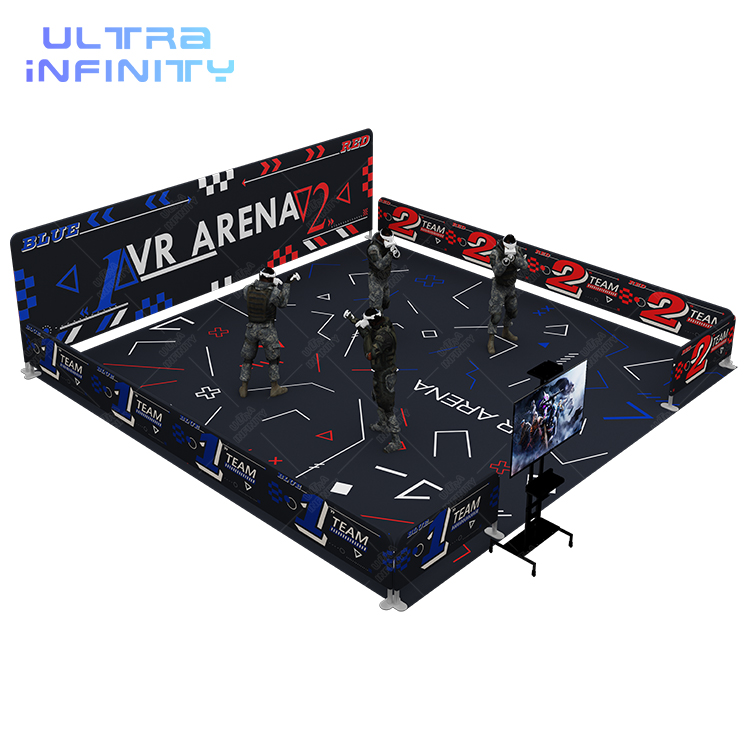
The repeat engine
Free Roaming VR Arena 2.0 - Multiplayer VR Walking Shooting Simulator
The free-roam system whose published loop already repeats - 60-70% rematch, 65% return, 24-40 players per hour.
View Details ›
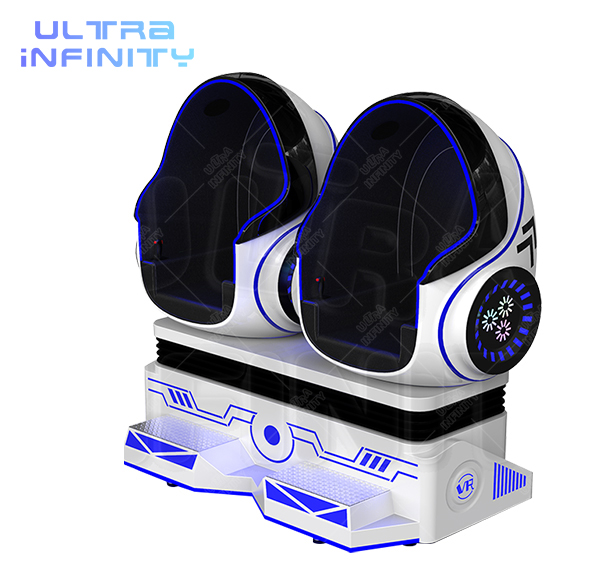
The companion repeat lever
VR Egg Chair
The published $6-12K, $130-320 per chair per day unit - the second visit reason for the friends who sit out the wave.
View Details ›
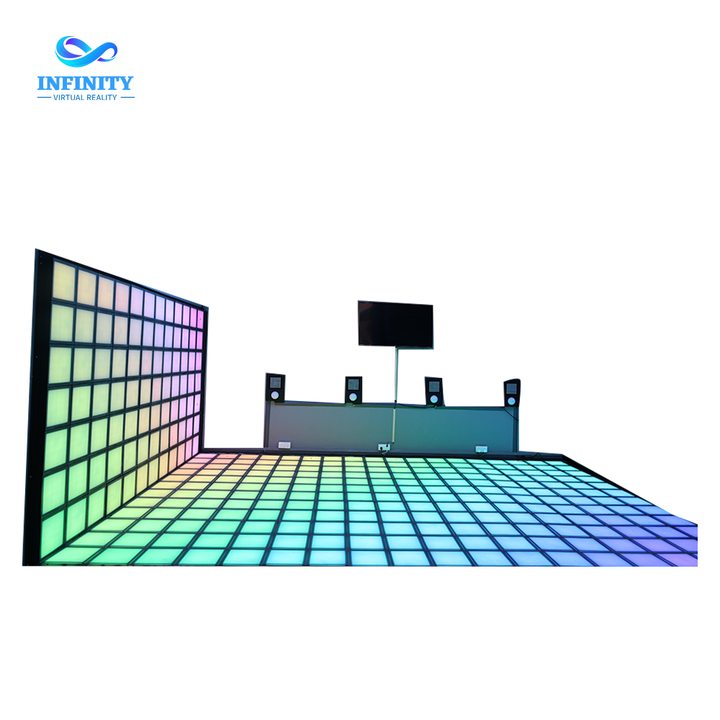
The wait-time earner
Infinity Grid LED Dance Floor Game - Interactive Light Up Jumping Tiles
The published $80 per 15-minute grid - the between-wave wait monetized while the next mission is being sold.
View Details ›

