VR CHAIR PRICING - THE RATE CARD GUIDE
How Much Should You Charge for a VR Chair Experience?
The rate card the comparators defend: $6-10 for the impulse ride, a three-rung ladder, weekday bundles for the dark hours and held peak prices - anchored to the published karting, moto and grid bands, with assumptions stated.
$6-10 impulse band 3-rung session ladder Small pass discount Dark-hours bundles Peak price held Quarterly counter review
$6-10
Session Band (comparators)
12-30
Demand Band Rides/Day
+30%
Counter-Side Lift (published)
1. What It Is: The Rate Card Behind the Ride
The chair's economics only work at a price the footfall can convert: charge too little and the published $130-320 daily band never materializes; charge too much and the impulse sale - the chair's whole demand model - dies at the counter. This guide builds the rate card: the published comparators that anchor the band, the session ladder that moves riders up a step, the weekday/weekend structure, and the bundles that turn one ride into one family decision. The cost side of the ledger is the published setup-cost guide's subject and the earnings side the ROI calculator's; this guide sets the number the counter asks for.
The anchors, so every price below has a home: the karting heat at $6-9 per six minutes (published), the moto impulse seat's $6-9 session band with its 25-65 rides a day scenario (published), archery's $12-20 per 15-minute lane, the grid's $80 per 15 minutes, and the chair's own published $130-320 daily band - which the demand model opens as 12-30 rides a day. The ride experience being priced is the published closed-capsule feel guide's subject.
In one line: price the session in the $6-10 band the comparators defend, build a three-step ladder, discount the dark hours - never the peak.
2. How It Works: The Session Ladder and Its Pricing Structure
Rung one is the single ride: the 5-8 minute capsule session at $6-10 - inside the band the karting heat and moto session jointly anchor, priced as the impulse decision it is. Rung two is the multi-ride pass: three rides at a modest per-ride cut ($15-24 in the frame), converting the 60-70% rematch appetite published in bigger formats into a pre-committed second and third ride. Rung three is the premium session: themed or exclusive content, a longer cut, $10-15 - the step that catches riders who want more than the base loop without repricing the whole card.
| Rung (EXAMPLE frame) |
Format |
Price (EXAMPLE) |
What it converts |
| Single ride |
5-8 min capsule session |
$6-10 |
The impulse sale, footfall-fed |
| Three-ride pass |
Same session x3, shareable |
$15-24 |
The rematch appetite (60-70% pattern) |
| Premium session |
Themed or extended content |
$10-15 |
Riders who outgrew the base loop |
| Weekday bundle |
Rides + counter credit |
$12-18 |
Dark hours: after-school, midweek |
Planning assumptions, stated in one place: the ladder is an EXAMPLE frame interpolated across the published comparators - the single-ride band is anchored by the karting heat and moto session, the pass discount is held small (10-15%) to protect the base rate, and the weekday bundle exists only where the calendar is dark. These are planning references, not quotes; the counter data, not this table, is the final editor.
The structure rule the ladder implies: the ride price holds at peak because demand is the scarce good - the queue, not the price, is the peak-hour instrument, and the published revenue-leak audit counts a dead off-peak as the bigger leak. Weekday bundles, sibling add-ons and after-school rates are where pricing earns its keep.
Where a Bundle's Price Goes (EXAMPLE split, $16 family bundle)
- Ride content 55
- Counter credit 25
- Bundle discount 12
- Payment costs 8
Source: worked scenario (EXAMPLE) - value split of a sample $16 family bundle: ride content at the published band, counter credit framed from the spectator studies. Planning reference, not a prescription.
3. How It Works: Weekday, Weekend and the Demand Bands
The demand bands give the rate card its calendar: 12-30 rides a day per chair across the published band, weekday troughs at the low end, weekends and events at the high - and the daily model's tiers are exactly the frame to price against. Weekend structure: hold the ride price, run the queue playbook, and let the wait sell the pass ("the line is 10 minutes - a three-ride pass skips the decision next time"). Weekday structure: the bundle does the converting, priced to clear the dark hours at contribution rather than to defend a headline rate.
The comparator reality check: the moto impulse seat books 25-65 rides a day at the same $6-9 band (published) - a styled machine at a matched price outperforms a plain capsule on demand, which is why the ladder's premium rung matters: it gives the capsule a styled story without new hardware. The published motorcycle impulse model and the karting row guide bracket the styled-versus-plain question from both sides.
Scenario Rides per Day at Each Price Posture (EXAMPLE planning frame)
Premium session launch
17
Source: worked scenario (EXAMPLE) - non-monotonic planning frame: demand response across the published 12-30 rides band under four pricing postures. Published bands anchor the ends; postures are planning references.
The review cadence completes the card: quarterly, against counter data - rides per day against the 12-30 band, pass take-rate, bundle redemption - and the calculator re-run with the measured variables so the rate card, the payback frame and the floor's reality stay the same document.
4. Who It Is For and Where It Fits: Operators, Counters, the Next Rate
Who it is for: the operator setting a price list from scratch and the one defending an existing one to a regional manager - both need the same artifact: a band the comparators defend, a ladder the counter can sell, and a calendar that discounts only where it is dark. The chair's $6-12K entry makes it the easiest line item to price-test; the published daily band makes the test measurable.
Where it fits: the rate card plugs into the pod plan (the space guide positions the queue that converts), the daily model (the demand tiers the bundles clear), and the formula (the price variable the sensitivity table bends). Close the loop the practical way: print the ladder, brief the counter on the pass script, date the weekday bundles, and let the quarterly review - not habit - move the number.
The operator's one-line brief: $6-10 for the impulse ride, a three-rung ladder to climb, bundles for the dark hours - and a quarterly counter-data review that keeps every number honest.
5. Frequently Asked Questions (FAQ)
What is the right price for a VR chair ride?
Anchor to the published comparators: the karting heat runs $6-9 per six minutes, the moto impulse seat books $6-9 a session, and the chair's 5-8 minute ride lands in the same $6-10 band - long enough to feel substantial, short enough to stay impulse. Above $10 without a longer experience, conversion pays for the difference.
How do you build a session price ladder?
Price the experience, not the minutes: a single ride at the base band, a three-ride pass at a small per-ride discount, and a themed or premium mission above it. The ladder exists to move riders up a step, and the 60-70% rematch patterns published in bigger formats show what a well-timed second-ride offer converts.
Should weekends cost more?
Structure beats surcharge: hold the ride price and manage the queue instead - the published playbook routes waits past the counter. Off-peak is where pricing actually moves riders: weekday bundles and after-school rates fill the hours the chair would otherwise sit dark.
What belongs in a family bundle?
The things a family is already doing: several rides shared across riders, the sibling's turn while parents watch, and F&B credit on the counter side. The bundle's job is one decision instead of four, and the published spectator study prices the waiting parents' side at +30% on drinks.
How does chair pricing compare with other VR formats?
The chair sits at the accessible end: the karting heat and moto session anchor $6-9, archery lanes run $12-20 per 15 minutes, and the grid charges $80 per 15 minutes for a group. The chair's price is deliberately the low-commitment entry - the format family's ladder rises from it.
How often should prices be reviewed?
Quarterly, against counter data: rides per day against the published 12-30 demand band, conversion at the counter, and the leak audit's findings. Price changes should follow measured demand, not the manager's mood - the calculator keeps the arithmetic honest.
6. Featured NextPlay Active Gaming Equipment
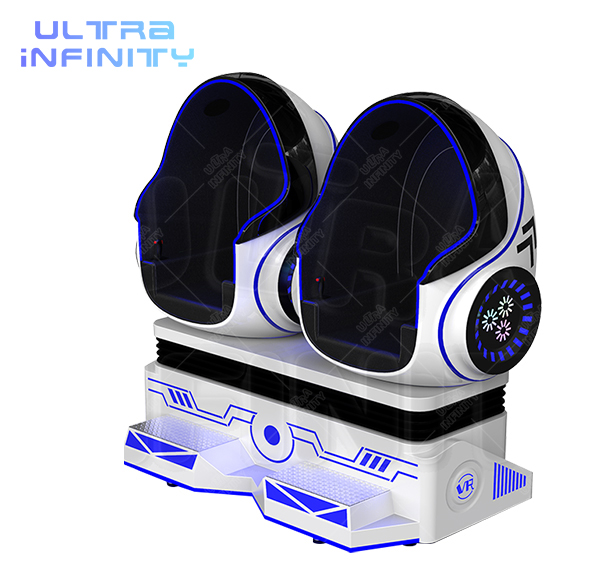
The rate card's subject
VR Egg Chair
The published $6-12K, $130-320 per chair per day capsule - priced to convert footfall at $6-10 a session.
View Details ›

The styled comparator
VR Motorcycle Simulator
The published 25-65 rides a day at the same $6-9 band - proof that styling lifts demand at matched price.
View Details ›
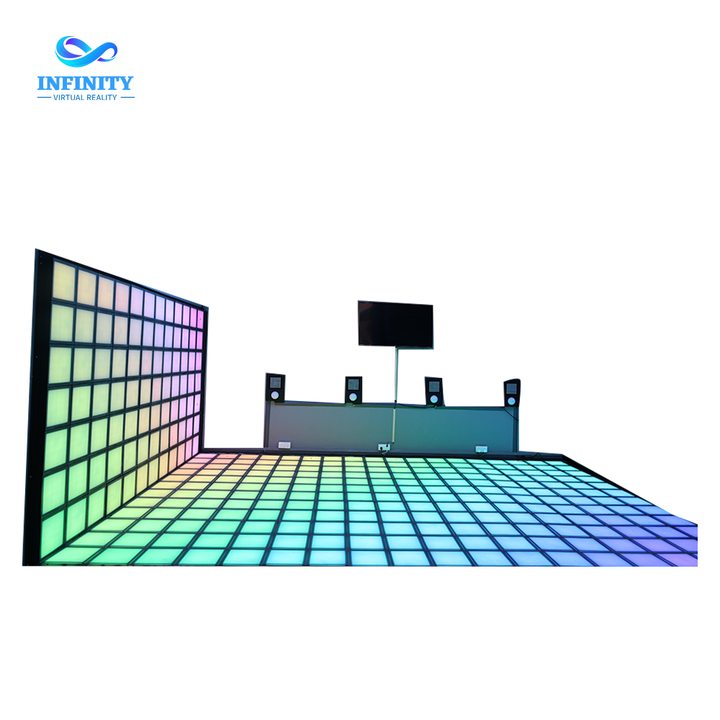
The group-price contrast
Infinity Grid LED Dance Floor Game - Interactive Light Up Jumping Tiles
The published $80 per 15-minute grid - the family format at the ladder's far end.
View Details ›

