How Much Revenue Can an Archery Simulator Generate?
The revenue lines behind the published band: $2.8K-6.1K a month for the two-lane corner at 30-70% utilization, the rate blend from $12-16 singles to party premiums, breakeven at 36% - and the levers that move the blend.
Sep 27th,202619 Puntos de vista
ARCHERY SIMULATOR REVENUE - THE LINES BEHIND THE BAND
How Much Revenue Can an Archery Simulator Generate?
The revenue lines behind the published band: $2.8K-6.1K a month for the two-lane corner at 30-70% utilization, the rate blend from $12-16 singles to party premiums, breakeven at 36% - and the levers that move the blend.
1. What It Is: The Revenue Lines Behind the Published Band
The published model already answered the headline: a two-lane archery corner grosses $2,800-6,100 a month across the 30-70% utilization band, breakevens at about 36% utilization against a scenario $2,300 stack, and pays back inside the published window (the published profitability model). This guide opens the band itself: the revenue lines a lane actually books - walk-in sessions, duo play, party blocks, league slots - and what each line contributes to the number the ceiling judges.
The decomposition in one line: monthly gross = lane-hours sold x effective rate per lane-hour, where the effective rate is a blend - $12-16 singles, $20 duos, hourly party and event premiums - and the lane-hours sold are the utilization band made real. The published $12-20 per 15-minute session anchors every rate in the blend.
In one line: $2.8K-6.1K a month for the corner (published) = lane-hours x the blended rate - and the blend, not the band, is where operators leave money.
2. How It Works: The Rate Blend, Line by Line
Line one, walk-in singles: the $12-16 end of the published band, booked at session pace - 16-24 guests per lane-hour on paper, fewer in practice once changeover eats its minute. Line two, duos and family play: the $20 mark, the band's better ticket for the same fifteen minutes. Lines one and two are the base the utilization band describes; they clear the 36% breakeven by themselves at mid-band, which is the structural margin story the profitability model tells.
Line three, premium bookings: parties and corporate blocks book the lane by the hour at 2-3x the session band's hourly equivalent, and leagues fill the late weekday slot with recurring, reservation-backed play. The premium lines do not change the band - they change the blend, which is why two rooms at the same utilization can land $1,400 apart per lane. The packaging mechanics (block structure, host, tournament format) are the packaging guide's subject; here they are one number: the blend shift.
Revenue line (EXAMPLE mix)
Rate basis
Share of a mid-band month
What moves it
Walk-in singles
$12-16 per 15-min (published low)
38%
Footfall and changeover speed
Duos and family play
$20 per session (published high)
22%
Group mix at the counter
Party and event blocks
Hourly premium, 2-3x band
26%
The party calendar
League and recurring slots
Per-player season pricing
14%
Weeknight programming
Planning assumptions, stated: the mix table is an EXAMPLE frame on the published session band at the published mid-band gross - shares describe a healthy blend, not a census, and F&B rides the same bookings in the register without appearing in the lane line.
Where a Mid-Band Lane Month Comes From (EXAMPLE blend, $2.2K lane share)
Walk-in singles 38
Duos and family 22
Party and event blocks 26
League slots 14
Source: worked scenario (EXAMPLE) - blend split of the published mid-band gross at lane scale, on the published $12-20 session band. Planning references, not quotes.
3. Who It Is For: The Ceiling That Judges the Corner
The published ceiling - $88-135 per square meter per month - is the judge every attraction answers to. The archery lane's 10-15 square meter footprint books $1,400-3,050 a month at mid-band, which is roughly $95-205 per square meter when the gross is paired with the generous end of the footprint - and the precision ticket is what pushes the tighter-footprint pairings past it. The per-square-meter frame is the published space-guide discipline (the same $88-135 ceiling the bowling series answers to).
The utilization ladder, as a planning frame: the published band spans 30-70% utilization and $1,400-3,050 per lane, so the floor of the band is the breakeven-plus-a-little month and the top is where the calendar, not the machine, is the constraint; blend discipline decides where inside the band a lane lands. The calendar work that climbs the ladder is specific: league nights own the late weekdays, party blocks own weekend afternoons, and the walk-in wave fills what the blocks leave.
Monthly Gross per Lane by Utilization (EXAMPLE, on the published band)
30% 140040% 175050% 222560% 265070% 3050
Source: worked scenario (EXAMPLE) - per-lane half of the published two-lane $2.8K-6.1K gross band interpolated linearly across the published 30-70% utilization ladder. Planning references, not measurements.
4. Where It Fits: The Levers, Ranked
Lever one, utilization: the band is 30-70%, and most rooms live at its floor. Calendar discipline - league nights, party blocks, corporate weekday slots - is how the lane climbs without touching the price. The published revenue-leak audit (the five-leak checklist) finds where the hours went.
Lever two, mix: the blend table is the room's report card - a lane stuck at walk-in-only mix books the band's floor even at good utilization, while a 40% premium mix lifts the same hours into the band's top. Lever three, throughput: changeover under a minute is worth a session an hour at peak, which is a scheduling fix, not a hardware one - the published how-to-play guide scripts the fast changeover.
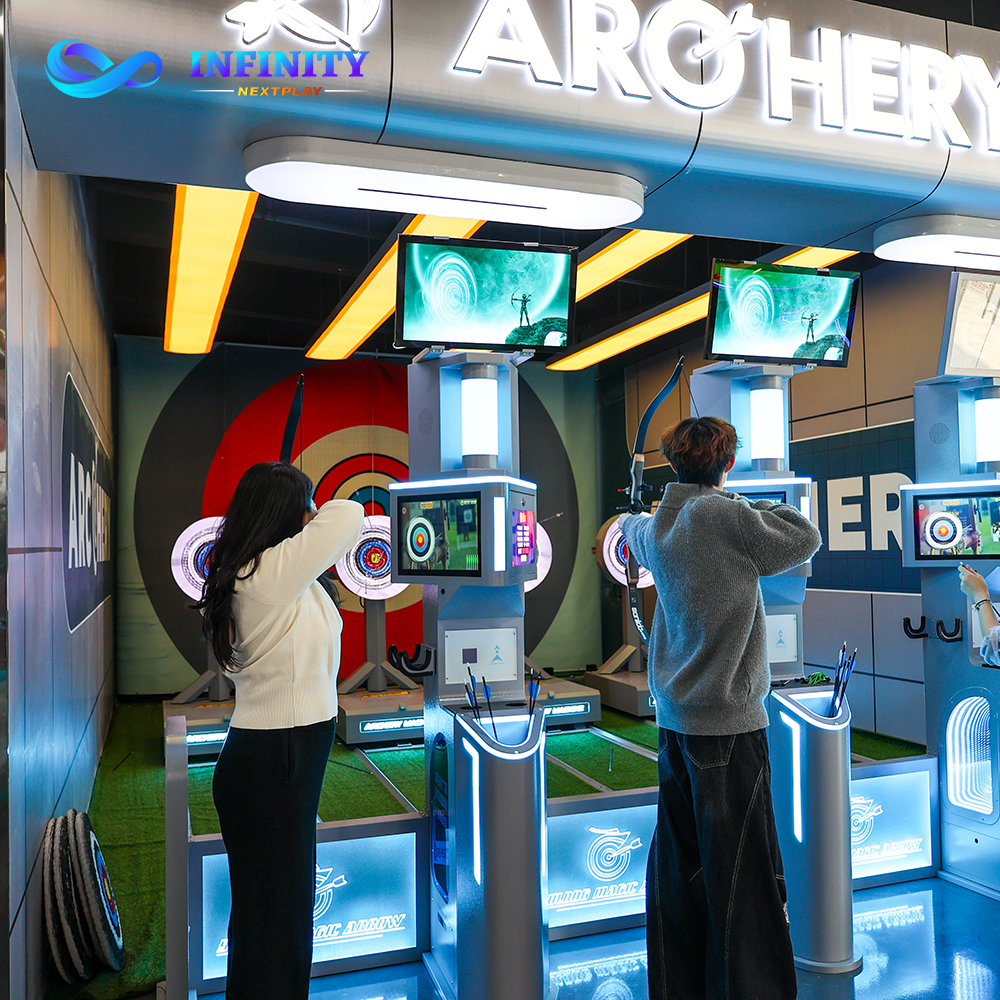
Price is the lever to touch last: the $12-20 band is a market fact the published model defends, and discounting it trades the corner's precision narrative for volume the lane cannot physically absorb. The honest revenue answer is calendar and blend; the hardware - the Archery Simulator A4 or the Archery System A6 - sets the ceiling the calendar climbs toward, and the published cost stack prices the hardware.
Monthly Gross per Lane by Mix Discipline (EXAMPLE, 50% utilization)
Walk-in only blend
1250
Healthy blend
1650
Premium-heavy blend
2100
Source: worked scenario (EXAMPLE) - same 50% utilization, three blends of the rate mix above, on the published session band. Planning references, not quotes.
5. The Defended Answer
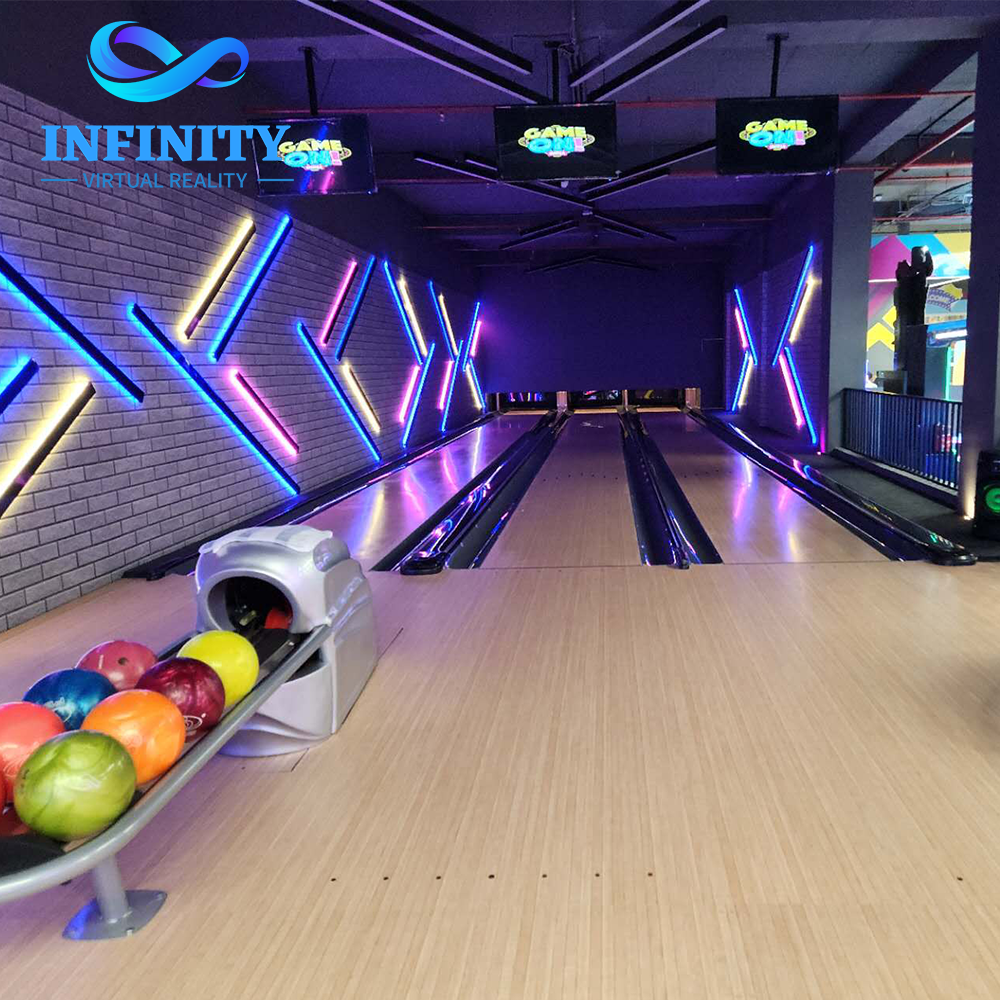
How much revenue can an archery simulator generate? The published answer: $2,800-6,100 a month for the two-lane corner across the 30-70% utilization band - $1,400-3,050 per lane - with breakeven at about 36% utilization. The operator's answer is the blend: the premium lines (parties, leagues, corporate blocks) are what turn the band's floor into its top, and the published $88-135 per-square-meter ceiling is the judge the corner clears when the calendar works. Run your own blend against the profitability model, price the hardware from the cost guide, place the corner beside the Duckpin Bowling System with the free 3D layout design and stage the corner - the full-zone earnings context is the sportainment earnings guides subject.
The buyer's one-line brief: $1.4K-3.05K per lane-month (published band), breakeven at 36% - and the blend, not the band, decides which end you book.
6. Frequently Asked Questions (FAQ)
How much revenue can one archery simulator generate per month?
The published model puts a two-lane corner at $2,800-6,100 gross a month across the 30-70% utilization band on the $12-20 session price - roughly $1,400-3,050 per lane. Party blocks and league nights sit on top of that walk-in base where the calendar allows.
What utilization does an archery lane need to break even?
About 36% - the published breakeven against a scenario $2,300 monthly stack. Everything booked above that line is contribution, which is why the calendar work (leagues, parties, weekday corporate) matters more than the session price.
What price should an archery session charge?
The published band is $12-20 per 15-minute lane session - a precision-sport price. Single archers take the low end, duos the $20 mark, and party or event formats book the lane by the hour at a premium the packaging guide prices out.
How does archery revenue compare to other attractions?
Per square meter it competes well: the lane's 10-15 square meter footprint books $1,400-3,050 a month at mid-band, and judged against the published $88-135 per-square-meter ceiling the corner carries its floor comfortably at moderate utilization.
Can one archery lane support a venue on its own?
It anchors a corner, not a venue: the lane's revenue is a rhythm line beside higher-throughput neighbours. The pairing math - what the zone earns together - is the published sportainment earnings guide's subject.
What levers raise archery revenue the most?
Three, in order: utilization (calendar blocks fill the 30-70% band's low end), mix (parties and leagues at a premium over walk-ins), and throughput discipline (session changeover under a minute). Price is the lever to touch last - the band is a market fact.
7. Featured NextPlay Active Gaming Equipment
The revenue line's machine
Digital Archery Simulator A4 - Adjustable Track Distance, Dual Screen
Dual screens and turn-based sessions - the lane that books the published $12-20 band.
View Details ›
The premium-line enabler
Professional Arcade Archery System A6 - Auto Voice Scoring, Dual Display
Auto voice scoring runs league nights and corporate blocks without a referee per lane.
View Details ›
The zone neighbour
Duckpin Bowling System for Full Venue Solution
The high-throughput partner whose lane-hours share the party calendar with the archery corner.