NEXTPLAY FAMILY VR CHAIR GUIDE
Best 9D VR Egg Chair Games for Families & Kids: Egg Chair vs Motion Chair Guide
What games run on a VR egg chair vs a 360 motion chair, how the experiences differ, and how to pick the right chair for your family, birthday party or teen group.
VR Egg Chair Games 9D VR Egg Chair VR Motion Chair Games Family VR Activities VR Chair for Kids Egg Chair vs Motion Chair
360-degree
Motion Chair Rotation
1. 9D VR Egg Chair and Motion Chair: Which Game Experience Fits Your Family?
Walking into a mall or family entertainment center and seeing a VR egg chair or a 360 motion chair spinning is now as common as seeing a claw machine, and the reason is simple: both turn a single seat into a complete adventure in under five minutes. A family steps up, puts on a headset, and suddenly they are diving through a coral reef, racing a roller coaster on Mars, or fighting a space battle together. The egg chair wraps the player in a pod with wind, vibration and scent effects; the motion chair spins 360 degrees and pitches with the virtual track. Both deliver the "wow" moment that makes a weekend visit memorable, and both keep the group talking long after the headset comes off.
This guide is for families, birthday organizers and first-time visitors who want to know what games are actually inside these chairs, how the two experiences differ, and which one fits the group you brought today. It skips the spec sheets and focuses on the gameplay: what you see, what you feel, and whether your six-year-old or your teenager will want to line up for a second round. For the venue-side perspective on why 9D VR cinema has become a family favorite, the companion article on this site, why 9D VR cinema is becoming a popular choice for family entertainment, covers the trend and the business case; this guide focuses on the games you will play.
Note: the game descriptions, age suggestions and pricing references in this article are shared as general observations from the family entertainment and VR attraction market, and as directional guidance only. Actual game libraries, hardware specs and prices depend on the specific venue and equipment configuration.
2. The Game Libraries: What You Actually Play
Both the VR egg chair and the 360 motion chair are platforms, not single games. The headset and the motion base run a library that the venue operator curates, and a good venue refreshes that library the way a cinema changes movies. The categories below are the ones that matter most for families and groups, and they exist on both platforms, though the feel is different.
- Roller coaster and thrill rides - the signature 9D experience: drops, loops, launches and wind in your face
- Adventure and exploration - underwater reefs, jungle zip-lines, space walks and fantasy worlds
- Shooter and defense - wave-based alien defense, zombie survival, arcade gunplay
- Racing and speed - futuristic pods, mountain descents, hovercraft sprints
- Kids and family friendly - cartoon worlds, gentle flights, animal encounters, no jump scares
- Multiplayer and co-op - two seats side by side playing the same mission, scores combined
The difference is how the motion base translates those visuals into body sensation. The egg chair is an enclosed pod: you feel wind on your face, the seat vibrates with the engine, a scent cartridge might release ocean breeze or gunpowder, and the movement is pitch, roll and heave inside the shell. The 360 motion chair is an open cockpit that rotates a full 360 degrees and pitches forward and back with the track, so a loop-the-loop actually tips you upside down. Both are thrilling; the egg chair feels more immersive and sensory, the motion chair feels more physical and acrobatic.
Egg chair = sensory immersion (wind, vibration, scent, enclosed). Motion chair = 360 rotation + full-body acrobatics (open cockpit).
3. Best Games on the VR Egg Chair
The VR Egg Chair shines when the game uses its enclosed pod to layer sensory effects on top of the visuals. Because the seat is fixed inside the shell, the motion base moves the whole pod with pitch, roll and heave, while wind nozzles, vibration transducers and an optional scent module add the non-visual cues that make the brain believe the scene. The games that exploit this best are:
- Deep-sea and space exploration - the pod becomes a submersible or a cockpit; vibration sells the engine hum, wind sells the current, scent sells the ocean or ozone
- Roller coaster with environmental effects - a jungle coaster where you smell rainforest, feel mist and wind on the drops
- Sci-fi shooter with haptic feedback - every hit vibrates the seat, a near-miss blows wind past your ears
- Gentle family flights - a hot-air balloon over a cartoon valley, slow pitch, light breeze, zero nausea risk
For families with younger children, the egg chair is often the safer first pick because the enclosed shell feels protective, the motion range is smoother, and the operator can disable rotation entirely and run pitch/heave only. The Dino VR Egg Chair (a dinosaur-themed double seat) is built exactly for this: two kids or a parent and a child share the same pod, the game syncs to both headsets, and the shared "did you see that" moment is the whole point.
For kids and cautious adults: egg chair with rotation disabled = smooth pitch/heave + sensory effects, zero inversion.
4. Best Games on the VR 360 Motion Chair
The VR 360 Motion Chair is built for the player who wants the body to do what the eyes see. An open seat rotates a full 360 degrees on the yaw axis and pitches forward and back on the pitch axis, so a vertical loop in the game actually tips you head-down, and a corkscrew rolls you sideways. The sensation is closer to a real roller coaster than any fixed-base simulator, and the game library leans into that:
- Extreme roller coasters - inversions, corkscrews, launches that match the chair rotation 1:1
- Flight and dogfight - barrel rolls, Immelmann turns, split-S maneuvers that the chair reproduces
- Racing with oversteer - the chair yaws into the corner, pitches on braking, rotates on drift
- Horror and survival drops - a sudden 180 spin when the floor "gives way" is a signature motion-chair moment
The trade-off is intensity. A full 360 inversion is thrilling for teenagers and adults, but it can overwhelm a six-year-old or anyone prone to motion sickness. Good venues run a "gentle mode" that caps rotation at 90 degrees and disables inversion, but the signature experience is the full rotation. For a family with mixed ages, the practical approach is to let the older kids and adults take the motion chair while the younger ones ride the egg chair next to it, which is exactly the dual-station layout many FECs now run.
Motion chair = true 360 rotation and inversion. Great for teens/adults; run gentle mode or pair with egg chair for mixed-age families.
5. Safety, Comfort and Age Guidance
Both chairs are commercial-grade attractions with hard safety limits. The headset is sanitized between players, the restraint system locks the player in before the motion starts, and an emergency stop is always within operator reach. The practical age guidance that most venues follow:
- Ages 6-8: egg chair only, gentle flights and cartoon worlds, rotation disabled
- Ages 9-12: egg chair full library, motion chair gentle mode (capped rotation, no inversion)
- Ages 13+: both chairs full library, including extreme coasters and dogfights
- Height minimum: typically 110 cm / 43 in for the restraint to fit properly
Session length is short by design: a typical 9D movie runs 3 to 5 minutes, which keeps the queue moving and the nausea risk low. Operators report that even sensitive players handle a single 3-minute ride well on the VR Egg Chair or the VR 360 Motion Chair, and the quick turnover means a family of four can all ride within 15 minutes and compare scores immediately. If you are organizing a birthday party, ask the venue about a "party block" that reserves both chairs for 30 to 45 minutes and lets the group cycle through without waiting in the public line.
3-5 minute rides, sanitized headsets, locked restraints, emergency stop. Age gates and gentle modes protect younger players.
6. How to Choose the Right Chair for Your Group
The choice is not which chair is better; it is which chair matches the group you brought today. For a family with young children, a first-time VR visit or anyone who wants the sensory "wow" without the spin, the egg chair is the natural pick. For a group of teenagers, a date night, or anyone chasing the closest thing to a real coaster inversion indoors, the motion chair delivers the body sensation no screen can fake. Many venues now place them side by side so the group can split and swap, which is the layout that maximizes both revenue and satisfaction.
- Family with kids under 10 - egg chair (Dino double seat for parent+child), gentle flights, sensory immersion, no inversion
- Mixed-age group / birthday party - book both chairs side by side; younger on egg chair, older on motion chair gentle mode, swap halfway
- Teen group / date night / thrill seekers - motion chair full rotation, extreme coasters, dogfights, horror drops
- Corporate team building / social club - multiplayer co-op on two egg chairs or two motion chairs, combined scores, leaderboard
Looking for a commercial VR chair that matches the experiences above? The featured models below are built for the group types and game libraries described in this guide. To see how both chairs fit on your actual floor plan, request a free 3D layout design that places the egg chair and motion chair side by side with the right clearances.
7. Featured NextPlay Active Gaming Equipment
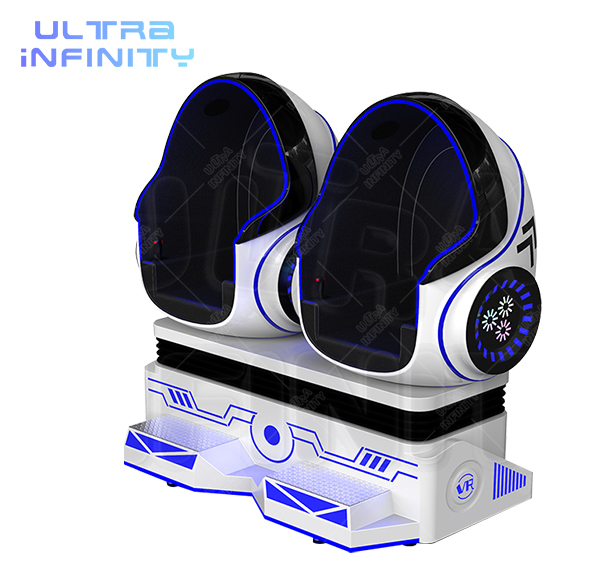
Enclosed Pod + 9D Effects
VR Egg Chair
Enclosed single-seat pod with wind, vibration and optional scent effects. Rich 9D library from gentle flights to extreme coasters. Rotation can be disabled for youngest players.
View Details ›
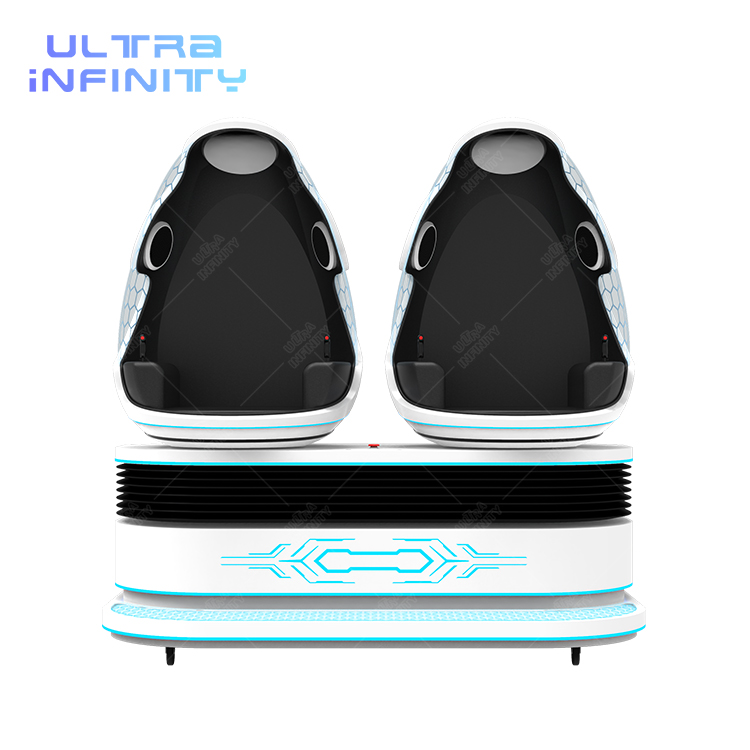
Double Seat + Dino Theme
Dino VR Egg Chair
Dinosaur-themed double-seat egg chair for parent-child or two-kid shared play. Synced headsets, same sensory effects, built for family bonding moments.
View Details ›
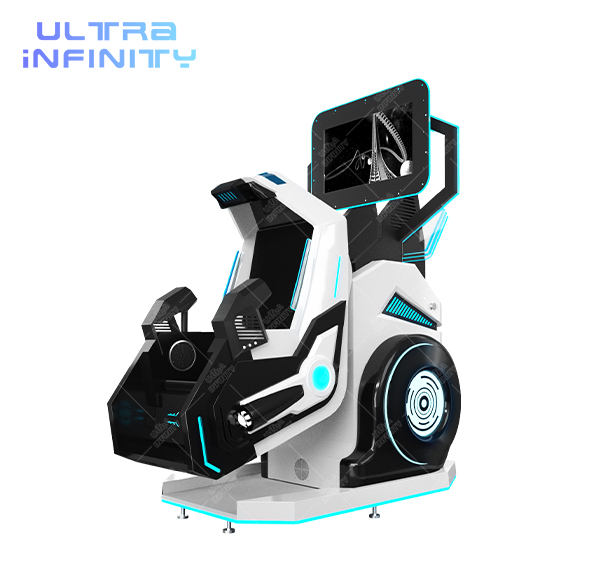
360 Rotation + Open Cockpit
VR 360 Motion Chair
Open single-seat with full 360 yaw rotation and pitch motion. Roller coaster, flight and racing library with true inversion. Gentle mode caps rotation for younger players.
View Details ›
8. Frequently Asked Questions (FAQ)
What is the difference between a VR egg chair and a 360 motion chair?
The egg chair is an enclosed pod with wind, vibration and scent effects; motion is pitch/roll/heave inside the shell. The 360 motion chair is an open seat that rotates a full 360 degrees and pitches with the track, delivering true inversions and acrobatic body sensation.
Can a 6-year-old ride a VR egg chair?
Yes, with the gentle library and rotation disabled. Most venues set a minimum height of about 110 cm (43 in) for the restraint to fit, and run cartoon flights and gentle adventures for ages 6-8.
Which chair is better for a birthday party?
Book both side by side. Younger kids on the egg chair (Dino double seat for parent+child), older kids and adults on the motion chair gentle mode, and let the group swap halfway. A party block of 30-45 minutes keeps the whole group cycling without a public queue.
How long is a typical ride?
3 to 5 minutes per 9D movie. A family of four clears both chairs in about 15 minutes, which is why the queue moves fast and the operator can run high throughput.
Do I need to book in advance?
For a walk-in family visit, usually not. For a birthday party, corporate group or school trip, reserve a party block so the chairs are held for your group and the operator can pre-load the game playlist.
Can two people play the same game together?
Yes. The Dino VR Egg Chair is a double seat with synced headsets. Two single egg chairs or two motion chairs can run co-op multiplayer with combined scores and a shared leaderboard.
Will I get motion sickness?
Most players handle a single 3-5 minute ride well. The egg chair with rotation disabled is the lowest risk. The motion chair gentle mode caps rotation and disables inversion. If you are sensitive, tell the operator and they will select a gentle title.
Is the VR egg chair worth it for a family visit?
If your group wants a shared "wow" moment in under five minutes, yes. The sensory immersion, the quick turnover and the age flexibility make it one of the most family-friendly attractions on a modern games floor.
Plan a Family VR Session
Choosing between an egg chair and a motion chair for a family outing or birthday party? Share your group ages and the venue, and we can recommend the right chair and game lineup. Or request a free 3D layout to see how both chairs fit on your floor.
