FLOOR IS LAVA - ONE RULE, FIVE MODES
What Is the Floor Is Lava Game? The LED Grid Attraction Driving Arcade Revenue
What is the floor is lava game? One rule - do not touch the floor - that turned a playground classic into a Netflix game show and now runs on commercial LED floor grids. Here are the rules, the arcade version, the game modes and the revenue mechanics behind the keyword.
The lava loop Sense - trigger - score - reset Survival mode Mode library All ages Dead-corner activation
3
Netflix Seasons (2020-22)
5+
Game Modes on One Grid
1. What Is the Floor Is Lava Game?
The floor is lava game is a pretend game with one rule: the floor is made of lava, and touching it means you are out. Players cross a room by stepping only on furniture, cushions, taped paper sheets or playground markings, moving from one safe spot to the next without letting a foot, hand or knee touch the ground. Some versions add a time limit or a destination; others simply last until every player has fallen in. The rule is short enough for a three-year-old and strict enough to make a group of adults negotiate whose jump is safe - which is exactly why the game has survived every toy trend of the last several decades.
That one rule is also the reason the game converts so cleanly into a commercial attraction. A game that needs no tutorial, no controller and no explanation can absorb walk-up guests in seconds, and a guest who understands the game in five seconds is a guest who will pay for a second round. Keep that idea in mind; the second half of this article is about what happens when the living room becomes an LED grid and the pretend lava starts keeping score.
Two searches sit behind this article, and both matter to a venue buyer:
- "How do you play it?" - parents, teachers and players looking for rules. This article answers that in the first two sections.
- "Can I buy one?" - venue owners who watched the Netflix show and want to know whether the floor version earns. Sections four onward answer that, with the money numbers relayed to our deeper cost and revenue guides rather than repeated.
2. From Playground Chant to Netflix Game Show
The game itself is folk culture: nobody trademarked it and no single origin story exists, which is precisely why it spread to playgrounds on several continents. What changed in 2020 was television. On June 19, 2020, Netflix debuted Floor Is Lava, a game show that took the playground rule and built it at set-piece scale: three teams of three contestants navigate an obstacle course mounted above a room flooded with 80,000 US gallons of a bright red, slippery lava substitute. Teams win by getting as many members as possible out of the exit without falling in; the first-season prize was USD 10,000 and a lava-lamp trophy. The show ran for three seasons and 20 episodes, with the final season landing September 30, 2022, and it was shot in a former IKEA building in Burbank, California.
For an attraction buyer, the interesting part is not the prize money. It is what the show did to the search bar: a game that used to be looked for as "living room games" or "playground games" became a destination keyword of its own. Every episode functions as a 25-minute demonstration of the core loop - cross the room, do not touch the floor - with production values no showroom can match and emotional stakes any child already understands. When a guest who watched the show walks past your LED floor, they are not learning a new game; they are recognizing one.
The show ended in 2022. The keyword did not - because the underlying game never stopped being played on every playground the show ever advertised against.
Source basis: first-broadcast date, season and episode count, finale date, team format, lava volume, prize and filming location are from the Wikipedia articles on the game and the Netflix series, retrieved 2026-09-17; figures there are cited by the encyclopedia to press coverage of the show.
3. The Arcade Version: How an LED Grid Runs the Game
Put the playground onto electronics and you get the commercial form: a grid of tough, backlit floor tiles that detect where each player stands and answer with light and sound. This is the machine behind most "floor is lava arcade game" searches, and it is worth understanding as a loop, because the loop is what you are actually buying. We call it the lava loop - four beats that repeat every round:
- 1. Sense. Each tile knows whether a guest is standing on it. The detection layer is what separates an interactive floor from a light-up dance floor: the game reacts to the players, not to a playlist.
- 2. Trigger. The grid answers instantly - tiles flare red under a "fallen" player, safe paths pulse green, a miss sounds a buzzer. The RGB surface is the game screen; no projector, no headset, no screen to clean.
- 3. Score. The system tracks who is still alive, how fast each player reacted and which team is ahead, and shows it live. Scoring is what turns a five-minute novelty into a repeat-play sport: guests are not playing against the floor, they are playing against each other.
- 4. Reset. When the round ends, the grid resets itself for the next group. On the playground an adult has to agree the rules; on the grid the rules referee themselves, which is why one attendant can supervise a whole zone.
Our own immersive interactive LED floor game is built around exactly this loop: bright RGB tile effects for visual pull, sensor technology tuned for fast response during play, and game software whose modes, difficulty and scenarios are configurable per project. The commercial-grade structure is designed for long daily operation in family entertainment centers - the part of the specification that decides whether the machine is still earning in year three.
The loop also explains the operational economics in one line: sense and trigger cost nothing per round, score and reset run without staff, so the marginal cost of one more game is close to the electricity. Machines with that shape - and the same reasoning appears in our comparison of interactive floor game formats - are the ones that survive contact with a busy weekend.
4. Core Rules and Game Modes You Can Run
The playground game has one rule; the grid version turns that rule into a family of modes, because software can vary the rule while guests instantly understand every variation. The modes below map to what the product software supports - reaction games, competition modes, memory challenges and team activities - plus the classic survival format the Netflix show made famous:
- Classic survival ("the floor is lava"). The grid lights safe tiles; every other tile is lava. Stay on safe tiles as they shrink or move. Last player standing wins. This is the mode guests who watched the show ask for by name.
- Reaction sprint. Tiles light up one at a time and score on the stomp. Fast, loud, physical, and the natural warm-up mode for younger children.
- Head-to-head competition. Two players or two teams on split zones race the same sequence. Competitive formats are what make groups stop and watch, and spectators are next round players.
- Memory challenge. A path flashes, then goes dark; players repeat it from memory. Quieter, cognitive, and popular with the five-to-nine age band and with parents playing along.
- Team relay. Groups cooperate across the grid - one holds a zone while the other crosses. Team modes spread play across more players per session, which is the throughput lever examined in the next section.
Practical numbers for planning (framing, not guarantees): a survival round runs 60-120 seconds, reaction and memory rounds 90-180 seconds, and a grid comfortably absorbs 4-8 players at once depending on tile count. The mode library is the inventory: one cabinet of floor space carrying five games is the reason an LED grid zone earns its footprint, and the same logic our buyers apply to multi-game equipment generally - see the custom multi-game sportainment equipment line - applies here.
Operators also rotate modes by daypart, and the good ones do it deliberately: reaction sprints and survival rounds through the after-school window when the floor is full of energy; memory and team modes in the morning toddler blocks where the room is calmer and parents play along; head-to-head competition on weekend peaks, when spectators convert to players fastest. None of that needs a technician on the floor - mode selection is a software setting, which is why one attendant can re-program the zone between sessions in under a minute.
5. Why It Works: One Rule, Instant Stakes, Zero Tutorial
Strip the franchise paint off and the floor is lava game succeeds for structural reasons, and those reasons are the same reasons the commercial version earns:
- Zero tutorial cost. Every guest under forty already knows the rule, and every guest over it learns it in one sentence. Staff never explain, so throughput never queues behind an operator.
- Instant stakes. Falling in is funny, visible and social - failure is part of the show. Games where failure embarrasses lose the second round; games where failure entertains sell it.
- Built-in video moments. Adults leaping between tiles while children shout instructions is user-generated marketing. The playground version spread because it was watchable; the grid version spreads the same way on every parent channel in a fifty-kilometre radius.
- All ages, one rule. A five-year-old and a fifteen-year-old can play the same mode at different difficulty settings. Family groups are the highest-value unit in an FEC, and a game the whole family plays together is the rarest kind.
Those mechanics plug into the numbers the industry already runs on. Our registry of planning figures carries two relevant entries: a consultancy finding that each extra percent of guest dwell time lifts per-capita spend by roughly 1.3 percent, and the operator observation that active-entertainment visits run two to three hours against thirty to sixty minutes for passive formats. An LED grid is a dwell machine: it is the game children return to between the paid stations, and it is the game parents film. The coordination and development angle for younger guests is treated in our guide to interactive games and kids coordination.
Source basis: dwell-to-spend and visit-length figures are reused from our verified planning registry (sparkcooperative; superparkunited), both with snapshots on file. Mode lengths and player counts in the previous section are planning framing from our own deployments, not third-party research.
6. What It Earns: The Revenue Mechanics
This article stays out of the spreadsheet business - we publish the full models elsewhere and they stay current there - but a buyer evaluating the game deserves the shape of the revenue case in four lines, each with the door to the detailed guide:
- Dead-corner activation. The grid is square, modular and does not care whether the space it fills is a prime hall or an awkward L-shaped remnant. The activation playbook - which corners convert, and the monthly figure a mid-size install reached in our model - is in how an LED floor turns dead corners into profit.
- Birthday and party anchoring. A survival mode final with eight kids on the grid and twenty watching is a party set-piece. The packaging math is in the LED dance floor birthday package blueprint.
- Cost side. Tile counts, installation class and the price bands behind a 2026 order are maintained in how much an interactive LED dance floor costs.
- Capex discipline. The grid ships in modular tiles, so scope the zone to the traffic you have and extend by the case later; oversizing a first install is the most common first-buyer error we see.
One warning belongs in the revenue section rather than a footnote: the floor is lava game is the keyword guests search, but the grid you install will run five or more modes. Do not budget for "a lava game" - budget for "an interactive floor zone whose most famous mode is floor is lava." The distinction changes what you buy and how you staff it.
Throughput is where the zone quietly outperforms its footprint. A survival final seats eight and holds an audience of twenty; the audience is the queue, and the queue is pre-sold by the time their round starts. The pairing trick is to give the queue something to do: a low-staff companion unit beside the grid - the automatic rubber bullet shooting machine is the usual pick - catches spectators who want a turn now, and two earning stations share one footprint and one attendant. Over a four-hour weekend block, that is a few dozen paid sessions off roughly ten square metres - before a single birthday package or party add-on is counted. The moment a queue forms, the grid has done its real job: it turned dead floor into a stage.
Plan the zone around the mode library, not the headline game. The lava mode books the party; the other four modes pay the rent between parties.
7. How to Set One Up Without Over-Building
Compared with every other attraction in an FEC, an LED grid is mechanically simple: no moving parts, no headset hygiene, no per-ride staffing. The setup risks that remain are the unglamorous ones - subfloor flatness, power drop placement, ceiling clearance for any surrounding theming and the edge transition from grid to normal flooring. We keep the full installation standards in two guides: site preparation is covered in ceiling and floor prep for LED floors and the tile-level install sequence in our interactive floor overview alongside the game library it runs.
Three planning rules prevent most first-install mistakes:
- Size the grid to the traffic, not the room. A grid the guests can fill beats a grid that fills the room. Extend later; the tile format is designed for it.
- Put it where falling is funny. The game produces noise, laughter and watchers. Next to the cafe and the party rooms it multiplies spend; in a quiet corner it disturbs the quiet corners.
- Leave the approach clear. Players jump. Two metres of clear landing room on the entry sides, plus visible scoring, does more for repeat play than any software setting.
If the floor plan is already drawn, the fastest check is architectural: send the plan through the free 3D layout design and the grid, its clearances and its power drops come back marked on your own drawing. The full venue solution overview shows where a floor zone typically sits in the wider attraction mix.
8. Before You Sign: The 7-Question Buyer Checklist
The LED grid category spans everything from toy-grade dance mats to commercial tile systems rated for a decade of footfall, and a buyer who asks the wrong questions meets the wrong half of that range. Seven questions separate the two, and every serious supplier answers them without hesitation:
- 1. What does a tile detect, and how fast does it respond? You are buying the sense beat of the lava loop. Ask for the sensing method and the measured response time; a floor that answers late feels broken even when the lights are beautiful.
- 2. How many game modes ship in the base software, and what does an extra mode cost? The mode library is the inventory. A floor with two modes is a toy; five or more with configurable difficulty is a zone.
- 3. What is the tile surface rated for? Load rating, scratch and impact resistance, and the replacement part for a single damaged tile. You want a floor that survives stiletto heels, dropped scooters and a decade of jumping children.
- 4. What happens to scores and leaderboards? Live scoring on a visible display turns players into performers. Ask where the scoreboard lives and whether it needs a second screen or is built in.
- 5. How are new games delivered? Software updates over the network keep the zone fresh for repeat visitors; a floor whose library is frozen at delivery is a depreciating novelty.
- 6. What does one attendant actually do? In a well-run zone: supervise, reset special rounds, sell repeats. If the answer is "operate the game", the loop is not automated and your staffing cost is wrong.
- 7. What did a zone like mine earn? Ask for operator references at a comparable size and traffic. Framing numbers from our own cluster live in the revenue guides above; a supplier without references is selling lights, not a loop.
Run the seven questions as a script - fifteen minutes on a call or a showroom floor - and the category sorts itself quickly: the suppliers who answer in numbers and references are selling the lava loop, and the rest are selling an illuminated floor. The checklist pairs naturally with the site-prep guides above; between the two, the only remaining unknown on install day is the weather.
9. Featured NextPlay Active Gaming Equipment
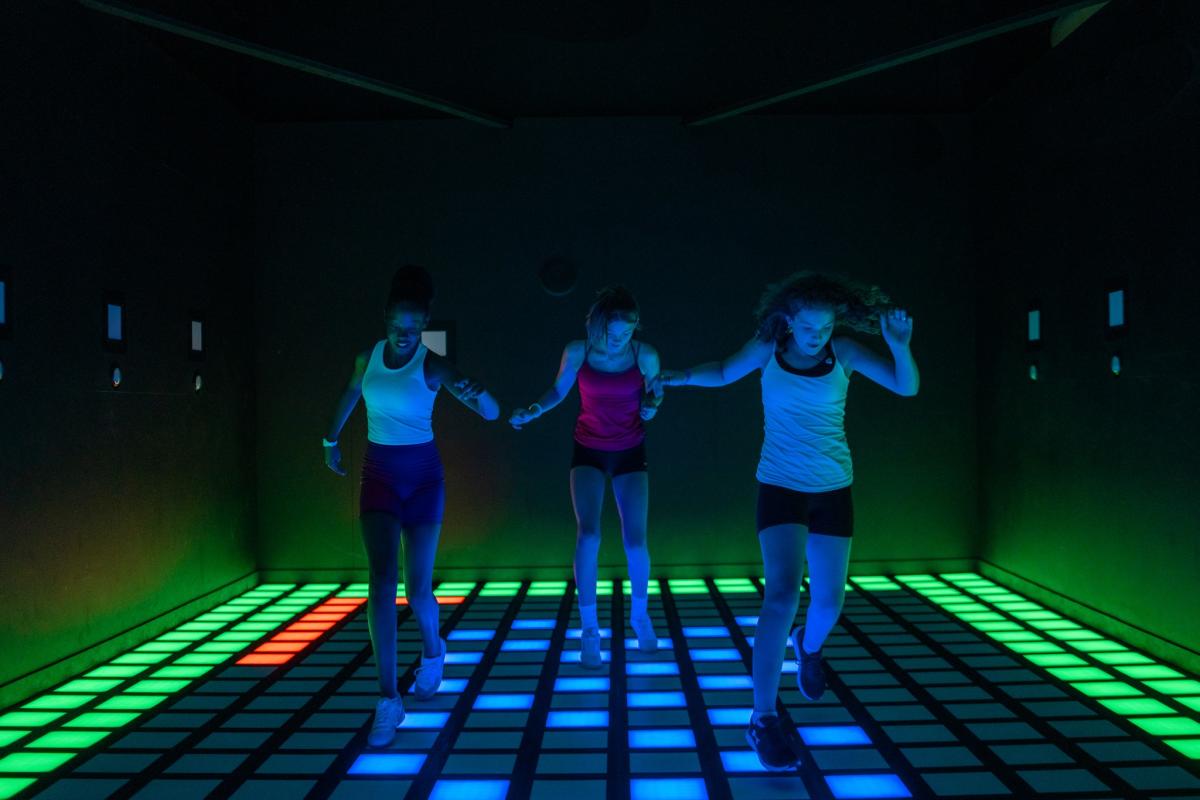
The lava loop, built in
Immersive Interactive LED Floor Game
The commercial floor is lava platform: RGB tile grid with sensor-driven response, customizable game modes including reaction, competition, memory and team formats, built for daily FEC operation.
View Details ›
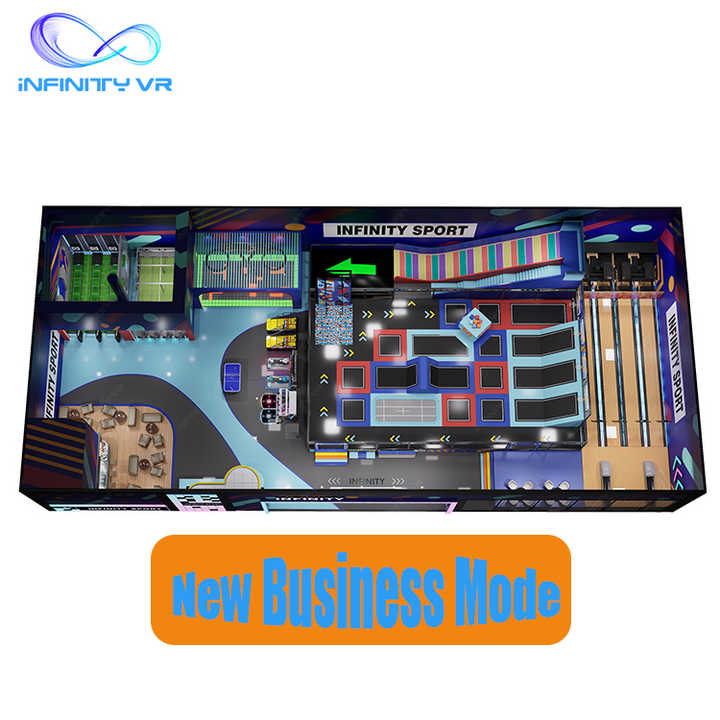
Multi-game zones
Custom Interactive Sportainment Equipment
Configure a multi-game interactive zone around the grid - one footprint, several game formats, matched to your floor plan and guest mix for family entertainment centers and sports clubs.
View Details ›
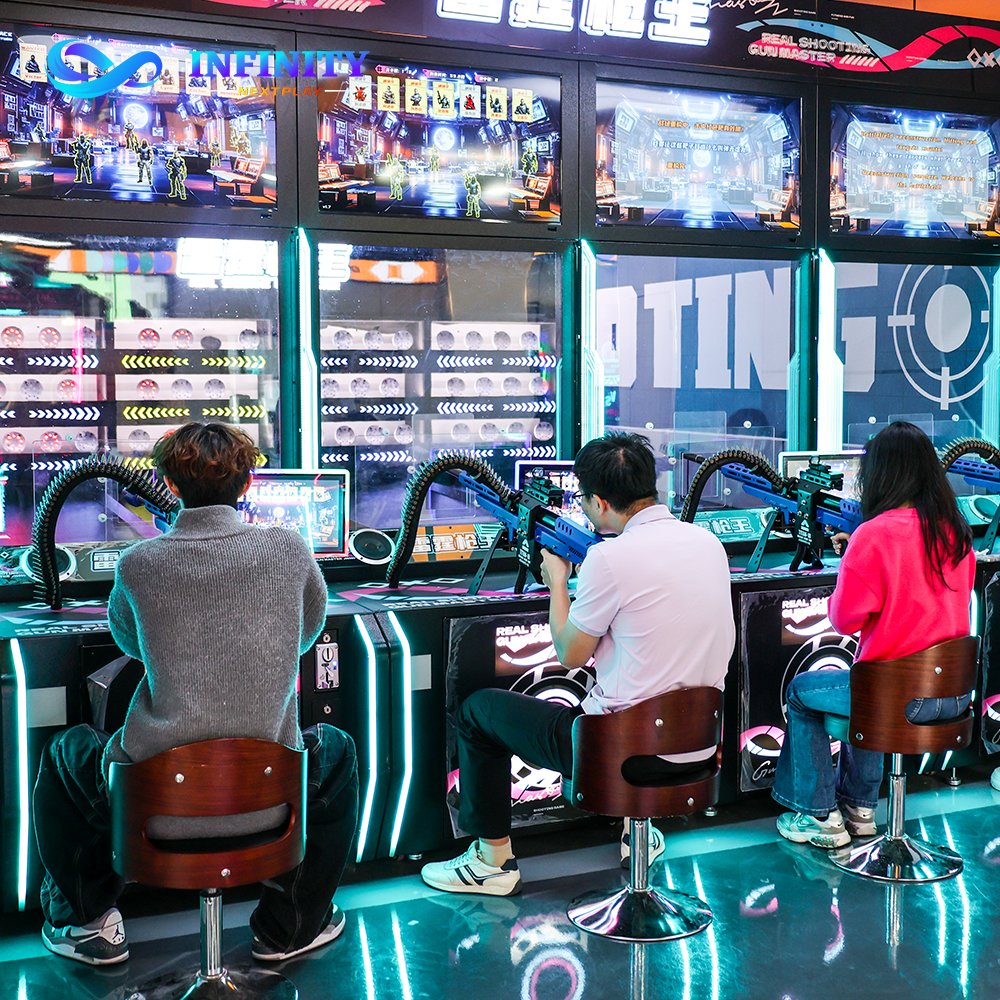
Zone companion
Automatic Rubber Bullet Shooting Machine C4
A self-loading moving-target interactive unit that pairs naturally with a floor game zone: while one group owns the grid, the next group starts on the targets - two earning stations, one footprint.
View Details ›
10. Floor Is Lava Game FAQ
The questions buyers and parents actually ask, in the order they ask them.
Is the floor is lava game only for kids?
No. The playground version is a children's game, but the commercial versions are engineered all-ages: difficulty settings scale from five-year-olds to corporate team-building groups, and adult players are the ones who turn a survival final into a spectator event. Family venues buy it precisely because one rule spans every age band.
Do I need special flooring to install an LED grid game?
You need a flat, sound subfloor, a power drop and enough ceiling clearance for any surrounding theming - the same site basics as any LED floor installation. The tiles are modular and load-rated for commercial foot traffic, so no structural change is normally required; the full site-preparation checklist is in our LED floor prep guide.
How many players can play at once?
Depending on grid size and mode, four to eight players comfortably, with team formats absorbing more by splitting zones. Spectators are part of the design: a survival final with an audience is the format that fills the next session.
How long is one round of floor is lava?
A classic survival round runs about one to two minutes; reaction and memory formats run one and a half to three. Short rounds are a feature, not a compromise - they keep lines moving, sell repeat plays and let a walk-up guest start within a minute of arriving.
Can the same LED grid run other games?
Yes, and it should. The mode library - reaction sprints, head-to-head competition, memory paths, team relays - runs on the same tiles, and software modes are configurable per venue. Budget for the zone, not the single game; the lava mode is the headline act, not the whole show.
How is an LED floor grid different from a projection floor?
A projection floor throws an image and usually senses with a camera above; an LED grid is the display itself, tile by tile, with detection built into the surface. The grid is brighter under ambient light, has no projector to shadow or recalibrate, and takes footwear abuse directly. We keep the full comparison in our interactive floor formats guide.
11. Key Takeaways: The Floor Is Lava Game as an Attraction
Six lines to take into your next planning conversation.
- The game is one rule - do not touch the floor - and one rule is the whole commercial case: zero tutorial, instant stakes, all ages.
- The Netflix show (3 seasons, 2020-2022) industrialized the keyword; the playground keeps it alive. Your guests arrive pre-trained.
- The machine is a loop: sense, trigger, score, reset. Buy the loop, not the light show.
- One grid carries the survival classic plus four more mode families - budget for the zone, staff it with one attendant.
- The revenue case lives in dead-corner activation, party anchoring and dwell lift; the detailed models are in our cost, activation and birthday guides.
- Size the grid to your traffic, place it where falling is funny, and keep the approaches clear - then let the loop run.
Ready to put the loop on your floor? Start from the immersive interactive LED floor game specification, check how the zone fits your plan with the free 3D layout design, or step back to the full venue solution to see where the grid sits in the attraction mix.
Put the Lava Loop on Your Floor
Send us your floor plan and guest mix: we will come back with the grid size that fits, the mode lineup your traffic supports and a free 3D layout - or start from the full venue solution overview.

