VR CHAIR VS STATIONARY VR
VR Simulator Chair vs Stationary VR: Which Experience Is Better?
A VR simulator chair is better for ride content - coaster, flight, race, battle - because the body moves with the picture; stationary VR is better for world content such as story, exploration and casual group play, and it costs less. This guide compares the two side by side: the four real differences, the honest motion-sickness science, price and space shapes, and a decision rule for who should pick what.
VR Chair vs Stationary VR Simulator Chair Motion VR vs Headset VR Ride Experience Immersive VR Comparison VR Venue Formats
1. The Short Answer: Motion Wins on Immersion, Stationary Wins on Price and Space
Which is better, a VR simulator chair or stationary VR? A simulator chair with motion feedback is better for anyone who wants the ride - the type of experience where the software is a roller coaster, a flight, a drive or a battle, and the whole point is feeling the motion. Stationary VR - headset-only, seated or standing - is better when the experience is a story, a puzzle, an exploration or a shoot-out, and the value is in the world rather than the motion. Each wins by being the right tool for a different job, not by being universally superior.
This guide compares the two honestly and side by side: what motion feedback actually changes in the headset, how each handles motion sickness, the price and space shape of each, and a short rule of thumb telling you which one to pick for which kind of ride and rider. For the feel of the ride itself, the chair roller coaster experience guide has the first-person version; for the science of why chairs help some riders and not others, the motion sickness guide covers the mechanism. This article is the decision between the two formats.
One-line rule: if the software tells a story, pick stationary VR; if the software is a ride, pick a motion chair. Both are legitimate - they are different products wearing the same "VR" label.
2. What a Motion Chair Adds That a Headset Cannot
The difference is physical: a VR motion chair at the ride level moves your body. Based on our VR 360 Motion Chair specification, the machine provides 360-degree yaw rotation plus 45-degree pitch, matched in real time to the video, and a library of 70+ ride titles of roughly 2-5 minutes each. Stationary VR gives you the same eyes but none of that body channel - you see the dive, but you do not feel it. For ride-style content, that body channel is exactly what makes the memory, and it is the reason the motion-sickness science shows motion-matched rides can feel more natural rather than more sickening.
There is a second, quieter difference: presence. A stationary player keeps the awareness that the floor is still under their feet; a motion-chair player gets the same drop-of-the-stomach cue a theme park ride delivers. That is why venues charge a premium for the chair, and why the worth-buying comparison recommends the chair for adrenaline content and the headset for exploring content. The single-seat 360 chair covers the personal ride; the double-seat chair turns the same ride into a shared event.
| What You Feel |
Stationary VR |
VR Simulator Chair |
| Sight (headset picture) |
Yes |
Yes |
| Head turn / peer |
Yes |
Yes |
| G-sense / dive pull |
No |
Yes (360 yaw + 45 pitch) |
| Vibration / rumble |
Only if floor props |
Ride-matched |
| Drop-of-stomach cue |
No |
Real (rotated body) |
| Price per session |
Lower |
Premium |
The biggest single upgrade is the dive: on a roll or a drop the chair tips you into it, so your inner ear reports exactly what your eyes report - a match the sickness guide explains in detail. That physical honesty is what separates a ride from a picture.
3. Motion Sickness: The Honest Version for Both Formats
The surprise most people have is backwards: for many riders, a motion-matched chair causes less nausea than a headset sitting still. The motion sickness science shows sensory conflict (eyes say move, inner ear says still) is the main trigger; a chair that rotates you in step with the picture narrows that conflict, which is why the same coaster video is often more comfortable on a chair than on a bare headset. But chair rides are not sickness-free - fast reversals, long rotations and very long sessions still build discomfort for sensitive riders.
Stationary VR has a cleaner profile for explorers but a worse one for riders: slow walking and story content rarely triggers sickness, while seated games that accelerate you without body feedback create exactly the conflict chairs avoid. The ride experience guide describes the practical session shapes (short 2-5 minute rides, brief recoveries, sensible breaks) that keep both formats comfortable, and venue instructions should always be followed. The full mechanism, age fits (Meta recommends 10+ with parent-managed accounts; PlayStation guidance excludes under-12s) and break schedules live the sickness guide.
Honest science: a motion chair that matches the picture can feel MORE natural than the same headset sitting still - but reversals, long rotations and long sessions still affect sensitive riders. Choose short rides and sensible breaks in both formats.
4. Price and Space: What Each Format Costs at a Venue
The shape of the cost difference is the practical tiebreaker. A motion chair needs a safety bay (the install spec wants clear radius and clearance, as the 360 chair install guide details), a power allocation, and a wider footprint than the thin wall-table a stationary headset can run on. That is why venues price chair rides at a premium - the chair, the power and the floor it owns all cost money, and the ticket reflects it.
Stationary VR, by contrast, is the cost-efficient format: a handful of headsets on a wall stand, a shared PC or console, minimal power and footprint. It is the format that scales for story libraries and party queues, and it is why family and education centers run headset parlors alongside a single premium motion chair rather than a whole floor of chairs. The right venue layout is usually both: one or two motion-chair bays for the ride crowd plus a stationary wall for the explorer crowd, sized by the traffic each audience brings.
| Cost & Space Line |
Stationary VR |
VR Simulator Chair |
| Floor footprint |
Small (wall stand) |
Safety bay per chair |
| Power |
Consumer-level |
Allocated circuit |
| Ceiling |
Standard |
Minimum clear height |
| Price per session |
Lower |
Premium |
| Best for |
Stories / parties / scale |
Rides / adrenaline |
| Mixed-venue fit |
Explorer lane |
Ride lane |
5. Who Should Pick Which: A Decision Rule for Riders
Match the format to the person and the ride. Pick a VR simulator chair when you want the adrenaline: coaster, flight, race, battle or drop content, a 2-5 minute strong ride, and the budget for a premium ticket. Pick stationary VR when the draw is the world: exploration, story, puzzle, casual multiplayer, or when a group wants to walk around without staying seated. Kids under the age guidance in the sickness guide, riders who dislike fast motion, and anyone prone to travel sickness should pick the gentler format or the shorter chair ride and follow venue guidance.
The venues that do this best run both and label them honestly - ride tokens for the chair, explorer tokens for the headset wall - so the guest chooses their own comfort level. The worth-buying guide votes the same way from the buyer side: buy the chair for ride content, the headset wall for library content. The compact VR egg chair sits between the two: a low-motion, kid-friendly seat that still gives a body channel without the 360 spin.
Decision rule: ride content + adrenaline craving = motion chair; world content + group/explorer mood = stationary VR; gentle motion for kids or sensitive riders = the low-swivel egg chair lane.
6. The Verdict: Better Depends on the Ride You Want
"Worse" or "better" is the wrong question - the two formats answer different wants. If you want to be in the story, stationary VR is better and cheaper. If you want to be on the ride, a simulator chair is better and worth its premium. For venue operators the practical answer is the mixed floor (a chair bay plus a headset wall), because the same guest who rides will also explore, and the two formats feed each other through the queue. The venue best practice is described in the ride experience guide and the revenue side in the worth-buying analysis.
Book the format that matches the ride: pick the double-seat 360 chair for groups who ride together, the single-seat chair for the personal adrenaline run, the egg chair for gentle family motion, or plain stationary VR when the world is the show. If you are designing a venue, run the mixed layout through the free 3D layout service to see how a chair bay and a headset wall share the floor.
Planning note: ride lengths, prices and age fits in this article are planning references based on typical venue formats and the manufacturers public guidance. Always check the specific machine and venue rules before booking, and follow the venue instructions for riders who feel unwell.
7. Featured NextPlay Active Gaming Equipment
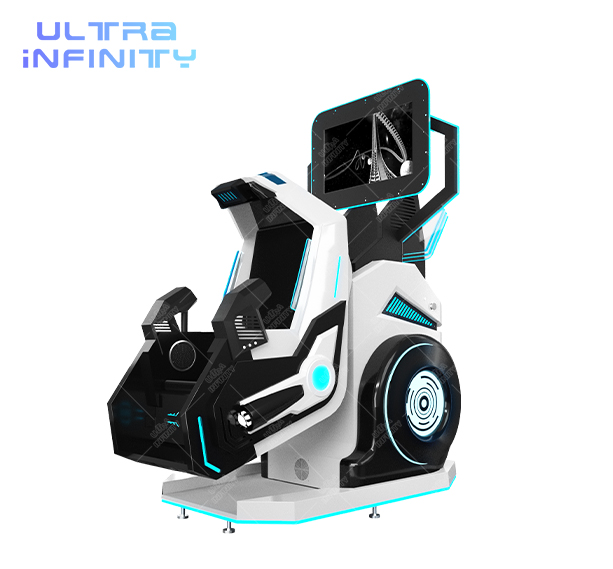
Personal Ride
VR 360 Motion Chair (1 Seat)
Single-seat 360-degree rotating VR motion chair - 360 yaw + 45 pitch, 70+ titles of 2-5 minutes, the adrenaline format for one rider.
View Details ›

Shared Ride
VR 360 Motion Chair (2 Seats)
Double-seat rotating VR chair - the same ride taken together, the format that turns a personal thrill into a shared event.
View Details ›
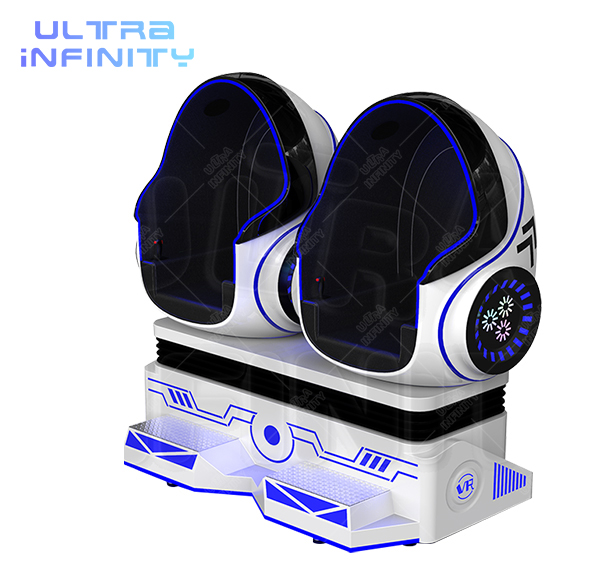
Gentle Motion Lane
VR Egg Chair (9D)
Compact 9D egg chair - lower-motion, child-friendly middle ground between headset and full 360 spin for sensitive riders.
View Details ›
8. VR Simulator Chair vs Stationary VR FAQ
The selection questions riders and families actually ask, answered with the motion-vs-stationary comparison above.
Which is better, VR simulator chair or stationary VR?
It depends on the ride. For ride-style content (coaster, flight, race, battle), a motion chair is better because the body moves with the picture. For world-style content (story, exploration, puzzle, casual group play), stationary VR is better and cheaper. They are different products, not better-versions of the same one.
Is a VR chair more immersive than stationary VR?
Yes, for ride content - a motion chair adds rotation and pitch matched to the video, so your inner ear agrees with your eyes and the dive feels real. For story content, the extra motion is rarely needed and the headset experience is already immersive.
Does a motion chair cause more motion sickness than stationary VR?
Not necessarily - for many riders the opposite. A chair that rotates you with the picture reduces the sensory conflict that causes nausea, so the same coaster can be more comfortable on a matched chair than on a bare headset. Reversals, long rotations and very long sessions still affect sensitive riders in either format.
Why does a VR chair cost more than stationary VR?
The chair needs more of everything: the motion base, a safety bay with clear radius and clearance, a dedicated power allocation and a wider footprint. A headset wall runs on a small stand and consumer-level power, which is why venues price chair rides at a premium and headset sessions cheaper.
Is a VR simulator chair good for kids?
Only if they meet the machine and platform age guidance (Meta recommends 10+ with parent-managed accounts; PlayStation guidance excludes under-12s) and do not mind fast motion. For younger or sensitive riders, a low-swivel egg chair or stationary VR is the gentler pick.
Can a venue or home run both VR chair and stationary VR?
Yes, and venues often do: one motion-chair bay for the ride crowd plus a headset wall for the explorer crowd. The mixed layout lets the same guest ride and explore, and the two formats feed each other through the queue.
What content is better on a simulator chair vs headset?
Chair: roller coaster, flight, race, drop, combat rides - anything where the body moving IS the experience. Headset: story, exploration, puzzle, creative and casual multiplayer games where the world is the experience.
How long is a typical VR chair ride session?
Roughly 2-5 minutes per ride, with 70+ titles on the library - a short strong burst followed by a break, which keeps both comfort and queue moving. Stationary VR sessions are typically longer because they are gentler.
Does stationary VR need a special space?
Stationary VR needs a small clear play area (roughly arms-length around the player) and a wall stand or shelf; it does not need the safety bay, ceiling height or allocated circuit a 360 chair requires.
How do I choose what to book at a VR venue?
Pick by content: if the draw is a ride, book the chair; if the draw is a world, book the headset; if you want gentle family motion, ask for the low-swivel seat. Follow the venue instructions for riders who feel unwell.
See Which Format Fits Your Venue
Run the mixed layout through the free 3D layout service to see how a motion-chair bay and a headset wall share the floor - or ask the team which format suits your traffic and content plan.

