VR FIGHTER JET GUIDE
VR Fighter Jet: What Does a 360-Degree Dogfight Feel Like?
A 360-degree VR fighter dogfight feels like sitting inside your own view of an air battle - the seat spins a full circle as the scene banks, horizon rolls and the enemy slides past your wingtip. This guide walks the fly-fight-feel sequence for first-timers: the three controls, six beginner fighter moves, the body science of the 360 spin, and the safety rules that keep it fun.
VR Fighter Jet 360 Dogfight First-Time Motion Sickness Flight Controls BFM Basics
360-degree
Full-Spin Seat
1. The Short Answer: It Feels Like Flying a Camera That Can Also Kill You
What does a 360-degree dogfight feel like in a VR fighter jet? The short answer: a VR fighter jet dogfight feels like sitting inside your own point of view of an air battle - the seat spins a full circle while the headset shows your jet banking, the horizon rolling and an enemy fighter sliding across your canopy past your wingtip. Because the chair rotates with the scene, your inner ear and your eyes tell the same story for the spins - which is why first-timers on a rotating VR flight seat often report the intensity higher but the queasiness lower than they expected.
This guide is written for people about to climb into one for the first time - at an arcade, an entertainment venue or a flight zone. It covers what the machine does to you (the fly part), the six moves that actually win a dogfight (the fight part), what the 360 spin feels like in your body (the feel part), and the safety rules that let everyone have the ride without the sickness. It is written around the Infinity VR Thunder Fighter F2, the rotating flight-and-shooting seat you typically meet first.
Fly - Fight - Feel: master the controls, then the combat basics, then read what your body is doing during the 360 spin. That order keeps first flights fun instead of disorienting.
2. Fly First: The Three Controls You Need Before Takeoff
A flight-shooting VR machine is a fighter cockpit, not a driving wheel, and the control language is worth learning before the screen lights up. You have three inputs: the joystick in front of you (which banks and pitches the jet - push it left to roll left, pull it back to climb, push forward to dive), the throttle or trigger system (which controls engine thrust - more throttle, more speed and more turn rate, but also more energy burned), and the fire button (which shoots). On the VR Thunder Fighter F2 these sit together on a hall-effect joystick with trigger fire and integrated combat controls - no pedals, no keyboard, no rebinding during a session. Five minutes on a screen tells a first-timer everything they need in the air.
The one habit that saves every new pilot: keep looking where you want to go, not at the enemy. Fighter pilots call it "never lose visual" - the first person to lose sight of the bandit loses the merge. In VR this becomes literal: your head movement is camera movement, so tracking the enemy with your eyes and head, then flying your jet to match, does most of the work before you touch the trigger. The VR flight simulator complete setup guide walks the hardware that makes that head-tracking response tight.
3. Fight Second: Six Beginner Moves That Actually Win Dogfights
Dogfighting inside a VR sim follows the same basic fighter maneuver (BFM) principles that real air-combat training teaches, scaled to a 3-8 minute arcade session. These six are the beginner set: fast to learn, easy to feel on a rotating seat, and genuinely the difference between a boring flight and a win.
- Never lose visual - the bandit is wherever you last saw him; fly your eyes, then your jet.
- Manage speed, do not max it - a tight pull at full throttle bleeds energy and the enemy just flies past you; keep a sustainable turn speed.
- Use the vertical - dive to gain speed, climb to trade speed for altitude, and turn in the vertical instead of level circles.
- Shoot guns with lead - put the gun pipper ahead of the enemy
- s nose, not on it; pure pursuit (aiming straight at them) sends your bullets behind a turning jet.
- Lock missiles before firing - wait for the lock tone, then release; launching blind is a wasted missile.
- Defend with scissors - if someone is on your tail, reverse your turn, then reverse again; a fast or careless attacker flies past you and gives you his six.
All six work on a 360 rotating seat exactly as they do in a flat simulator, and the seat makes the energy game physical: when you pull hard into a vertical scissors, the chair banks with you and your body feels the G transferred through the rotation, which is what separates a VR fighter from a flat-screen flight game. The first time a defender reverses on you and you watch him overshoot, you will feel the win in the same instant the headset shows it.
| Beginner Move |
What You Do |
Why It Works |
| Lose visual last |
Track the enemy with your head, then fly to him |
Head-tracking VR = your eyes fly the camera |
| Speed discipline |
Pull less, keep sustainable turn rate |
Full-speed turns bleed energy; overshoot loses the merge |
| Vertical attack |
Dive to gain, climb to convert speed |
Vertical turns beat flat circling in the same time |
| Lead pursuit guns |
Pipper ahead of the nose, not on it |
Turning targets need bullets led, not aimed |
| Lock then fire |
Wait for lock tone before releasing missiles |
Blind launches are wasted ordnance |
| Scissors defense |
Reverse your turn over and over |
Forces a fast attacker to overshoot; gives you his six |
None of this requires real-jet training - it is the same reasoning a venue coach will give you in two minutes at the machine, and it is why a "flight zone" is a different product from a cinema chair: the same 360 seat that prices like a ride also runs like a game with a skill curve. The how much a 360 VR Thunder Fighter earns piece explains why venues like the replay value that skill curve creates.
4. Feel Second-and-a-Half: What the 360 Spin Actually Does to Your Body
The 360 rotation is the part first-timers ask about before they sit down, so let us make it concrete. When the chair spins to match a headset attitude change, the rotation briefly accelerates your head in one direction, and that short angular-acceleration pulse is what fools your vestibular system into feeling forward acceleration - the "push in the chest" sensation that makes a loop feel real. Researchers who study VR spinning platforms describe it the same way: a short rotational pulse is enough to produce a convincing sensation of motion without any real G-load.
The physics that keep a 360 chair pleasant: your inner ear and your eyes are telling the same story. When the chair rotates exactly with the scene, the vestibular and visual channels agree - and matching sensory channels is the documented way to reduce vection-induced sickness versus a fixed seat where the visual says turn but the body says still. The seat has a real skill: getting the rotation rate right - the same calibrated rotation profile In this 360 VR Thunder Fighter maps to each game, and reviewers who tested full-rotation VR chairs note that a too-fast spin (they measured rates near 20 RPM) creates the dizziness most riders complain about, and good venues set the rotation profile to suit the machine, the game and the guest.
Why some people still feel it: the disorientation that does occur comes from the vestibular-visual conflict window during fast reversals - the semicircular canals adapt to constant rotation in roughly 15-30 seconds and then "replay" the turn as a phantom counter-rotation for another 15 seconds after the motion stops. That phantom turn, plus the occasional unseen reversal, is the queasy window. It is short, it is expected, and it is exactly what the 3-8 minute session length and a 15-minute gut-check between flights are designed to manage.
The gyroscopic truth: constant rotation adapts (your canals settle in ~15-30s); stop-then-feel-the-world-spin is the known after-effect. Short sessions and a 15-minute break between flights keep it fun.
5. Who Can Ride, Who Should Skip, and How Long a Flight Should Be
Because a 360 fighter seat is a motion ride with a game on top, the limits come from both truth of the hardware. Headset manufacturers publish health guidance that broadly sets VR off-limits for children under about 13 (systems such as PS VR2 state 12) and cautions pregnant guests and people with heart conditions, high blood pressure, epilepsy or a history of motion sickness to consult a doctor before use. Venue-side, rotating 360 seats enforce their own rules: height minimums (roughly 88-100 cm / 35-40 in for cockpit-style seats), single-rider weight limits around 130-135 kg, a requirement to sit upright with the harness and knee bar secured, and staff stopping the ride instantly on a raised hand.
| Guest Group |
Guideline |
Why |
| Children under ~12-13 |
Not recommended (varies by headset/venue) |
Headset vendor health guidance; seat limits |
| Pregnant guests |
Do not ride |
Motion + restraint; universal venue rule |
| Heart / blood pressure conditions |
Doctor first or skip |
Adrenaline + rotation load on the cardiovascular system |
| Motion-sickness history |
Doctor first; short sessions |
Vection sensitivity is personal |
| Height / weight limits |
Follow the seat (e.g. 35-40in, ~130-135kg) |
Harness and knee-bar engagement |
Session length on commercial VR ride machines clusters at 3-8 minutes per flight across published product specs - the sweet spot where the novelty peaks and the canal-adaptation window we described stays well inside the fun zone. Venues that run longer flights quietly hurt repeat play; the fix is the 3-6 minute flight plus a quick re-line and a fresh opponent, which is what a well-run VR flight zone does in the same 8-minute block. For guests who want the flying without the fighter pressure, the 9D VR airplane machine runs a gentler single-seat flight at the same facade.
Health note: motion simulators are not suitable for pregnant guests, or for people with heart conditions, high blood pressure or a history of motion sickness (consult a doctor first). Headset manufacturers recommend age minimums (for example 13 in some systems, 12 for PS VR2) and venues with rotating 360 seats enforce height, weight and safety-harness rules. If you feel queasy at any point, raise your hand - staff stop the ride immediately.
6. Your First Flight: A 60-Second Walkthrough So You Do No Wrong
Here is what actually happens minute by minute, so the first session feels like a familiar ride instead of a blind test. You step in, sit, and staff adjust the headset and lock the chest strap and knee bar. The briefing is two sentences: look around freely - the view follows your head - and pull the trigger to shoot. Then the world lights up.
- Settle in: hand on the joystick, feet where staff place them, harness tight enough to feel secure, not squeezing.
- Take-off moment: the scene lifts through the clouds; keep your eyes on the horizon line in front of you, not at your feet.
- First turn: push the joystick gently and let the chair rotate under you - that is the "fly" feeling, and matching headset + seat is the calmest part of the ride.
- See a bandit: track him with your head, add throttle, and put your gun pipper ahead of his nose before firing.
- Mission ends: the screen or staff signals the stop; hold still for a second after the chair stops - the world-spin after-effect is normal and passes in seconds.
- Gut check between flights: wait 15 minutes before a second run if that was your first 360 flight ever.
The whole loop - brief, fly, fight, debrief - fits inside the 8-minute window the machine is built for, and the "hold still for one second after stop" step is the piece most guests skip and then blame the machine for. The VR flight simulator equipment guide explains the headset, seat and safety design that make that loop repeatable.
7. Featured NextPlay Active Gaming Equipment
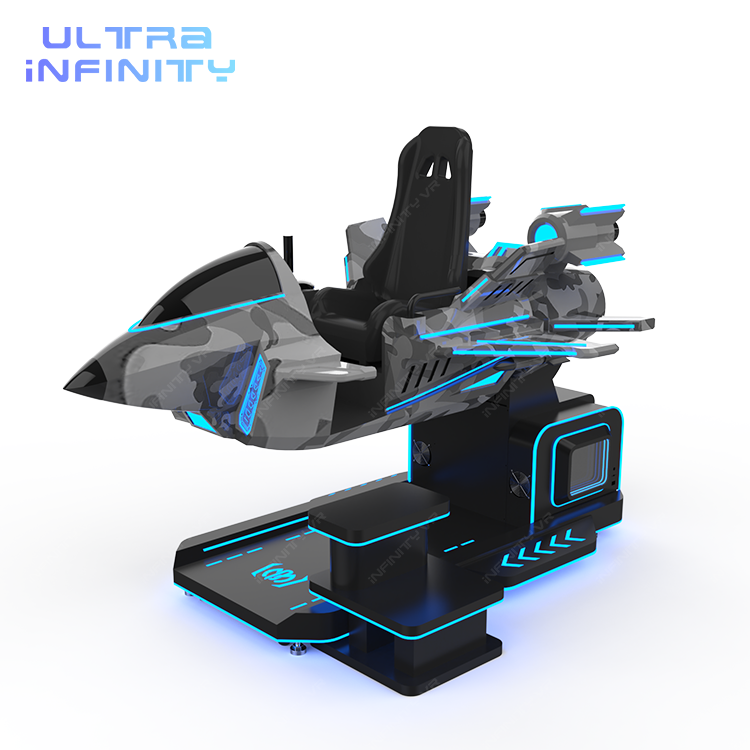
The Rotating Fighter Seat
VR Thunder Fighter F2
Single-seat 360 flight-and-shooting fighter with joystick controls. The machine first-timers meet on a flight zone floor - fly, fight and feel in one seat.
View Details ›
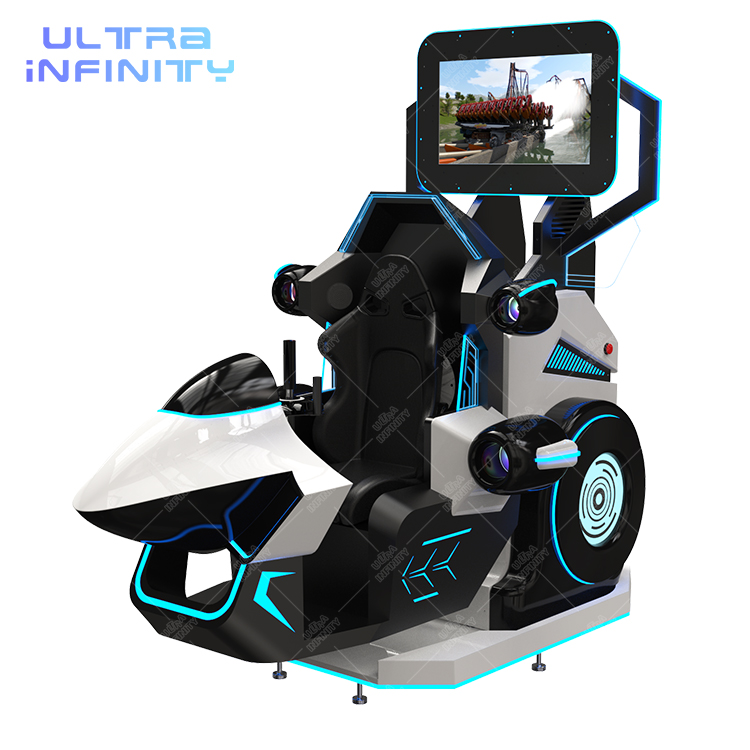
Flight + Racing Rotation
360 VR Thunder Fighter
The 360-degree rotating chair that swaps flight and racing modes. Same spin physics, different dose of adrenaline.
View Details ›
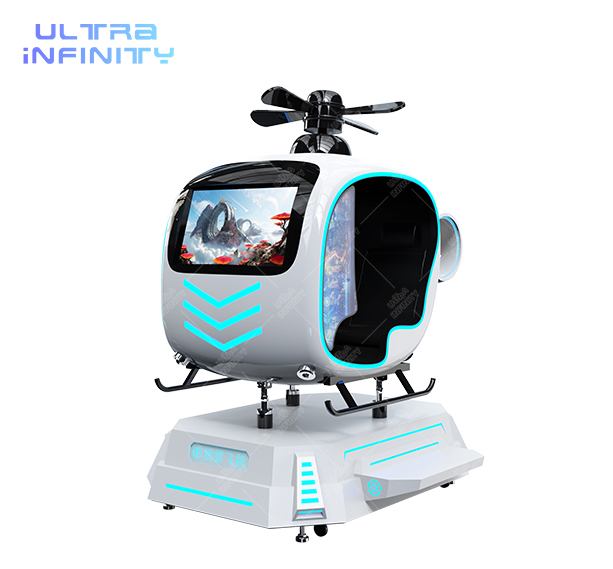
Gentler First Flight
9D VR Airplane Machine
A single-seat 9D flight simulator for guests who want the flying without the fighter pressure - a softer on-ramp to the same flight zone.
View Details ›
8. 360 Degree VR Dogfight FAQ
The questions first-time 360 VR fighter pilots actually ask at the machine, answered straight.
What does a 360-degree VR dogfight feel like?
It feels like sitting inside your own point of view of an air battle: the seat spins a full circle as the scene banks, the horizon rolls and the enemy swings past your wingtip. Because the chair matches the scene, most first-timers find the intensity higher and the queasiness lower than expected.
Is a 360 VR fighter seat motion-sickness prone?
Less than a fixed seat for most people, because the rotation matches the visual scene and the vestibular + visual channels agree. The documented queasy window comes from fast reversals and the phantom counter-rotation after the spin stops - both manage with short sessions and a 15-minute gut check between flights.
How do I fly the VR fighter?
Think of it as three inputs: joystick banks and pitches the jet, throttle adds speed and turn rate, trigger fires. And keep looking where you want to go - your head is the camera, so tracking the enemy with your eyes and then flying to it does most of the work.
Why does the 360 spin make my chest feel pushed?
That is a short rotational acceleration of your head being read by your inner ear as forward acceleration - the same sensory trick used to make simulators feel like they are really moving without actual G-load. It is the intended sensation, and it is strongest right after takeoff and during hard turns.
How long does one flight last?
Commercial VR ride machines run about 3-8 minutes per flight. That window keeps the loop thrilling while staying well inside the body adaptation time, and venues use the same block to re-line the next guest.
Can kids ride a 360 VR fighter?
Headset manufacturers set age minimums around 12-13, and venues with rotating seats enforce their own height, weight and harness rules (roughly 35-40 in and 130-135 kg single-rider). Check the machines posted limits before queueing children.
What if I feel sick mid-flight?
Raise your hand. Staff stop the machine immediately, open the restraint and let you out. The after-effect world-spin passes in seconds; skipping the second flight and drinking water fixes almost all of it.
Do I need to know fighter tactics to enjoy it?
No - six beginner moves cover it: keep eyes on the enemy, manage speed, use the vertical, lead your guns, lock missiles before firing, and scissors to defend. A two-minute briefing at the machine teaches them all.
Who should skip a 360 VR fighter?
Pregnant guests, people with heart conditions, high blood pressure, epilepsy or a history of motion sickness should skip or consult a doctor first. Anticipating the rule is what keeps a flight zone fun for everyone in line.
Is a rotating fighter seat stronger than a normal VR ride?
Stronger, not harder: the rotation adds the physical turn to the visual turn, which most people experience as more immersive and less floaty. The machines rotation profile matters - a venue that tunes it to the guest keeps the 2,500-hour headset and the smile both intact.

