THE 2026 VR CHAIR GUIDE
VR Chair: The Ultimate Guide to More Immersive Virtual Reality Gaming in 2026
A VR chair is five different products sharing one name: a comfort seat, a swivel, a home motorized 360 chair, a commercial 360 motion chair and a multi-seat cinema. This guide maps the whole spectrum with the Immersion Stack model, gives the honest home-versus-venue decision, answers the motion-sickness question without spin and ends with a price and try-it map for 2026.
VR Chair Immersion Stack Five Tiers Motion Sickness Home vs Venue Cost 2026
5
Tiers of Seated VR, 2026
4
Layers in the Immersion Stack
360 deg
Rotation at the Top Tier
$5-20
Cost to Trial a Tier-4 Ride
1. The Short Answer: What a VR Chair Is (and Is Not)
A VR chair is any seat built to turn a headset experience into a whole-body one, and the phrase is doing a lot of work in 2026. At one end it means a comfortable gaming chair you sink into while wearing a headset, which adds nothing moveable at all. At the other end it means a motorized platform that physically turns you, tips you and shakes you in sync with the game. The gap between those two is exactly the gap between "watching the world" and "being inside it", and most of what gets called a VR chair lives somewhere in between. The honest starting point is this: almost no consumer product called a VR chair is the same machine a venue uses, and most of the "more immersive" promise lives in the moveable half.
The market context explains why this question is being asked at all right now. VR gaming crossed into its second wave: dedicated headsets are cheap enough to be an impulse buy, the libraries have real games instead of tech demos, and the number of people who play VR at least occasionally keeps climbing. Published estimates of the virtual reality gaming market for 2026 sit around 41 billion US dollars, and the same research compilations put the global user base at more than 200 million people who will use VR in some form this year. Those are directional, from different methodologies, so read them as "big and growing" rather than as precise facts. What they mean for a shopper is simple: because millions of people now own a headset, the bottleneck for most players has stopped being the headset and started being everything around it - the room, the comfort, the seating, the sensation of movement.
That is where the chair enters. A headset delivers your eyes; a good seated setup delivers everything below the neck. If you already own a Quest, a Pico or a PC headset and you have ever thought "this would be better sitting down", or the reverse, "this is amazing but I wish I could feel the lean", then you are the exact reader this guide is written for. Below, we break the category into five tiers you can actually buy, give you a four-layer way to compare any two products honestly, work through the home-versus-venue choice with real tradeoffs, deal with the motion-sickness question without pretending it does not exist, and end with a practical price and try-it map for 2026.
One-line version: a VR chair is not a single product. It is a five-tier spectrum from "a comfortable place to wear a headset" to "a motorized machine that moves you with the game", and the immersive jump arrives at the tiers that add motion and haptics to your eyes and ears.
2. The Immersion Stack: The Four Layers Between a Headset and a Body
To compare two VR chairs honestly, drop the spec-sheet instinct and count layers instead. We call the model the Immersion Stack because immersion in seated VR is not one feeling, it is four input channels stacked on top of each other: the visual layer (your headset and its display), the audio layer (headphones plus any seat-level sound), the motion layer (whether the seat physically moves you), and the haptics layer (vibration, wind, seat-up kick that makes the game touch your body). A headset alone gives you layers one and two. Everything marketed as "more immersive" is really trying to add layers three and four, and that is the entire honest difference between a gaming chair and a motion chair.
Think about how a roller coaster scene feels in practice. With a headset only, you see the drop and you hear the wind; your body stays still on a normal couch. Most people report that a big drop scene is exciting on the first watch and then flattens, because your body has no reason to believe it. Put that same scene on a motion platform that tips you backwards into the climb, rolls your shoulders over the crest and kicks the seat as the train drops, and your inner ear and your eyes finally agree about what is happening. That agreement, motion that matches the visuals, is the core of why a good motion chair reads as "real" and a static one reads as "a video". It is also why the two layers are inseparable: motion that fights the picture can feel worse than no motion at all, which is the theme of our honest sickness section further down.
The haptics layer is the one most shoppers underestimate. A seat that shakes during an explosion, blows air at your face when the virtual world has wind, or gives a small kick when your virtual vehicle touches down adds a constant stream of tiny "your body is being touched" signals. Those signals are cheap to build and disproportionately effective: a 2 minute ride with layered haptics can feel like a complete experience, while the same ride from a display-only setup can feel like a 2 minute demo. Every serious venue machine we build - the two-seat 360 motion chair, the single-seat 360 motion chair and the compact VR egg chair alike - treats sound, wind and vibration as first-class features for exactly this reason.
The important corollary is that the four layers are independent, so you can spend badly on any of them. An expensive chair with a weak headset still has a weak top layer; a great headset on a wobbly seat leaves the bottom two layers unbuilt. The practical way to use the stack when comparing products is to ask one question per layer: what exactly is the display, what exactly encodes the audio, what exactly moves and in which directions, and what exactly touches me and when. If a product cannot give you a straight answer on layer three, everything else in its marketing is decoration. That layer test is the backbone of the table in the next section.
The Immersion Stack is a planning model used on the NextPlay product team, not a published academic scale. The motion-matching mechanic it reflects is documented: aligning physical motion cues with what a headset shows can reduce self-reported simulator sickness and raise perceived presence (KulSak 2023; Croucher 2025; Kim 2026; Oh 2022; Chang 2020). Sources are mirrored in the NextPlay research archive.
3. The VR Chair Spectrum: Five Tiers and Where Each Fits
Here is the full landscape of what you can sit in while you play in 2026, arranged not by price tag but by how much of the Immersion Stack each tier actually delivers. Read it as a choosing tool: pick your layer count first, then your budget.
| Tier |
What Moves |
Immersion Layers |
Typical Price Signal |
Best For |
| 1. Gaming / lounge chair |
Nothing (static seat) |
1 and 2 only |
USD 100-600 home retail |
Long sessions, comfort, keeping a headset on without fatigue |
| 2. Swivel / rocking seat |
Manual turning and rocking by your body |
1, 2, partial 3 |
USD 50-300 home retail |
Sim racing and cockpit games where you spin the view yourself |
| 3. Consumer motorized 360 chair |
Motorized rotation up to full 360 degrees |
1, 2, 3, partial 4 |
USD 300-900 home retail |
Home Quest users who want gaze-driven rotation and seat rumble |
| 4. Commercial 360 motion chair |
360 degree rotation plus 45 degree pitch, wind, effects |
1, 2, 3, 4 complete |
USD 5,000-12,000+ per machine |
Arcades, malls and FECs selling premium 2-5 minute rides |
| 5. Multi-seat cinema chair |
Group motion with synchronized seats |
1, 2, 3, 4 complete |
Quoted per project |
Families and groups who want to ride the same story together |
Tier 1 is where almost every home player starts, and it is a completely legitimate purchase. An ergonomic chair that stops your back from making you quit after forty minutes is real value - it improves your play just by letting you play longer. What it does not do is add a single layer of immersion beyond your headset and headphones. If the phrase "more immersive" is what you are shopping for, a tier 1 chair is not the answer to that question; it is the answer to the question "how do I stay comfortable for longer".
Tier 2 is the hidden darling of the spectrum. A swivel office chair, a rocker or a rotating seat you can turn with your body gives you a partial motion layer for close to zero money: in a cockpit game you physically spin to look out the side window, and in a headset that tracks your body motion the game responds. The catch is that the motion layer is driven by you, so it is passive - the chair never decides to move you. For flight and racing sims at a desk this is often the best value-per-dollar in the whole table.
Tier 3 is the newest and most interesting thing to happen to home VR in years: a consumer motorized chair that turns you automatically. The cleanest 2026 example is the Roto VR Explorer, a "Made for Meta" motorized chair that rotates up to a full 360 degrees, carries a haptic motor in the seat and back, and uses a head tracker puck so the chair turns to follow where you look. It lists around 800 US dollars, spins at up to 21 revs per minute, and its 84 cm rotating footprint and 30 kg weight tell you it lives in the middle of a room, not against a desk. Reviews are genuinely positive about what it adds to gaze-driven games, and genuinely honest about its limits: for racing and flying titles without motion compensation the chair cannot match your virtual direction to your physical one, so a game that is not built for it gains almost nothing. Tiers 3, 4 and 5 all share that same software caveat, which is why we flag it everywhere and explore it further in the sickness section.
Tier 4 is the professional version of the same idea, and it is what venues actually run. A commercial 360 motion chair couples full rotation with a 45 degree pitch envelope - lean-forward, lean-back and roll all come from a real motor and actuator, not from you - and adds wind, vibration and a screen to the package. The single-seat 360 motion chair and the two-seat 360/720 chair are the formats you will meet in an arcade, a mall kiosk or a family entertainment center, playing 2 to 5 minute curated rides rather than 40 minute game sessions. Tier 5, the multi-seat and egg cinema formats, stretches that logic to groups: several seats move together through one story, which is how a venue sells one attraction to a whole family at once.
Choosing rule of thumb: home users who want the motion layer buy tier 3 for rotation, or tier 2 swivel for desk sims, and never confuse tier 1 comfort with immersion. Venues buy tier 4 and 5 because only commercial machines deliver complete four-layer rides with the throughput and safety engineering a paid ticket demands.
Roto VR Explorer details (list price around USD 800, 21 RPM max rotation, 84 cm rotating diameter, 30 kg, Made for Meta, head-tracker puck): taken from the manufacturer product listing and from the UploadVR 2025 hands-on, which noted that games with and without motion compensation are very different experiences. Third-party price checks shift over time; treat the numbers as a planning signal, not a quote.
4. Home Gamer vs Venue Owner: How the Choice Differs
The same five tiers serve two completely different buyers, and the biggest mistake we see in either group is copying the other group strategy. A home gamer and an arcade operator are not trying to buy the same thing, yet most search advice treats them as one audience. So split the advice in half.
| Question |
Home Gamer |
Venue Owner |
| Ride length you need |
Moments of movement inside a longer session |
Full 2-5 minute curated rides, on a loop |
| Who will use it |
One person, mostly solo or with friends |
Hundreds of strangers a week, all sizes |
| Space to give it |
A corner of a bedroom or living room |
A defined kiosk area with a clear safety radius |
| Key spec to chase |
Rotation plus software support for your games |
Riders per hour, safety locks, spares, warranty |
| Budget reality |
USD 100-900 home retail |
USD 5,000-12,000+ per machine, quoted per project |
For the home gamer, the decision flow is short. If your games are desk-based cockpit titles, a tier 2 swivel beats everything else in value. If you want the marquee "the chair turns me" effect, tier 3 is the first tier that delivers it, but only for titles that actually support turning - read the compatibility list before you buy, not after. If sessions end early because your back hurts, fix that with tier 1 comfort first and add motion later; a sore player never reaches the immersion anyway. What you almost never need at home is tier 4, not because it is inferior but because a 360 degree rotating commercial platform with pitch actuators is enormous, needs a safety radius and is engineered for a paying crowd, not a living room.
For the venue owner, the logic is business math, not gadget math, and it is deliberately covered elsewhere on this site because it needs its own depth. The question "are VR chairs worth buying" is answered with real payback work in our are VR chairs worth buying guide, the published commercial price bands live in the VR chair cost guide, and the physical requirements - ceiling height, floor load, power - are broken down in the ceiling, floor load and power guide for 360 chairs. If your question is how many machines fit in a given floor, the density numbers are in the how many VR chairs fit in 50 square meters guide, and the revenue angle - including the riders-per-hour and food-sales effects - is in the is a VR chair profitable for an arcade guide. This pillar deliberately does not re-derive those numbers; it points you at them.
One crossover point is worth naming because it confuses both audiences: the "static versus motion" question. A venue owner with a fixed budget sometimes asks whether they can skip motion entirely and just run headsets on static seats, and a home gamer sometimes wonders whether a 900 dollar consumer chair is secretly the same as a commercial machine. The VR simulator chair vs stationary VR guide answers the first question with a side-by-side of what each format actually delivers for the money, and it reaches the conclusion that matters for both audiences: the motion layer is where the perceived value jumps, so cutting it saves the most money but also surrenders the most. And the do VR chairs reduce motion sickness guide adds the nuance that matters most to nervous first-timers, which is the topic of the next section.
5. The Motion Sickness Question, Answered Honestly
No honest guide to VR chairs can skip this, because it is the first question everyone with a sensitive stomach asks and it has a genuinely two-sided answer. Motion sickness in VR comes from a sensory conflict: your eyes report fast movement while your inner ear reports none, and your brain answers that contradiction with nausea. The layer the chair adds has the power to reduce that conflict when it works with your eyes - and to increase it when it works against them. That is why product claims like "this chair eliminates motion sickness" are always false, and why the same machine can feel calm for one person and queasy for another.
The evidence on the helpful side is real and consistent. A body of published work on motion-matched cues in simulators and VR shows that when physical motion mirrors what the headset shows, simulator-sickness scores tend to drop and presence tends to rise - several studies tested sled and seat platforms against standing or static conditions with exactly that outcome (KulSak 2023; Croucher 2025; Kim 2026; Oh 2022; Chang 2020). The mechanism is intuitive: when your eyes and your inner ear are finally telling the same story, the brain has one less contradiction to resolve. On our own machines we see the same pattern in the field - reviewers who walk away dizzy from poorly synced content are rare, and riders who settle into synced motion report feeling carried rather than spun.
The honest part of the answer has three hard edges. First, synced motion reduces conflict but does not remove it: a wild roller coaster ride is still a wild roller coaster ride, and a rider who is prone to motion sickness can still feel it on a well-built machine. Second, mis-synced motion is worse than no motion - if the chair turns or tilts in a game that was not designed around it, the extra motion can add a new conflict instead of resolving one. This is the exact caveat the consumer tier 3 chairs carry today: on gaze-driven titles the rotation matches beautifully, and on racing or flying titles without motion compensation it adds little or fights the view. Third, individual tolerance, age and session length change everything; a 2 minute ride on a synced chair is a very different deal for a prone rider than a 40 minute session on a static headset.
What to do with this: never buy on the "no sickness" promise, buy on the "matched motion" promise. Ask what happens when the game and the chair disagree, keep your first sessions short, choose gentler titles to start, and respect your own reading of your body - a sensitive rider who eases in usually finds the motion chair far more comfortable than a static headset, and one who pushes through too fast can make the whole thing memorable for the wrong reasons.
For families, one line belongs here because it surprises people every time: consumer headsets and commercial rides carry minimum ages, and it is the operator job to gate them. Meta sets 10 years and up for account age on its Quest line, Sony says 12 and up for PlayStation VR, and the same logic applies to any pay-to-ride chair - a venue that lets a small child ride a 360 degree chair is cutting a corner it should not cut, and a parent who watches their child spin at 21 revs per minute should probably intervene. Our families-first content on the site - the roller coaster chair experience guide and the how a coaster simulator works without a track guide - goes deeper into exactly how these rides feel and why the machinery behaves the way it does.
Motion sickness and minimum-age points reflect: Meta Quest platform accounts age 10+; Sony PlayStation VR guidance 12+; and published motion-matched VR/simulator studies (KulSak 2023, Croucher 2025, Kim 2026, Oh 2022, Chang 2020) reporting reduced simulator-sickness scores and increased presence when physical motion matches headset visuals. Individual results vary; this is ride-design guidance, not medical advice. Sources mirrored in the NextPlay research archive.
6. What a VR Chair Costs in 2026 and Where to Try One Before You Buy
Prices in 2026 split cleanly along the same line as everything else in this guide: home tiers are a consumer purchase, venue tiers are an equipment purchase, and neither stack price tells you anything useful about the other. On the home side, tier 1 ergonomic chairs run roughly 100 to 600 US dollars, tier 2 swivels and rockers often cost less than that, and tier 3 motorized chairs like the Roto Explorer sit around 300 to 900 US dollars depending on the retailer and the sale. On the commercial side, the published bands on this site put chair-class machines at roughly 5,000 to 12,000 US dollars and above per unit, with the exact number driven by seat count, motion system and content library rather than by any single feature. That comparison is worth staring at: the same words "VR chair" span a 100 dollar seat and a 10,000 dollar machine, which is why the tier system is not decoration, it is the whole job of a buyer.
The best purchase decision in VR seating is undeniably the one you make after trying it, and 2026 is the first year where trying is genuinely easy almost everywhere. The same arcades and malls that run single-seat 360 motion chairs, two-seat 360 chairs and egg and multi-seat cinema machines are usually selling rides at 5 to 20 US dollars, which buys you a full tier 4 experience without any upfront risk. Ride one twice if you can - once on a slow scenic title and once on a thrills title - because you are testing the motion layer, not the soundtrack, and the two rides speak for different parts of your tolerance. If you are shopping for a home machine, that single paid trial will tell you more than forty hours of video reviews about whether your stomach and the rotation agree.
A second, cheaper trial trick deserves to be stated plainly: if you already own a headset, spend a few sessions on a borrowed or cheap swivel chair before you spend anything on a motorized one. For desk sims this tests the exact tier you will end up buying, and for everything else it calibrates your baseline tolerance - how queasy you are on a static headset in a moving seat, before any motor exists. Players who discover they are highly tolerant of a static headset are often the perfect candidates for a 300 to 900 dollar tier 3 purchase; players who feel rough on a static setup should try a synced venue chair before spending on home machinery, because a well-built motion rig may genuinely agree with them far better than the static one.
When the decision reaches "which machine, exactly", the site has already done the heavy comparison lifts that are too big to compress into one pillar. The seat-by-seat format choice for venues - which of the six machine types fits which floor - is the subject of the six roller coaster simulator formats guide, and every format cost anatomy is inside the VR chair cost guide and the worth-buying deep dive. On the home side, do not skip the simulator chair vs stationary VR guide before any purchase, because it is the shortest honest route to the question "will I actually perceive a difference".
The try-first rule: never buy a motion chair for home before you have ridden a synced one for ten dollars in a venue, and never buy for a venue before you have modeled the machine against your floor, your power and your riders per hour. Cheap trials exist at every tier in 2026; only the mistake of skipping them is expensive.
Home price ranges (USD 100-600 tier 1, USD 50-300 tier 2, USD 300-900 tier 3) and commercial ranges (USD 5,000-12,000+ per chair-class machine) are directional planning bands published on this site and cross-checked against retailer listings; actual quotes vary by market, configuration and content library. Use them to compare, not to budget at face value.
7. Featured NextPlay Active Gaming Equipment
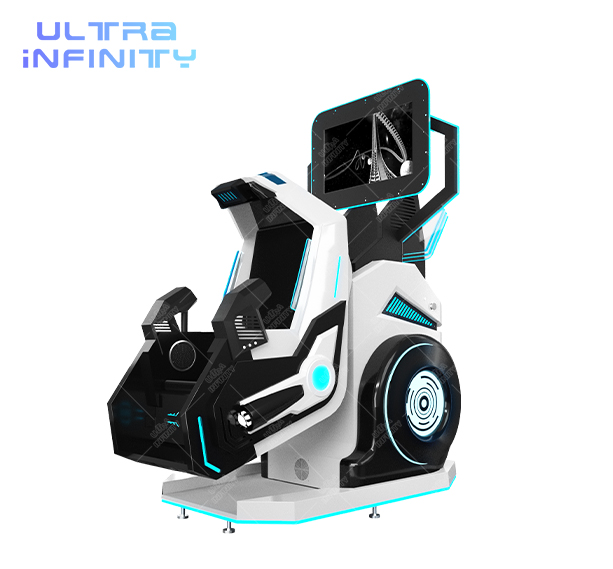
The Compact 360
VR 360 Motion Chair, Single Seat
Full 360 degree rotation with a 45 degree pitch envelope, a 32 inch display plus panoramic headset, wind effect and head-motion control. The reference tier-4 chair and the format nearly every first-time rider meets in a venue.
View Details ›
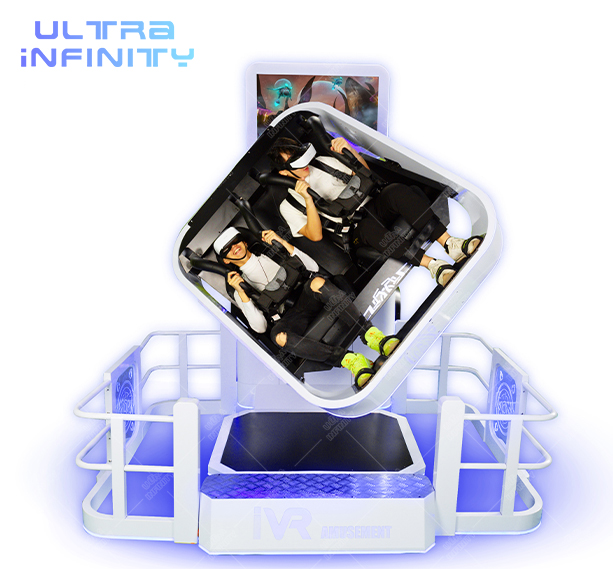
The Throughput Pick
VR 360 Motion Chair, 2 Seats
The two-seat IN720-01 runs 110-240 V at 2,000 W, carries two DPVR E3 (2K) headsets and nine included movies on 2-5 minute rides, and moves couples and friends through one synchronized story.
View Details ›
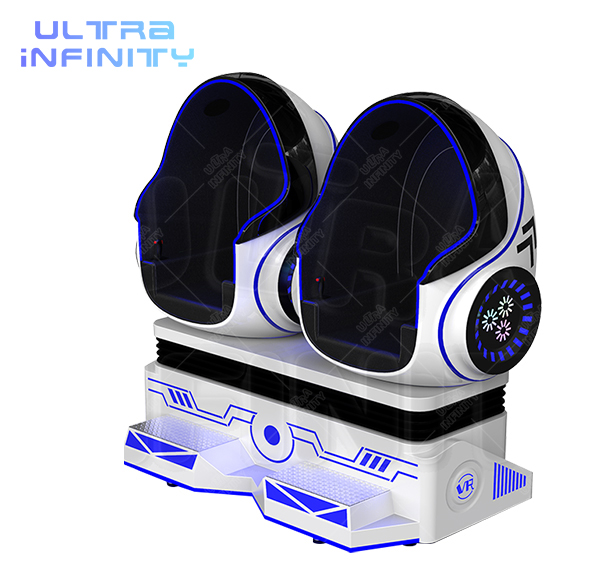
The Gentle Entry
VR Egg Chair
A compact 9D motion cinema in a single enclosed seat with wind and vibration effects. The most approachable way for nervous riders and younger players to feel a full motion layer in a small footprint.
View Details ›
8. VR Chair FAQ: Tiers, Motion Sickness, Home vs Venue and What Things Cost
The questions home gamers and curious parents actually ask when they face this category, answered without the sales line.
What is the difference between a gaming chair and a VR motion chair?
A gaming chair is static comfort - it stops your back from hurting but adds no motion, so it only serves the visual and audio layers of the Immersion Stack. A VR motion chair physically moves you, usually with rotation, pitch or both, and adds the motion and haptics layers. Both are valid; only the motion chair delivers the "more immersive" promise.
Do I still need a headset if I buy a VR chair?
Yes. A VR chair is a seat and motion platform, not a display. Consumer motion chairs like the Roto Explorer are built around headsets such as the Meta Quest line, and commercial machines include a headset with the ride, but either way the picture always comes from a headset, not from the chair.
Which VR chair is best for home use in 2026?
For most home players, a tier 2 swivel chair is the best value because it adds a worthwhile motion layer for almost no money and suits sim titles. If you specifically want the motorized, gaze-following rotation experience, a tier 3 consumer chair around 300-900 US dollars is the first tier that delivers it - but only on games that actually support the rotation, so check compatibility before you buy.
Is a VR chair better than playing standing up?
For seated games, cockpit games and anything with a virtual HUD, yes: the chair removes fatigue, fixes your body to a reference frame, and on motion tiers adds movement corridors standing play cannot. For room-scale games where you walk and swing your arms, standing is correct. The deeper comparison lives in our simulator chair vs stationary VR guide.
Can a VR chair really reduce motion sickness?
Synced motion can help, and that is the honest best-case claim to shop for. When the chair movement matches the headset picture, your eyes and inner ear agree instead of conflicting, and published studies report lower simulator-sickness scores and higher presence under those conditions. It is not a cure-all: mis-synced motion, long sessions, wild content and individual tolerance all still matter.
Are consumer VR chairs the same as the ones in arcades?
No. Arcade machines are tier 4 commercial units: full 360 degree rotation with a 45 degree pitch envelope, wind and effects, engineered for hundreds of rides a day, with safety systems and spares - typically 5,000 to 12,000 US dollars per machine. Consumer motorized chairs are tier 3: rotation and haptics, made for one owner, hundreds of dollars. Sharing a name trips many buyers up; treat them as different products.
How much space does a VR chair need at home?
A swivel chair needs the same space as any desk chair. A motorized 360 chair needs clear floor around it: the Roto Explorer itself is 84 cm across, and you want enough margin that nobody walks into the rotation arc - realistically a slightly wider circle than the chair. Commercial machines need a real safety radius plus boarding clearance, which is why venue density is a separate guide on this site.
Is it safe for kids to use a VR chair?
For home use, follow the headset platform guidance - Meta sets 10 and up for Quest accounts and Sony requires 12 and up for PS VR - and start children on gentle content in short sessions. Off-the-shelf motion chairs are not toys; supervise any child standing near one while it rotates. In venues, the operator is responsible for gating riders by age and size, and a professional machine should never be treated as a free-for-all.
Why do some games make the chair do nothing?
Because the rotation and effects are driven by software. A consumer chair with gaze-following works in titles that track your head direction, but in racing or flight games without motion compensation the virtual direction and the physical chair can disagree, so check per-game support before you buy. This is the same synced-versus-mis-synced rule that decides whether motion helps or hurts.
How much should I pay to try VR chairs before buying?
Nearly all venues sell tier-4 rides for roughly 5-20 US dollars each, which is the cheapest full-tier trial available. Ride a slow scenic title and a thrills title at least once each before any home purchase. If you already own a headset, add a few sessions on a swivel chair for free to calibrate your baseline before you spend on a motorized one.

