VR ARENA VS VR SIMULATOR - THE PUBLISHED COMPARISON
VR Arena vs. VR Simulator: Which Fits Your Indoor Entertainment Venue Better?
The published head-to-head: a free-roam arena books 24-40 players per hour across 100-200m2 and holds groups 35-50 minutes, while a simulator station row books 60-90 rides per hour on 4-6m2 per seat - so the right answer is a footprint question, not a hype question.
24-40 players/hr arena 60-90 rides/hr row 35-50 min arena dwell 8-12 min per ride $6K-12K per chair entry 57% multi-activity demand
24-40/hr
Arena Players Per Hour
60-90/hr
Row Rides Per Hour
35-50 min
Arena Group Dwell
$6-12K
Per-Chair Entry Cost
1. VR Arena vs. VR Simulator: The Question Every Floor Plan Has to Answer
Every indoor entertainment venue eventually stands in the empty half of its floor plan and asks the same question: should this be a free-roam VR arena, or a row of VR simulators? The two formats get pitched as rivals, but on the published numbers they are different machines entirely. An arena books 24-40 players per hour across 100-200m2 and holds each group for 35-50 minutes; a simulator row books 60-90 rides per hour across a few dozen square meters and turns every seat over in 8-12 minutes. Throughput, dwell, budget, audience and even the drinks menu follow from that one choice - so this comparison puts the published figures side by side and lets the footprint decide.
A concrete scenario frames the stakes: a 260m2 venue with a $90,000 attraction budget can open a compact arena on half the floor and a three-seat simulator row on the other half, or it can open eight simulator seats plus a duckpin pair and skip the arena entirely. The right answer depends on whether the calendar fills with groups (the arena pays) or with walk-in couples and juniors (the row pays). The comparison below is built to route that decision with published evidence instead of vendor enthusiasm.
The head-to-head in one line: the arena wins on group economics and dwell (35-50 minutes, 65% repeat intent), the simulator row wins on throughput and entry cost (60-90 rides/hour, from $6,000-12,000 a seat) - and the published 57% multi-activity preference says most floors eventually want both.
2. Throughput First: What Each Format Books Per Hour
Throughput is where the formats diverge hardest. The published free-roam arena dwell study books a free-roam arena at 24-40 players per hour: the 6-8 minute match plus briefing and turnaround caps the cycle at roughly 15 minutes, and the tracking volume holds one to two squads at a time. A simulator row runs the opposite pattern - every seat is an independent revenue unit on its own 8-12 minute loop, so a six-seat row accumulates 60-90 rides per hour when the queue holds. Neither number is better in the abstract; what matters is that the arena sells one shared hour to 24-40 people who arrive together, while the row sells the same hour as 60-90 separate tickets.
Published Hourly Throughput by Format (players per hour)
Free-roam arena (100-200m2)
40
Simulator row, 4 seats
60
Simulator row, 6 seats
90
Arena, full weekend session block
24
Source: published capacity model (published free-roam session study) - free-roam arena 24-40 players per hour on the 6-8 minute match cycle; simulator stations 60-90 rides per hour across a row of independent seats on 8-12 minute loops (4 seats x 15 rides/hr at the low end, 6 seats at the high end). The bars deliberately interleave the two formats: a busy four-seat row out-books a floor-band arena hour. Published figures are planning references, not guarantees.
The published session structure explains why the arena number sits in a band rather than a point. The published free-roam session-stage breakdown shows each match carrying a 6-8 minute game, a 5-10 minute scoreboard debate and a 60-70% chance of an instant rematch - so an arena hour flexes between two tight rounds and one long social one, and the operator chooses which by how hard they push the rematch. The row has no such dial: its seat turns at the pace of the ride loop, which is exactly why it keeps booking when the arena between-rounds are stretching.
3. Footprint and Fit: What Each Format Demands of the Floor
The arena is a floor-plan commitment. The published models size free-roam volumes at 100-200m2 with safety padding, a spectator bench and a briefing zone - space that cannot be shared with other attractions while a session runs. A simulator row asks for 4-6m2 per seat plus queue circulation, which is why the published kids-karting model fits a four-kart junior row plus an F1 station into a 45m2 zone. On a per-meter basis the row is the density play; on a per-group basis the arena is the only format that converts a 16-person walk-in into a single booking.
The demand side seals the argument for most mid-size floors. The published trend research (n=600) records 57% of visitors preferring multi-activity venues against 17% for single-activity, and the published 800m2 atrium model answers by zoning the anchor tier for group formats and the social tier for per-seat rows - both formats in one journey, each covering the other's weak daypart. A 200m2 boutique floor usually cannot carry both at full published size, which is why the scenario framework in the next section matters more than any single benchmark.
4. The Money: Budget, Dwell and What Each Format Earns
Budget separates the formats before the first guest walks in. The published chair model prices a commercial seat at $6,000-12,000 and books $130-320 per chair per day, landing payback at about 4.5 months; the published karting row opens at $18,000-28,000 and grosses $7,500-11,000 a month at a 49-55% margin. The free-roam arena carries a published $95,000-160,000 opening range - the tracking system, content library and safety floor all scale with square meters - and earns it back through group economics: the published multiplayer VR group-size model shows squad revenue peaking at the 16-player booking, and the published multiplayer VR birthday playbook turns the arena into a party product the row cannot imitate.
Dwell converts into revenue on the arena side of the ledger. The published free-roam arena dwell study measures 35-50 minute arena visits against 8-12 minute simulator sessions, attributes a 25-35% beverage lift to the 72% of group members who stay and watch, and records 65% repeat intent leaving the building. The row counters with velocity: 60-90 independent tickets per hour at a $6-9 published price point on the kart row, each ride a clean transaction with no group assembly required. The published spectator screens analysis adds the asymmetry in one sentence - an arena sells to the people watching, a simulator seat sells to the person strapped in.
Where a Group Arena Visit Actually Spends (published share of group booking value)
- Arena session tickets 55
- F&B lift from spectators (25-35% band midpoint) 18
- Party package add-ons 15
- Rematch rounds and merch 12
Source: published models - group booking value dominated by session tickets per the published group-size model (published multiplayer VR group-size model); the 25-35% spectator beverage lift (published spectator screens guide) and party add-on shares follow the published birthday playbook (published multiplayer VR birthday playbook); rematch rounds per the 60-70% instant-rematch rate in the published session study (published free-roam session study). Shares are planning references on the published models, not guarantees.
5. The Decision Framework: Which Format Fits Your Floor
Three questions route the decision. First, what walks past the door? Group-heavy traffic (birthdays, corporate, friend squads on weekends) is arena demand - the published models show those bookings filling weekend sessions at 16-player scale. Couple-and-family walk-in traffic is row demand - the $6-9 six-minute heat, the junior kart bracket, the solo egg-chair ride. Second, how much floor can you commit? Below roughly 80m2 of free space the arena is off the published spec sheet; the row runs from a single aisle. Third, what does the calendar need? A venue with dead weekday mornings wants the row's bookable-by-the-seat rhythm; a venue with full Saturdays and empty party inventory wants the arena's buyout economics.
| Decision Factor |
Free-Roam VR Arena |
VR Simulator Station Row |
| Published throughput |
24-40 players per hour (shared sessions) |
60-90 rides per hour (independent seats) |
| Published footprint |
100-200m2 + briefing and spectator zones |
4-6m2 per seat + queue circulation |
| Published opening budget |
$95,000-160,000 |
$6,000-12,000 per chair; $18,000-28,000 karting row |
| Published dwell per visit |
35-50 minutes per group |
8-12 minutes per ride |
| Audience center of gravity |
Groups, parties, corporate buyouts |
Walk-ins, couples, juniors |
| Published payback window |
Utilization-dependent (30-70% band) |
About 4.5 months (chairs); 6-9 months (karts) |
| Best role on the floor |
Anchor attraction |
Density and filler revenue |
The scenario from the opening resolves cleanly under this table. The 260m2 venue with group-heavy weekend demand opens the compact arena on the anchor half and a three-seat row on the social half - the published atrium split in miniature - while the same venue with walk-in-heavy weekdays inverts the allocation and lets the duckpin lanes take the anchor corner instead. What the published numbers forbid is the middle mistake: buying a row for a group market (the 16-player squad walks out when there is nothing to book together) or an arena for a walk-in market (the tracking volume idles at two scheduled sessions a day).
6. Frequently Asked Questions (FAQ)
Which is cheaper to open: a VR arena or a row of VR simulators?
On the published models, the simulator row wins on entry cost. A chair fleet starts at $6,000-12,000 per seat and a four-kart kids row opens at $18,000-28,000, while a free-roam arena carries a published $95,000-160,000 opening range because the tracking volume, content license and safety floor all scale with square meters. The arena earns it back with group economics - 24-40 players per hour in one shared session - so the comparison is really about how much floor and calendar you can commit, not which machine is cheaper.
How many players per hour does each format handle?
The published capacity model books a free-roam arena at 24-40 players per hour in shared 6-8 minute matches plus turnaround, while a simulator station row books 60-90 rides per hour because each seat runs an independent 8-12 minute loop with no group assembly. Both numbers assume the published staffing plan - one marshal per arena session, one attendant per four to six seats - and both collapse without the hygiene cycle: the published 6-8 minute between-guest reset is what keeps the hourly rate honest.
Which format holds guests longer?
The arena, decisively. The published dwell study measures 35-50 minutes inside a free-roam visit against 8-12 minutes at a solo simulator seat, a gap it attributes to the scoreboard debate, the 60-70% instant rematch and the 72% of non-playing group members who stay to watch. That dwell is revenue: the published spectator analysis records a 25-35% beverage lift on match days, which a single-seat format with no audience bench cannot produce.
Can I run both formats in one venue?
Yes, and the published models treat the pair as complementary rather than competing. The arena is the anchor that pulls groups and birthday parties - the published group model shows revenue peaking at the 16-player squad - while the simulator row catches walk-ins and fills the hours the arena cannot book, one seat at a time. The published 800m2 atrium plan uses exactly this split: the anchor tier holds the group formats, the social tier holds the per-seat rows, and the two share one entrance queue.
What audience does each format serve best?
The arena serves groups: the published session study shows birthday, corporate and friend-group bookings filling 50% of weekend slots, with the 16-player buyout as the marquee product. The simulator row serves individuals and pairs - the walk-in who wants a 6-minute F1 heat, the sibling pair on the junior karts - and the published kids-racing model shows that bracket monetizing at $6-9 per heat with a 49-55% operating margin. A venue that knows its calendar (groups on weekends, walk-ins on weekdays) can weight the mix accordingly.
Which format pays back faster?
On the published payback windows, the per-seat fleet is faster: the chair model lands at about 4.5 months and the karting row at 6-9 months, against arena payback that depends on group bookings landing at the published 30-70% utilization band. The honest framing from the published models: the row pays back fast but caps out early, while the arena costs more, pays back slower, and keeps compounding through party packages and the 65% repeat intent the published dwell study records.
7. Featured NextPlay Active Gaming Equipment
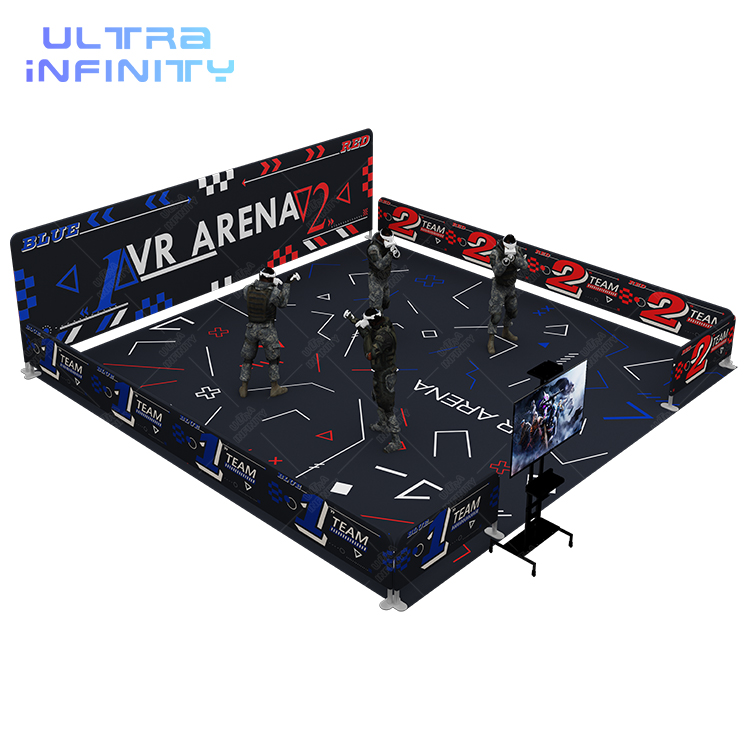
The anchor play
Free Roaming VR Arena 2.0 - Multiplayer VR Walking Shooting Simulator
The group format behind the published 24-40 players per hour and 35-50 minute dwell - birthday and buyout ready.
View Details ›
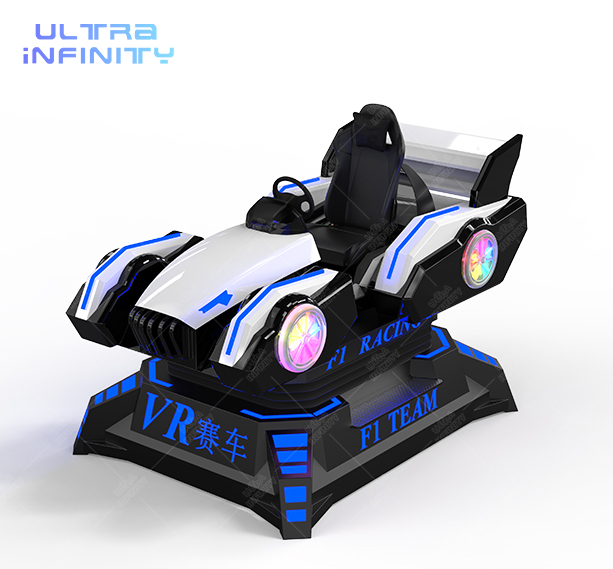
The density play
VR Racing Simulator - 2022 Best VR F1 Car Games Simulator
The per-seat row behind the published 60-90 rides per hour and the $6-9 six-minute heat.
View Details ›
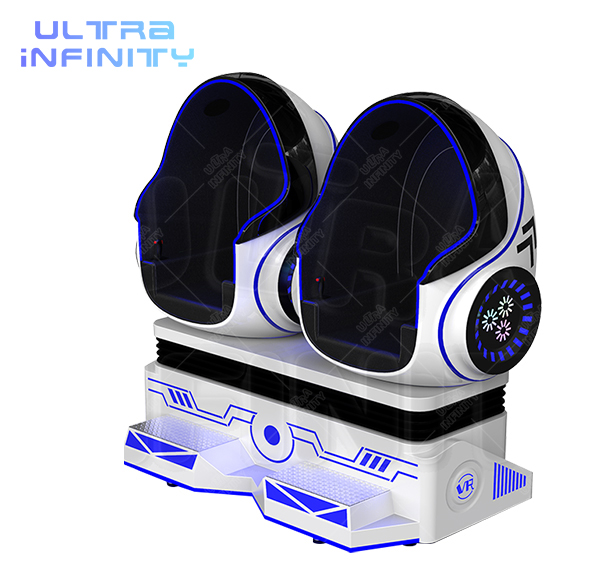
The entry play
VR Egg Chair - 9D Cinema VR Chair Simulator
The $6,000-12,000 seat with a published about-4.5-month payback - the row's lowest-risk first unit.
View Details ›

