SPORTAINMENT REVENUE - SIX PUBLISHED MODELS, ONE FLOOR
Top 6 Sportainment Revenue Models From $7.5K to $52K a Month
The published math behind six sportainment revenue models: a karting zone at $7,500-11,000 on four revenue layers, a $320 room-hour session model, a laser arena swinging $22,464-52,416 on utilization, a $450-1,200 corporate hour, the 25% hosted-lane share and the $960/m2 bay benchmark.
$7,500-11,000 karting month $320 room-hour session $22.5-52.4K arena swing 72% F&B margin on corporate 34% of gross from events $88-135/m2 ceiling
$52.4K
Ceiling Arena Month
49-55%
Karting Zone Margin
60%
Repeat Lift With Leaderboards
1. Top 6 Sportainment Revenue Models From $7.5K to $52K a Month
Sportainment revenue is not one number - it is six different machines running on the same floor, each with its own published math. A karting zone earns by the ticket layer, a gaming room by the session, a laser arena by the utilization point, a corporate pipeline by the hour, a hosted lane bank by the share it carries, and a bay floor by the yield per square meter. This guide assembles the six models from the published analyses on this site, ranked from the smallest published monthly number to the largest.
A concrete scenario: a 500m2 floor runs all six models at once - the karting row books its layers, the LED room sells sessions to parties, the laser arena runs leagues at 55% utilization (mid-band of the published 30-70% window), the corporate calendar fills two Fridays a month, the duckpin lanes anchor the weekend, and the archery bays post their $960 per square meter yield (the published measured figure). The same floor, the same month, six engines - and the published 57% preference for multi-activity venues (against 17% for single-activity) is the demand curve that fills all six at once.
The spread in one line: the published models run from a $7,500 karting month to a $52,416 arena month - and the difference between the floor and the ceiling of every model is utilization, not hardware.
2. Model 1-2: The Layer Stack and the Session Rate
Model 1 - the revenue-layer stack (the $7,500-11,000 month). The published kids-karting model is the cleanest published breakdown: a 45m2 zone with four junior karts plus one F1 station grosses $7,500-11,000 a month across four layers - single heats at $6-9 a ticket (40% of gross), 3-race packs at $15-20 (26%), birthday packages at $180-320 (21%) and school events at $350-700 (13%). Against $3,800-5,500 of monthly OPEX the zone keeps a 49-55% direct operating margin and pays back in 6-9 months. The layers matter more than the ticket: the pack, party and school layers are booked in advance, which is what makes the month plannable. The hardware is the VR Racing Simulator kart row.
Model 2 - the session rate (the $320 room-hour). The published active-gaming analysis prices a 30m2 room at up to $80 per 15-minute session for 4-8 players - the published figure behind the "$320/hour test" that every attraction on a floor should clear. The Infinity Grid LED floor runs the same session economics on light-up tiles with party and event modes. The model earns on room density, not machine count: one session carries four to eight tickets, and the room doubles as the party slot in a weekday calendar - which feeds Model 4 below.
Published Revenue Layers: Kids VR Karting Zone (share of $7,500-11,000 monthly gross)
- Single heats ($6-9 per 6-min race) 40%
- 3-race packs ($15-20) 26%
- Birthday packages ($180-320) 21%
- School and scout events ($350-700) 13%
Source: published kids-karting model (blog 795) - published layer shares of the $7,500-11,000 monthly gross for the 45m2 zone; OPEX $3,800-5,500 keeps a 49-55% direct operating margin with a 6-9 month payback on the published model. Published figures are planning references, not guarantees.
3. Model 3-4: The Utilization Arena and the Corporate Layer
Model 3 - the utilization-scaled arena (the $22,464-52,416 month). The published capacity analysis prices a 16-player laser arena across the published 30-70% utilization band: $22,464 a month at the floor of the band, $52,416 at the ceiling - a roughly $30,000 spread on identical hardware, driven by the $11 round and the session turnover the published laser ROI model documents at $21,000-38,000 a month with breakeven at 27% occupancy. The Infinity laser combat system is the hardware anchor; the calendar is the revenue engine. No other model on this page swings this wide on the same machines - which is why utilization is the first variable every operator should buy.
Model 4 - the corporate and party layer (the $450-1,200 hour). The published earnings guide measures the corporate side of a games floor: groups of 25 to 80 guests, hourly package rates of $450-1,200, a 72% F&B margin contribution and a 34% annual rebooking rate. The published weekday playbook completes the calendar: school blocks at $300-600, corporate buyouts at $4,500-7,500, league nights worth about $1,520 each, against a 40-55% weekday occupancy target. On the karting model the party and event layers already carry 34% of gross - the corporate calendar is the same layer scaled up, and its 34% rebooking rate is what makes the pipeline compound instead of restart.
4. Model 5-6: The Hosted Share and the Yield Benchmark
Model 5 - the hosted-zone share (the 25% lane engine). The published hub model records a resort venue where the duckpin lanes carried about 25% of total revenue at roughly $6,000 a month - not because lanes post the highest per-meter yield, but because they set the rhythm of the visit: the group books the lanes, and the bays and grid rooms monetize the dwell around them. The published battleship model works the same way at ride scale, netting $12,000-16,000 a month and $180,000-240,000 in year one. Hosted zones are the revenue glue - the Duckpin Bowling System earns as the anchor that holds the group while the rest of the floor sells to it.
Model 6 - the yield benchmark (the $960 per-square-meter bay). The published measured comparison puts an archery bay at about $960 per square meter a month at a 68% margin, a shooting lane at about $460 at 62%, and a baseball lane at about $160 once its netting footprint is counted. Yield per square meter is the model that disciplines every other one: the published floor ceiling is $88-135 per square meter a month across a four-category build, and the bays show what the premium end of that ceiling looks like at unit scale. The benchmark is also the ranking tool for a buy list - a machine that cannot approach its zone's published yield is a floor-space mistake.
Published Monthly Gross by Model, Floor to Ceiling (USD)
Karting zone (floor of range)
$7,500
Karting zone (ceiling of range)
$11,000
Laser arena at 30% utilization
$22,464
Laser arena at 70% utilization
$52,416
Source: published models - karting zone $7,500-11,000 monthly gross (blog 795); 16-player laser arena $22,464-52,416 monthly gross across the published 30-70% utilization band (blog 2681). Between the models, the published battleship cinema nets $12,000-16,000 a month (blog 701) and the published laser ROI model reports $21,000-38,000 (blog 699). The two-format pairing shows the overlap: a ceiling-band karting zone out-earns a floor-band arena. Published figures are planning references, not guarantees.
5. The Compounding Layer: Retention Equipment That Multiplies All Six
The six models share one multiplier: repeat behavior. The published retention analysis ties leaderboard and team systems to 60% higher repeat rates, and the published screen analysis measures 72% of queue guests watching a spectator wall with a 25-35% beverage lift behind it - both documented in the published trend ranking as revenue equipment, not decoration. On the layer-stack model the repeat systems lift every layer at once: the pack buyer becomes the birthday parent, the birthday parent becomes the league regular, and the 34% corporate rebooking rate turns one buyout into a season. Free-roam arenas add the dwell layer - the published study records groups staying 40 extra minutes, and dwell is what the bar and the bay floor sell into.
A concrete scenario closes the set: the 500m2 floor from the opening runs its laser league night at 55% utilization ($36,000 on the published band), sells the corporate buyout slot to a 60-guest group at $800 an hour (mid-band of the published $450-1,200 rate), and books two school blocks at $500 each (mid-band of the published $300-600 block) the same week. The leaderboard posts the league standings on the spectator wall; the bar behind it lifts 25-35% during the wait. One Thursday, four models firing - and the published ceiling of $88-135 per square meter is not a target anymore, it is the operating plan.
| Revenue Model |
Published Unit Economics |
Published Monthly Number |
| 1. Revenue-layer stack (karting zone) |
$6-9 heats; packs $15-20; birthdays $180-320; school $350-700 |
$7,500-11,000 gross at 49-55% margin |
| 2. Session rate (30m2 gaming room) |
Up to $80 per 15-min session, 4-8 players |
Up to $320 per room-hour |
| 3. Utilization-scaled arena (16-player laser) |
$11 round; breakeven at 27% occupancy (published model) |
$22,464-52,416 across the published 30-70% utilization band |
| 4. Corporate and party layer |
$450-1,200/hr; 72% F&B margin; 34% rebooking |
$4,500-7,500 buyouts; 34% of karting gross |
| 5. Hosted-zone share (duckpin lanes) |
Lanes set the visit rhythm |
About 25% of venue revenue, about $6,000 |
| 6. Yield benchmark (measured bays) |
Archery $960/m2 at 68%; shooting $460 at 62%; baseball $160 |
Floor ceiling $88-135/m2 a month |
6. Frequently Asked Questions (FAQ)
How much does a sportainment center make per month?
The published models span $7,500-52,000 a month of gross depending on format and utilization: a 45m2 kids karting zone grosses $7,500-11,000 at a 49-55% margin, a battleship cinema nets $12,000-16,000 a month on the published model, a laser arena books $21,000-38,000, and the same 16-player arena reaches $22,464-52,416 across the published 30-70% utilization band. Benchmarked per square meter, the published ceiling is $88-135 a month across a four-category floor.
What are the main sportainment revenue models?
The published cluster documents six: the revenue-layer stack (a karting zone earning 40% from single heats, 26% from race packs, 21% from birthdays and 13% from school events), the session-rate model (a 30m2 active gaming room at up to $80 per 15-minute session for 4-8 players), the utilization-scaled arena ($22,464-52,416 on the published band), the corporate and party layer ($450-1,200 per hour with 72% F&B margin), the hosted-zone share (duckpin lanes carrying about 25% of venue revenue), and the yield-benchmark model ($960/m2 archery, $460/m2 shooting, $160/m2 baseball).
Which sportainment format earns the most per square meter?
On the published measured comparison, the archery bay leads at about $960 per square meter a month at a 68% margin, a shooting lane follows at about $460 at 62%, and a baseball lane lands at about $160 once its netting footprint is counted. The active gaming room competes on room density at up to $320 per hour in 30m2. All of them serve the published $88-135 per square meter ceiling that a multi-category floor builds toward.
How does utilization change the monthly number?
It is the biggest swing in every published model. The published capacity analysis prices the same 16-player laser arena at $22,464 a month at 30% utilization and $52,416 at 70% - a roughly $30,000 spread on identical hardware. The published weekday playbook fills the gap with named engines: school blocks at $300-600, corporate buyouts at $4,500-7,500, league nights worth about $1,520 each, against a 40-55% weekday occupancy target.
What share of revenue should come from parties and corporate events?
The published karting model puts the party and event layers at 34% of gross (birthdays 21% plus school events 13%), and the published earnings guide shows why the share should grow: corporate groups of 25-80 guests book at $450-1,200 an hour with a 72% F&B margin contribution, and 34% of corporate clients rebook within the year. Parties are the highest-margin layer a sportainment floor operates.
How do leaderboards and screens affect revenue?
The published retention analysis ties leaderboard and team systems to 60% higher repeat rates, and the published screen analysis measures 72% of queue guests watching a spectator wall with a 25-35% beverage lift behind it. Both are revenue equipment rather than decoration: the leaderboard sells the second visit, the screen converts waiting time into bar orders, and together they compound the utilization every model on this page depends on.
7. Featured NextPlay Active Gaming Equipment
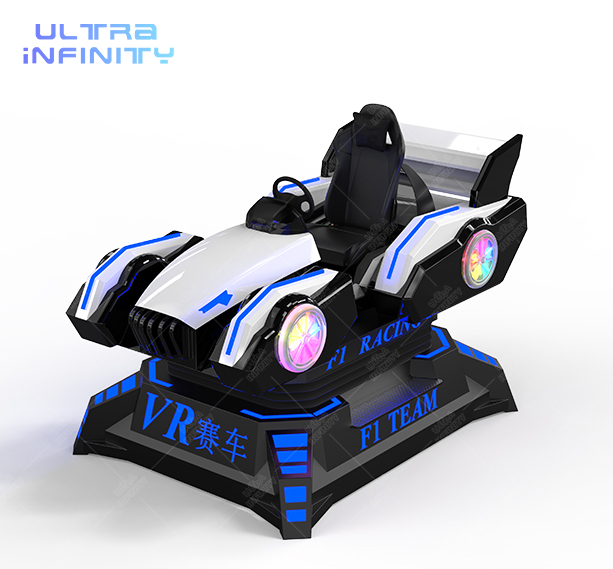
Model 1 - the layer stack
VR Racing Simulator - Best VR F1 Car Games Simulator
The four-kart row behind the published $7,500-11,000 month on the 40/26/21/13 revenue layers.
View Details ›
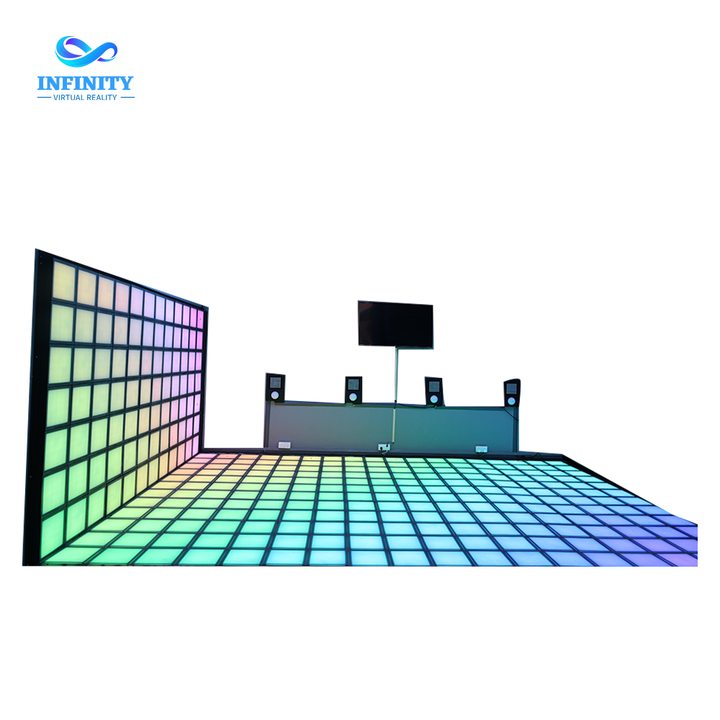
Model 2 - the session rate
Infinity Grid LED Dance Floor Game - Interactive Light-Up Tiles
The 30m2 room that books up to $80 per 15-minute session for 4-8 players - the $320 room-hour.
View Details ›

Model 3 - the utilization arena
Infinite Competition - Immersive Laser Tag Combat Game
The 16-player arena that swings $22,464-52,416 a month across the published 30-70% utilization band.
View Details ›

