SPORTAINMENT BUSINESS IDEAS - RANKED BY PUBLISHED PAYBACK
Top 7 Sportainment Business Ideas That Pay Back First
Seven sportainment business ideas ranked by published payback: a chair fleet at about 4.5 months, a kids karting zone at 6-9 months on $7,500-11,000 monthly gross, a battleship cinema at 8, and the multi-activity mix that monetizes the published 57% preference for multi-activity venues.
7 ideas, ranked by payback About 4.5 mo fastest window 6-9 mo karting payback 49-55% operating margin 57% multi-activity demand $88-135/m2 revenue ceiling
4.5 mo
Fastest Published Payback
$18-28K
Karting Zone Opening
49-55%
Karting Operating Margin
57%
Prefer Multi-Activity
1. Top 7 Sportainment Business Ideas That Pay Back First: The Published ROI Ranking
Every sportainment pitch deck promises a payback window; almost none of them shows the math. This ranking does the opposite. It takes seven business ideas for a sportainment venue - from a single chair to a full attraction mix - and orders them strictly by the evidence already published on this site: opening budgets, monthly gross, operating margins and payback windows from working models, not vendor brochures. The demand side is measured too: published research (n=600) records 57% of visitors preferring multi-activity venues against 17% for single-activity, which is the market every idea on this list is selling into.
A concrete scenario: a first-time operator with 120m2 of mall-adjacent space and a $60,000 budget reads the ranking, opens a four-kart kids karting row plus a two-chair VR corner, and plans the duckpin lanes as a year-two expansion once the published 6-9 month karting payback has been banked. That staged path - prove utilization small, expand into hosted formats, finish with the scale plays - is the structure this article follows.
The ranking in one line: a chair fleet pays back in about 4.5 months, a kids karting zone in 6-9, a battleship cinema in 8 - and the demand side (published 57% multi-activity preference) rewards the floors that stack formats instead of betting on one machine.
2. How the Ranking Was Built (and What Counts as Evidence)
Three rules produced this list. Rule one: every number is a published figure - an opening budget, a monthly gross, a margin or a payback window that already exists in a published model on this site, each linked below. Rule two: the ranking metric is months-to-payback on the published model, because payback forces all three variables (budget, price, utilization) into one number. Rule three: where a published model gives a range, the midpoint is used for ordering and the range is printed beside it, so the ranking never hides the spread. What did not count: manufacturer claims, single-anecdote success stories and any figure without a published basis.
The demand constraint sits underneath all seven ideas. The published trend analysis records the split that started the multi-activity shift: 57% of competitive-socializing visitors prefer venues with multiple activities, 17% prefer single-activity venues, and the remaining 26% is the arithmetic remainder of the published split. A single-attraction venue fights that curve; every idea on this list either stacks formats, sells to groups, or sells the same seat several times an hour.
The Demand Split Behind the Ranking (published preference, n=600)
- Prefer multi-activity venues 57%
- Prefer single-activity venues 17%
- Open to either (remainder of the published split) 26%
Source: published KAM Insight research (n=600) cited in the published trend analysis (blog 2720). The 57% / 17% split is the published figure; the 26% remainder is the arithmetic remainder of the published split. Published figures are planning references, not guarantees.
3. Ideas 1-3: The Fast-Payback Trio
Idea 1 - the kids VR karting zone. The flagship of the fast tier. The published kids-karting model opens a four-kart junior row plus one F1 family station at $18,000-28,000, books $7,500-11,000 of gross a month at a 49-55% direct operating margin, and pays back in 6-9 months. The engine is the revenue-layer stack on a $6-9 per 6-minute heat: single heats at 40% of gross, 3-race packs at $15-20 at 26%, birthday packages at $180-320 at 21% and school events at $350-700 at 13%. The hardware is the VR Racing Simulator kart row, which draws about 0.5 kW per kart - the whole fleet adds $100-180 a month in electricity. The mix below is the reason the model works: the pack, party and school layers are booked in advance, which is what makes the month plannable.
Published Revenue Mix: Kids VR Karting Zone (share of monthly gross)
- Single heats ($6-9) 40%
- 3-race packs ($15-20) 26%
- Birthday packages ($180-320) 21%
- School and scout events ($350-700) 13%
Source: published kids-karting model (blog 795) - revenue-layer shares of the $7,500-11,000 monthly gross for the 45m2 zone; 49-55% operating margin and 6-9 month payback on the published model. Published figures are planning references, not guarantees.
Idea 2 - the VR chair and egg-chair fleet. The lowest-ticket entry on the list. The published chair profitability model prices a commercial chair at $6,000-12,000, books $130-320 per chair per day, and lands payback at about 4.5 months - the fastest window in this ranking. The chair sells a 3-9 minute premium ride to walk-in traffic that a kart row is too big to catch, and a two-to-four chair row turns a corridor or a queue corner into revenue. The published VR egg chair format adds the family and kids audience on the same footprint, and motion-seat titles rotate without new hardware.
Idea 3 - the duckpin bowling lanes. The hosted-lane play. The published cost analysis prices a duckpin package at $30,000 of equipment inside a $40,000-48,000 opening budget, on short 12-14 meter lanes that fit footprints a 26-meter ten-pin hall cannot. Duckpin earns as the social anchor: shorter games, lighter balls, party-friendly scoring, and the lane bank that sets the rhythm of a visit even when per-meter yield belongs to other zones. On the published resort-hub model, lanes carried about 25% of venue revenue at roughly $6,000 a month while occupying a fraction of the floor - the lanes hold the group while the bays and grid rooms monetize it. The hardware entry point is the Duckpin Bowling System with integrated pinsetter and ball return.
4. Ideas 4-5: The Premium Hosted Formats
Idea 4 - the active gaming and LED grid room. The highest revenue density on the list. The published active-gaming model prices a 30m2 room at up to $80 per 15-minute session for 4-8 players - $320 per room-hour at full rotation, the published figure behind the "$320/hour test". The Infinity Grid LED floor version runs the same math on light-up jumping tiles with party and event modes, and both formats sell the room, not the seat: one session carries four to eight tickets, which is why the room beats per-machine formats on revenue per square meter. Staffing is one attendant per session on the published zoning model, and the room doubles as the party slot in a weekday calendar.
Idea 5 - the VR battleship cinema. The hosted mid-scale ride. The published battleship model opens the cinema at $48,000-68,000, nets $12,000-16,000 a month, and pays back in 8 months - worth $180,000-240,000 in year one on the published model. The format sells a shared 6-8 player ride cycle at premium tickets with high throughput per hour, and it anchors bookings the way lanes do: the group buys the ride, then buys the rest of the visit around it. It is the midpoint of this list in both budget and risk - bigger than a chair row, smaller and more predictable than an arena.
5. Ideas 6-7: The Scale Plays
Idea 6 - the laser tag arena. The biggest single-format budget on the list, and the deepest bench of published economics. The published laser ROI model carries $86,000-118,000 of CAPEX, prices a round at $11 against $21,000-38,000 a month of gross, and breaks even at 27% occupancy - a low bar the published capacity model shows is cleared through session turnover (16 players per session, $22,464-52,416 a month across the published 30-70% utilization band). The corporate side is where the margin hides: $380-900 per hour buyouts, a 66% F&B margin contribution and a 38% repeat rate on the published model, with league and party revenue adding $3,000-12,000 a month on the published pricing analysis. The hardware anchor is the Infinity laser combat system.
Idea 7 - the multi-activity attraction mix itself. The seventh idea is the portfolio. The published 800m2 atrium model plans the floor as a 180-220m2 anchor tier, a 150-180m2 social tier and a 100-140m2 family tier around a 60-40 selling-to-flow split, and lands payback in 12-18 months when footfall conversion holds. It ranks last on speed because it carries the most moving parts - but it ranks first on resilience, because it is the only idea that directly monetizes the published 57% multi-activity preference and keeps earning when any single attraction has a slow month. For a mall operator, it is usually the correct first purchase; for a first-time independent operator, it is the destination after two or three of the ideas above have already paid back. The free-roam VR arena is the anchor tier candidate, with the published equipment ranking as the buy list.
6. The First-Year Comparison: All Seven on One Table
The table assembles the published numbers side by side. Read it as planning references, not promises: each row assumes the operator reaches the published utilization band through the weekday calendar - school blocks, leagues, corporate buyouts - rather than walk-in hope, and each payback window is the published model figure, not a guarantee.
| Rank |
Sportainment Business Idea |
Published Opening Budget |
Published Monthly Economics |
Published Payback |
| 1 |
VR chair / egg-chair fleet |
$6,000-12,000 per chair |
$130-320 per chair per day |
About 4.5 months |
| 2 |
Kids VR karting zone (4 karts + F1) |
$18,000-28,000 |
$7,500-11,000 gross at 49-55% margin |
6-9 months |
| 3 |
VR battleship cinema |
$48,000-68,000 |
$12,000-16,000 net; $180,000-240,000 year one |
8 months |
| 4 |
Active gaming / LED grid room (30m2) |
Room build inside a zone budget |
Up to $80 per 15-min session ($320/hr) |
Driven by utilization |
| 5 |
Duckpin bowling lanes |
$40,000-48,000 ($30,000 equipment) |
About 25% of venue revenue on the hub model |
Zone-level model |
| 6 |
Laser tag arena |
$86,000-118,000 |
$21,000-38,000 gross; corporate $380-900/hr |
Breakeven at 27% occupancy |
| 7 |
Multi-activity mix (800m2 atrium) |
Zone budget across three tiers |
Three-tier mix against $88-135/m2 ceiling |
12-18 months |
Published Monthly Gross Swing: Same Machines, 30% vs 70% Utilization (USD)
Karting zone at 70% utilization
$11,000
Laser arena at 30% utilization
$22,464
Karting zone at 30% utilization
$7,500
Laser arena at 70% utilization
$52,416
Source: published models - karting zone $7,500-11,000 monthly gross across the published 30-70% utilization band (blog 795); 16-player laser arena $22,464-52,416 monthly gross across the published 30-70% utilization band (blog 2681). The bars deliberately interleave the two formats to show the overlap: a full-band karting zone out-earns a floor-band laser arena. Payback windows behind each format are in the table above. Published figures are planning references, not guarantees.
A concrete scenario pulls the table together: the 120m2 operator from the opening section banks the karting payback in month 8, adds the LED grid room against the published $320 per room-hour test in month 10, and reserves 15% of the floor (the published circulation reserve) for the duckpin lanes in year two - by which point the demand split (published 57% multi-activity preference) is working for the floor instead of against it. The published earnings guide carries the same logic at venue scale: the $88-135 per square meter ceiling is reached by stacking formats that fill different dayparts, not by buying one bigger machine.
7. Frequently Asked Questions (FAQ)
What is the best sportainment business idea to start with limited capital?
The published models favor a staged start: a VR egg chair fleet enters at $6,000-12,000 per chair and pays back in about 4.5 months on the published model, and a four-kart kids karting row opens at $18,000-28,000 and pays back in 6-9 months at a 49-55% operating margin. Both formats monetize below 50m2, so a first-time operator can prove utilization on a small floor before committing to the $40,000-48,000 duckpin tier or the $86,000-118,000 laser arena tier.
Which sportainment idea pays back fastest?
On the published payback numbers, the single VR chair fleet is fastest at about 4.5 months, followed by the kids karting zone at 6-9 months and the VR battleship cinema at 8 months. Speed depends on utilization as much as format: the published capacity analysis frames the realistic band at 30-70% utilization (based on the published model), and every payback window in this ranking assumes the operator reaches it through events, leagues and party bookings rather than walk-in traffic alone.
How big does a sportainment venue need to be?
The published models scale from a 30m2 active gaming room that books up to $80 per 15-minute session for 4-8 players, to a 45m2 karting zone grossing $7,500-11,000 a month, to an 800m2 mall atrium planned as a 180-220m2 anchor plus 150-180m2 social plus 100-140m2 family tier with a 60-40 floor split. The discipline at every size is the published $88-135 per square meter monthly revenue ceiling - revenue per square meter, not machine count, is what the floor is optimized for.
What revenue mix should a new sportainment venue plan for?
The published kids-karting model is the cleanest template: single heats 40% of gross, 3-race packs 26%, birthday packages 21% and school events 13%. The lesson generalizes - roughly two thirds of gross comes from repeatable formats (packs, parties, events) rather than first-time walk-ins, which is why the leaderboard and league systems behind the published 60% repeat lift belong in the opening budget, not in a later upgrade.
Is a multi-activity floor really better than one strong attraction?
The published KAM Insight research (n=600) measures 57% of visitors preferring multi-activity venues against 17% for single-activity, and the 800m2 atrium model shows why: the anchor pulls, the social tier holds, the family tier converts, and the three tiers together capture the walk-by traffic a single format cannot. Single-attraction floors can still work, but they start year one swimming against a measured three-to-one preference.
What utilization should I plan on before signing an order?
Plan on the published 30-70% band (based on the published capacity model). At the low end the same 16-player laser arena that does $52,416 a month does $22,464 - the equipment did not change, the calendar did. The published marketing playbook targets 40-55% weekday occupancy through school blocks, leagues and corporate buyouts, and treats utilization - not ticket price - as the variable that swings every monthly number on this page.
8. Featured NextPlay Active Gaming Equipment
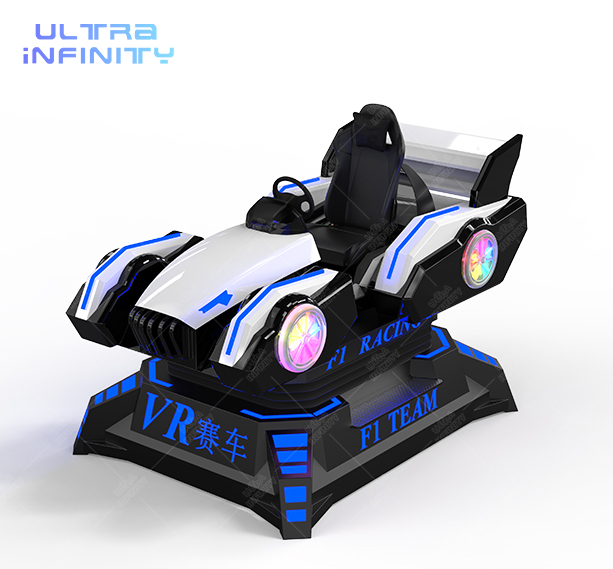
Idea 1 - the fast payback
VR Racing Simulator - Best VR F1 Car Games Simulator
The four-kart row behind the published $7,500-11,000 month at a 49-55% margin and 6-9 month payback.
View Details ›
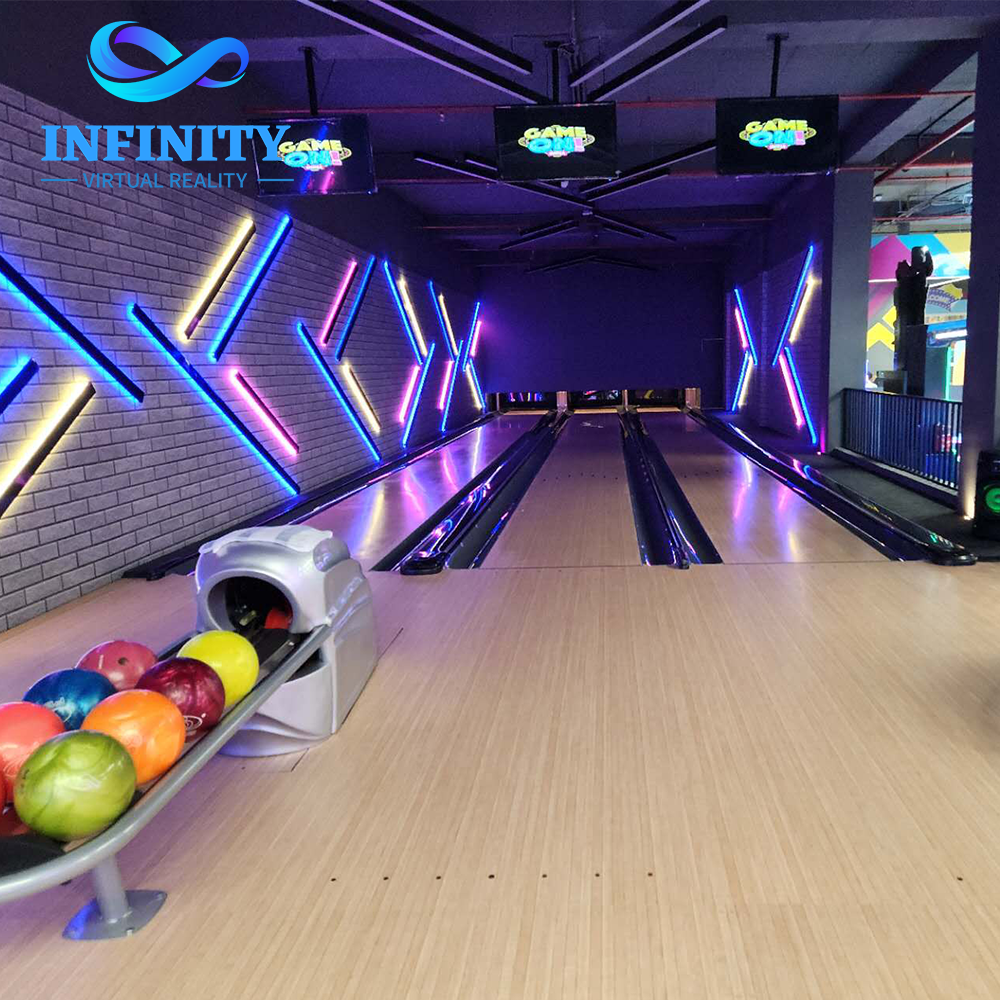
Idea 3 - the hosted anchor
Duckpin Bowling System for Full Venue Solution
Short-lane social bowling: the $30,000 equipment tier inside the published $40,000-48,000 opening budget.
View Details ›
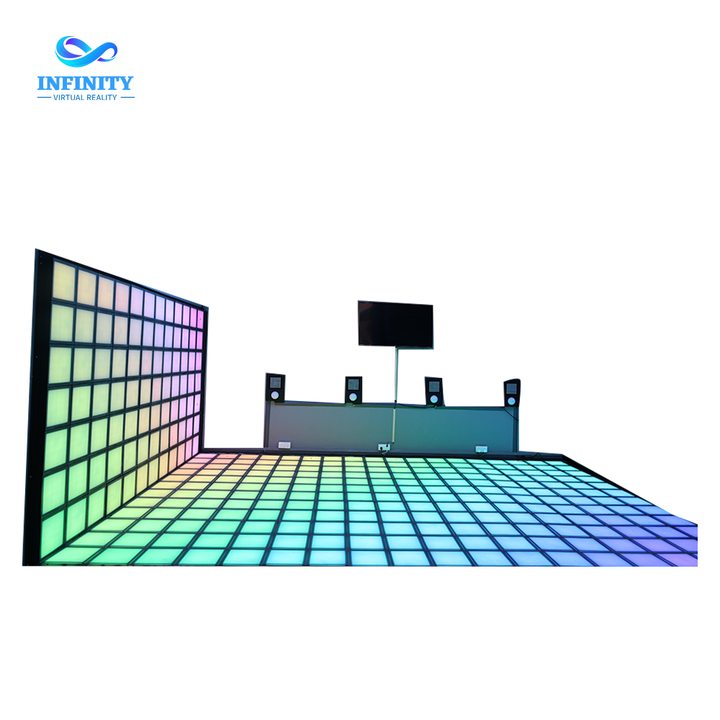
Idea 4 - the density play
Infinity Grid LED Dance Floor Game - Interactive Light-Up Tiles
The 30m2 room that books up to $80 per 15-minute session for 4-8 players - the $320/hour test.
View Details ›

