MINI GOLF EVENTS - THE WEDDING BUYOUT PLAYBOOK
How Do You Sell Mini Golf as a Wedding and Event Venue Add-On? The Buyout Playbook
The published buyout ladder prices a private course booking at about $4,500 for 3 hours - more than 4x the same hours of walk-up revenue. This guide maps the wedding-day slot plan, the package the planner buys, and the holes that photograph like a celebration.
Buyout ladder 4x economics Wedding-day slots Cocktail-hour flow LED wedding theme Package anchors
$4,500
3-Hour Buyout Rate
$26-36
Per-Head Package Band
30 min
LED Wedding Re-Theme
1. How Do You Sell Mini Golf as a Wedding and Event Venue Add-On? The Buyout Playbook
A wedding venue sells one day at a time and leaves its slow hours idle; a mini golf course sells rounds all week and leaves its premium hours undersold. The add-on model fixes both at once: the venue books the course as a private event buyout, the operator earns event-day rates instead of walk-up rounds, and the couple gets an activity their guests actually use. The published corporate-night analysis (the $4K buyout package format) already proved the economics for corporate groups - the same playbook sells to wedding and event planners, who buy for the same reasons: entertainment that fills dead time, photographs well and works for mixed ages.
The event pitch in one line: the course books out by the hour at buyout rates - a published multiple of more than 4x the same hours of walk-up revenue.
2. The Buyout Economics: 4x the Same Hours
The published corporate-night comparison sizes the gap between walk-up and buyout for the same evening:
| Selling Model |
Same Hours |
Revenue (published math) |
Basis |
| Walk-up evening |
Slow evening |
About $1,040 |
~40 players x ($18 + $8 F&B) |
| Private buyout |
Same hours |
$4,500 (3 hours) |
Published operator ladder |
| Extended buyout |
4 / 5 hours |
$6,000 / $7,500 |
Published operator ladder |
The buyout ladder prices time, not heads: about $4,500 for a 3-hour private booking, $6,000 for 4 hours and $7,500 for 5 hours, with per-head corporate packages quoted around $26-36. Wedding add-ons price on the same ladder - the couple books the course for a reception window, and the per-head band gives the planner a line item that survives the budget review.
Same Evening, Two Selling Models (published math, indexed to the $4,500 buyout)
Walk-up evening (illustrative)
$1,040
Private buyout, 3 hours
$4,500
Source: published corporate-night buyout analysis. Both bars share one USD unit, indexed to the $4,500 buyout. The walk-up case is the published illustrative example, not an industry average.
3. The Wedding-Day Slot Plan
A wedding day has three windows where an attraction earns its place, and the published capacity math (players per course-hour) sizes each one:
| Wedding Window |
Course Product |
Capacity Check (published basis) |
| Cocktail hour |
Open course, casual play |
16-24 players/hour; a 2-hour window serves 32-48 guests |
| Reception gap |
Putt-off or mini tournament |
A 12-hole course cycles a group every 30-40 minutes |
| Late reception |
LED re-themed night course |
Re-theme in about 30 minutes; 12 rotations/year calendar |
The cocktail hour is the product that sells itself: guests stream in over 60-90 minutes, play a few holes with a drink in hand, and the course absorbs staggered arrivals naturally - no schedule, no marshal. The late-reception window is the upsell: one LED re-theme turns the same course into the after-party venue, and a hole like the Cyclone Spin Hole becomes the photo moment the couple shares.
4. A Saturday in the Sell: One Concrete Scenario
Picture the published numbers assembled into one wedding day. A 120-guest reception books the course for the cocktail hour: guests stream past the bar to the Dream Castle Hole over 90 minutes, and at the published 16-24 players per course-hour the course absorbs roughly 30 of them without a schedule. The reception gap runs a six-hole putt-off - a 12-hole course cycles a group every 30-40 minutes, so four competitive rounds fit before dinner. At 9 PM one LED re-theme (a 30-minute change from the published rotation calendar) turns the course blush-and-gold for the after-party, and the Cyclone Spin Hole becomes the photo the couple posts. The venue billed the same course three ways in one day - cocktail open play, a scheduled tournament, a themed night course - all inside one package at the buyout ladder rate.
The scenario is illustrative, assembled from published capacity and re-theme references - but every step is a planning number a venue can restate against its own floor before the first wedding contract is signed.
5. The Package: One Decision for the Planner
Wedding planners buy packages, not line items. The published playbook structure is identical across segments - the corporate night sells slot, course rotation and food as one buyout; the birthday analysis (party flow design) sells the loop, table and photos as one package with a published +22-35% tiered value lift. The wedding version bundles three lines: the course window (at the buyout ladder rate), the LED theming (one rotation from the published calendar), and a keepsake layer - scorecards printed with the couple's names or a hole sponsor sign.
Pricing discipline stays intact: the walk-up rate card (the time-tier rate card) keeps its four tiers for regular play, and the event calendar books over it at the buyout rates. The event slot never discounts the tiers - it replaces them for the booked hours, which is exactly why the buyout earns the multiple.
6. What the Course Needs to Look Like
Wedding buyers purchase photographs first and gameplay second, so the two holes the couple sees matter more than the twelve the guests play. The Dream Castle Hole is the wedding-native anchor - a castle reads as celebration without any custom work. The Labyrinth Challenge gives wedding parties a cooperative group moment, the same shared-ball dynamic the corporate analysis uses for team building. A themed rotation from the published LED guide (LED hole themes) covers the rest: the course that plays blue on Tuesday plays blush-and-gold on Saturday for one booking.
If the venue floor plan is still open, the free layout service at free 3D layout design maps the wedding product onto your square meters - course position relative to the ballroom, the photo sightlines, and the cocktail-hour flow from bar to first hole before a single hole is ordered.
7. Planning Assumptions Behind Every Number
Every figure here is a published planning reference with stated assumptions. The buyout ladder (about $4,500 / $6,000 / $7,500) comes from one operator's published pricing; the ~$1,040 walk-up comparison is an illustrative example from the same analysis, not an industry average; the 16-24 players per course-hour baseline assumes staggered casual play; and the +22-35% package lift is the published birthday-package figure. Restate each against your own market before treating any line as a forecast.
8. Frequently Asked Questions (FAQ)
The questions venue operators ask about the wedding add-on, answered with the published references.
Why would a wedding couple want mini golf at their reception?
It gives guests something to do between formalities - a cocktail-hour activity, a photo backdrop and a reason to move around the venue. The published corporate-night analysis makes the same argument for group events: an attraction fills the dead time that otherwise empties the room.
How much should a wedding or event buyout cost?
The published operator ladder prices buyouts at about $4,500 for 3 hours, $6,000 for 4 hours and $7,500 for 5 hours, with corporate packages quoted around $26-36 per head - the same per-head band works for wedding add-ons.
How many wedding guests can play in a cocktail hour?
The published capacity baseline runs 16-24 players per course-hour; a two-hour cocktail window therefore serves roughly 32-48 guests, and a 12-hole course can cycle a group every 30-40 minutes for larger receptions.
Does the course need to be re-themed for a wedding?
No new holes are needed. The published light-scheme rotation guide times an LED re-theme at about 30 minutes and runs 12 rotations a year - a wedding palette is one more rotation on that calendar.
What lift does an event package carry over walk-up?
The published buyout math multiplies revenue more than four times over the same hours (about $1,040 of walk-up business vs a $4,500 buyout), and tiered packages add a published +22-35% value lift over single rounds.
Can a small venue host both weddings and regular play?
Yes - the buyout is a calendar slot, not a rebuild. The published rate card keeps the walk-up tiers intact, and the event calendar books the course out by the hour at the buyout rates above.
9. Featured NextPlay Active Gaming Equipment
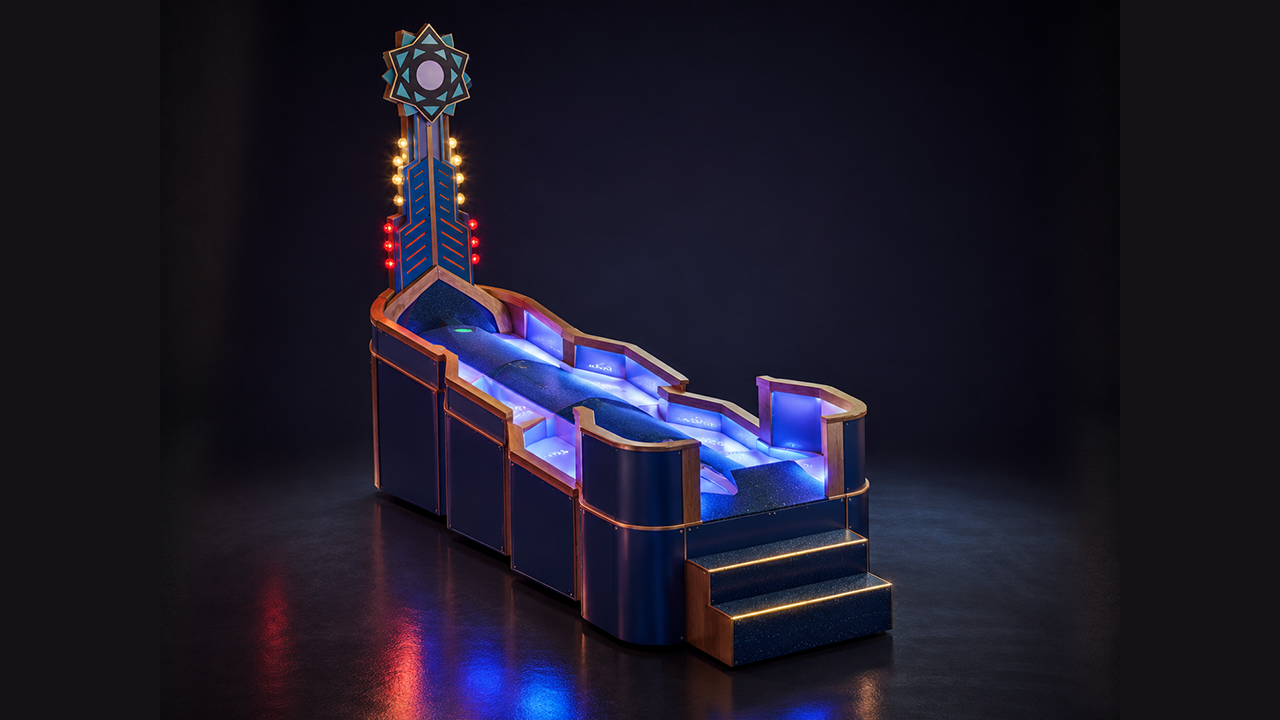
The wedding-native anchor
Dream Castle Hole - Themed Putting Attraction
A castle hole that reads as celebration in every photograph - the centerpiece the couple books the course around.
View Details ›
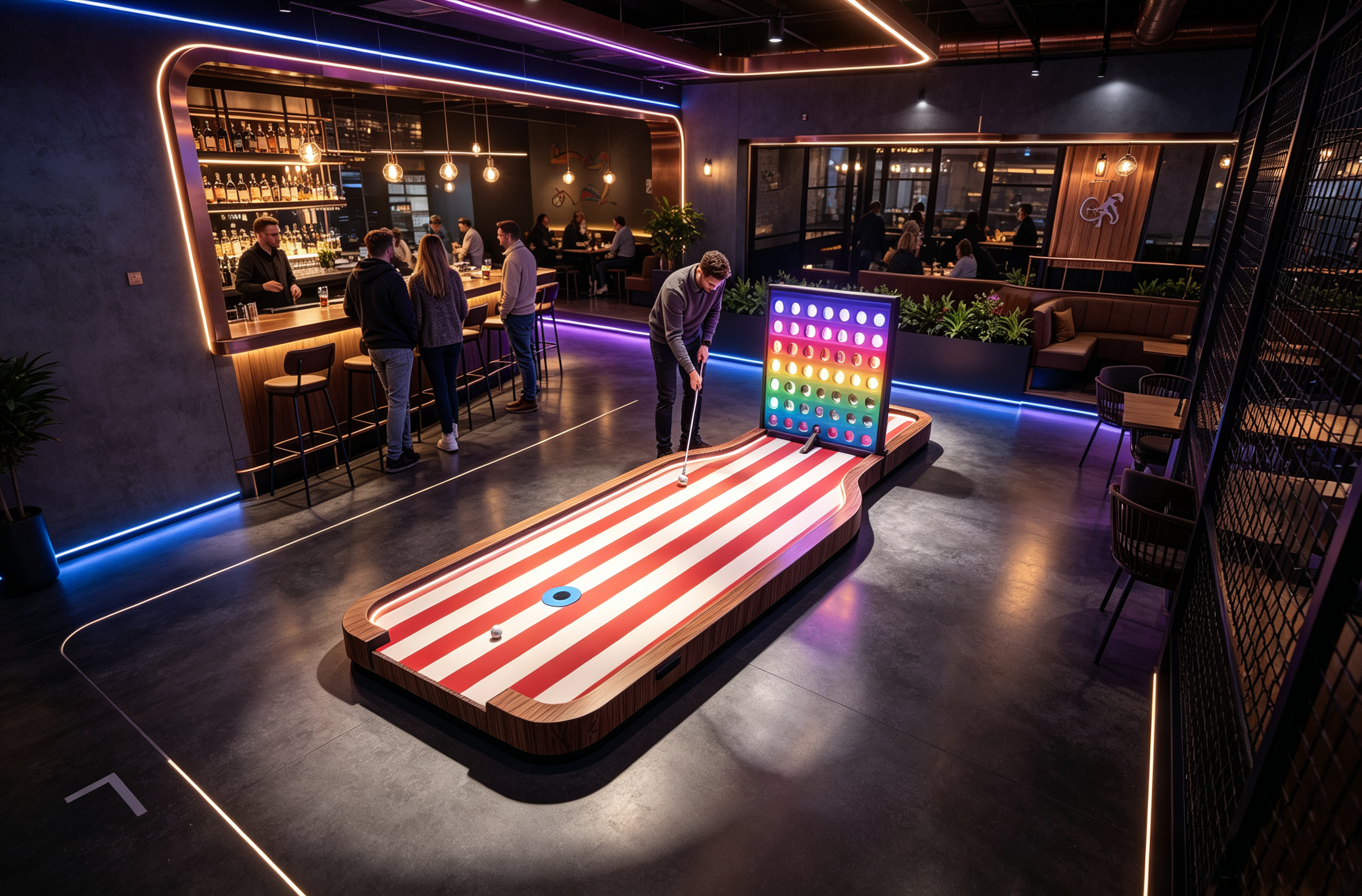
The photo moment
Cyclone Spin Hole - Interactive Putting Challenge
A spinning-ball challenge hole that turns into the after-party photo moment under a wedding LED theme.
View Details ›
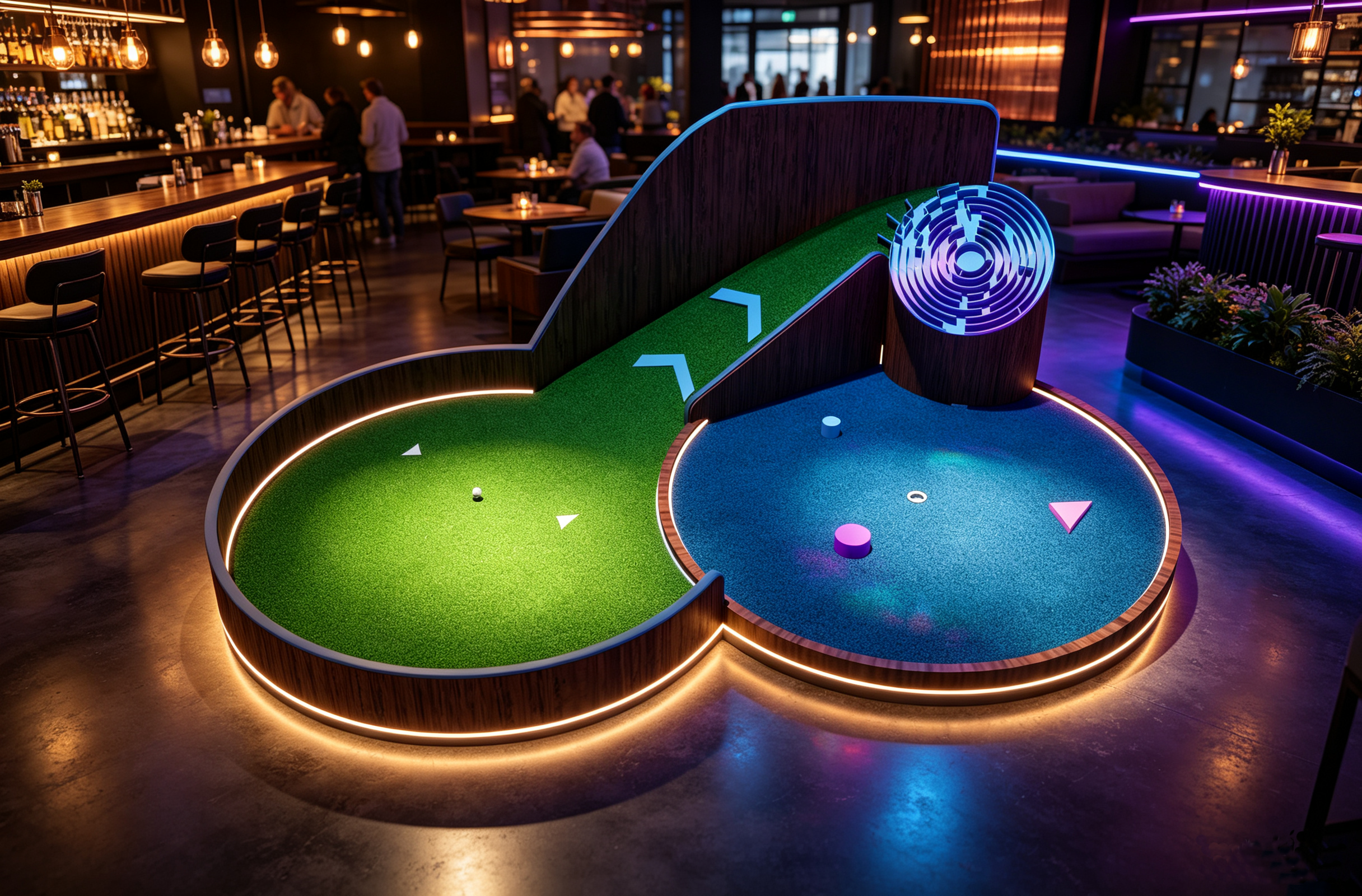
The group icebreaker
Labyrinth Challenge - Interactive Putting Attraction
A cooperative puzzle course for wedding parties - one shared ball, the same dynamic that runs corporate team building.
View Details ›

