INDOOR MINI GOLF MAINTENANCE - THE COMPONENT CALENDAR
Maintenance Guide for Indoor Mini Golf Holes
The maintenance calendar by component - turf, obstacles, auto-scoring, LED theming, structure - on the daily/weekly/monthly cadence the published safety-checks, surfaces and spare-parts pieces anchor, with the shelf stocked before opening day.
Published weekly cadence Five components Spares shelf first One-operator floor Designed-in access
Weekly
Check Cadence (published)
5
Components on the Calendar
1 operator
Auto-Scored Floor (published)
18 holes
Compact Build (published)
1. What It Is: A Calendar by Component, Not a Chore List
Indoor mini golf maintenance fails in one of two directions: everything gets polished and the labor bill eats the margin, or nothing gets checked and a dark hole refunds a birthday party. The published cluster already anchors the middle path - the published safety-checks cadence (full check before opening day, weekly after), the published surfaces guide (what wears first), and the published spare-parts list (what to stock). This guide organizes those anchors into a calendar by component.
In one line: daily sweeps, weekly checks on the published cadence, monthly deep-checks by component - and the spares shelf the published list names, stocked before opening day.
2. How It Works: The Calendar, Component by Component
Turf and playing surfaces: daily debris sweeps and ball-return mouth checks; weekly edge, seam and high-traffic-lane inspection against the wear order the published surfaces guide documents; monthly spot grooming and patch-and-glue work from the spares shelf. Obstacles and interactive elements: daily wobble-and-contact checks during the opening sweep; weekly torque and alignment checks on moving parts; monthly full-function passes on anything motorized.
Auto-scoring and electronics: the published operations frame runs one operator across an 18-hole floor, which holds only when sensors are healthy - daily response checks on score sensors, weekly cable, mount and battery checks, monthly full-round calibration. Lighting and theming: themed holes (the Dream Castle LED rotations) add module checks to the weekly round and spare modules to the shelf. Structure and safety: the published safety checklist governs - before opening day in full, weekly thereafter, with the party-day extras it names.
| Component |
Daily |
Weekly |
Monthly |
| Turf and surfaces |
Debris sweep, return-mouth check |
Edges, seams, high-traffic lanes |
Spot grooming, patching |
| Obstacles and interactives |
Wobble and contact check |
Torque and alignment |
Full-function pass |
| Auto-scoring electronics |
Sensor response check |
Cables, mounts, batteries |
Full-round calibration |
| Themed lighting (LED) |
Visual dark-module check |
Module and driver check |
Rotation content swap |
| Structure and safety |
Walkthrough during sweep |
Published safety checklist |
Deep check + records |
Planning note, stated: the weekly cadence and the pre-opening full check quote the published safety-checks anchor; daily and monthly lines are operator-planning practice (EXAMPLE) built around it.
Where Maintenance Hours Go on an 18-Hole Floor (EXAMPLE split)
- Turf and surfaces 30
- Obstacles and interactives 22
- Auto-scoring electronics 20
- Lighting and theming 13
- Structure and records 15
Source: worked scenario (EXAMPLE) - share split of a weekly maintenance round across components on an auto-scored 18-hole floor; the published anchors set the cadence, not this split.
3. Who It Is For: The Spares Shelf Behind the Calendar
The calendar only works with the shelf behind it: the published spare-parts and wear-items list names the stock - turf patches, obstacle contact parts, score sensors, balls, putters, LED modules - that turns each failure into a two-minute swap. The kit behind the shelf: the Rainbow Golf Challenge (auto-scored throughput), the Labyrinth Challenge (the signature puzzle hole) and the Dream Castle Hole (the LED rotation engine) each carry their consumables on that list.
Seasonality rides the same calendar: the published winter-profitability playbook books the calendar through the cold months, and the deep-check month is where the quiet-season repairs land. The free 3D layout service plans the maintenance access paths before the floor is built - the cheapest maintenance hour is the one designed in.
Vendors differ in what maintenance they price in, so the bid meeting is where the calendar gets cheap: hand every bidder the component calendar and the spares list, and ask which lines their warranty and their quote already carry. A quote that includes sensor spares, LED modules and turf patches shifts real budget from the shelf to the invoice; a quote that prices only the kit leaves the whole shelf unfunded. The published cost bands are the frame for the machine; this calendar is the frame for everything the machine needs after the invoice.
The Wear Order the Published Guides Name (per hole)
Obstacle contact points
25
Source: planning ranks (EXAMPLE) built on the published surfaces guide and spare-parts list - turf traffic wears first, electronics last; the shelf is stocked in this order.
The operator's one-line brief: published cadence (opening day + weekly), component calendar on top, published spares list stocked before day one - that is the whole system.
Records close the system: the weekly round ends in a one-line log per hole - what was checked, what was swapped, what is trending. The log is what turns three swapped sensors into a purchasing forecast instead of a surprise, and it is the sheet the published safety-checks cadence assumes someone is keeping. On an auto-scored floor the same log doubles as the utilization record: a hole that keeps failing is a hole that stops earning its share of the published base case, and the log is where that shows up first.
Staffing rides the same structure: the published one-operator frame holds when the operator owns the daily sweep and the counter staff report what players break - the first line of detection is the birthday group itself. Brief the crew to flag a wobbling obstacle or a dead module the moment they see it, and the weekly round becomes verification instead of discovery.
Cost discipline frames the whole guide: the published bands price the build ($50-150K compact) and the published base case prices the reward ($37,440 a month), which leaves maintenance as the line that protects both. A skipped weekly round saves minutes and costs sessions - a dark hole during a booked party refunds the ticket and the F&B tab behind it, while the two-minute sensor swap the spares shelf enables costs almost nothing. The calendar is not overhead on the investment; it is the difference between the published base case and the refund column.
4. Frequently Asked Questions (FAQ)
How often should indoor mini golf holes be inspected?
The published safety-checks piece anchors the floor: a full check before opening day and weekly after that. Daily visual sweeps are operator practice on top - turf edges, obstacle wobble and score-sensor response take seconds to spot and minutes to fix before they cost a session.
What wears out first on an indoor mini golf hole?
The surfaces guide prices the wear order: lane turf carries foot traffic and putter strikes, so edges and high-traffic lanes show wear first; obstacle contact points and ball-return mouths follow. The published spare-parts piece exists because those parts are known consumables.
What maintenance does auto-scoring mini golf need?
Auto-scored holes like the published 18-rounds-per-hour system trade marshal labor for sensor upkeep: daily response checks on the score sensors, weekly cable-and-mount checks, and the spare-sensor stock the published wear-items list carries. One operator runs the floor when the sensors are healthy.
How do you keep indoor turf playing true?
Indoor turf escapes weather but not traffic: daily debris sweeps, weekly edge and seam checks, and spot grooming on high-traffic lanes keep the roll true. The published surfaces guide names the turf types and what wears first on each.
What should be stocked before opening day?
The published spare-parts list is the checklist: turf patches, obstacle contact parts, score sensors, balls and putters, LED modules for themed holes. Stocking it turns a mid-session failure into a two-minute swap instead of a dark hole.
Does themed lighting change the maintenance load?
Themed holes with LED rotations add a lighting layer - module checks join the weekly round and spare modules join the stock, which is the price of the twelve-rotations-a-year repeat-visit engine the published theme-rotation model documents.
5. Featured NextPlay Active Gaming Equipment
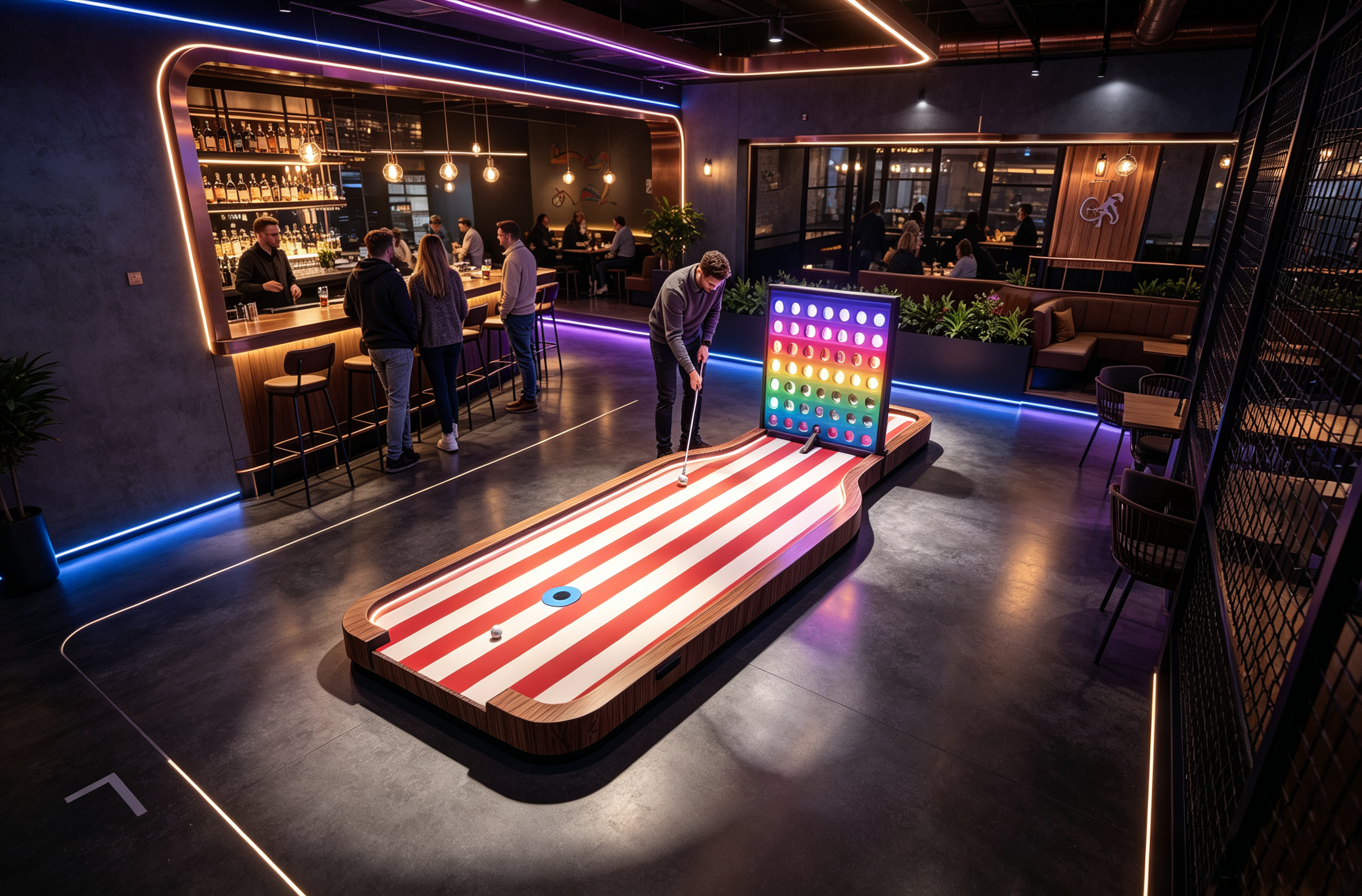
The sensor floor
Rainbow Golf Challenge - Auto-Scored Interactive Mini Golf
The published 18-rounds-per-hour system - auto-scoring maintenance is the daily and weekly round.
View Details ›

The interactive line
Labyrinth Challenge - Interactive Putting Attraction
Moving parts and puzzle mechanisms - the torque-and-alignment weekly check lives here.
View Details ›

The LED engine
Dream Castle Hole - Themed Putting Attraction
Twelve published theme rotations a year - module checks and spare stock priced in.
View Details ›

