ARCHERY SIMULATOR ROI - THE PUBLISHED PROFITABILITY MODEL
Is an Archery Simulator Profitable for an FEC?
The published profitability math: a two-lane archery corner booking the published $12-20 per 15-minute session grosses about $2,800-6,100 a month across the 30-70% utilization band, clears a scenario $2,300 stack at about 36% utilization, and pays back inside the published compact-simulator window on a managed calendar.
$12-20 published session band $2.8K-6.1K monthly gross About 36% breakeven utilization 16-24 guests/hour corner 10-15m2 per lane Payback inside published window
$12-20
Published Session Band
$2.8K-6.1K
Scenario Monthly Gross
About 36%
Scenario Breakeven Utilization
4-6
Sessions/Hour Per Lane
1. The Archery Question, Answered the Published Way
Archery simulators carry a reputation problem in the FEC business: they look like a novelty, so operators price them like a novelty and book them like one. The published archery model says otherwise - the $12-20 per 15-minute lane session is a precision-sport price, the 10-15m2 lane footprint is a compact-bay footprint, and the economics that pay for batting bays and golf bays pay for archery lanes. The profitability question is not whether the machine is a toy; it is whether the corner's calendar gets managed like a zone or left to walk-ins.
So this guide builds the answer the published way: the published pricing and utilization anchors first, then one clearly-labeled worked scenario - a two-lane corner inside a mid-size FEC - with the assumptions stated in one place, a breakeven line, and the payback read against the published ladder. The 57% multi-activity preference in the published survey is the strategic frame: archery is rarely the reason a guest comes, but it is a frequent reason a party books, and parties are transactions.
The answer in one line: a two-lane archery corner at the published $12-20 session band grosses about $2,800-6,100 a month across the published 30-70% band, clears a scenario $2,300 stack at about 36% utilization, and pays back inside the published compact-simulator window on a managed calendar.
2. Revenue Lines: The $12-20 Session and Where It Stacks
The published anchors price the family first. The archery lane books $12-20 per 15-minute session on the published archery model; the active-gaming room books up to $80 per 15 minutes for 4-8 players; the karting heat books $6-9 per six minutes; and the precision-bay family - batting, golf, archery - clusters at $12-25 a session. Archery sits mid-band with a structural advantage: the widest guest age span in the family, which is why the session mix leans on formats rather than walk-ins. The scenario ladder: $12-16 single sessions, $20 duo sessions, and party add-ons booked per lane-hour.
The mix follows the published zone pattern: single sessions carry the walk-in top line, duos and small groups fill the lanes between parties, and the scheduled formats - birthday add-ons, school outings, corporate team slots, league evenings - carry the repeatable two-thirds. The published earnings model frames the check: the corner's per-square-meter yield must land inside the published $88-135/m2 ceiling, and the scheduled formats are what push it there.
Scenario Session Mix (EXAMPLE - share of two-lane monthly gross)
- Single sessions ($12-16) 36
- Duo sessions ($20) 24
- Party add-ons and birthdays 23
- Leagues and corporate slots 17
Source: worked scenario following the published revenue-stack pattern (single sessions top, packs and scheduled events carry the repeatable share on the published zone models); the archery mix reweights toward duos and party add-ons. Shares are planning references on the published models, not guarantees.
3. Capacity, Cost Lines and Breakeven - Assumptions Stated
Planning assumptions, stated in one place. The worked model rests on: (1) a two-lane corner, each lane a 15-minute session loop serving 4 sessions per hour, 1-2 players per session; (2) the $12-20 published session band with a $16 blended scenario price; (3) the published 30-70% utilization band applied to the two-lane capacity; (4) a scenario $2,300 monthly fixed stack - rent share, counter staffing, utilities, maintenance reserve; (5) a scenario $35,000-70,000 installed budget, quote-driven and labeled scenario; (6) a 50-55% contribution margin on the published simulator-zone pattern. Replace any assumption with a quote and your telemetry, and the model reruns.
| Line |
Scenario / Published Value |
Basis |
| Session price |
$12-20 per 15-min lane session |
Published archery profitability model |
| Throughput |
4 sessions/hour/lane; 16-24 guests/hr corner |
15-min loop, per-bay independence (published) |
| Monthly gross |
$2,800-6,100 across 30-70% utilization |
Scenario math on the published band |
| Monthly fixed stack |
$2,300 |
Scenario: rent share, counter staff, utilities, maintenance |
| Breakeven utilization |
About 36% |
Scenario; published laser breakeven at 27% occupancy |
| Contribution margin |
50-55% |
Published simulator-zone margin family |
| Per-m2 check |
Inside $88-135/m2 ceiling |
Published ceiling (blog 828) |
| Payback |
Inside published compact window |
Published ladder 4.5-9 months; scenario mid-band plan |
Scenario Monthly Gross Across the Published Utilization Band (USD, two lanes)
Fixed stack (context)
2300
Source: worked scenario (EXAMPLE) - two lanes x 4 sessions/hour x the $12-20 published session band, scaled across the published 30-70% utilization band; the fixed-stack bar is the scenario breakeven context. The bars deliberately interleave utilization points with the stack line. Scenario figures are planning references, not guarantees.
The breakeven read: at the published band ceiling the corner books about $3,800 of scenario contribution over its stack, which repays the $35,000-70,000 installed budget in the published months-scale window on sustained mid-band performance. The payback ladder brackets the expectation - about 4.5 months for the chair fleet, 6-9 for the karting row - and the corner's lever set is the published one: leagues, parties and corporate slots, per the published off-peak playbook, move utilization up the band faster than any walk-in campaign. The published birthday-playbook guide is the operational template for a new corner: package the calendar before the paint dries.
4. Placement and the Family Stack
Archery earns its floor space in three placements. The FEC corner: two lanes beside the simulators it shares a family with - batting and golf bays, duckpin lanes - where the shared counter staffs all of them and the session grid rotates guests through. The bar-and-club build: the dual-screen lane as a bookable social bay, per the product's own positioning, where the $20 duo session and the leaderboard carry the night. The party add-on: one lane annexed to the party room, sold as a 15-minute competition block inside birthday packages - the highest-margin session the corner will ever run.
The stack logic is the published attraction-mix argument at small scale: the 57% multi-activity preference means guests reward venues that chain short formats, and archery chains beautifully - a 15-minute lane is the perfect bridge between a bowling game and a laser round. The published session-stages guide shows why defined session structure matters for the rematch moment; the corner's scoreboard ending is a party-selling surface. The published equipment ranking sequences the purchase: archery lands in the prove-it tier with the other compact bays, and the published year-one mistakes list records what happens when operators buy the big builds before the small ones prove their band.
The strategic read: archery is not the anchor that fills the venue - it is the compact bay that raises the anchor's yield, chainable into any calendar, at a $12-20 published session price, on a footprint nothing else wants.
5. Frequently Asked Questions (FAQ)
Is an archery simulator profitable for an FEC?
On the worked scenario in this guide: a two-lane archery corner booking the published $12-20 per 15-minute lane session grosses about $2,800-6,100 a month across the published 30-70% utilization band, covers a scenario $2,300 fixed stack at roughly 36% utilization, and lands payback inside the published compact-simulator window when the lanes run a full package calendar. The profitability case rests on the published precision-bay pattern: low staffing, small footprint, session-based pricing.
How much does an archery simulator cost to install?
A commercial digital archery lane is a screen-plus-sensor build with adjustable track distance and a dual-screen bay - a quote-driven price that lands in the compact-simulator tier. The scenario budget for a two-lane corner with fit-out runs $35,000-70,000, and the honest planning move is to state the range, label it scenario, and replace it with a supplier quote - the published cost-analysis template prices the lines around it.
How many players per hour can an archery lane serve?
A lane runs a 15-minute session loop including scoring and reset, so one lane serves 4 sessions an hour and a two-lane corner serves up to 16-24 guests per hour when sessions book full - the same per-bay independence the published simulator rows use to book 60-90 rides per hour. Sessions can host 1-2 players each, which is why the corner pairs so well with a party calendar.
What utilization does an archery corner need to break even?
On the scenario model: a two-lane corner at a $16 blended session price covers a $2,300 monthly fixed stack at about 36% utilization, inside the published 30-70% band by construction. The levers are the published ones: league nights, birthday add-ons and corporate packages push the corner up the band faster than walk-ins ever do.
How does an archery simulator compare to a golf or batting bay?
They are the same economic family - screen-and-sensor precision bays on 10-15m2 lane footprints with $12-25 session pricing - and they split the calendar: golf takes steady adult rounds, batting takes teams and training, archery takes the widest age span and the party add-on market. The published attraction-mix pattern pairs them to cover different dayparts of the same week.
How fast does an archery simulator pay back?
The published payback ladder for compact simulators runs about 4.5 months (chair fleet) to 6-9 months (karting row). The scenario archery corner with a mid-band plan and a party-calendar accent lands payback inside that window on its $35,000-70,000 scenario budget - faster than a hosted arena, slower than a chair bank, and the published equipment ranking sequences it exactly there: prove the small bays before funding big builds.
6. Featured NextPlay Active Gaming Equipment
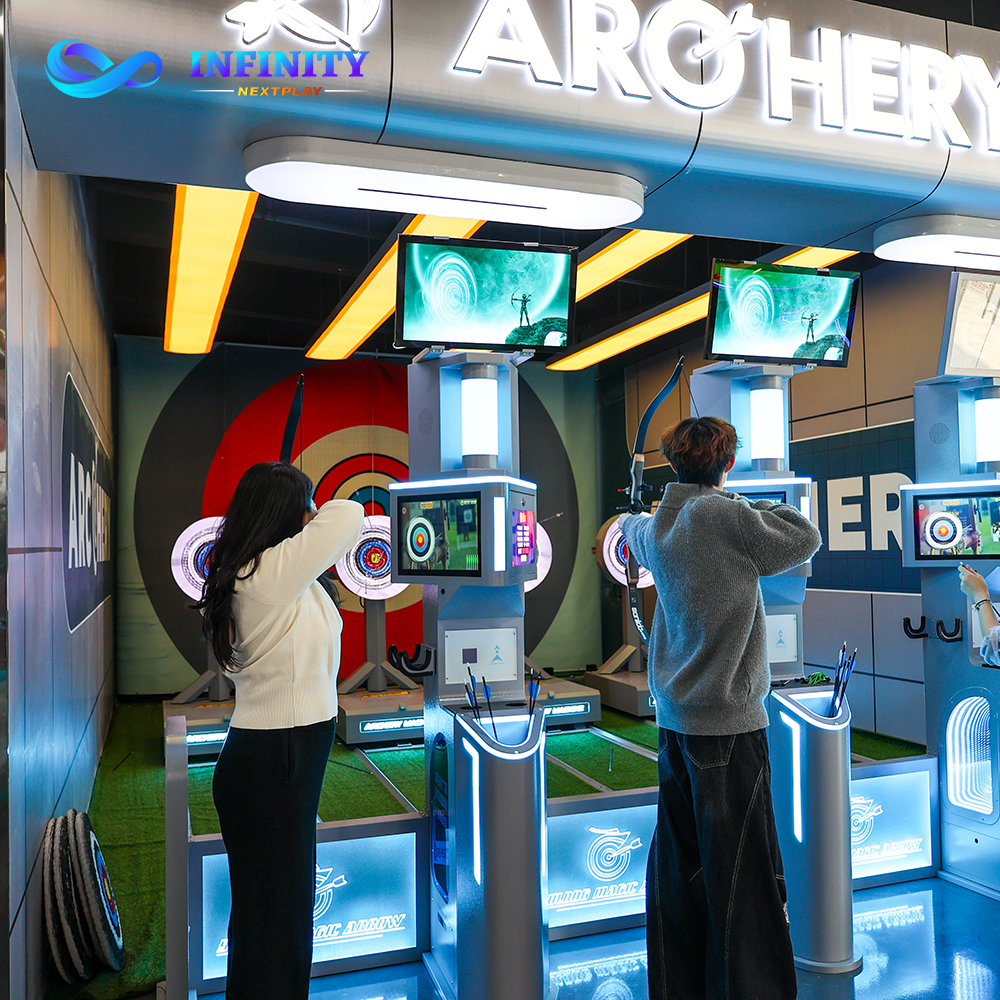
The corner itself
Digital Archery Simulator for Full Venue Solution - Adjustable Track Distance, Dual Screen
The dual-screen lane behind the $12-20 published session band - adjustable track distance for FEC, bar and club builds.
View Details ›
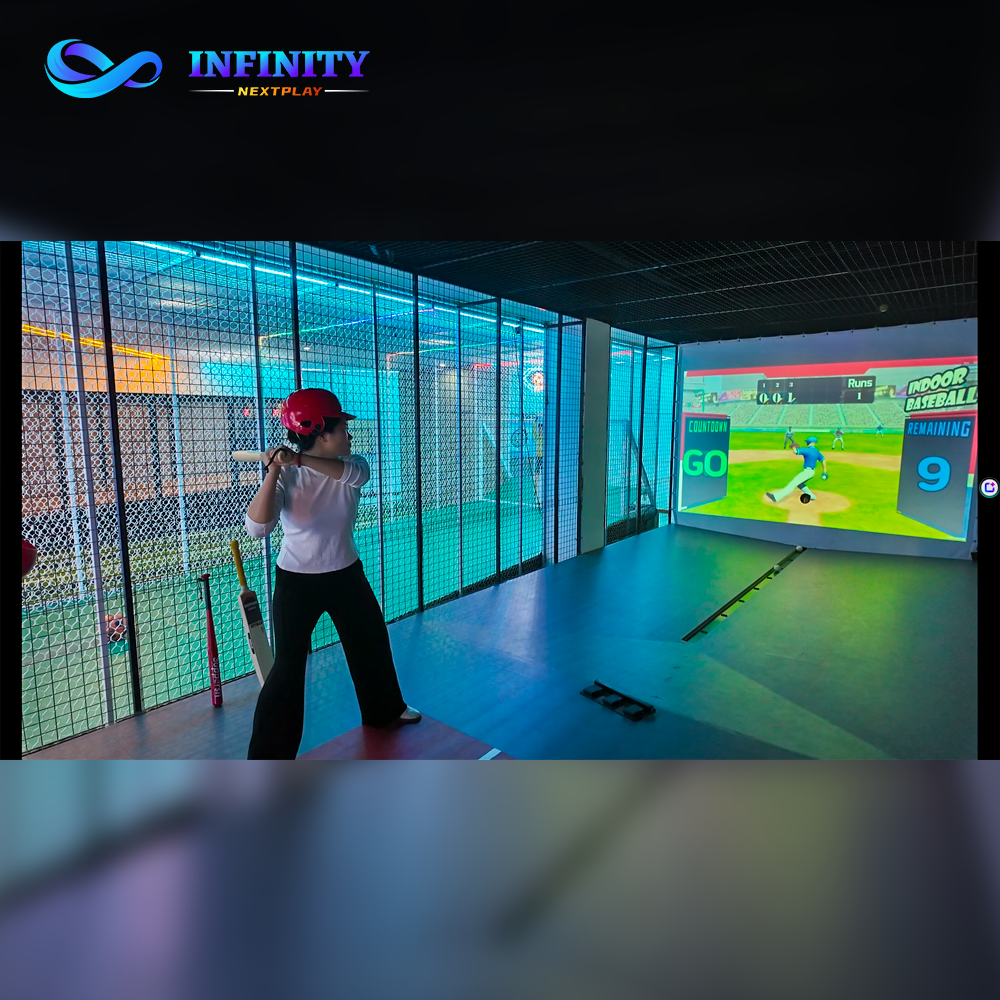
The family sibling
Immersive Indoor Baseball Batting Simulator - Real-time Ball Tracking HD Projection
The precision-bay sibling on the same 10-15m2 footprint - the shared-counter partner that splits the calendar.
View Details ›
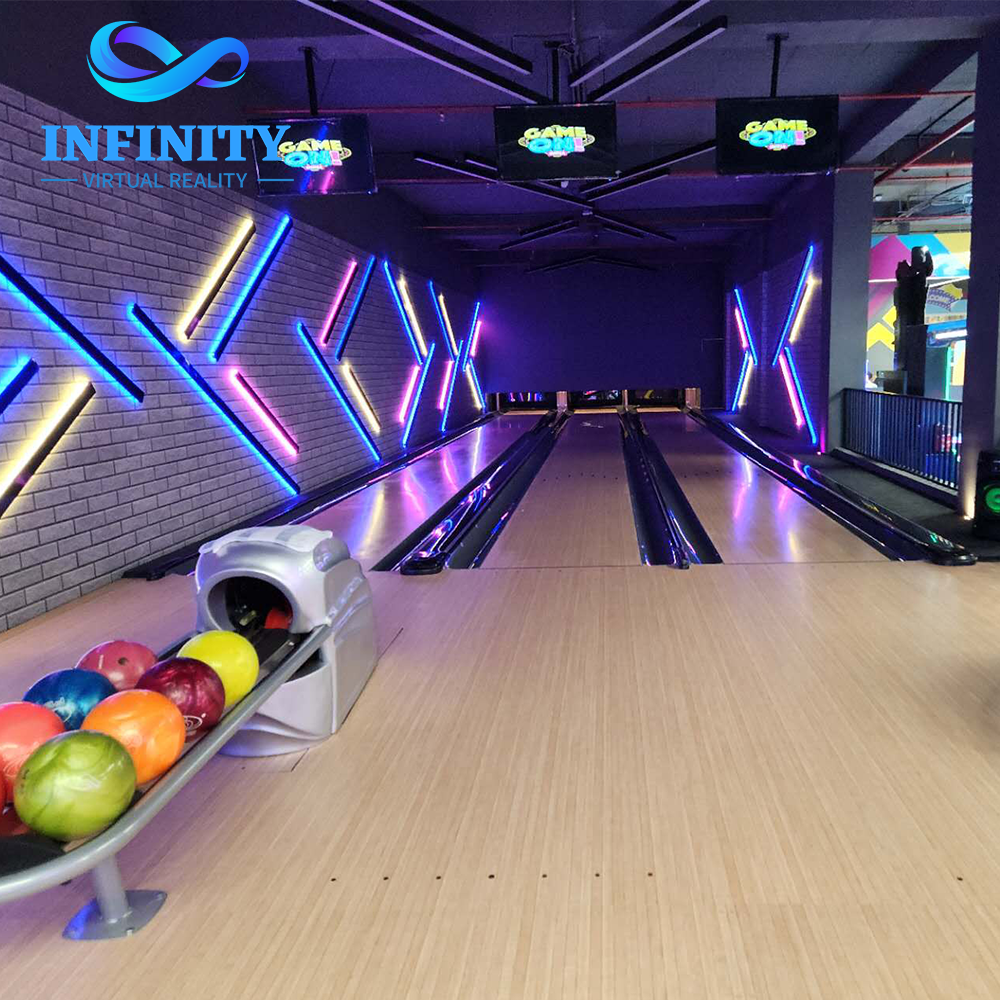
The chain partner
Duckpin Bowling System for Full Venue Solution
The hosted-lane neighbor that chains 15-minute archery blocks between games - the multi-activity pattern the survey rewards.
View Details ›

