BOWLING + SPORTS BAR - ONE CALENDAR, TWO REGISTERS
How to Combine Bowling with a Sports Bar
The bar-bowling design: sightlines from every lane, the lane-hour-plus-tab revenue model anchored to the published $45 duckpin lane-hour, the league-and-event calendar that fills weeknights, and the night schedule that keeps both registers ringing.
Sightline design Dual pricing structure League fills weeknights Tab = the bigger register +30% spectator lift Night schedule
$45/hr
Duckpin Lane-Hour (published)
+30%
Spectator Drink Lift
55%
Tab Share (EXAMPLE frame)
1. What It Is: The Bar That Lanes Built
A bowling alley inside a sports bar is not two businesses sharing a lease - it is one calendar with two registers: the lane books the group and the bar earns the evening. The published evidence anchors the model - duckpin's $45 per lane-hour, the two-lane bar math (published duckpin-for-bars guide), and the string pinsetter's compact 9.7-13-meter lanes that let a bar-shaped building hold a real bowling room. This guide designs that business: zone adjacency, the lane-hour-plus-tab revenue model, the league-and-event calendar, and the night schedule that keeps both registers ringing.
The anchors, so every number below has a home: the published duckpin lane-hour ($45) and the format's ~14-meter spine; the string turnkey's 9.7-13 meters and up-to-75% maintenance cut; the pinsetter fork calendar logic (published string vs free-fall comparison); and the spectator-side drink lift the published studies price at +30%. Planning assumptions, stated in one place: the zone shares and revenue mixes below are EXAMPLE frames for a two-to-four-lane bar installation - a full-format venue should re-read them through the ROI guide's venue-scale math.
In one line: the lane books the group, the bar earns the evening - design them as one room, one calendar and two registers.
2. How It Works: Zone Adjacency and the Lane-Hour + Tab Model
The adjacency rule the design hangs on: every lane sees the bar, and the bar sees every lane - sightlines are the machine that converts a booked lane-hour into a running tab. The lane side plans from the space guide's per-lane envelopes (the published commercial bowling space guide in this series): duckpin at ~14 meters, string at 9.7-13, and the seating band along the lanes rather than behind them. The bar side plans within arm's reach of the wait: the queue between games is the bar's sales floor, the same geometry the published queue playbook routes past the counter.
| Zone (EXAMPLE frame) |
Share of the room |
What it earns |
Design rule |
| Lanes and approach |
35-45% |
Lane-hours ($45 duckpin published) |
Every lane faces the bar |
| Bar and counter |
15-20% |
Tabs, the waiting-line register |
Visible from every lane |
| Seating and tables |
25-30% |
The second hour, food orders |
Along the lanes, not behind |
| Circulation |
10-15% |
Nothing - it protects everything |
Never crosses a live lane |
The revenue model, with its basis stated: the lane registers at the published $45 per lane-hour (duckpin anchor) under the dual pricing structure the published per-game-vs-per-hour guide compares - lane-hours for groups, per-game for walk-ins - and the bar register earns the tab: drinks during the wait, food at the table, and the +30% spectator-side lift the published studies measure. Concrete scenario (EXAMPLE): two duckpin lanes on a Friday book six lane-hours each ($540 of lane revenue at the published anchor) and carry a tab line two to three times that - the bar, not the lane, is the larger register, which is why the design keeps it in sight.
Where the Zone's Evening Revenue Comes From (EXAMPLE split, 2-lane bar Friday)
- Bar tab 55
- Lane-hours 25
- Food at tables 15
- Events and grid add-ons 5
Source: worked scenario (EXAMPLE) - revenue split of a sample 2-lane bar installation Friday: lane revenue anchored to the published $45 duckpin lane-hour, tab share framed from the spectator studies. Planning references, not prescriptions.
3. How It Works: The Calendar - Leagues, Events and the Night Schedule
The calendar is the model's engine. Weeknights: the small-format league - four to eight duos or quads on a fixed evening - books the lanes, the tables and the tab on the thinnest night, the exact play the karting guide documents (published leagues-fill-weekdays playbook) and the bar version runs even better because the league's spectators drink. Weekends: walk-ins and group bookings take the lanes at the dual rate, and the wait between frames feeds the bar. Events: corporate nights and birthday parties book the room as one unit - lanes, tables and a tab minimum - the packaging logic the party guides run at arena scale.
The night schedule completes the design: early evening is walk-in and after-work traffic at the per-game rate; prime evening is booked lane-hours with the tab engine running; late evening is league night or event takeover. The schedule exists so the lanes never go dark while the bar is open - a dark lane is a wasted anchor, and the published queue playbook turns every between-frame wait into counter time instead of dead time.
Scenario Zone Revenue by Calendar Slot (EXAMPLE planning frame)
Source: worked scenario (EXAMPLE) - non-monotonic planning frame: 2-lane bar zone revenue across four calendar slots, lane revenue anchored to the published $45 duckpin lane-hour. Planning references, not quotes.
The investment frame closes the design: the published duckpin stack ($30K equipment, $40-48K open) is the bar-scale entry, and the ROI guide in this series (published bowling ROI guide) turns the two-register model into a payback case - the tab register is why bar bowling pays back faster than lane-only houses.
4. Who It Is For and Where It Fits: Bar Owners, Formats, the Next Tab
Who it is for: the bar owner whose weekends work but whose Tuesdays do not - the lanes give the quiet nights a booking engine; and the FEC operator whose floor wants a second register - the bar gives the bowling zone its second hour. The format choice follows the building: duckpin where 14 meters fits, string where 9.7-13 does, 10-pin only where 26 meters of depth exists.
Where it fits: the bar-lane room is the compact end of the bowling family this series covers - space (1575), pinsetters (1576), the bar play (this guide) and the payback (1578). Close the loop the practical way: draw the sightlines first, price the dual structure second, write the league night third, and let the free 3D layout design test the room before the buildout does.
The operator's one-line brief: lanes in sight of the bar, league on the thin night, tab minimum on every event - and the lane-hour becomes the cheapest booking fee the bar ever charged.
5. Frequently Asked Questions (FAQ)
Does bowling actually drive bar sales?
It drives the right kind: bowlers book lane-hours and spend them at the table, and spectators drink while they wait - the same spectator geometry the published studies price at +30% on the arena side. The bar converts the lane's social half; the lane gives the bar a reason to book groups.
Which bowling format fits a sports bar best?
Duckpin, on the published evidence: ~14-meter lanes, $45 per lane-hour, and a footprint that fits retail boxes - the format the two-lane bar math was written around. String lanes run 9.7-13 meters where the building is tight; 10-pin wants 26 meters of depth most bars cannot give.
How many lanes should a bar start with?
The published bar math starts at two - enough to host a group and create a wait without parking capital in empty lanes - and scales to four or six when the calendar proves demand. The space guide's per-lane envelopes size the room before the second order.
What pricing structure works for bar bowling?
Per lane-hour for groups, per game for walk-ins - the dual structure the published pricing guide compares. The lane-hour anchors the group calendar and the tab; the per-game rate catches the couple who stays for two drinks and one string of frames.
How do leagues fit a bar calendar?
The same way they fill karting weekdays in the published playbook: a small-fmt league night - four to eight duos or quads - books the lanes, the tables and the tab on the thinnest evening of the week, and the league's end-of-season night is a private event the bar prices as one.
What is the revenue split between lanes and bar?
In the worked frames here, lanes anchor the booking and the bar out-earns them: lane-hours at the published $45 anchor roughly a third of the zone's take, with the tab carrying the rest - which is why the design keeps the bar visible from every lane.
6. Featured NextPlay Active Gaming Equipment
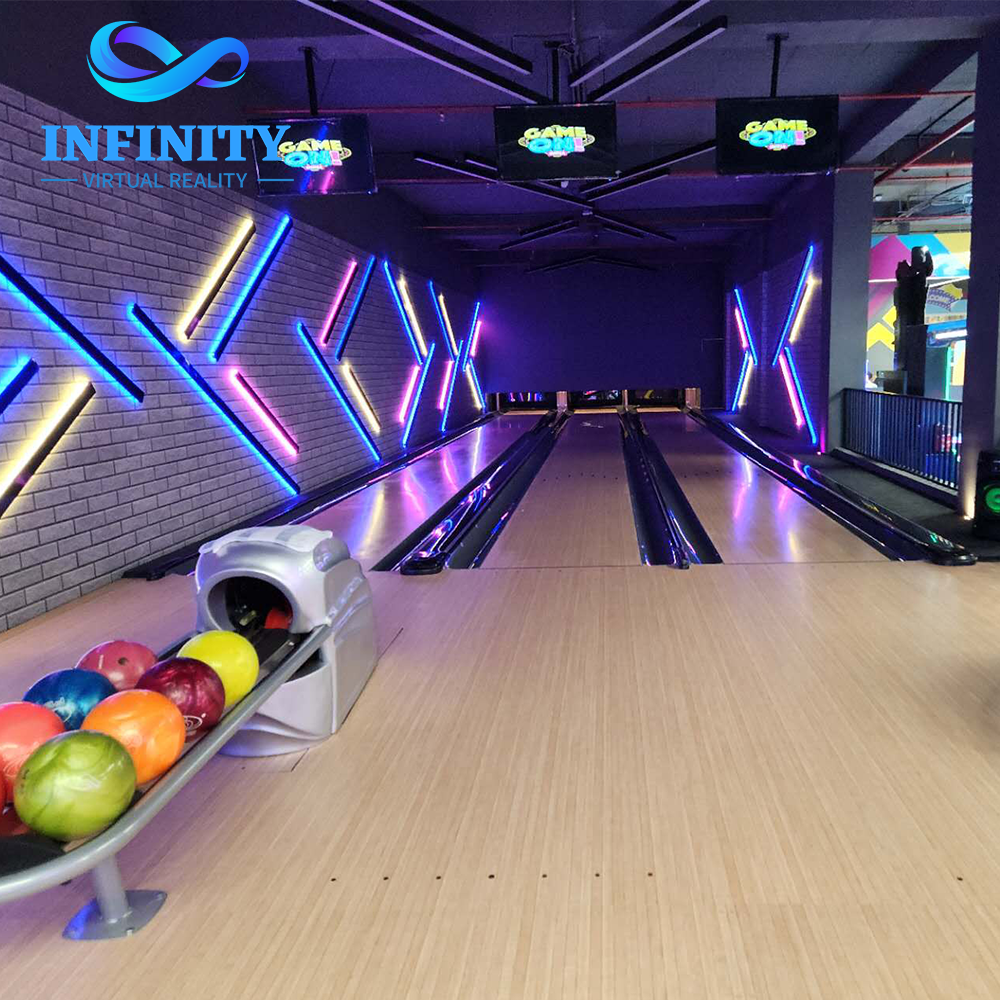
The bar format
Duckpin Bowling System for Full Venue Solution - Space-Saving Design, Easy Installation
The ~14-meter duckpin system - the $45-per-lane-hour anchor of the bar-bowling model.
View Details ›
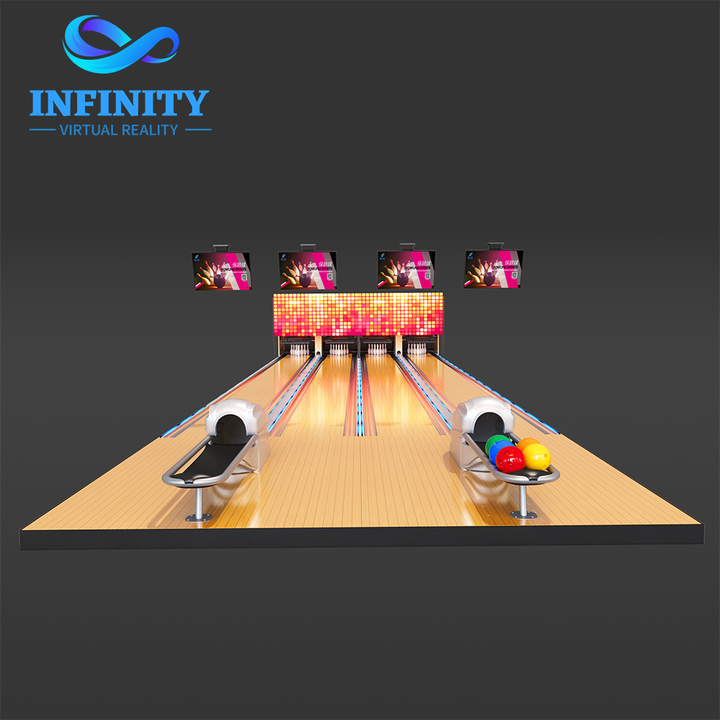
The tight-building option
2-Lane String Bowling Turnkey
The 9.7-13m string turnkey - bowling where 26 meters cannot go, with the maintenance cut.
View Details ›
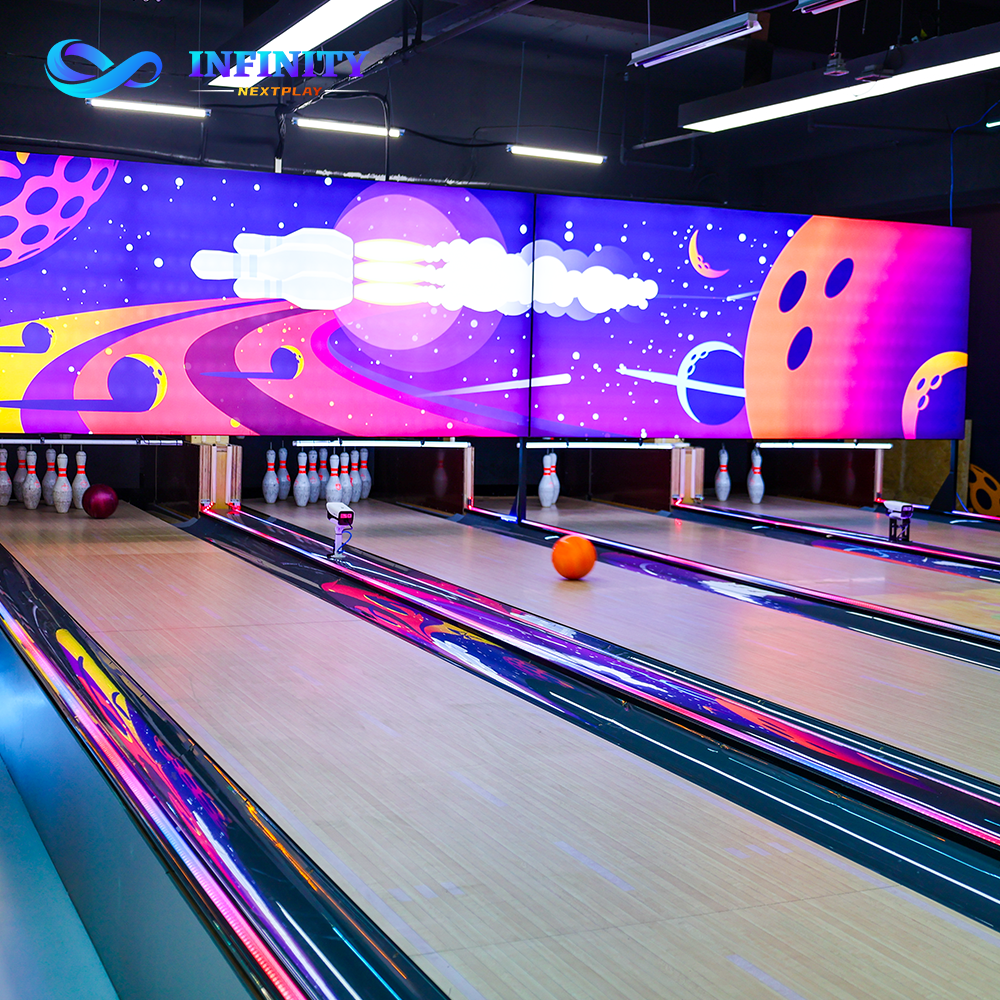
The full-format destination
Standard 10-Pin Bowling Alley for Full Venue Solution - International Standard 26m Lane
The published 26-meter international lane - for the sports-bar scale that can hold it.
View Details ›

