BOWLING COST GUIDE
How Much Does Bowling Cost? A Night-Out Budget for Groups of 4, 8 and 12
Bowling costs $4 to $8 per person per game, $3 to $6 for shoes, and $22 to $60 per lane per hour. A realistic night out lands at $20 to $35 per person. This guide prices out groups of 4, 8 and 12 on a four-rung budget ladder, gives the break-even rule that settles whether per game or per hour is the better buy, explains why the same night costs twice as much across town, and sets out the five moves that cut the bill.
Bowling Cost Per Game vs Per Hour Group Budget Shoe Rental Cheap Night Out Cosmic Bowling
$4-8
Per Game, per Person
$20-35
Per Person, Full Night
1. The Short Answer: What a Bowling Night Costs in 2026
A bowling night in 2026 costs $4 to $8 per person per game, $3 to $6 for shoe rental, and $22 to $60 per lane per hour if you rent the lane by the clock instead. Add food and drink and a realistic night out lands at roughly $20 to $35 per person. For four people that is about $80 to $140 all in; for eight people, about $160 to $280; for twelve, about $240 to $420. Those are the numbers, and everything below is how to move them in your favour.
Bowling is also one of the few nights out where the cheap option and the good option are the same option. A two-hour session gives a group of four something a cinema cannot: everyone plays, nobody watches, and the score settles the argument at the end. A family of four playing two games each typically spends about $35 to $50 on games and shoes alone, which is less than the same family spends on tickets and popcorn.
This guide is written for people who are planning the night rather than studying the sport. It breaks the bill into its three line items, prices out groups of four, eight and twelve on a four-rung ladder, shows the break-even rule that settles whether per game or per hour is the better buy, explains why the same night costs twice as much at the venue across town, and gives the five moves that cut the bill without cutting the night. If you want the game itself rather than the bill, why a bowling night out is a cheap night out covers how the scoring works and what happens when you arrive.
The one-line answer: budget $20 to $35 per person for a normal bowling night with food, and $12 to $20 per person if you are only paying for lanes and shoes. Everything else is a choice you can make at the counter.
2. Where the Money Goes: Three Line Items on Every Bowling Bill
Every bowling bill is three line items, and only one of them is negotiable once you walk in. Lane time is the big one, shoe rental is the small one you cannot skip, and food and drink is the one that quietly doubles the total. Knowing which is which is most of the budgeting work.
- Lane time: charged either per game, per person, or per hour, per lane. Per game runs $4 to $8 per person; per hour runs $22 to $60 per lane depending on daypart and venue. This is 60 to 70 percent of a typical bill.
- Shoe rental: $3 to $6 per pair, and one of the few genuinely unavoidable costs. Bowling shoes are required because street shoes damage the approach. If you bowl more than four or five times a year, buying your own pair pays for itself.
- Food and drink: the only truly optional line, and the one that moves the total the most. Published guidance puts it anywhere from $0 to $15 to $40 or more per person, and a group that shares a pizza lands at the bottom of that range while a group that orders individually lands at the top.
The reason the third line matters so much is that lane time has a ceiling and food does not. Two games and shoes for four people cannot exceed about $80 at typical rates, no matter where you go. Add a round of drinks each and a shared meal and the same night reaches $140 without anyone noticing the difference in the bowling.
One more line item appears in some venues and confuses first-timers: the per-lane minimum. Some centres require a minimum spend per lane or a minimum number of games in peak slots, which is worth asking about before you sit down. It is rarely hidden, but it is rarely volunteered either.
3. The Bowling Night Budget Ladder: 4, 8 and 12 People Priced Out
We call this the Bowling Night Budget Ladder: four rungs, each one adding a layer to the night, priced per person and then for three real group sizes. Use the rung you actually intend to buy rather than the cheapest one, because the gap between rungs is what trips up group organisers who end up collecting money twice.
| Budget Rung |
What You Get |
Per Person |
4 People |
8 People |
12 People |
| Lane only |
2 games each, standard rate, no food |
$13-20 |
$50-80 |
$100-160 |
$150-240 |
| Lane and table |
2 games each, shoes, shared food |
$20-35 |
$80-140 |
$160-280 |
$240-420 |
| Peak night |
Peak evening rate, shoes, food and drinks |
$30-50 |
$120-200 |
$240-400 |
$360-600 |
| Party package |
Per-head bundle: games, shoes, food, host |
$15-45 |
$200-400 |
$275-600 |
$500-900 |
Read the ladder down the columns and a useful pattern appears: the per-person figure is stable at roughly $20 to $35 for a normal night, whatever the group size. Bowling scales linearly. There is no group discount hiding in the structure, which means the only way to lower the per-person number is to move down a rung rather than to invite more people.
The party package row is the exception, and it is the exception worth understanding. A packaged kid party at $15 to $22 per child covers one or two games, shoes and basic tableware; $22 to $30 adds food and a party area; $30 to $45 adds a dedicated coordinator and often unlimited bowling during the slot. For adult and corporate groups, packages run $500 to $900 for twelve to twenty people with food and a bar tab, and a full-alley buyout for forty-plus people over four hours runs $1,500 to $4,000. Bundling is where the venue gives something back, because it is selling you a slot it would otherwise leave empty.
Two worked examples make the ladder concrete. Two people bowling two games each with shoes spend about $25 to $40, and about $40 to $70 once snacks and a drink each are added. A family of two adults and two children playing two games each typically spends $45 to $90 on games and shoes, and about $80 to $140 with food. Both figures come from published 2026 consumer pricing rather than from any single venue, so treat them as a starting budget and confirm against the venue you have chosen.
Planning note: the ladder uses published 2026 consumer price ranges and venue price lists. Your city, the venue type and the daypart move these numbers by a wide margin. The structure holds everywhere; fill it in with a phone call or the venue pricing page before you commit a group.
4. Why the Same Night Costs Twice as Much Across Town
Two lanes in the same city can charge two very different prices for the same game, and the reason is almost never the pins. Price follows four variables: when you bowl, how the venue charges, what kind of venue it is, and what is happening that night. Understanding the four is what lets you shop for a bowling night the way you would shop for a flight.
| Scenario |
Per-Game Total |
Per-Hour Total |
Cost per Game Under Each |
Cheaper |
| 2 people, 2 games, off-peak $22/hr (45 min) |
$24 |
$16.50 |
$6.00 vs $4.13 |
Per hour |
| 4 people, 3 games, off-peak $22/hr (2 hr) |
$72 |
$44 |
$6.00 vs $3.67 |
Per hour |
| 4 people, 2 games, peak $55/hr (1.5 hr) |
$48 |
$82.50 |
$6.00 vs $10.31 |
Per game |
| 6 people, 2 games, peak $55/hr (2 hr) |
$72 |
$110 |
$6.00 vs $9.17 |
Per game |
The break-even rule falls straight out of that table, and it is the single most useful thing in this guide. Convert the hourly rate into a cost per game: hourly rate times hours bowled, divided by the total number of games your group will bowl. Compare it with the per-game price. If the hourly equivalent is lower, take the hour; if it is higher, take the game. As a rough shortcut, an hourly rate near $22 a lane-hour beats a $6 game for almost any group, and an hourly rate near $55 loses to it.
Daypart is the biggest of the four variables. Weekday daytime typically runs $3 to $5 per game and is where bowling is genuinely cheap. Friday and Saturday evenings run $6 to $12 per game or materially higher hourly rates. Cosmic or glow sessions charge $12 to $20 per person for time-boxed unlimited play, and large entertainment complexes with arcades and full kitchens routinely sit at $45 to $60 or more per lane-hour. Same lane, three or four times the price, purely on the clock.
Real published price lists show the spread without any marketing spin. One Michigan centre charges $4 per person per game or $22 per lane-hour before 5pm, then $25 per lane-hour on Friday 5pm to 8pm and Saturday daytime. An Illinois centre runs $19 per lane-hour on weekday afternoons or $6 per person per game, $22 from 5pm to close, $25 on Friday evening and Saturday daytime, and $22 all day Sunday. Both charge $4 for shoes. Neither is expensive or cheap in absolute terms; they are simply priced to the clock.
Venue type is the fourth variable, and it interacts with the format. A boutique bar with a couple of lanes and a full kitchen can price a lane-hour well below a family entertainment centre with forty lanes, because the bar is not trying to make its money on the lane. The how duckpin bowling works and why everyone is playing it explains why the compact social formats cluster in exactly these venues - and why a night there often costs less per person than a league-style hall. If you want to see the same numbers from behind the counter, how operators decide between per-game and per-hour pricing works through the venue-side maths.
5. Five Ways to Cut the Bill Without Cutting the Night
There are five reliable ways to lower a bowling bill, and only one of them involves bowling less. In rough order of how much they save: change the daypart, switch the charging model, bundle, bring your own shoes, and control the food order.
- Move the daypart. Weekday daytime and Sunday to Thursday evenings are consistently cheaper than Friday and Saturday, and many venues run matinee specials at $2 to $3 per game. Moving a Friday night booking to a Thursday evening usually cuts the lane cost by a third to a half.
- Switch the charging model. Apply the break-even rule from the previous section. In off-peak slots, an hour of unlimited bowling often costs less than the same group paying per game; in peak slots, the reverse is true. Ask the counter which one applies before you pay.
- Bundle instead of itemising. Party and group packages price per head and include shoes and food, which removes the two lines that surprise people most. Packages are cheapest relative to walk-in rates on weekend mornings and weekday afternoons, when the venue is selling otherwise empty capacity.
- Buy your own shoes once you bowl regularly. At $3 to $6 a rental, a pair pays for itself after about four or five visits, and it removes a per-person line from every future booking.
- Control the food order. Share a pizza instead of ordering individually, or bowl first and eat afterwards. Food is the only line with no ceiling, and it is the one that turns a $100 night into a $200 night without anyone feeling they got more bowling.
Two more are worth asking about even though they are not universal. Many centres run kids-bowl-free programmes over the summer, where registered children get two free games per day, and most venues with a loyalty card apply automatic discounts or accrue points toward free games. Neither is advertised at the counter, so ask once and then stop asking.
The one move that does not work is haggling over shoe rental. Guests compare game prices and hourly rates, not shoe fees, so venues protect the lane price and hold shoes flat. If you want a lower number, negotiate the lane, not the shoes.
6. How the Three Formats Change What You Spend
Bowling comes in three commercial formats, and the one you play changes the experience more than it changes the price. Ten-pin is the full-length sport-standard game on a 26 m lane; duckpin uses a smaller ball of about 4.75 to 5 inches with no finger holes and gives three rolls per frame instead of two; string bowling keeps full ten-pin scoring on a mechanical string pinsetter in a compact 9.7 to 13 m lane. All three are real bowling, and all three are priced more by venue and daypart than by format.
| Format |
Lane and Ball |
Where You Meet It |
How It Is Usually Priced |
| Ten-pin |
26 m lane, full-size ball, two rolls per frame |
Bowling centres, sports centres, large FECs |
Per game at the top of the band; league rates by season |
| Duckpin |
Shorter lane, 4.75-5 in ball, three rolls per frame |
Bars, boutique venues, hotels |
Often by the lane-hour as part of a social night |
| String |
9.7-13 m lane, full ten-pin scoring |
Bars, hotels, lounge-style venues |
Competitively priced to drive dwell time |
The practical consequence for your budget is that venue type matters more than format. A bar with two duckpin lanes may charge less per person than a forty-lane family centre running ten-pin, because the bar is monetising the table and the centre is monetising the lane. Choosing by venue is a better budget decision than choosing by format.
There is one place where format genuinely changes the maths: how long a game takes. Duckpin and string lanes in social venues tend to run shorter, more casual games, which means more games per hour and better value under a per-hour rate. A full ten-pin game with a group of four typically runs 60 to 75 minutes, which matters when you are deciding between an hour of unlimited bowling and two games each.
If you are comparing the formats side by side before choosing a venue, 10-pin vs duckpin vs string bowling, the full-venue solution sets out the differences in lane, ball and scoring. For the guest, the short version is simple: pick the venue whose night you want, then use the break-even rule to pick how to pay.
7. Featured NextPlay Active Gaming Equipment
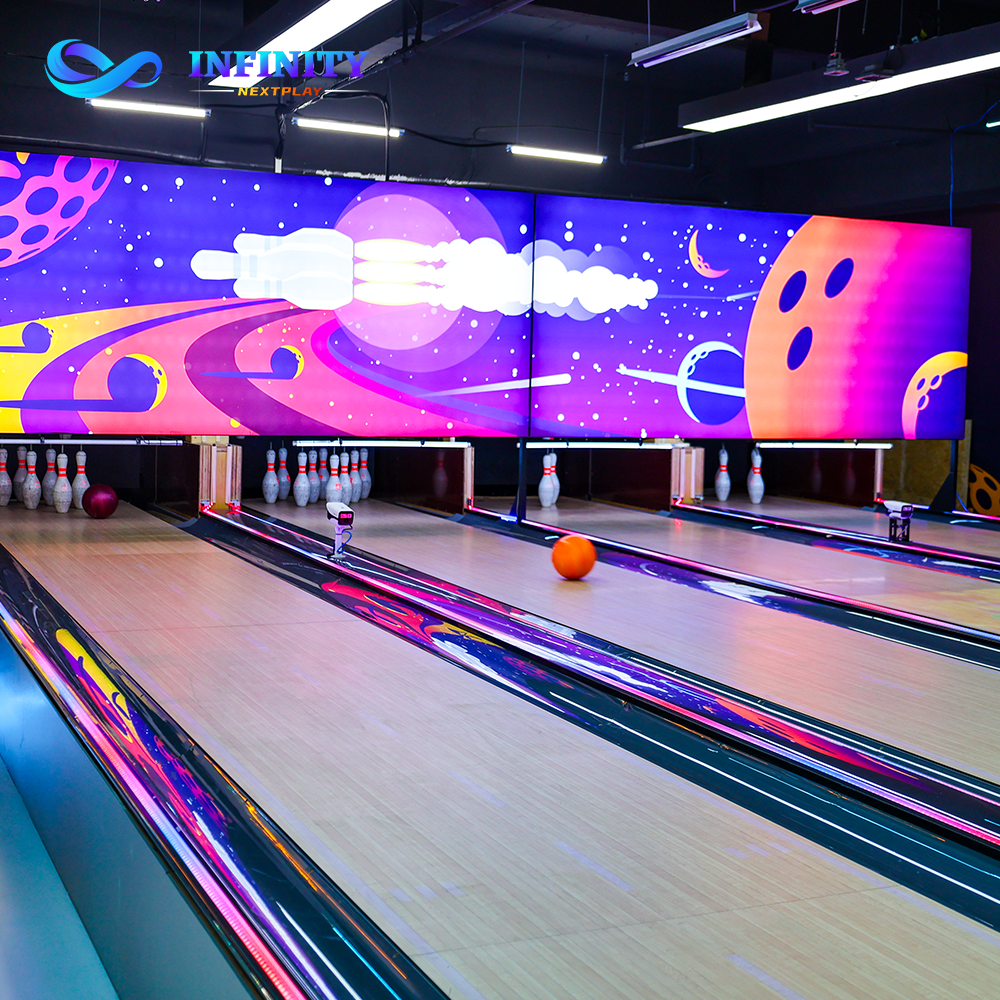
The Classic 26 m Game
Standard 10-Pin Bowling Alley
The international-standard 26 m lane behind the game most people mean when they say bowling. Full-size balls, two rolls per frame, ten frames, and the format that league nights and most walk-in pricing are built around.
View Details ›
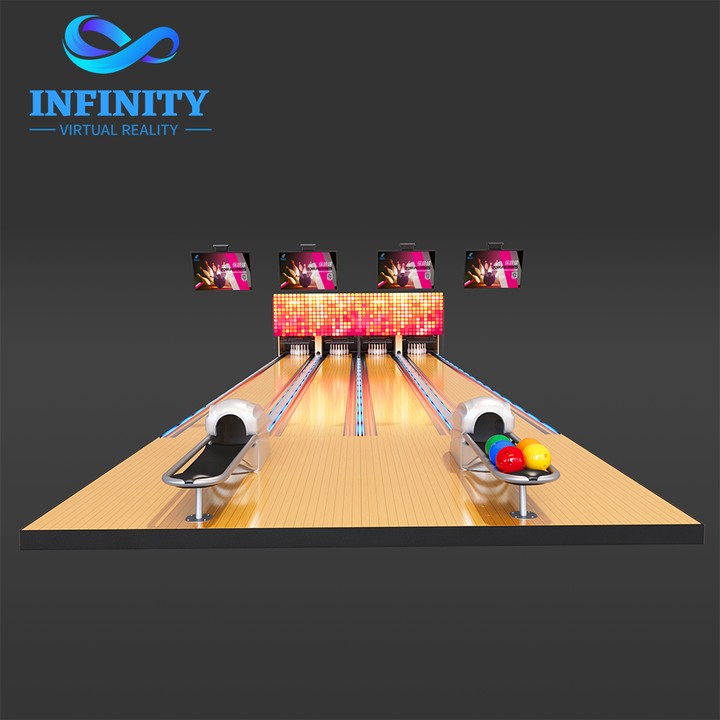
Compact Bar and Hotel Format
Commercial 2 Lane String Bowling
String bowling keeps the real ten-pin scoring while the mechanical pinsetter runs quieter. The compact 9.7 to 13 m lane is why bars, hotels and lounges can offer a genuine bowling night without a full-scale hall.
View Details ›
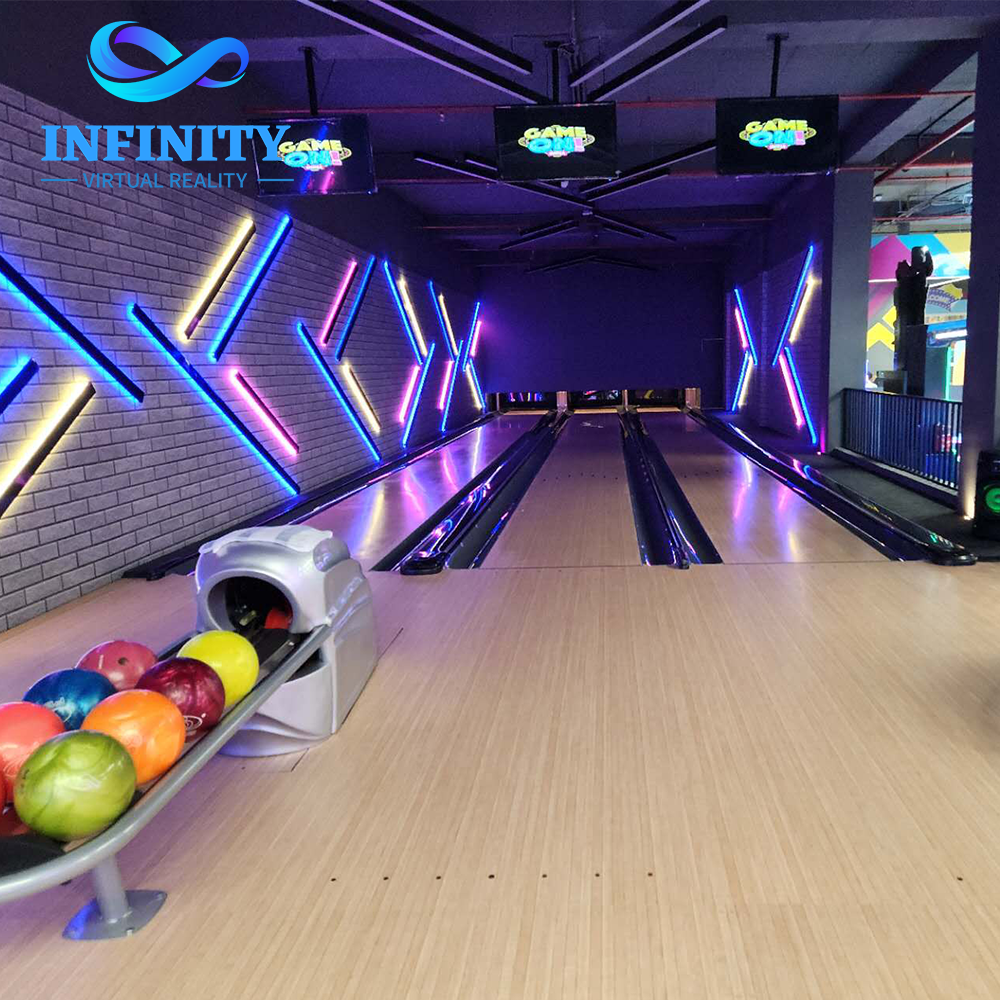
The Social Three-Roll Game
Duckpin Bowling System
Duckpin brings the small finger-hole-free ball, shorter pins and a three-roll frame to bars and boutique venues. Shorter games mean more games per hour, which is why duckpin venues are usually the best value under an hourly rate.
View Details ›
8. Bowling Cost FAQ: Games, Shoes, Hours and Group Budgets
The questions people actually ask when they are working out what a bowling night costs, answered with real price ranges rather than vague advice.
How much does bowling cost per person?
Bowling costs $4 to $8 per person per game, plus $3 to $6 for shoe rental. A realistic night with food and a drink lands at $20 to $35 per person, while a lane-only night runs about $12 to $20 per person. Cosmic and glow sessions charge $12 to $20 per person for time-boxed unlimited play.
How much does a bowling night cost for 4 people?
Four people bowling two games each with shoes spend about $50 to $80, and about $80 to $140 once food and drinks are added. Renting the lane by the hour instead costs about $40 to $55 for the lane plus $12 to $24 for shoes, which is usually better value in off-peak slots and worse value at peak.
Is it cheaper to bowl per game or per hour?
Convert the hourly rate into a cost per game: rate times hours, divided by the total games your group will bowl. Below roughly $30 per lane-hour, the hour is usually cheaper; above it, per game usually is. An off-peak $22 lane-hour beats a $6 game for most groups, while a peak $55 lane-hour loses to it.
How much does bowling cost for a group of 12?
Twelve people bowling two games each with shoes spend about $150 to $240, and about $240 to $420 with food and drinks. At that size, ask about group packages: adult and corporate packages typically run $500 to $900 for twelve to twenty people including food, and bundling removes the two lines that surprise group organisers most.
Why is bowling more expensive on Friday and Saturday?
Because the lane is scarce then. Weekday daytime typically runs $3 to $5 per game while Friday and Saturday evenings run $6 to $12, and hourly rates climb from about $22 to $60 or more. Large entertainment complexes can sit at $45 to $60 or more per lane-hour on peak nights.
Do I have to pay for shoe rental?
Yes in practice. Bowling shoes are required because street shoes damage the approach, and rental runs $3 to $6 per pair. It is one of the few unavoidable costs, and buying your own pair pays for itself after about four or five visits if you bowl regularly.
How much does cosmic or glow bowling cost?
Cosmic bowling typically costs $12 to $20 per person for time-boxed unlimited play on late Friday and Saturday nights, which is more than a standard game but includes the lighting, music and extended hours. For a group that plans to bowl several games in one session, it is often better value than paying per game.
What is the cheapest way to go bowling?
Go on a weekday afternoon. Matinee specials run $2 to $3 per game at many venues, some with free shoe rental, and unlimited-bowling nights on Sunday to Thursday evenings are close behind. Combine that with sharing food rather than ordering individually and a four-person night can land under $70.
How long does a game of bowling take?
A single game for four adults typically runs 60 to 75 minutes, while two bowlers finish a game in about 20 to 25 minutes. That difference is what decides the value of an hourly rate: the more people on the lane, the longer a game takes and the more an hour of unlimited bowling is worth.
Does the bowling format change the price?
Less than the venue and the daypart do. Ten-pin, duckpin and string are priced more by where you play and when than by which one you play. The one real difference is pace: duckpin and string games in social venues tend to run shorter, so more games fit into an hourly session.

