MINI GOLF FOR SCHOOLS - THE WEEKDAY GROUP PLAYBOOK
How Do You Sell Mini Golf to Schools and After-School Programs? The Weekday Group Playbook
Schools fill the idle weekday morning: the published rate card prices the morning tier at USD 4.50 for school demand, the capacity analysis puts the course at 16-24 players per course-hour, and a 9-hole quick session fits a class period in about 30 minutes. This guide maps the rate-card fit, the session design, the group math per morning and the pitch that closes the account.
Morning tier fit Session design Group math Auto-scoring Term programs Sales pitch
USD 4.50
Published Morning School Tier
16-24
Players Per Course-Hour
~30 min
9-Hole Quick Session
2 waves
One Class Per Period
1. How Do You Sell Mini Golf to Schools and After-School Programs? The Weekday Group Playbook
The hardest revenue to find on a mini golf course is the weekday morning, and the easiest group to fill it with is already organized: schools. A class arrives with a teacher, a head count and a schedule, plays a session that fits a period, and leaves before the after-school rush - all on capacity that would otherwise sit at zero. The published explainer on what indoor mini golf is sets the base fit: one modest ticket per player, mixed ages, first-time players welcome, and smart-cup auto-scoring that removes score arguments. This guide turns that fit into a sales playbook: the rate-card tier schools belong in, the session schedule that matches a school day, the group math per morning, and the pitch that gets the booking signed.
The one-line pitch to a school: a supervised 30-to-45-minute session on a real course, priced inside the weekday morning tier, sized to one class per hour - a PE period the venue already has the capacity to serve.
2. Schools Belong in the Morning Tier of the Published Rate Card
The published off-peak pricing analysis (the weekday time-tier rate card) already reserves the morning tier for school demand: weekdays before noon are priced lowest of the day at about USD 4.50 per round, explicitly because school groups and seniors are the only demand and staffing is light. The afternoon tier at about USD 5.00 is the quiet slot that needs filling, the evening tier at about USD 8.00 carries after-work demand, and the weekend peak at about USD 9.00 carries the premium calendar. A school program should be quoted from the morning and afternoon tiers - never a custom discount that breaks the card.
Weekday Rate Card per Round (published tiers)
Morning tier (schools)
USD 4.50
Source: published weekday time-tier rate card (morning USD 4.50, afternoon USD 5.00, evening USD 8.00, weekend peak USD 9.00 per round). All four bars share the same USD-per-round unit; indexed to the USD 9.00 peak tier.
| Tier |
When it applies |
Published rate |
Who it is for |
| Morning |
Weekdays before noon |
USD 4.50 per round |
School groups and seniors - the only demand in the slot |
| Afternoon |
Weekdays noon to 5 PM |
USD 5.00 per round |
After-school programs and the quiet slot that needs filling |
| Evening |
Weekdays 5 PM to close |
USD 8.00 per round |
After-work and date-night walk-ups |
| Peak |
Weekends and holidays |
USD 9.00 per round |
The premium calendar schools must never touch |
3. The Group Math: What One School Morning Serves
The session design starts from published throughput. The capacity analysis (mini golf course capacity, players per hour) puts an 18-hole walk-in route at 16 to 24 players per course-hour and explains the multiplication behind it: groups started per hour, players per group, and utilization. For a school morning, run 9-hole quick sessions instead of the full 18 - the published holes-for-an-FEC guide times the 9-hole quick-play standard at about 30 minutes per round - and a class of 25 students splits into two waves that each clear inside a period.
| Planning line |
Value (published basis) |
Where it comes from |
| Course throughput baseline |
16-24 players per course-hour |
Published capacity analysis (18-hole walk-in route) |
| 9-hole quick session |
About 30 minutes per round |
Published holes-for-an-FEC guide (quick-play standard) |
| Morning tier price |
USD 4.50 per round |
Published weekday rate card |
| Class of 25 in one period |
Two waves, about 30 min each |
Arithmetic on the published 30-minute quick-play session |
| Three-hour morning block |
Roughly 50-70 players per course rotation |
Arithmetic on the published 16-24 players per course-hour |
The revenue math follows directly and stays inside published numbers: at the published morning rate, a class of 25 books about USD 112 of round revenue in a slot that previously earned nothing, and a two-class morning roughly doubles that before any add-ons. The utilization ladder in the published ROI guide (indoor mini golf ROI) shows why weekday fill matters more than weekend spikes. Utilization there is defined as players served as a share of the course hourly capacity - the 16-to-24 players per course-hour baseline is the denominator - so a quiet Tuesday morning at 10 percent of capacity is exactly the gap the school playbook closes. The reference case that lands near USD 37,440 per month at about 35 percent utilization is built on steady daily volume, not weekend heroics.
4. Design the Session Like a PE Period, Not a Party
Schools buy structure. The published hole-design sheet (mini golf hole design, hole by hole) keeps every hole in a 3-to-5-minute play band, which is the rhythm a supervised class needs - no student stalls, no group gets eliminated, and the teacher can watch the whole rotation from one vantage. Auto-scoring is the second structural win: the published scoring comparison (scoring tech guide) shows sensor leaderboards lift a course from about 12 to about 18 rounds per hour because staff stop re-checking cards, and the Rainbow Golf Challenge scores automatically without a marshal reading anything.
For the after-school slot, the pitch shifts from curriculum to recreation: a 45-minute session with a themed finale. The Bowling Theme Mini Golf Challenge works as the class finale because the whole group cheers one roll together, and the Labyrinth Challenge gives the competitive students an interactive putting puzzle that survives repeat visits across a term. Program the term as a series - week one basics, week six a class tournament - and the school renews instead of books once.
5. The Pitch: Sell Idle Capacity, Not Discounts
The sales frame that closes school accounts is the same one the corporate-night analysis (the mini golf corporate night buyout format) uses for evening groups: the venue sells a slot it already owns, priced as a package, against capacity that earns nothing otherwise. The corporate format shows the same floor selling as a buyout for four times a walk-up evening; the school version is smaller but identical in structure - one decision, one head count, one invoice. Quote the morning tier, add the teacher free of charge as a published-style group courtesy, and put the session calendar in writing so the school books by the term.
If the floor plan is still open, the free layout service at free 3D layout design maps the school session - bus drop-off, course rotation, and the exit path that clears the class before the afternoon tier - onto your actual square meters before a single hole is ordered. The weekday playbook only works if the course can turn a class around in one period, and the layout decides that long before the pitch does.
All figures trace to published cluster articles and first-party product pages, verified live 2026-09-22. Derived rows are arithmetic on published bounds, not guarantees of results.
6. Mini Golf for Schools FAQ
The questions venue owners ask about selling to schools and after-school programs, answered with the published references.
Why is a school group a good customer for an indoor mini golf course?
School groups arrive exactly when the course is idle - weekday mornings and early afternoons - so every school booking is incremental revenue on fixed costs. The published weekday rate card already prices the morning tier at the lowest rate of the day for exactly this demand, and a school class of 20 to 30 players in one slot out-earns several hours of scattered walk-up rounds at that tier.
What should a school charge per student?
Anchor on the published rate card: the morning tier is priced at about USD 4.50 per round for school and senior demand, and the afternoon tier at about USD 5.00. School programs usually price per student including the round, and the group rate stays inside those published bands so the weekday rate card never contradicts itself.
How many students can a course serve in one morning?
The published capacity analysis puts an 18-hole walk-in route at 16 to 24 players per course-hour. A three-hour morning block therefore serves roughly 50 to 70 players per course rotation, and a class of 25 fits comfortably inside one hour with staggered starts.
Does the course need auto-scoring for school groups?
It helps a lot. The published scoring comparison shows sensor leaderboards move a course from about 12 to about 18 rounds per hour versus manual cards, because the marshal stops re-checking scorecards. For a teacher-supervised class, auto-scoring keeps the session inside the period bell.
How do you pitch a school without discounting the weekend?
Sell the weekday tier, never the weekend rate. The published rate card keeps morning and afternoon weekday tiers separate from evening and weekend peaks, so the school account fills idle capacity without touching the premium calendar that parties and tournaments pay for.
Is mini golf suitable for mixed-ability students?
Yes. The published what-is-indoor-mini-golf explainer notes the format works for mixed ages and first-time players, and the hole-design guidance keeps every hole in a 3-to-5-minute band, so no student waits long or gets eliminated - which is what a PE period needs.
7. Featured NextPlay Active Gaming Equipment
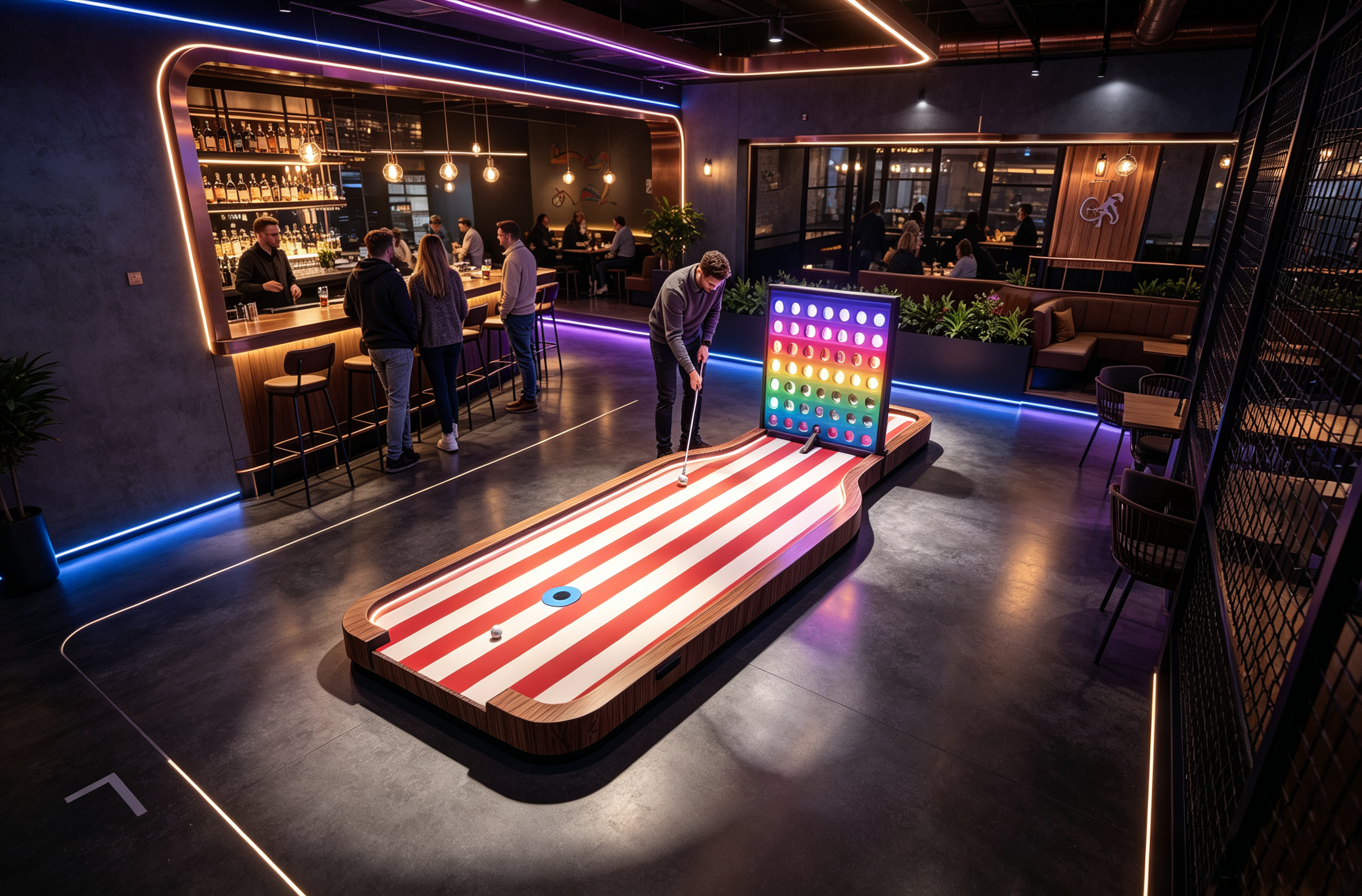
The school-session anchor
Rainbow Golf Challenge - Auto-Scored Interactive Mini Golf
Automatic smart-cup scoring keeps a supervised class moving without a marshal reading scorecards - the throughput edge school sessions run on.
View Details ›
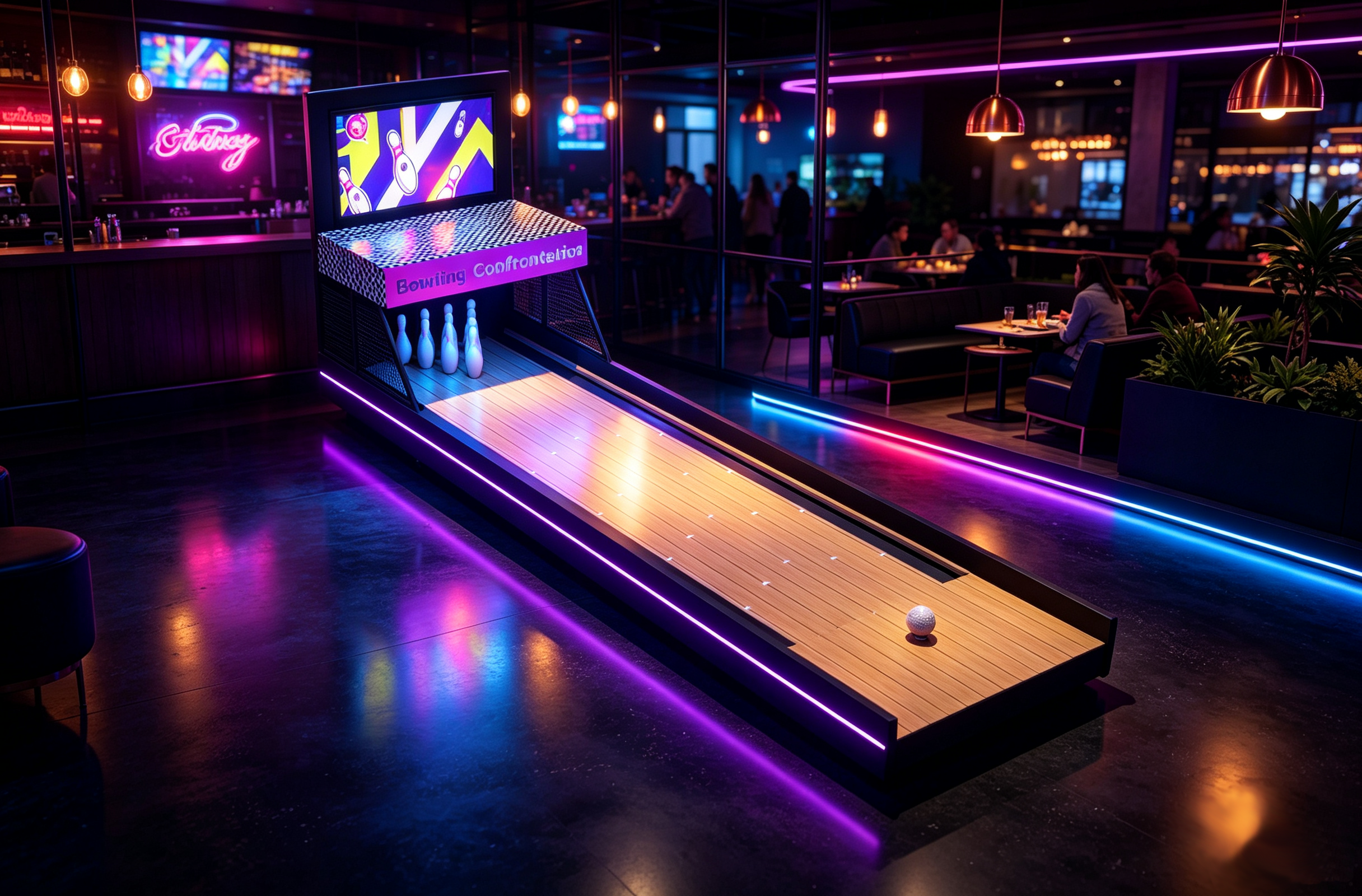
The class finale
Bowling Theme Mini Golf Challenge
A themed group-finish hole where the whole class cheers one roll together - the memory the school rebooks by the term.
View Details ›
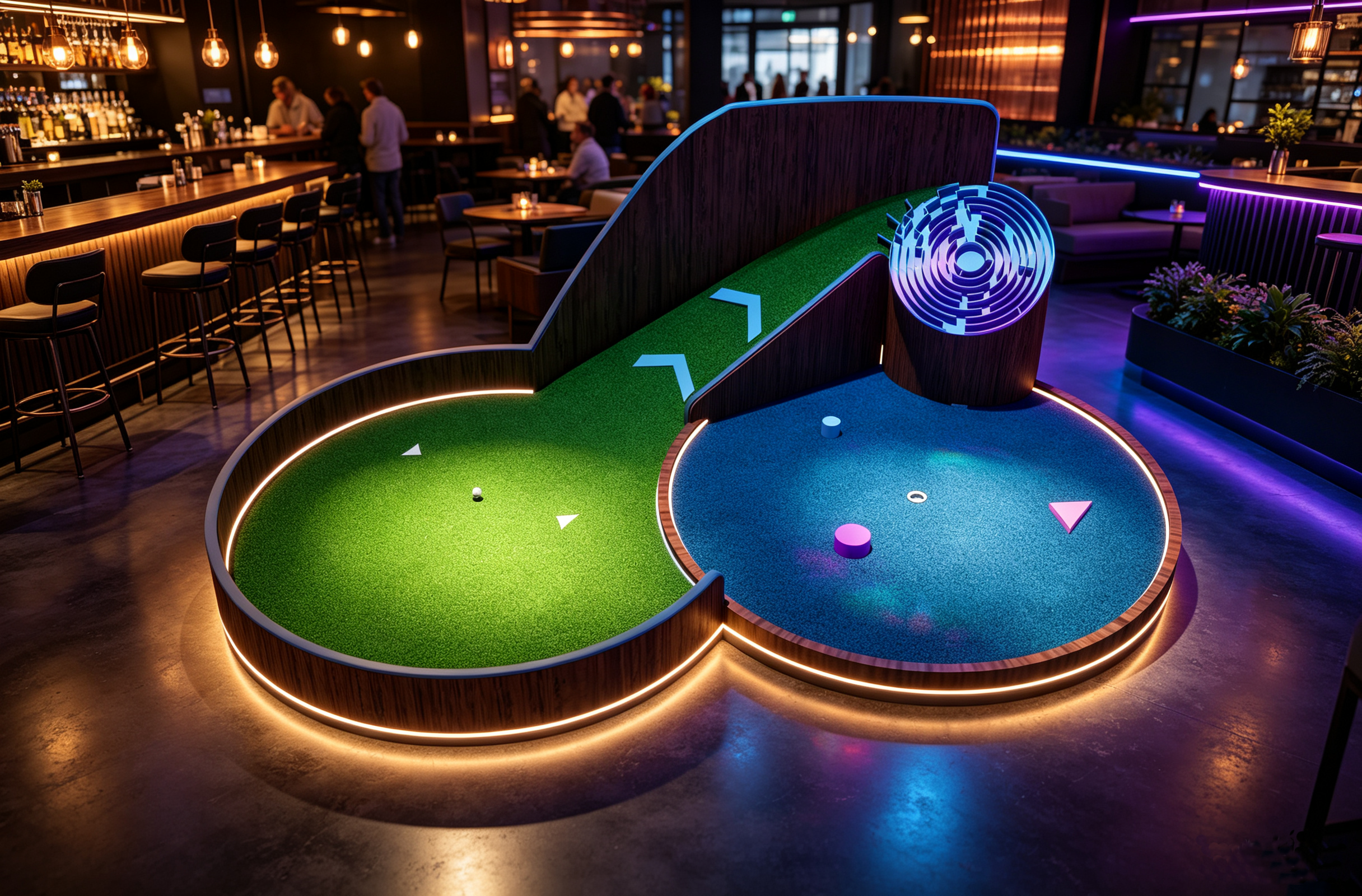
The repeat-visit hook
Labyrinth Challenge - Interactive Putting Attraction
An interactive putting puzzle that survives week-after-week after-school visits, giving the term program a competitive spine.
View Details ›

