MULTI-SPORT SIMULATORS MAINTENANCE - THE CARE SCHEDULE
How Do You Maintain Multi-Sport Simulators? A Year-Round Care Schedule
One shared sensor stack serves every sport library, so one dirty sensor degrades the whole room. The year-round rhythm: ten minutes a day per bay, an hour a week, half a day a month, one full service a year - run by one trained person.
10 min/day per bay Weekly library check Monthly calibration suite Annual full service One tech, whole room
10 min
Daily Routine per Bay (EXAMPLE schedule)
15-20%
Labor Band Context (published)
$8-30K
Equipment Band (published)
1-2 weeks
Annual Care as Bay Revenue (EXAMPLE)
1. What you are actually maintaining
A multi-sport simulator is one hardware stack serving several sport libraries: shared sensors, one projection surface, one compute unit, swappable software. The published definition guide is explicit that the multi-sport value comes from that shared core - which is also why maintenance matters more here than on a single-sport machine. One dirty sensor strip does not degrade one sport; it degrades every sport that library box sells.
So the care schedule below is organized by rhythm, not by sport: a ten-minute opening routine, a weekly round, a monthly deep service and an annual full service. The parallel is the published mini-golf maintenance guide, which runs the same daily-check / monthly-service split on a different floor - the habit transfers because the failure modes do: drift, wear, and the slow accumulation of small faults.
The schedule in one line: ten minutes a day per bay, an hour a week, half a day a month, one full service a year - and one trained person can run it across the whole room.
2. The daily routine: ten minutes per bay
Opening: wipe the sensor strip and the projection surface with the supplier-approved cloth, clear the bay floor of balls and clutter, and glance at the enclosure netting for gaps. Then throw one calibration set in the first sport you will sell that day - the published tracking-accuracy guide names calibration drift as the main risk to score integrity, and a thirty-second throw set is the cheapest drift test that exists.
Closing: power the bay down in the supplier sequence, log any error message the console showed during the day, and note the session count. The log is the part operators skip and later wish they had - three weeks of small error codes is exactly the record a service technician asks for, and the daily session count is what turns maintenance from a chore into a utilization check.
| Rhythm |
Task |
Time |
| Daily open |
Wipe sensors + screen, clear floor, netting glance |
5 min |
| Daily open |
Calibration throw set, first sport of the day |
2 min |
| Daily close |
Power-down sequence + error log + session count |
3 min |
| Weekly |
Sensor response across all sport libraries, filter clean, cable check |
60 min |
| Monthly |
Full calibration suite, mount torque, firmware + library updates, score DB backup |
Half day |
| Annual |
Full service: laser alignment, source hours, consumables, supplier inspection |
Scheduled |
3. Weekly, monthly, annual: the deeper rounds
Weekly: run each sport library once and compare scores against a known reference throw - the multi-sport architecture means software faults surface per library, and a library that scores wrong needs an update, not a hardware call. Clean or replace projector filters, and check cable dress at the sensor mounts where vibration slowly works connections loose.
Monthly: the full calibration suite across every library, mount torque on screens and sensors, firmware updates applied one bay at a time (never the whole room the morning of a league night), and a score-database backup. The published accuracy guide carries the calibration questions buyers ask; this is the same discipline on a schedule.
Annually: the supplier full service - laser alignment, light-source hour check, consumables (balls deform, screens scuff, filters clog), and a written inspection report. The published install-budget guide prices the equipment at $8,000-30,000 per bay; the service plan and consumables together are a low single-digit share of that per year. EXAMPLE framing: if a bay earns inside the published $2,400-per-machine monthly band, the annual care line is roughly one to two weeks of that revenue.
Care time per bay by rhythm (minutes, EXAMPLE schedule)
EXAMPLE planning schedule from published maintenance practice; annual shown as a single scheduled day. One trained person covers a 3-4 bay room on this plan.
4. Software care and the staffing question
Software is part of maintenance on a multi-sport floor because the libraries are shared: update on a monthly rhythm, verify one sport per library after each update, keep licenses current, and back up scores. Skip the verification step and a broken update sells wrong scores across several sports before anyone files a ticket. Scored formats feel it first - the leaderboard flow on a Digital Scoring Shooting Simulator Q4 bay is exactly the kind of software surface a bad update corrupts, which is why the verify-one-sport step exists.
Staffing follows the same self-service logic as the rest of the room. The published staffing guides put attended attractions in a 15-20% labor band; a bay that sells scored sessions through a kiosk flow needs a technician on rounds, not an attendant per bay. One trained person running the schedule above across three or four bays is the published pattern - and the daily session count in the log doubles as the utilization feed for the published 30-70% band arithmetic.
Consumables deserve their own line: balls lose pressure and seam accuracy, screens scuff where throws land, filters clog in dusty rooms. The published accuracy guide ties ball condition to tracking quality directly. Budget the consumables per bay per year, stock them, and let the weekly round trigger the swap - that habit is what keeps session quality inside the band customers paid for.
5. The defended answer
Maintaining multi-sport simulators is a rhythm, not a project: ten minutes a day per bay, an hour a week, half a day a month, one scheduled full service a year, and a written log that turns every error into a service call with evidence. Run by one trained person, the schedule keeps a shared sensor stack scoring true across every sport library it sells.
The budget context lives elsewhere in the family: the published install-budget guide prices the equipment and the room, the published definition guide explains the shared-architecture trade-offs this schedule protects, and the zone layout guide is where clearance and lighting decisions - the ones that make maintenance easier or impossible - get made. The Immersive Indoor Baseball Batting Simulator and the Indoor AR Golf Simulator Full Set both ship with supplier service plans; read those plans against this schedule before you buy, because the cheapest plan to maintain is the one whose intervals you can actually keep.
Operator takeaway: the schedule is cheap, the failure it prevents is expensive - a bay that scores wrong stops being played, and an unplayed bay pays rent for nothing.
6. Frequently Asked Questions (FAQ)
What daily maintenance do multi-sport simulators need?
A short opening routine: wipe the sensor strip and projection surface, throw one calibration set per sport you plan to sell that day, and check the enclosure netting and floor markers. Ten minutes per bay. The published tracking-accuracy guide treats calibration drift as the main accuracy risk, and the daily throw set is what catches it before customers do.
How often should sensors and projectors be serviced?
Weekly, look at sensor response across every sport library and clean filters; monthly, re-run the full calibration suite and inspect cables and mounts; annually, schedule a full service that covers laser alignment, lamp or laser-source hours and firmware. The published accuracy guide and the supplier service plan define the exact intervals for the unit you buy.
Does multi-sport software need its own maintenance?
Yes, and it is lighter than hardware care: monthly library updates, license checks and a score-database backup. Because multi-sport simulators share one sensor stack across sport libraries, a software bug can affect several sports at once - update on a schedule, and verify one sport per library after every update rather than assuming.
How much does annual maintenance cost for a multi-sport simulator bay?
The published cost material prices the equipment at $8,000-30,000 per bay; the maintenance line is a fraction of that - supplier service plans plus consumables (balls, screen stock, filters) typically run a low single-digit percentage of the unit cost per year. Treat supplier plan quotes as the real number and the percentage as the sanity check.
Can one technician maintain several bays at once?
One trained staff member can cover a multi-bay room - the published staffing guides put attended attractions inside a 15-20% labor band, and a bay built for self-service sessions leaves the technician with scheduled rounds instead of babysitting. The schedule below is written so one person can run it across three or four bays in under an hour a day.
What happens if you skip the care schedule?
The published accuracy material shows where it ends: drift that customers notice before the P&L does - balls registering wrong, launch data looking off, scores that feel random. A bay that scores wrong stops being played, and a bay that is not played earns nothing. Maintenance is cheap relative to the revenue line it protects.
7. Featured NextPlay Active Gaming Equipment
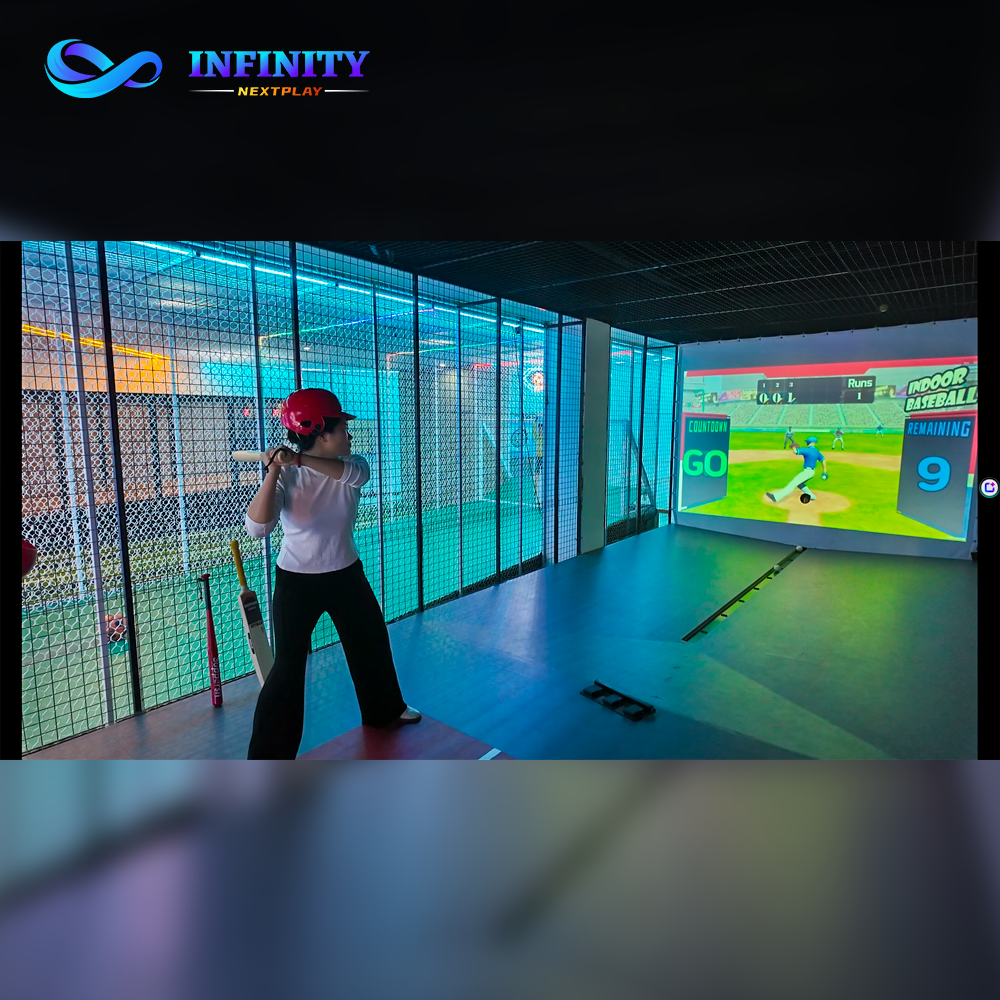
The tracking bay
Immersive Indoor Baseball Batting Simulator
Real-time ball tracking with HD projection - ships with the supplier service plan this schedule is built around.
View Details ›

The camera-tracked bay
Indoor AR Golf Simulator Full Set
High-speed camera detection that shares the sensor-care routine across the second sport library.
View Details ›
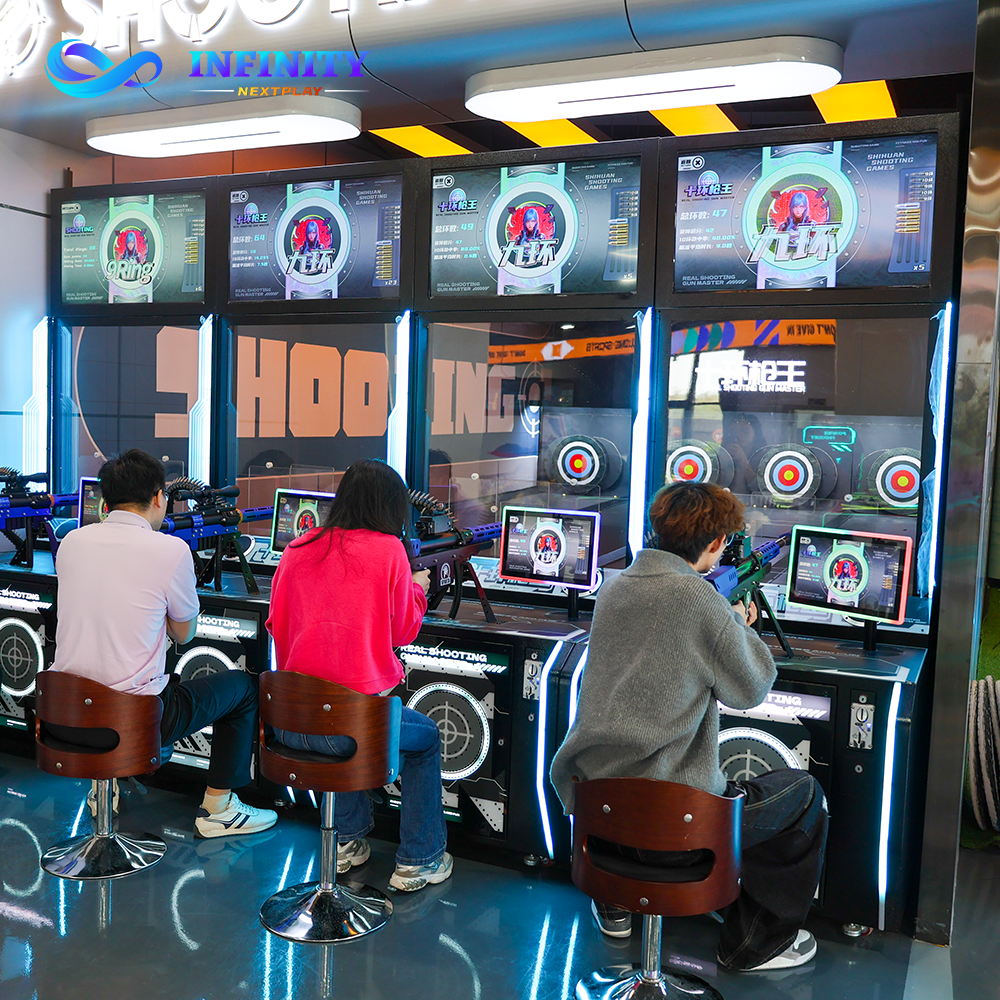
The scoring bay
Digital Scoring Shooting Simulator Q4
Real-time leaderboard scoring whose software cadence rides the same monthly update rhythm.
View Details ›

