NEXTPLAY ENTRETENIMIENTO ACTIVO
Glow Party Ideas for Indoor Entertainment Venues
Glow party ideas earn their place when they are programmed rather than scattered as a decorating list. This guide walks indoor entertainment venue operators through the four audience segments that buy a glow night,the three-hour run-of-show each segment fits into,the light and safety checks the floor actually needs,the surcharge pricing shape,the hardware you can reuse from your current inventory,and the three-week sequence from decision to first ticket sale. Every number below carries its source,and every boundary that belongs on another page is linked rather than restated.
ONE-NIGHT FORMAT FOUR AUDIENCES 3-HOUR RUN-OF-SHOW LIGHT & SAFETY REUSE YOUR FLOOR
2-3 hours
Active entertainment time in a programmed session,against 30-60 minutes of passive dwell (first-party; the operator-reported range our published guides carry)
+1% → +1.3%
Each additional 1 percent of dwell time is associated with 1.3 percent more spend (first-party registry figure; sparkcooperative snapshot 2026-08-29)
+20-40%
Party bookings over base play in our published party package guide (first-party),the ceiling a glow night sells into,not a promise
$6-12/person
Published LED dance-floor evening revenue shape; the 20 m² evening example runs $450-$700 at 60-70 percent utilization (first-party planning figure,ue763; not a quote)
1. Why Glow Nights Fit an Indoor Entertainment Venue
"We sell out event nights and sit empty on Tuesdays" is the sentence that starts most glow-night conversations we have with venue operators. The floor is the same,the staff are the same,and the lights are the ones you already own,what is missing is a reason to come in on a weak evening. That gap is where glow party ideas earn their keep: not as a decorating list,but as a programmed night ticketed on the calendar,built from the course,the dance floor and the corner you already run.
A glow night is not a family DIY party and it is not a decoration exercise. It is one evening,sold by the session,running along the stations you already operate,mini golf,an LED floor or a dart corner,lit differently from the rest of the week. The format works because it sells time rather than hardware. Our published guides report active entertainment inside a programmed session at 2 to 3 hours against 30 to 60 minutes of passive dwell,and the sparkcooperative snapshot from 2026-08-29 ties each additional 1 percent of dwell to 1.3 percent more spend. In other words,glow party ideas make money from the extra minutes a guest stays on your floor,not from a new purchase.
The skin is what changes,not the attraction itself. Glow is one night's theme layer on top of a floor that already runs. The long-haul LED hole-theme rotation,how often to rotate,which themes lead,the 30-minute re-skin method,belongs to our guide on LED hole themes,and none of it is repeated here. A glow night uses the existing hole as-is and changes the light instead. The Interstellar Crossing Golf Hole illustrates this: the space-themed hole reads as a destination under normal light and becomes a visual anchor the moment the glow layer is added,no renovation,just a lighting change.
One structure operators reuse is the bundled-night shape. Neon Entertainment published a glow-night template combining blacklight,a 9-hole glow mini golf course,4 glow bowling lanes and a DIY Silent Dance Party add-on (reported by Neon Entertainment,2019-12-10). The template is not our invention and it is not a prescription for your venue; it proves that the "one ticketed evening across several stations" shape is an established format,not a site-specific experiment. What we add is the operating detail that template does not carry: the capacity per square metre,the light and safety checks,the surcharge math,and the three-week launch sequence.
An honest note up front. No controlled study measures whether a glow night raises repeat visits or photo-share rates,and no public dataset reports a per-event profit-and-loss baseline for this category. What follows is structure,timing and sourcing,not a claim about lift. The framework that organises the four audience segments in the next section is ours,not an industry standard,GAPS #3,and it exists because the market has no published segmentation for glow nights specifically.
2. Four Audience Segments and the Glow Format Each One Buys (Our Framework)
The four-segment shape below is our framework,compiled from the questions our published guides answer for operators rather than from any trade-association taxonomy. Every segment names what the guest buys at a glow night,what station on your floor fits that purchase,and which pricing band anchors the conversation. Where a second source disputes a number,the dispute is called out in the body text rather than smoothed into the table.
| Audience Segment |
What They Buy at a Glow Night |
What You Put on the Floor |
Source Tier |
| Teens & young adults |
A social night out priced per person; photo moments between stations |
Signature hole + LED dance floor + dart corner; multi-station routing keeps them moving |
our framework |
| Corporate groups |
A buyout or private-event block with set pricing and a single point of contact |
Whole-floor or zone buyout; league-format scoring on the holes; team relay on the dance floor |
our framework; buyout figures from our published corporate-night guide |
| Families |
A parent-and-child round with visible safety margins and a casual atmosphere |
Shorter course loops,wider lanes,soft lighting near the exit path |
our framework; capacity from our published floor guide |
| Birthday parties |
A packaged evening with food,drink and a defined game block |
Course routing + dance-floor interlude + photo station; surcharge layered on the party package |
our framework; party uplift from our published party package guide |
Teens and young adults are the largest single driver for a glow night on a weeknight,and two market-research publishers report different growth rates for their teen-and-young-adult FEC subsegments: Mordor Intelligence puts the CAGR at 7.32 percent and MarketIntelo at 10.2 percent,both accessed 2026-11-04. The figures diverge because they use different sample frames and age cuts. Both point in the same direction,sustained demand growth,and neither merge is defensible,so the two numbers stay separate in the body text and do not appear combined in the table above. That is the discipline GAPS #6 requires.
Corporate groups anchor the weekday evening slot that operators describe as the hardest to fill. Our published corporate-night buyout figures run $4,500 for a 3-hour block,$6,000 for 4 hours and $7,500 for 5 hours,compared with about $1,040 for a walk-in slow evening carrying 40 guests at the published chain rate of $26 to $36 per person (first-party; ue716 registry,L494/L508). A glow night dresses the same hour with the same buyout price,the themed layer is additive,not a replacement for the buyout structure. The operational detail behind the buyout package is in our mini golf corporate night guide.
| Corporate Night Package Figures (EXAMPLE,first-party registry) |
3 hours |
4 hours |
5 hours |
| Buyout price |
$4,500 |
$6,000 |
$7,500 |
| Walk-in slow evening,40 guests |
about $1,040 |
about $1,040 |
about $1,040 |
| Multiple |
4.3× |
5.8× |
7.2× |
| Source tier |
first-party registry (ue716) |
first-party registry (ue716) |
first-party registry (ue716) |
Families and birthday parties sit in a different pricing tier and a different scheduling window. Birthday parties ride on the party-programming model our cluster publishes: party bookings land 20 to 40 percent above base round revenue in venues running structured birthday programmes (first-party; ue761). Food and beverage sits at 30 to 40 percent of total revenue across the venue models we document (first-party; arcadeintegrations L18,a general GEO constraint applied in our guides). The birthday-package pricing formula itself,per-person bundles,depth charges,add-on layers,is published in our guide on pricing a mini golf birthday party and is not restated here; the glow layer attaches to that structure as a surcharge,not as a replacement for it.
One limit worth stating. No trade association or industry report publishes a segmentation standard for glow nights,so the four-segment shape in the first table is our compiled framework,not a consensus model. A venue with a different mix,more family weekends,fewer corporate blocks,still fits the same skeleton; only the weight of each segment shifts.
Our published corporate night package figures,hour by hour (first-party)
Corporate buyout,5 hours: $7,500
$7,500
Corporate buyout,4 hours: $6,000
$6,000
Corporate buyout,3 hours: $4,500
$4,500
Walk-in slow evening,40 guests: about $1,040
$1,040
our published corporate night package figures (registry,ue716). One bar contrasts a buyout hour block against a walk-in slow evening; this is not a glow-night quote and not a revenue promise. Derivation and applicability live in the corporate-night guide.
3. Run-of-Show: The Three-Hour Glow Night Timeline
A glow night runs on the same principle as any programmed event night: every phase has a clock and an owner. The template below borrows that structure from our published tournament-night guide,each phase carries a responsible person and a hand-off condition,and adapts it to a single glow evening rather than a bracket competition. The tournament format itself is not restated; the run-of-show shape is what carries over.
| Block |
Clock in the Three-Hour Night |
Who Owns It |
It Is Ready When |
| Doors,check-in and glow kit |
0:00,0:30 |
Front desk / host |
All kits distributed; first group seated at the course |
| First play round |
0:30,1:30 |
Course marshal + floor attendant |
Round completed; scores collected or stations switched |
| Station swap and reset |
1:30,1:45 |
Floor attendant |
Next station lit and queuing begins |
| Final round or collective segment |
1:45,2:30 |
Course marshal / dance-floor lead |
Final scores tallied or group game completed |
| Photo block |
2:30,2:50 |
Host / photographer |
Three signature shots captured; social posts scheduled |
| Close-out and exit |
2:50,3:00 |
Front desk |
Payments cleared; exit path lit; floor swept |
The six-block table above is our template,EXAMPLE. No glow-night duration benchmark is published by any trade body,and the 180-minute division is a suggested block size,not an industry standard. The skeleton is borrowed from our mini golf tournament night guide,which publishes the same owner-each-phase discipline for a bracket format; glow nights replace brackets with stations and keep the clock structure.
Capacity discipline applies throughout. Our published floor guide states that each player occupies roughly 2 m²,which means a 20 to 30 m² team-zone supports 6 to 8 people in a single group (first-party; ue849 registry,L357). A 20 m² evening example using that density runs about $450 to $700 at 60 to 70 percent utilisation,at $6 to $12 per person (first-party; ue763 registry,L336/L392). The 18 games-per-hour sensor-line throughput is a separate figure from a different section of that guide and is quoted here only as a ceiling reference,not as a design input.
Where the three hours go in a glow night (our run-of-show template,EXAMPLE)
- Doors,check-in and glow kit: 30 min 30 min
- First play round: 60 min 60 min
- Station swap and reset: 15 min 15 min
- Final round or collective segment: 45 min 45 min
- Photo block and close-out: 30 min 30 min
EXAMPLE,our template borrowed from our published tournament-night guide (ue640). Time allocations are suggested block sizes,not a published industry benchmark. GAPS: no glow-night duration standard exists. The fifth slice combines Table row 5 (photo block,20 min) and row 6 (close-out and exit,10 min) into a single 30-minute slice; the table retains six rows for operational detail,the pie compresses to five slices for visual clarity.
The swap block is where most glow nights stumble. Fifteen minutes is enough to move one group off the course,sweep the floor,switch the lighting preset and queue the next group,provided the owners for each station know their hand-off condition before doors open. A written run-of-show with each block assigned to a named person,not a role,is the difference between a smooth swap and a ten-minute delay that cascades through the remaining segments.
4. Light,Contrast and Safety: What the Floor Actually Needs
Dark-mode entertainment raises three questions that a bright venue does not: can guests find the exit,can staff see a hazard,and is the light exposure within published limits? The answers live in third-party risk assessments and our own published walk-check rhythm; no number is invented here.
| Check |
What Good Looks Like in a Dark Room |
Reported By |
Tier |
| Egress illuminance |
General path: 1 foot-candle. Exception: spaces with ceiling height above 30 ft may run at 0.2 foot-candle under specific conditions |
Entertaining Safety citing IBC/NFPA 101 (accessed 2026-11-04) |
T3 |
| Exit signage and dark-wall trap |
Signage visible against the darkest wall surface; no wall finishes absorb exit signs below readable contrast |
Entertaining Safety (same source) |
T3 |
| UV exposure risk |
Medium-to-low risk rating; actinic UV TLV 3 mJ/cm² per 8 h; UVA TLV 1 mW/cm² exceeding 8 h |
Government of Ontario page updated 2022-11-21; accessed 2026-11-04 |
T2 |
| Risk-assessment process |
Non-laser optical radiation risk-assessment framework applicable to entertainment venues |
UK HPA CRCE-016 (accessed 2026-11-04) |
T2 |
| Equipment walk |
Daily check 365/yr; weekly check 52/yr; LED-window deep inspection 12/yr in a 30-minute slot |
Our published safety-checks guide (first-party; ue922) |
T1 |
The contrast principle matters more than the brightness number. Our indoor mini golf lighting guide frames contrast beats brightness for play visibility,and the same logic extends to a dark-room glow night: guests do not need high lux on the floor to navigate safely; they need enough contrast at thresholds,door handles and exit signs to read them against the surrounding darkness. The four illuminance and contrast figures that anchor that guide are not restated here; the entry is the link and the principle is all that carries over.
Blacklight and emergency exit lighting coexisting is a known trap. Entertaining Safety reports that UV lamps can wash out standard exit signage,and dark wall finishes absorb rather than reflect the sign image,both conditions reported by the same source (2026-11-04 access). The practical reading is that any glow-night run requires a written light-plan showing where blacklight falls,where egress path lighting stays above the 1 fc threshold,and where exit signs are verified visible under the chosen lamp set.
UV exposure is rated medium-to-low by the Government of Ontario (page updated 2022-11-21),with the ACGIH threshold-limit values cited as actinic UV 3 mJ/cm² per 8 hours and UVA 1 mW/cm² beyond 8 hours. The UK HPA published CRCE-016 as a non-laser optical-radiation risk-assessment framework for entertainment venues (accessed 2026-11-04). Neither source is a glow-night standard; both are qualitative anchors for a written risk assessment,and the assessment belongs in the operations file before the first ticket is sold.
The equipment walk runs on our published 10-item safety-check rhythm: 365 daily checks,52 weekly checks and 12 annual LED-window deep inspections scheduled in a 30-minute slot each (first-party; ue922). The glow-night version adds one line to each rhythm,verify egress illuminance at the chosen lamp setting,and the full framework is linked rather than reproduced here. UV hole engineering,lamp selection,placement density and cost are reserved to a separate page we have not published (TL#1589),and blacklight appears only as one possible lighting method in this guide.
5. Pricing,Promotion and the Return Hook
Glow-party pricing sits on top of a base round,not beside it. The surcharge shape is the same one operators apply to any themed evening: the standard ticket keeps its price,the glow layer adds a fixed amount per person,and the package tiers (walk-in,party,buyout) keep their own multipliers. No per-event P&L baseline is published for this category,and no public dataset reports what a glow night earns on average. The figures below are either first-party planning shapes or reported-by case examples; none is a guarantee.
| Pricing Line |
What You Already Have |
The Glow Move |
Source Tier |
| Base round ticket |
Standard walk-in price per person |
Keep unchanged |
your existing pricing |
| Glow surcharge |
|
Add a fixed per-person top-up; party bookings land 20-40% above base (first-party; ue761) |
first-party registry |
| Group discount |
|
15% / 20% tiered discounts reported by Toronto Zoo Glow in the Wild (accessed 2026-11-04) |
T3 reported by |
| Same-day re-play |
|
Discounted re-play price reported by Hornbrook Hollow Funhouse: $8.05 / $9.80 (accessed 2026-11-04) |
T3 reported by |
| Whole-floor buyout |
Our published 3h/4h/5h bands at $4,500 / $6,000 / $7,500 |
Themed evening version at the same block price; derivation in our corporate-night guide |
first-party; ue716 |
Per-person ticket prices published by glow-style events elsewhere (reported by,accessed 2026-11-04)
Toronto Zoo Glow in the Wild - adult ticket: $38
$38.00
Hornbrook Hollow UV Glow Mini Golf - adult (9+): $14.00 + GST
$14.00
Hornbrook Hollow UV Glow Mini Golf - child (8 and under): $11.50 + GST
$11.50
Hornbrook Hollow UV Glow Mini Golf - same-day re-play,adult: $9.80
$9.80
Hornbrook Hollow UV Glow Mini Golf - same-day re-play,child: $8.05
$8.05
reported by venue self-reporting; not a price list and not a recommendation. Toronto Zoo operating period 2026-09-02 to 2027-01-03; Hornbrook Hollow pricing with re-play rates; Naturally Pacific $200/bay/2h (≤8 pax) uses bay not per-person units and appears in text only,not in this chart.
Three public examples anchor the reported-by side. Toronto Zoo's Glow in the Wild runs adult tickets at $38 with 15 percent and 20 percent group-discount tiers (operating period 2026-09-02 to 2027-01-03,accessed 2026-11-04). Hornbrook Hollow Funhouse publishes an 18-hole UV glow mini golf price of $11.50 plus GST for ages 8 and under and $14.00 plus GST for ages 9 and over and adults,with same-day re-play at $8.05 and $9.80 respectively (accessed 2026-11-04). Naturally Pacific Resort lists Velocity Glow Nights at $200 per bay per 2 hours for up to 8 people; the unit is bay not person,so this example appears in text only and does not enter the chart above.
Promotion rests on three photo stations,the signature hole,the LED dance floor and the dart corner,because those are the spots guests photograph and share. Short-period or near-date bookings are rising according to a PartyCenterSoftware analysis (reported by PartyCenterSoftware,2026-02-24),which means the booking page must let guests pick an actual date at the point of sale; a "contact us for availability" wall kills the near-date impulse. Posting the next glow-night date before the current one closes is the simplest return hook: it turns one evening into a calendar rhythm rather than a one-off.
Repeat behaviour is the other return hook. Our published venue models report a 40 to 60 percent returning-guest share across the clusters we document (first-party; ue682). The party-programming model that fills a Tuesday evening,documented in our LED tile floor repeat group bookings guide,is the structural engine behind that figure: programmed nights create a habit loop that walk-in traffic alone does not. A glow night plugs into that engine without replacing it.
Two honesty gates. No glow-night per-event P&L is published publicly,and no A/B repeat-visit study backs a specific uplift number for this category. The surcharge shape in the table above is the planning form; the reported-by cases are reference points,not price targets. Nothing here promises a revenue double or a visit-lift percentage.
6. Reuse the Hardware You Already Own,and Open in Three Weeks
A glow night does not require a new capital outlay if the floor already carries the three station types: a themed mini golf hole,an LED dance floor and a dart or arcade corner. The only new spend is the lighting layer and the glow props; the revenue shape comes from the same stations,programmed differently for one evening. The three-week launch sequence below is an action order,not a construction timeline,the hardware is assumed to be in place.
The LED dance floor enters a glow night as the second station,the queue-absorber between the course and the exit. Our published buying guide frames three size bands: party-room entry at 8 to 12 m²,team play at 20 to 30 m²,and anchor grid at 50 m² and above (first-party; ue853). The purchasing methodology and the cost derivation sit in that guide and in the cost guide (commercial LED dance floor buying guide,interactive LED dance floor cost); neither is restated here. What carries over is the specification row that appears on the product card: 50 by 50 cm modules,10 mm tempered glass IK10,sub-10 ms response,roughly 256 sensors per square metre and 30 to 40-plus modes. The Infinity Grid LED Dance Floor Game is the unit that fits this role: party-room and event-rental positioning makes it the natural queue-absorber between the course and the exit.
Blacklight appears once as one implementation option. Rental inventories reported by Pro Lighting Rental (accessed 2026-11-04) list a baseline kit at 1 UV lamp per 6 to 12 ft of wall,ordered at least 2 weeks before the event,with glow sticks at $0.10 to $0.25 each,blacklight paint at $8 to $15 per unit,white tablecloths,window blackout material and a test run before doors open. Those retail-level figures are reported-by reference points,not a venue budget,the same way a restaurant menu lists ingredient costs without publishing a dish P&L.
- Week 1: lock the date,fix the surcharge amount,write the run-of-show and assign an owner to each block in the table above.
- Week 2: run the dark-room walk-through using the check framework from the safety section; shoot the three photo-station assets; publish the booking page with a selectable date; finalise the staff schedule.
- Week 3: launch the promotional window; open the next glow-night date before closing the current one; execute the first night; hold the post-night review while the run-of-show is fresh.
| Asset You Already Own |
Role in the Glow Night |
What You Check Before Doors |
Source Tier |
| Interactive LED holes |
Signature visual anchor; the photo station guests seek first |
Theme intact; scoring reads under the glow lamp set |
first-party (product spec) |
| LED dance floor (8-12 / 20-30 / 50+ m²) |
Queue absorber and second station; holds waiting groups |
IK10 rating,sub-10 ms response verified; 30-40+ modes loaded |
first-party; ue853 |
| Darts or arcade corner |
Third station; closes the circuit without new hardware |
Targets and scoring working; ambient glow lighting verified |
first-party (product spec) |
| Ambience and blacklight (one implementation path) |
Themed light layer; reported-by rental kit reference only |
Egress path at 1 fc; exit signs readable against dark walls |
T3 reported by (Pro Lighting Rental) |
| Booking and POS system |
Date selection and near-date conversion |
Next date visible before current date closes; re-play price published |
T3 reported by (PartyCenterSoftware,2026-02-24) |
The alternative path,waiting for new equipment before opening a glow night,produces a different first-night sequence: the lighting arrives,the crew tests it,the date is still unbooked because the surface was never published,and the first guest walks in without knowing the room was ready. The hardware-first path skips that delay and runs the launch in parallel with the build. Both paths reach the same destination; the first reaches it three weeks sooner. The Darts Golf Hole closes the three-station circuit,hole,floor,corner,without requiring new hardware beyond the glow lighting layer.
There is no published benchmark for blacklight delivery and setup lead time or labour cost; this section gives action order only,not day counts. A holiday glow night is a date on the calendar,not a decoration program; seasonal theming and its planning cycle are covered elsewhere on this site,and this page only names the holiday slot as a scheduling direction.
7. Equipos Destacados de NextPlay
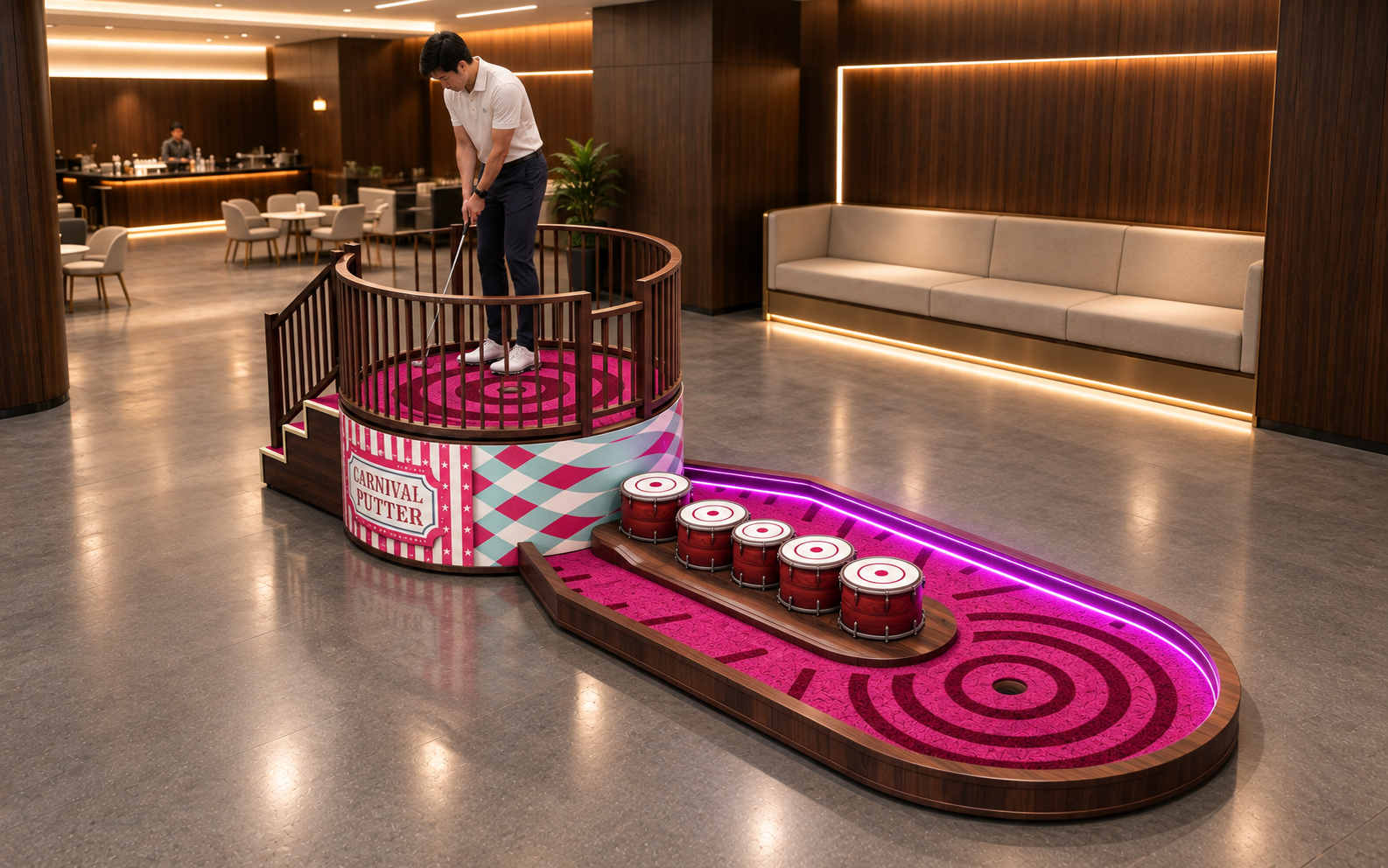
ONE NIGHT,ONE SKIN
Interstellar Crossing Golf Hole
Space-themed concept with immersive design,precision putting and interactive gameplay. The hole reads as a destination under normal light and becomes a visual anchor the moment the glow layer is added,no renovation,just a lighting change. This is the unit that proves glow party ideas work on a floor that already runs: the theme is already there; the evening skin is the only new input.
Ver Detalles ›
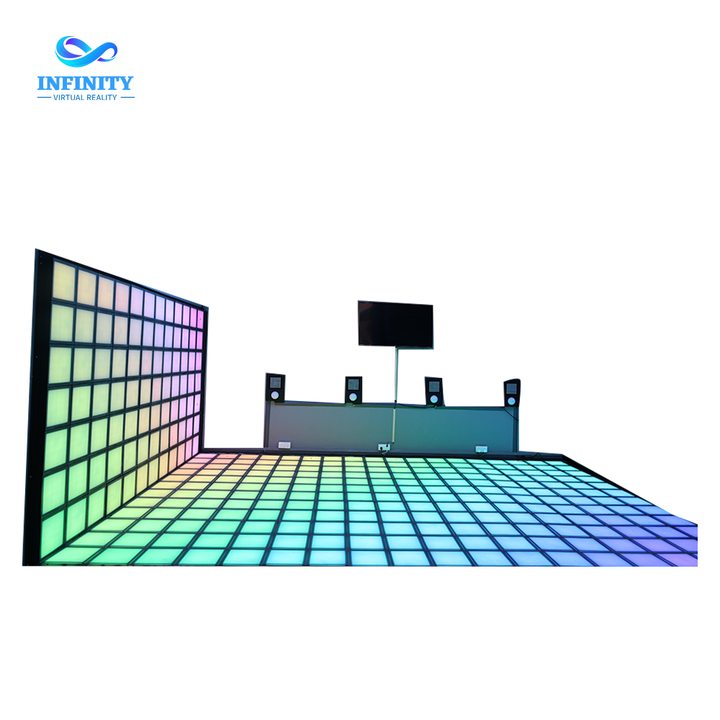
THE SECOND STATION
Infinity Grid LED Dance Floor Game
50×50 cm module tiles,10 mm tempered glass IK10,sub-10 ms response,~256 sensors per m² and 30-40+ modes. Party-room and event-rental positioning makes this the natural queue-absorber between the course and the exit: waiting groups step onto the grid and the queue dissolves into play. The specification row above is reused from our published guides; cost and sizing methodology are in the buying guide linked in section 6.
Ver Detalles ›
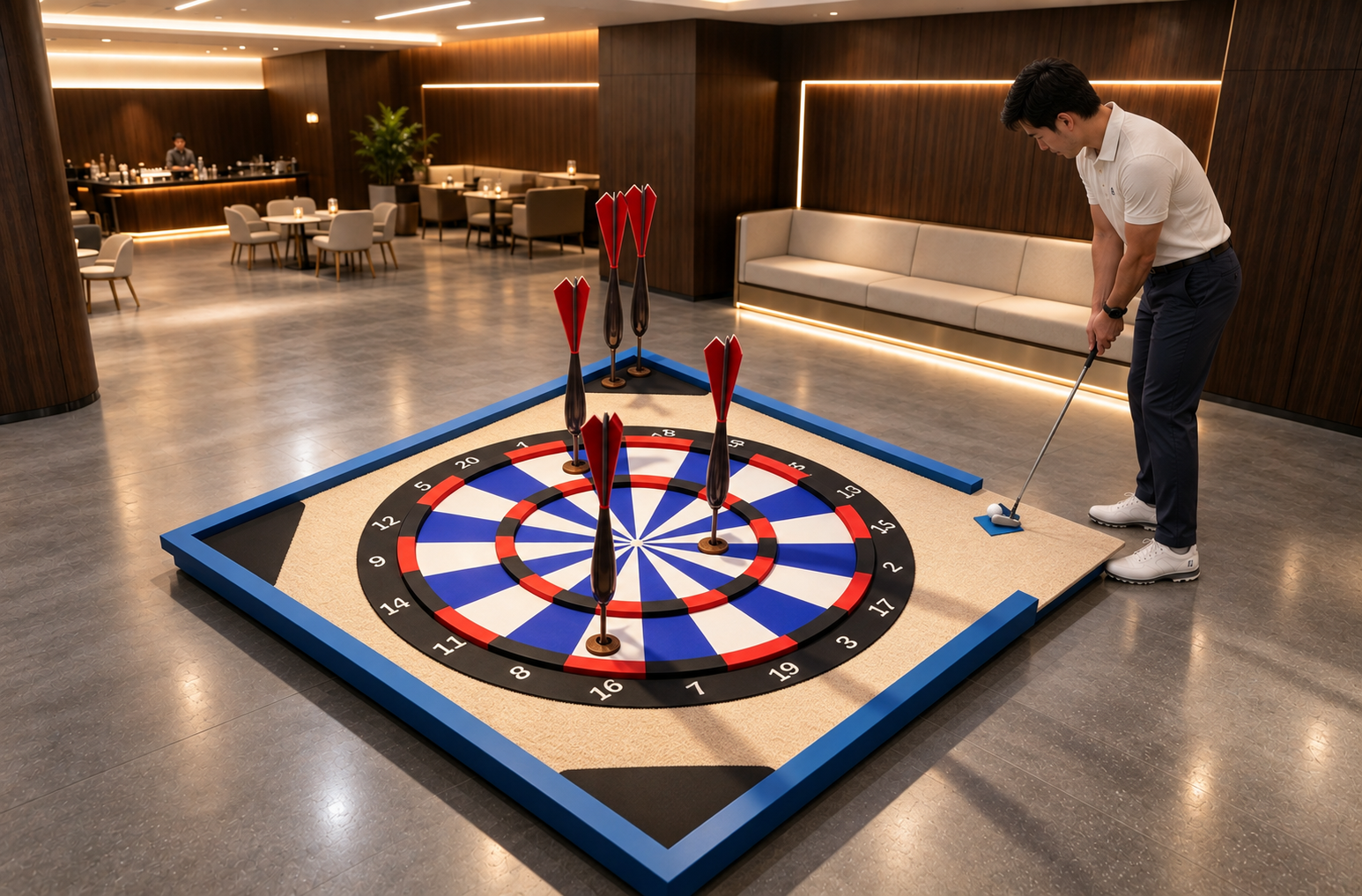
THE THIRD STATION
Darts Golf Hole
Combines golf putting with dartboard-style targets and scoring for social venues. The dartboard element turns a corner into a photo station without new hardware,completing the three-station circuit,hole,floor,corner,that defines a glow night on an existing floor. No large capital equipment required; the glow layer is lighting,not construction.
Ver Detalles ›
8. Preguntas Frecuentes (FAQ)
What is a glow party at an indoor entertainment venue?
A glow party is a single programmed evening lit with blacklight or programmable LED,sold by the session and run across the stations you already operate. It is not a decorating list and it is not a family DIY party,the ticket buys access to a routed night,not a theme decoration.
Do you need blacklight,or is LED enough?
Blacklight makes fluorescent props and clothing pop with visual intensity; programmable LED holes and floors let you re-skin the light for each date. Lamp specifications,UV hole engineering and cost are out of scope for this page,that territory belongs to a separate guide we have not published (TL#1589). What this page covers is the programming decision,not the hardware selection.
How much does it cost to run a glow night?
No public per-event profit-and-loss baseline exists for this category. The planning shape comes from our published LED dance-floor evening revenue at $6 to $12 per person,with a 20 m² evening example running $450 to $700 at 60 to 70 percent utilisation (first-party; ue763). Blacklight rental kit prices appear as reported-by reference points from Pro Lighting Rental and are not written as a venue quote or a cost recovery promise.
What are the main safety risks of a blacklight or glow event?
The three risks are: egress path darkness (reported by Entertaining Safety citing IBC/NFPA 101 at 1 fc general / 0.2 fc exception),dark-wall exit-sign trap (same source),and UV overexposure rated medium-to-low by the Government of Ontario with ACGIH TLV anchors (T2,page updated 2022-11-21). A written risk assessment following the UK HPA CRCE-016 framework and a published walk-check rhythm of 365 daily / 52 weekly / 12 annual inspections complete the safety stack.
How should you price a glow night ticket?
Layer a surcharge on top of the base round rather than replacing it. Group discounts at 15 percent and 20 percent tiers appear in reported-by cases from Toronto Zoo Glow in the Wild; same-day re-play pricing is reported by Hornbrook Hollow Funhouse. Party bookings land 20 to 40 percent above base in venues running the party programme (first-party; ue761). No fixed price table is published because venue economics vary; the shape is surcharge-on-base,not a stand-alone rate card.
How often should a venue run a glow night?
Frequency is a repeat-visits decision,not a lighting decision. Setting the date on a calendar rhythm,weekly or monthly,lets staff reset the floor to the same standard every time,and our published venue models report a 40 to 60 percent returning-guest share (first-party; ue682) as the baseline a programmed night builds on. The LED hole-theme rotation calendar belongs to our guide on LED hole themes and is not repeated here.
Ready to Plan Your Glow Night?
Everything above ends on your own floor plan: the course you run,the dance floor you own and the corner that becomes the photo station,laid out as a three-hour night where every block has a clock and an owner. Start from the mini golf course solution page for the course side of the night,then send the plan to free 3D layout design and the drawing comes back against your walls,with the glow night placed on the floor you actually have.

