Do VR chairs reduce motion sickness? For most people, yes - a rotating VR motion chair makes the virtual ride feel less nauseating than the same experience on a static screen, because the chair gives your inner ear a physical signal that matches what your eyes see. But there is no universal guarantee: people with sensitive inner ears, fast direction changes, and poorly scripted content can still feel queasy even on the best chair. This guide explains the mechanism, shows what the research says, and gives you the honest list of who should skip.
The reason a chair helps is more interesting than the product itself. Motion sickness in VR is a sensory conflict - your eyes report movement, your inner ear reports stillness, and your brain flags the mismatch. A 360-degree VR motion chair removes part of that conflict by physically rotating you with the same motion your eyes are seeing. Below, we break that down into a principle you can reuse: match the movement, reduce the nausea.
Static VR - a headset while you sit on a fixed chair or stand still - creates the strongest conflict, because software shows high-speed motion while your body stays perfectly still. In a 2021 EEG study, researchers exposed riders to increasing levels of mismatch between vestibular and visual input and traced the brain activity behind the queasiness: the same visual-vestibular conflict that classical motion-sickness theory described, now visible in shorthand brain signatures. The mismatch is the trigger, and the fix in the lab has consistently been to shrink the mismatch - not to will yourself to ignore it.
Part of the discomfort is the pin-sharp view that VR gives you: your eyes cannot tell the image is fake, so your brain treats a virtual roller-coaster drop as real motion the body is not doing. The same conflict powers the well-known "vection" illusion - the feeling that you are moving when you are not. The first-day guest guide shows this is exactly why some arcade guests feel ill on their first session and why operators tune content accordingly.
A rotating chair attacks the conflict at its source: it gives the inner ear a real rotation to match the screen. In a 2023 study published in Frontiers in Virtual Reality, researchers had riders on a swivel chair with no wheels watch robot-camera footage, comparing rotations that matched the video versus rotations that did not - and found the matched (unwound) rotation condition significantly reduced simulator-sickness scores compared with the mismatched condition. Knowing when the rotation was coming helped further: preparation removed another layer of surprise, another way the brain stops flagging danger.
The same principle shows up in newer mitigation work. A 2025 preprint from a postural-alignment experiment found that misaligning your trunk roll with the virtual trajectory raised average discomfort scores, while aligning your body with the virtual motion helped - the human version of telling the inner ear "yes, we really are rotating." And a 2026 in-car VR study showed that adding motion-synchronized peripheral cues cut total simulator-sickness scores by 33% without harming task performance - again, matching movement to the visual field.
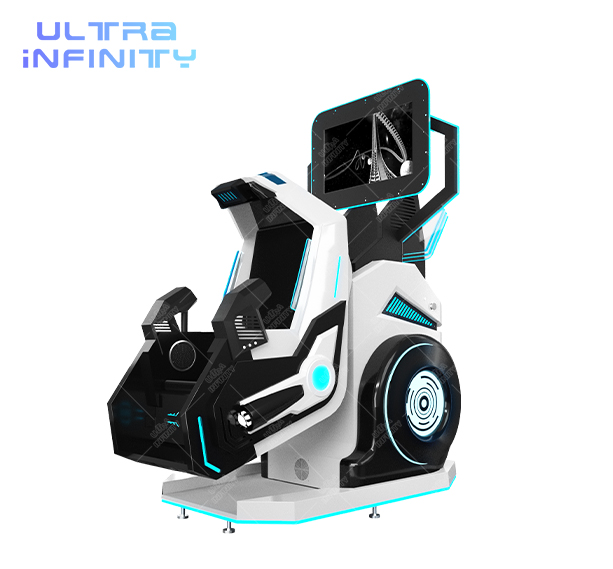
For riders, the practical takeaway sits in the product: a VR 360 motion chair spins with the on-screen track (360 degrees of yaw plus pitch), which is precisely the "matching the movement" behavior these studies isolate. The double-seat version does the same motion for two riders at once, which is why pairs on the same seat tend to report the same comfort level. That alignment is the difference between a ride you forget and a ride you remember too well.
| Condition | What the inner ear gets | Vestibular-visual match | Reported comfort |
|---|---|---|---|
| Static VR (fixed seat) | Nothing | Mismatch | Lower (conflict-driven) |
| Swivel chair, mismatched rotation | Rotation, wrong timing | Partial mismatch | Middle |
| Rotating chair, matched rotation | Rotation, matched timing | Aligned | Higher (in studies) |
| Rotating chair + known cue | Prepared rotation | Aligned + predicted | Highest |
The first-party side matches the research: based on our VR 360 Motion Chair specification, the ride pair is 360-degree yaw plus 45-degree pitch, running 70-plus titles at 2-5 minutes per ride - short enough to keep a first-time rider comfortable and matched enough to keep the inner ear on the same page as the eyes.
Why does anyone still feel sick on a motion chair? Three reasons. First, fast reversals: when the virtual track snaps direction while the chair is still decelerating, there is a window where eyes and inner ear disagree even on a moving chair - the same ~15-30 seconds your inner-ear fluid (the semicircular canals) needs to settle. Second, content that is too aggressive for your adaptation level: a first-time rider who jumps straight to a hard 360-degree inversion starts with zero adaptation, and the status-quo no-proof is no comfortable in-between.
Individual tolerance is the third, biggest factor - and it is genuinely personal. People who rarely get car-sick or sea-sick adapt fast; people who do tend to carry that sensitivity into VR. Age matters too: younger riders often adapt faster, while older riders and people with balance conditions are more susceptible. The responsible arcade keeps short sessions (2-5 minutes), clear content tiers, and a hydration-and-break rhythm - the same toolkit the VR arena first-aid protocol documents for when a rider does feel unwell.
Good operators treat motion comfort as an operations problem, not a luck problem. The toolkit stacks in order: a 2-5 minute ride length (short enough to end before nausea builds), a content ladder that starts easy and escalates, brief gaps between rides so canals can settle, ventilation and a cool, bright boarding area, and a clear "step out anytime" policy. A well-run 360 chair zone pairs these with the ceiling clearance and safety guide so the bay is physically calm as well as visually calm - and when venues plan the zone from scratch, the free 3D layout service documents the same comfort-first spacing into the floor plan.
The same toolkit is what makes the chair roller coaster experience one of the most user-friendly VR rides going - the operator has already tuned session length and intensity for walk-up families. If you have ridden twice and felt fine, small escalation is safe; if you felt off after one ride, take the gap - adaptation compounds over sessions, not within one.
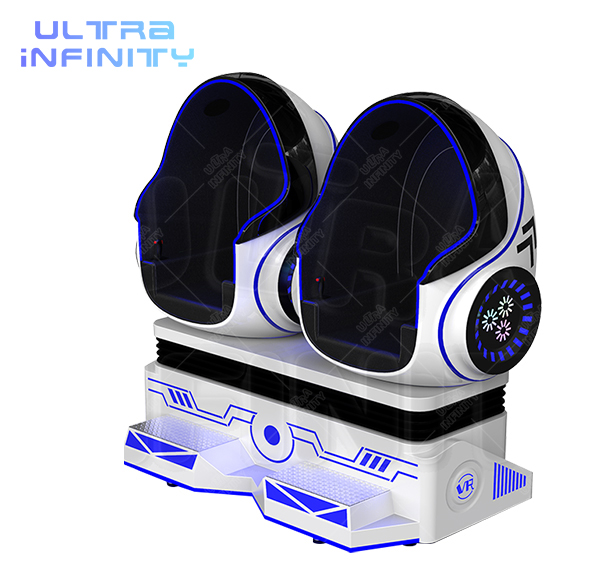
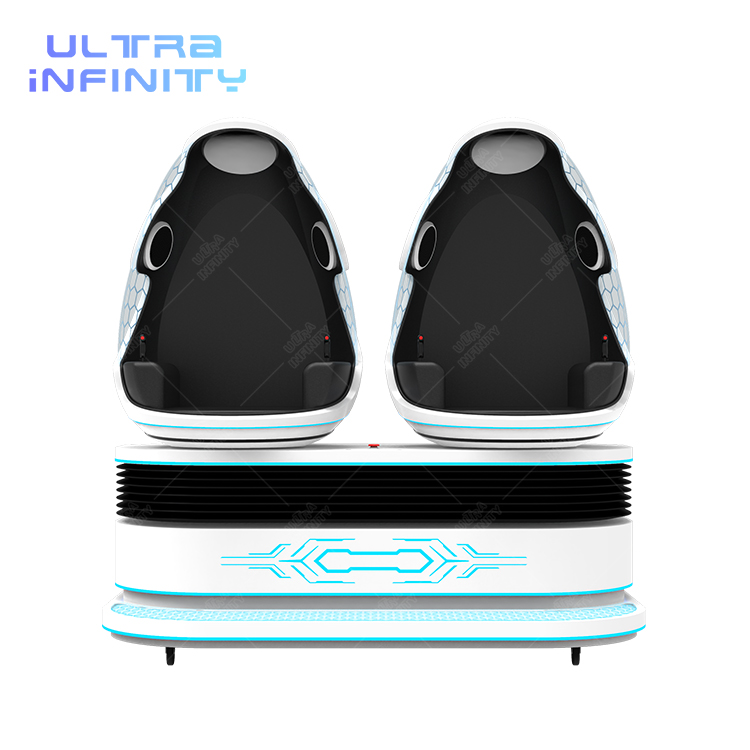
And if you are riding at home or in a venue with your own chair choice, the seat itself is the tool. Our VR egg chair swings a tighter envelope for gentler titles, while the full 360 motion chair delivers the matched-rotation effect at maximum intensity - and the double-seat dino egg chair is the lowest-discomfort entry for kids and first-timers, exactly because its motion is mild and its ride time is short.
The honest list is short but firm. Skip the ride - or ask a doctor first - if you are pregnant, have a heart or inner-ear condition, are prone to severe motion sickness, or are taking medication that causes dizziness. For kids, follow the headset guideline: Meta recommends its Quest headsets for ages 10+ (parent-managed accounts for 10-12), and Sony marks PlayStation VR2 as unsuitable for under-12s - age gates exist because the vestibular system is still developing, not because the content is scary.
First-timers should tell the operator they have not ridden before, ask for the mildest title, keep the first session to the short end of the 2-5 minute window, and stop immediately if anything feels off - no ride is worth pushing through discomfort. For everyone else, the rule of thumb matches the mechanism: match the motion, pace the sessions, and respect what your inner ear tells you.
A VR chair does reduce motion sickness for most riders, but you are the best judge of your own inner ear. If you want to try it, find a VR 360 motion chair ride near you - and if you are planning the ride itself for a venue, the mechanism and the toolkit above are exactly what operators script into a comfortable, repeatable attraction.
The motion-sickness questions riders and parents actually ask about VR chairs, answered with the mechanism above.
For most riders, yes - a rotating chair matches your inner-ear signal to what your eyes see, shrinking the sensory conflict that causes VR nausea. Studies on matched rotation found significantly lower simulator-sickness scores than mismatched or static conditions. But people with sensitive inner ears can still feel sick on a moving chair.
Because your eyes report motion while your body stays still - that is the visual-vestibular conflict at the root of VR motion sickness. A fixed seat gives the inner ear no matching signal, so the brain flags a disagreement and nausea follows.
Yes, mechanism-wise. When the chair rotates with the on-screen motion, the inner ear gets a matching cue instead of silence. Research on matched rotation (Frontiers in Virtual Reality, 2023) measured significantly lower simulator-sickness scores, and adding motion-synchronized cues cut scores by 33% in a 2026 study.
Most commercial VR motion-chair rides run 2-5 minutes - short enough to end before nausea builds. Short, paced sessions plus breaks let your inner-ear fluid (canals) settle back to normal.
Yes - fast reversals, surprise direction changes, over-aggressive content for your first ride, and personal inner-ear sensitivity all remain. The chair reduces the risk substantially; it does not remove it.
Age susceptibility varies, and headsets carry age gates because the vestibular system is still developing: Meta recommends ages 10+, Sony marks PS VR2 as unsuitable for under-12s. Ride operators follow these gates regardless of individual tolerance.
Pregnant riders, people with heart or inner-ear conditions, anyone prone to severe motion sickness, or those on dizziness-causing medication should ask a doctor first. Tell the operator about any condition before riding.
Usually the reverse - adaptation compounds across sessions. Riders who feel fine on ride one generally tolerate escalation on ride two. If you feel off after one short ride, take the break; next session will likely be easier.
Start with the gentler envelope: a dino or standard 9D egg chair swings less than a full 360 chair, so it is the lowest-discomfort entry. Move up to a 360 motion chair once mild rides feel routine.
Tell the operator immediately - every well-run venue has a step-out anytime policy and a documented first-aid protocol for discomfort. Do not push through; leaving early is the healthy and normal choice.
A VR 360 motion chair matches the motion your eyes see, and short 2-5 minute rides keep sessions comfortable. Choose your seat by comfort level - egg chairs for relaxation, 360 chairs for thrill - and step out anytime.