BASEBALL SIMULATOR - INSIDE REAL-TIME TRACKING
Baseball Simulator Accuracy: Real-Time Ball Tracking Explained
A batting simulator is a tracked hit, a reconstructed flight and an on-screen verdict delivered inside the moment. This guide opens the four-stage tracking pipeline, maps the four buyer profiles, and prices the bay with the published session ladder and zone economics.
4-stage tracking loop Measured vs computed Real-time verdicts 4 buyer profiles $15-25 session ladder Containment by design
4 stages
Pitch-Capture-Reconstruct-Verdict
$15-25
Published Session Ladder
$5.2-14K/mo
Published 4-Bay Scenario
~12 mo
Published Payback Framing
1. What It Is: The Simulator That Reads the Hit
A baseball batting simulator is a machine built around one moment: the instant the bat meets the ball. The guest steps into a cage, a pitch arrives on screen, the swing lands on a real (or limited-flight) ball, and the system reads that hit in real time - capturing the ball off the bat, reconstructing the flight, and showing the result on the HD projection while the swing still echoes. The published product data describes exactly this pairing - real-time ball tracking plus HD projection, built for competitive entertainment venues - and this guide opens what "real-time" actually means, stage by stage, then prices the bay the way the published models do.
The commercial framing first. The published batting-zone scenario - the published batting-simulator zone study - prices a four-bay cluster on a $15-25 session ladder at $5.2-14K monthly with a roughly 12-month payback, and the family comparators hold around it: the grid room's published $80 per 15-minute session is the interactive-rate benchmark, and the 57% multi-activity preference (published, n=600) makes the batting bay a teammate to bars, golf bays and party rooms - the published attraction-mix study is where it slots.
In one line: a batting simulator is a tracked hit, a reconstructed flight and an on-screen verdict delivered inside the moment - and the buyer's job is to test that loop for rhythm and consistency, because the scoreboard's honesty is what the rematch revenue rides on.
2. How It Works: The Tracking Pipeline from Swing to Scoreboard
Stage one is the pitch loop: the projection shows the delivery - stadium, wind, count - timed so the guest swings at a believable arrival. Stage two is the hit window: high-speed capture watches the plate area, reading the ball in the instant it leaves the bat. Stage three is reconstruction: speed, launch angle, direction and spin computed from the capture, the same measured-versus-computed distinction the golf-side guide walks in detail - the published launch-monitor accuracy guide covers the shared physics. Stage four is the verdict: the projected flight lands fair, foul or gone, the scoreboard updates, and the session structure carries the runs into a game.
Real-time is the phrase that earns its keep in stage four. The loop has to complete inside the moment the guest still feels connected to the swing - a verdict that arrives late reads as a video game, a verdict that arrives in rhythm reads as baseball. This is a wiring-and-processing property before it is a software one: camera placement, lighting discipline and the processing chain decide the loop before the content does. The published installation patterns sequence exactly these pieces ahead of the fun parts.
The consistency test is what separates a venue machine from a toy: three deliberate swings should produce three results that agree, and a deliberate slice should read as a slice. Suppliers who can explain what the system measures directly - and what it computes from the capture - are the suppliers who have built the loop honestly; ask it first at the demo.
3. Who It Is For: The Buyers and the Formats
Who it is for, by buyer. The sports-bar owner buys the bay as a competitive anchor: head-to-head hitting that books leagues and keeps groups drinking between at-bats - the published product positioning names competitive entertainment venues as the target floor. The FEC operator buys it as the sports-simulator sibling next to golf and the grid room, lifting dwell past the kids' bedtime. The training-minded venue buys the same bay as a Tuesday practice tool: exit numbers on the board, coaching in the lane. The boutique floor buys a single bay as a premium bookable experience. One machine, four commercial roles.
| Buyer profile |
What the bay is for them |
What surrounds it |
The anchor to price against |
| Sports-bar owner |
Competitive anchor, leagues, head-to-head |
Bar seats, event calendar |
Published $15-25 session ladder |
| FEC operator |
Sports sibling in a family stack |
Golf bay, grid room, party rooms |
Published $80/15-min grid comparator |
| Training venue |
Feedback tool: exit numbers, coaching |
Cage discipline, practice calendar |
Measured-numbers consistency |
| Boutique floor |
Premium bookable experience |
F&B, corporate evenings |
Published $88-135/m2 ceiling |
The published zone economics carry every row: the published batting-simulator zone study prices the cluster end to end, and the $88-135 per-square-meter monthly ceiling keeps the bay honest inside the whole-floor plan. The bay behaves like the golf bay and the grid room - a session machine - which is why the three stack so well on one floor.
4. Where It Can Be Used: Cages, Containment and Flow
Where it can be used is a containment question before it is a decoration one. The bay needs its length - plate-to-screen distance for the flight window - and its walls: netting or cage panels that keep every ball inside the lane, a waiting line drawn outside the swing arc, and ceiling clearance for the follow-through. Power and lighting follow: the capture stage reads images, so uncontrolled light on the hitting area is an accuracy tax, and the published installation checklists sequence power, network and lighting ahead of the theming.
Flow is where the bay pays its rent: a four-bay cluster books the session ladder the published model describes, and the queue discipline - bookings, bat rotation, the counter pace - is the published playbook on reducing queues applied to a sports lane. The session structure itself borrows the published session-stages arc - briefing, rounds, scoreboard - and the published session-stages briefing explains why that structure books the rematch. Containment done right is invisible; flow done right is the monthly revenue.
5. The Bay at Work: Session and Floor Mix, Charted
The charts assemble the session shape and the floor arithmetic. The pie splits an example bay session into swings, verdicts and the social time that feeds the counter; the bar books example weekly sessions across the sports-simulator family, anchored to the published session models. Both carry the EXAMPLE label - planning references, not forecasts.
Anatomy of an Example Batting Session (EXAMPLE split)
- Swings and at-bats 50
- Verdicts, scoreboard and reset 20
- Social and ordering time 30
Source: worked scenario (EXAMPLE) - how one batting session divides between play, results and the social time that feeds F&B. Shares are planning references, not measured data.
Scenario Weekly Sessions by Sports-Simulator Unit (EXAMPLE mix)
Source: worked scenario (EXAMPLE) - weekly booked sessions per unit on a sample mixed floor, arranged for readability; anchors are the published session models per unit. Planning reference, not a forecast.
Read together: the pie is why the bay earns (the social share is bar revenue), and the bar is how it earns alongside siblings - the sports-simulator row that the 57% multi-activity preference turns into a stack rather than a choice.
6. Specifications and Maintenance Reality: The Machine After Delivery
The specifications section, from the published product pattern down: the tracking system named (real-time ball capture at the plate), the display class (HD projection), the containment package (netting, cage walls, ball type), the measured-versus-computed numbers listed explicitly, and the software layer - game modes, session pricing, operator dashboard. Around it sit the published contract numbers: lead time, install days, training days and the warranty line items the checklists convert into a supplier scorecard.
Maintenance reality: screens and nets are wear surfaces consumed by swing counts, hitting mats compress on schedule, projector lamps in non-laser units are the classic forgotten line, and the capture system wants its calibration routine - camera geometry and lighting drift with the room. Balls are consumables with a retirement age. The published operating patterns price these lines into the bay's month, and the spare-parts habit applies in full: a tracking loop that drifts quietly is worse than one that fails loudly.
The buyer's bay test in one line: three swings, three agreeing verdicts in rhythm; walk the containment line; ask what is measured versus computed - then price the bay as the published models do, on the session ladder and the ceiling, not on the demo reel.
7. Frequently Asked Questions (FAQ)
How does real-time ball tracking work in a baseball simulator?
The machine watches the hit the way a scout does, only faster: high-speed sensors capture the ball in the instant it leaves the bat, the system reconstructs speed, angle and spin from that capture, and the projection shows the result - fair ball, foul, home run - on screen within the moment the swing still feels connected to it. The published batting build pairs exactly this real-time tracking with HD projection for competitive venue play.
How accurate is a batting simulator?
Accurate in the way that matters to a venue: the same swing produces the same result every time, and the tracking-to-screen loop stays inside the moment. The buyer's demo test is rhythm and consistency - three deliberate swings, three results that answer in time and agree with each other. What the system measures directly versus computes from the capture is the question that sorts suppliers.
Can a baseball simulator improve real batting?
Yes - the tracked session is feedback training: read the exit numbers, adjust the swing, swing again. The game layer (stadium, count, scoreboard) is what makes the same session sellable as entertainment. That dual use - practice tool and party game in one bay - is why the published batting-zone model prices it as a serious commercial unit.
How much space does a batting simulator bay need?
A bay is a length-and-containment proposition: distance from plate to screen for the flight window, netting or cage walls for containment, and ceiling clearance for the swing. The published batting scenario model books four bays as the working commercial cluster. The free 3D layout design tests bay count and containment on your actual plan.
Is a baseball batting simulator profitable?
The published batting-zone scenario prices it: a $15-25 ladder per session across four bays books $5.2-14K monthly with a roughly 12-month payback in the published framing. Around the bays, the comparators do the rest - the grid room's published $80 per 15-minute rate shows what interactive sessions carry, and the 57% multi-activity preference means the batting bay feeds the whole floor.
What balls does a batting simulator use, and are they safe?
Commercial builds run the hit with a contained real ball or a limited-flight training ball inside the cage, so the guest swings at a genuine ball and the tracking reads a genuine hit; projection carries the stadium. Containment - netting, cage walls, a waiting line outside the swing arc - is part of the installation checklist, not an accessory. The supplier walk-through should include ball type, containment spec and the refresh consumables.
8. Featured NextPlay Active Gaming Equipment
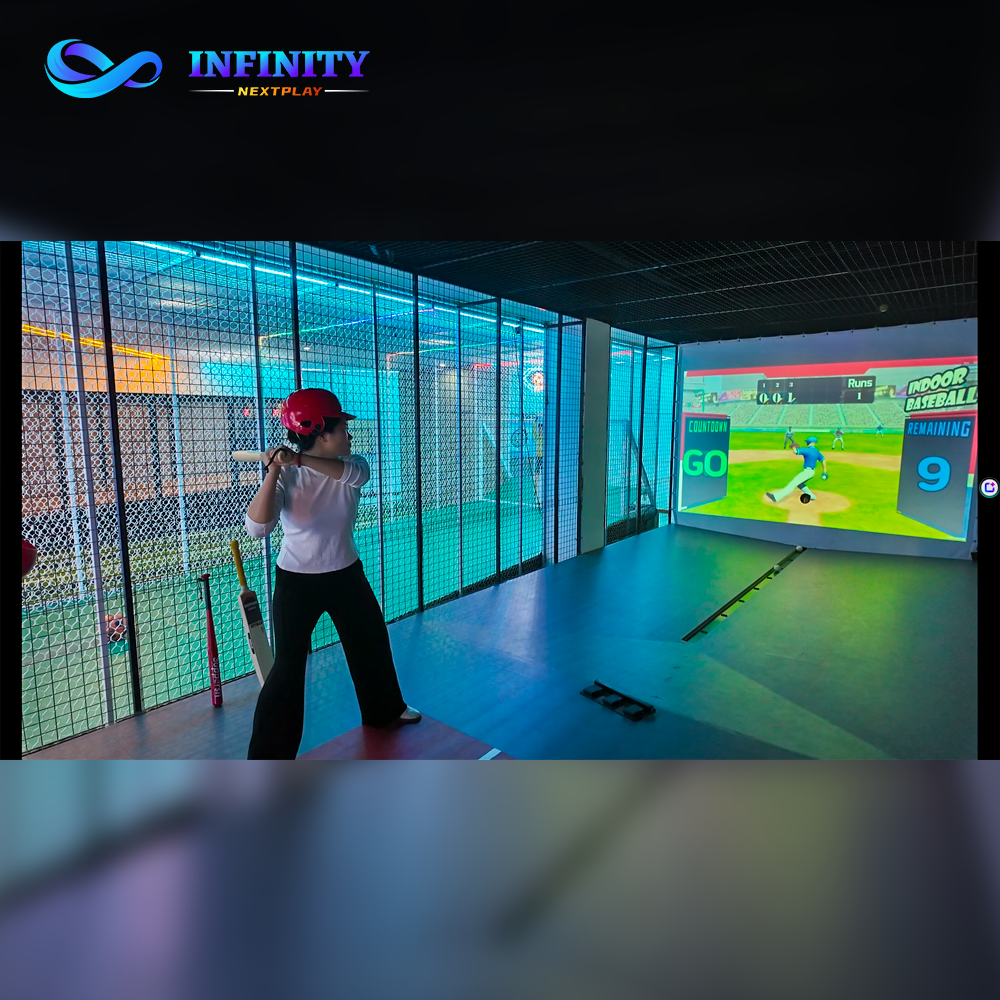
The tracked bay
Immersive Indoor Baseball Batting Simulator - Real-time Ball Tracking & HD Projection - Perfect for Competitive Entertainment Venues
Real-time ball tracking plus HD projection - the competitive-venue build behind the published $15-25 ladder and four-bay cluster model.
View Details ›
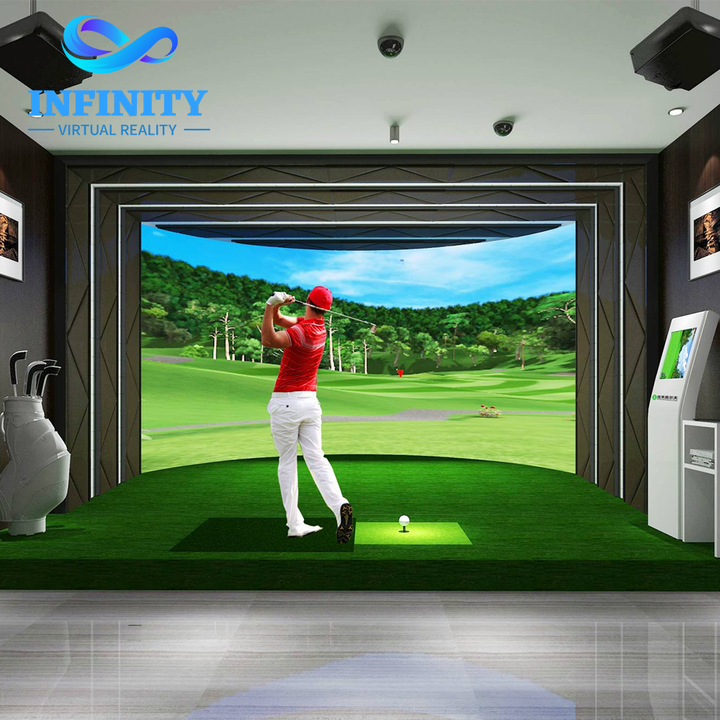
The physics sibling
Professional Training Commercial Use Indoor AR Golf Simulator Full Set With High-Speed Camera Detector 4K Laser Projector
High-speed camera detection and 4K laser projection - the same measured-versus-computed physics in the golf family.
View Details ›
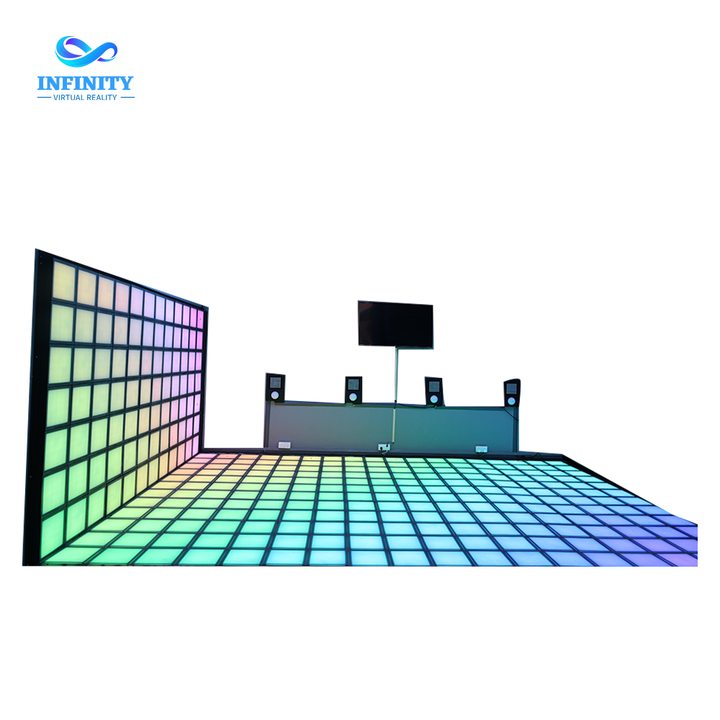
The rate benchmark
Infinity Grid LED Dance Floor Game - Interactive Light Up Jumping Tiles
The interactive grid at the published $80 per 15-minute rate - the session-model benchmark sports bays price against.
View Details ›

