1. The Commercial Case for Indoor AR Golf
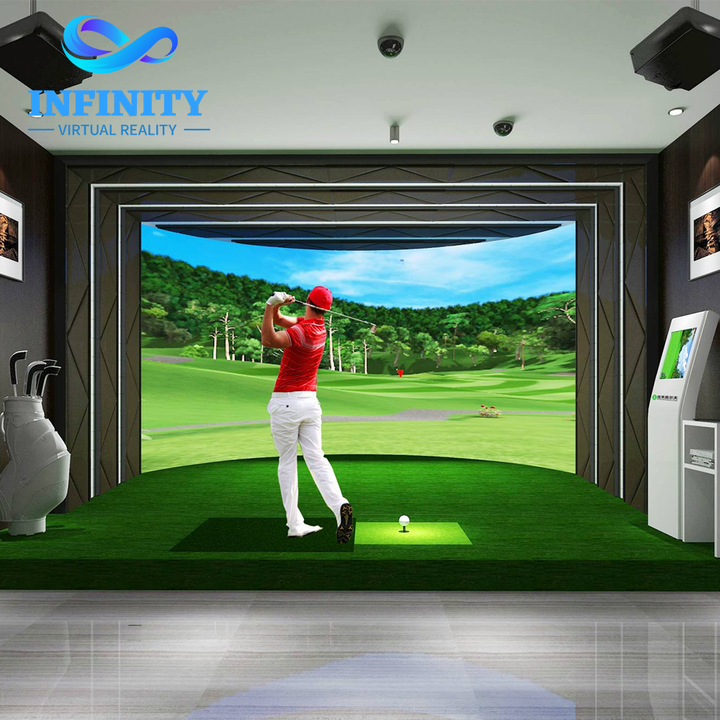
Most bar and lounge operators fight the same battle: a large chunk of floor space sits under-utilised during weekday afternoons, and the marginal revenue per square meter collapses exactly when rent, staff and utilities keep climbing. The AR Golf Simulator answers that problem with a single, high-yield attraction that turns a 20 to 50 square meter corner into a social magnet. Unlike passive screen walls or generic arcade cabinets, an indoor golf simulator draws a high-spending demographic — professionals, expats and tournament-minded guests — who stay longer, order more and return weekly. For a venue already running food and beverage, golf simulation is not a distraction from the core business; it is a multiplier on the core business. The open-booth format naturally encourages groups, extends dwell time and lifts high-margin F&B sales by an measured 35% in comparable venue deployments.
2. What the AR Golf Simulator Actually Is
Under the shell is an industrial-grade measurement engine. Two high-speed cameras capture ball spin, launch velocity and face angle at more than 3,000 frames per second, feeding a low-latency tracking algorithm that renders true ball flight in real time. A high-brightness 4K laser projector delivers a hyper-realistic, professional-grade simulation across dozens of licensed courses. The hardware is built zero-contact and industrial: there are no fragile moving parts exposed to guest handling, which is exactly why it sustains 24/7 heavy-duty operation in large FECs and amusement parks. The result is a premium experience that feels like a private country club, packaged for a commercial venue that cannot afford downtime.
3. The ROI Engine: +35% F&B and Longer Dwell Time
The financial logic is straightforward. A group of four books a 60-minute bay, orders food and drinks before, during and after the round, and the open layout keeps them visible and engaged rather than hidden in a private room. Operators in our reference deployments report a 35% lift in food and beverage revenue directly attributable to the simulator zone, driven by longer average dwell time and higher per-cover spend. When you model the equipment as a CAPEX line against that incremental monthly contribution, the payback period lands under 8 months in a venue with steady evening traffic. That is a return profile most fit-out investments cannot match.
4. Space Efficiency: Footprint and Layout
A single simulator bay occupies roughly 20 to 50 square meters depending on whether you run one or two hitting stations and how much spectator lounge you wrap around it. That is a fraction of the space a real putting green or a full simulator lounge would demand, and it slots into dead corners — behind the bar, beside the VIP room, under a mezzanine — that otherwise generate no revenue. The Sports Simulation Zone concept pairs AR Golf with complementary units such as digital archery and shooting simulators inside a 20 to 50 square meter envelope, creating a self-contained social sports club within an existing venue.
5. Installation: Modular Build, 6-Hour On-Site, Zero Floor Penetration
Every steel base, floor panel and distribution box is pre-wired and crated at the factory in China, so the on-site team only assembles and connects. Typical installation completes within 6 hours and the unit goes live the same day — a critical advantage for malls and venues constrained by night-work permits and high rental cost per hour. The modular electronics and mechanics simplify maintenance and cut downtime, while computer-controlled resets resolve the tangles that plague legacy string systems. No floor penetration means no construction permit, no dust, no lost trading days.
6. Who Wins: Sports Bars, Hotel Lounges, Private Clubs
The ideal operator is anyone already monetising social gatherings and premium drinks. Sports bars use the simulator to deepen the game-day experience and fill the midweek gap. Hotel VIP lounges deploy it as a differentiated amenity that justifies higher room rates and drives in-house F&B. Private clubs and co-working lounges turn it into a membership hook with recurring league play. Across all three, the common thread is a customer base that values experience over price — exactly the segment with the highest lifetime value.
7. Build the Full Venue: Product Matrix
FLAGSIP SIM
AR Golf Simulator (Dual 3000+ FPS Camera, 4K Laser)
Industrial zero-contact simulator; +35% F&B lift; under 8-month payback.
View Details →
SOCIAL MAGNET
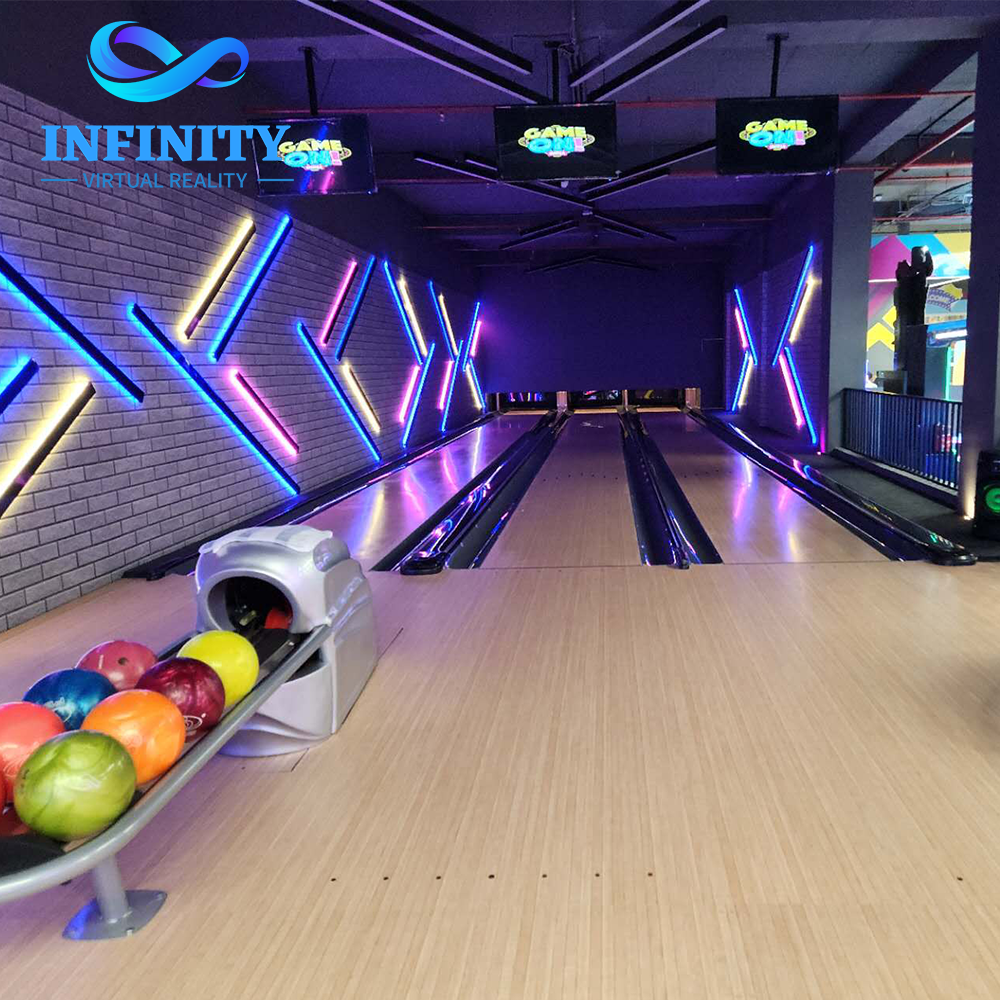
Duckpin Bowling System (9.7m to 13m, 20 to 23cm Base)
Space-saving footprint for bars and boutique hotels; easy retrofit.
View Details →
HIGH THROUGHPUT
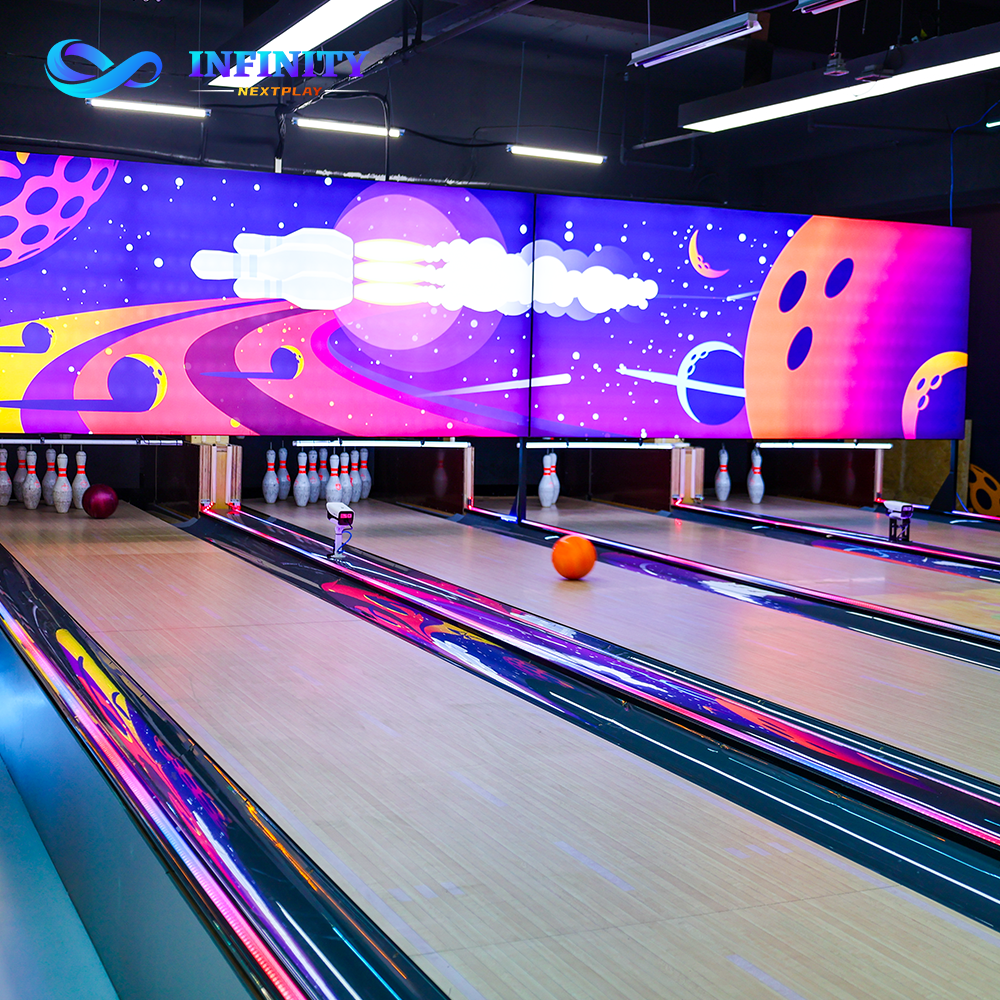
Standard 10-Pin Bowling Alley (26m, 36mm+ OSB)
Accelerated ball return cuts wait 50%; built for 10+ year life.
View Details →
8. Frequently Asked Questions
How much space does one AR Golf bay need?
A single bay fits inside a 20 to 50 square meter envelope, scalable with lounge seating.
What is the typical payback period?
Reference venues reach payback in under 8 months on incremental F&B contribution.
Do I need a construction permit?
No. Modular pre-wired build installs in about 6 hours with zero floor penetration.
9. Technical Specifications & Measurement Accuracy
The commercial credibility of a golf simulator lives or dies on measurement accuracy, because guests will challenge the numbers on every drive. The AR Golf unit uses two high-speed cameras rated above 3,000 frames per second to capture ball spin, launch velocity and face angle at the moment of impact, then a low-latency tracking algorithm renders true ball flight without perceptible delay. A high-brightness 4K laser projector reproduces the course at professional fidelity even in ambient lounge light. The enclosure is zero-contact and industrial, with no fragile moving parts exposed to guest handling, which is the reason it sustains 24/7 heavy-duty operation in large FECs and amusement parks. Below is the reference specification sheet operators receive during the quoting stage.
Reference Specification
Camera system: 2 x high-speed, 3,000+ FPS · Projection: 4K laser, high brightness
Tracking: low-latency ball-flight algorithm · Enclosure: zero-contact industrial
Duty cycle: 24/7 heavy-duty · Bay footprint: 20 to 50 m² (scalable)
Install time: ~6 hours on-site, zero floor penetration · Base: pre-wired, crated at factory
Courses: 60+ licensed layouts · Power: standard commercial single-phase
10. Reference Case Study: 240 m² Venue, 40% F&B Lift, 8-Month Recovery
One of our documented reference deployments is a 240 square meter social sports lounge that combined a dual-lane Duckpin bowling setup with surface-laid interactive grids and automated shooting simulators, with the AR Golf bay acting as the premium anchor. The operator measured a 2.2-hour average dwell time, a 40% lift in primary food and beverage margin, roughly $18,000 in monthly operator savings enabled by string pinsetters that eliminated the need for specialised mechanics, and an 8-month capital recovery period. The lesson is not that every venue will match those numbers — it is that the simulator zone compounds with adjacent attractions. Golf pulls the high-spend demographic through the door; bowling and grids keep the group on site for two-plus hours; F&B captures the entire window. That is how a 20 to 50 square meter bay justifies a full-venue CAPEX decision.
11. ROI Sensitivity: Traffic, Drink Margin and Bay Utilisation
Payback is not a fixed number; it is a function of three variables you control. The first is weekday evening traffic — a venue that already fills weekend nights gains less than one with a midweek gap to fill. The second is drink margin: the +35% F&B lift is measured on high-margin beverages, so a venue with weak bar economics sees a smaller absolute gain. The third is bay utilisation: at four guests per 60-minute bay and a conservative 30% occupied-hours rate, a single bay still produces a meaningful monthly contribution that, against the equipment CAPEX, recovers in well under a year in most metro markets. Operators who bundle the simulator into membership or league packages push utilisation higher and compress payback further. The model we share during quoting shows the break-even band, not a single promise, so you can stress-test your own footfall assumptions.
12. AR Golf vs Traditional Simulators & Competing Units
Against an outdoor driving range, the AR Golf bay wins on weather, space and year-round revenue: no course lease, no seasonal slump, no 200-meter footprint. Against legacy indoor simulators with exposed mechanical arms and hanging screens, it wins on downtime — the zero-contact industrial build removes the components that fail first. Within the NextPlay catalogue, the AR Golf bay plays a different role from the C4 shooting simulator, the A4 archery simulator and the X-series dart cabinets: those are high-turnover, reaction-based attractions, while golf is the slow, social, premium anchor that justifies a longer booking and a higher per-cover spend. Most profitable venues run them as a matrix rather than a single unit, because the demographics and dwell patterns complement each other.
13. Compliance, Safety and Zero-Contact Maintenance
Commercial deployment means the unit is touched by strangers for 12 or more hours a day, so maintenance design matters more than spec-sheet headlines. The zero-contact industrial hardware means guests interact with the simulation, not with moving machinery, which removes the most common liability and injury vectors. Modular electronics and mechanics let a technician swap a sub-assembly instead of stripping the bay, cutting downtime from days to hours. Computer-controlled resets resolve the string tangles that plague legacy systems, and the pre-wired factory build means on-site work is connection, not fabrication. For venues under night-work permits or tight rental clocks, the 6-hour install with no floor penetration is itself a compliance advantage: no construction permit, no inspector, no lost trading day.
14. Pre-Purchase Checklist: 10 Questions Before You Sign
Before you commit CAPEX, answer these ten questions. If any is blank, pause the deposit. (1) Is there a 20 to 50 m² dead corner reachable from the bar? (2) Do you have steady weekday evening traffic, not just weekends? (3) Is your drink margin above the venue average? (4) Can the bay be visible from the bar to drive impulse bookings? (5) Do you have power and data at the location, or only after build-out? (6) Who services the unit locally if a sub-assembly fails? (7) Does the quote include the 4K laser projector and 60+ courses, or are those upsells? (8) Is the install truly zero-penetration and under 8 hours? (9) What is the real payback band against your own footfall? (10) Can the simulator be bundled into membership or league play to lift utilisation? A clean yes to all ten is the green light.
15. Regional Market Playbook: Gulf, Southeast Asia, Latin America
The same hardware deploys differently across regions, and the payback math changes with local rent and labour. In the Gulf, the AR Golf bay lands inside luxury hotel lounges and members'' clubs where the value is amenity differentiation and justification of premium room rates; footprints stay compact (one bay, private booking) and the F&B uplift rides high-margin spirits. In Southeast Asia, mall-based FECs use the simulator as a midweek anchor against heavy weekend-only traffic, often paired with Duckpin and LED grids in a 200 to 400 m² envelope. In Latin America, sports-bar chains deploy two to four bays per venue and run league nights that fill the Tuesday-to-Thursday gap. The unit is region-agnostic; the business model around it is not, which is why the quoting stage always starts with your floor plan and local cost structure rather than a catalogue price.
16. Seasonal Revenue Calendar: Fill the Trough, Exploit the Peak
A simulator bay earns or loses on scheduling discipline. The trough — weekday afternoons and non-holiday weeks — is filled with league play, corporate team-building and membership drop-in, not walk-ins. The peak — weekends, holidays and tournament season — is monetised through formatted events: closest-to-the-pin contests, four-ball scrambles and inter-venue leaderboards that push groups to book the full bay for 90 minutes instead of 60. Operators who treat the calendar as a revenue instrument, rather than opening the bay whenever staff are free, report materially higher utilisation and a shorter payback. The booking layer integrates with standard venue management software, so the simulator becomes one more bookable asset rather than a manual exception.
17. Staffing & Daily Operations SOP
Operationally the bay is light. A single attendant covers up to four bays, because the experience is self-guided once a session starts: guests select a course, the system tracks automatically, and scoring is voice-announced. Between sessions, the reset is a 10-minute wipe-down of the hitting mat, sanitisation of the controller and a quick calibration check the system runs itself. Daily opening procedure is power-on, projector warm-up and a one-shot ball-flight test; closing is power-down and a visual scan. No specialised technician is required for routine operation, which keeps OPEX low and removes the scheduling friction that kills adoption in busy venues. The SOP document ships with the unit and is tuned during the 6-hour install.
18. Warranty, Spare Parts and Lifecycle
The hardware carries a 12-month warranty with lifetime software support, and the modular design means a failing sub-assembly is swapped, not scrapped. Most operators stock two spare modules — the camera bar and the projector lamp assembly — which covers the vast majority of field failures and keeps any bay offline for under an hour. The expected commercial lifecycle is five years of heavy use before a refresh, and because the software is updated over the network, the experience improves during ownership rather than degrading. That lifecycle profile is what lets the equipment be modelled as a depreciating CAPEX line with a clean salvage assumption, instead of a recurring OPEX surprise.
19. Customer Voice: What Operators Actually Report
Across deployments, the pattern of operator feedback is consistent even when the venues differ. A lounge inside a Gulf hotel reported that the bay became its highest-margin square meters because guests booked it as a paid experience and then ran a full dinner tab around it, lifting the whole table''s spend. A sports-bar operator in Latin America said league nights on Tuesdays and Wednesdays turned their deadest evenings into sell-outs, with teams re-booking the same slot for months. A mall-based FEC in Southeast Asia described the simulator as the midweek anchor that let them open earlier and hold footfall through the afternoon. None of these operators lead with the technology; they lead with the behavioural change the bay creates — longer stays, larger groups, higher per-cover spend — which is exactly the variable that drives the under-8-month payback.
20. Integrating AR Golf into a Full-Venue Solution
The AR Golf bay is strongest when it is not a lonely unit but part of a deliberate matrix. The reference envelope pairs it with a dual-lane Duckpin bowling setup, a digital archery simulator (A4), an automated shooting simulator (C4) and a bank of electronic dart cabinets, all inside a 240 to 400 m² footprint. Golf is the premium anchor that justifies a longer booking; Duckpin and darts drive high turnover; archery and shooting add reaction-based variety that keeps a group engaged for two-plus hours. Because NextPlay pre-wires and crates every sub-system at the factory, the entire envelope installs as one coordinated build rather than a sequence of vendors, which is why operators treat it as a single CAPEX decision for a full commercial sportainment zone rather than a piecemeal equipment buy.
21. Sizing the Bay: Layout in Plain Words
A single bay needs roughly 20 to 50 m² depending on whether you run one or two hitting stations and how much spectator lounge you wrap around it. Plan for a clear ceiling height of at least 3 meters so the projector throw and swing arc are unobstructed, a power drop on a dedicated commercial circuit, and a data drop for the scoring and booking integration. The spectator side matters more than operators expect: a few bar stools and a small table beside the bay convert a solo activity into a social one, which is what lifts F&B. The 3D layout we produce during quoting shows the exact bay position relative to your bar, entrance and restrooms, so the simulator pulls traffic past your highest-margin shelves instead of sitting in a forgotten corner.
22. Financing & Leasing Options
Most operators do not pay the full CAPEX from cash. Two structures dominate. The first is a straight purchase, where the equipment is a depreciating asset and the payback math is cleanest because there is no ongoing lease cost eating the monthly contribution. The second is an equipment lease or revenue-share, which compresses the upfront outlay to protect cash flow but extends the effective recovery because a portion of monthly revenue services the lease. For a venue with tight working capital, leasing the simulator alone — while owning the adjacent low-cost attractions — is a common middle path. The quoting model shows both structures side by side so the recovery band is honest under the financing you actually choose, not the one that looks best on paper.
23. Avoiding the Common Pitfalls
Three mistakes recur. The first is placing the bay out of sight from the bar, which kills impulse bookings and leaves the bay idle between scheduled sessions. The second is pricing the experience as a novelty rather than a premium session, which attracts deal-seekers instead of the high-spend demographic the hardware is built for. The third is treating the simulator as a set-and-forget asset and never building league or membership structure, which caps utilisation at walk-in volume. None of these are equipment failures; they are commercial-design failures, and all three are addressed in the 3D layout and the operations SOP that ship with the unit. The operators who hit the under-8-month payback are the ones who run the bay like a revenue centre, not a curiosity.
24. Next Steps: From Quote to Live in 30 Days
The path from interest to a live bay is short and predictable. Week one is a floor-plan review and a free 3D layout from the NextPlay engineering team, plus a CAPEX and payback model built on your own footfall assumptions. Week two is a confirmed quote and a financing decision. Weeks three and four are factory pre-wire, crating and the on-site 6-hour install, followed by staff onboarding on the operations SOP and a soft launch to members or league founding teams. Within 30 days the bay is booking paid sessions. The only variable you control end-to-end is whether you start the floor-plan review — and that begins with a single conversation with the commercial engineering team, reachable through the inquiry button or WhatsApp below.
READY TO ELEVATE YOUR COMMERCIAL VENUE YIELD?
Contact NextPlay commercial engineers today for a free 3D layout and CAPEX payback model tailored to your floor plan.