NEXTPLAY ADULT BOWLING PLAYER GUIDE
Adult Bowling: How It Works, Scoring & Why It's the Best Cheap Night Out
How adult bowling works, how the scoring actually adds up, and why it keeps winning as the best cheap night out for groups, dates and casual players.
Adult Bowling Rules Bowling Scoring Duckpin vs 10-Pin Night Out Ideas Beginner Bowling String Bowling Bowling Formats
2
Rolls Per Frame (10-Pin)
3
Rolls Per Frame (Duckpin)
1. The Direct Answer: How Adult Bowling Works, How Scoring Works and Why It Is the Best Cheap Night Out
Adult bowling works by giving each player ten frames per game, with two rolls per frame in classic 10-pin bowling, and scoring every frame with the simple strike and spare math explained below. Duckpin bowling, the compact social format popular in bars and boutique venues, works the same way but gives you three rolls per frame instead of two. And string bowling is the modern commercial format that keeps the full 10-pin scoring experience with a quieter, lower-maintenance pinsetter. In every version the goal is identical: knock down ten pins, score more than your friends, and finish the night laughing either way.
Why is bowling called the best cheap night out? Because it takes the three ingredients people actually want on a night out, a real activity, time together, and something to talk about, and packages them at a price that a typical evening of drinks and dinner rarely matches. A game gives a group roughly an hour of shared physical activity, and unlike a movie or a concert nobody just sits and watches: everyone plays, everyone gets their own perfect moments, and the score settles the bragging rights without anyone needing to be an athlete.
This guide is written for adults who are new to bowling, people looking for a reliable first-date or group activity, and anyone curious why this decades-old game keeps filling lanes. It covers the scoring math in plain language, what actually happens when you step onto the lane, how to choose between the formats you will meet, how to pick a venue that fits the night you want, and the honest economics of why bowling keeps winning as a cheap night out. No experience required, and everything here applies on the lanes of the products shown below.
Bowling works the same everywhere you go: ten frames, knock down the pins, and the scoring math gives strikes and spares their bonus. Learn it once and you can walk into any alley in the world.
The scoring rule at the very center of adult bowling is delightfully simple: knock all ten pins down with your first roll and it is a strike, worth ten plus your next two rolls. Knock them down with two rolls and it is a spare, worth ten plus your next one roll. Leave pins standing and that frame just counts the pins you did knock down. That single rule powers every score screen you will ever see, and once it clicks, the rest of the night is pure game.
2. Bowling Scoring Explained in Plain English
A bowling game is ten frames. In classic 10-pin bowling you get two rolls per frame, and the pins are reset between frames by a machine while the ball comes back to you through the return. What makes bowling different from almost any other scoring sport is the bonus system: strikes and spares are worth more than the pins they knock down, which is how a single perfect frame can bank points from the frames that come after it.
A strike, marked with an X, happens when your first roll in a frame knocks down all ten pins. The frame is worth ten points plus the total of your next two rolls. If those next two rolls are also strikes, the first strike frame grows even bigger, which is how three strikes in a row, a turkey, become a genuine score explosion. A spare, marked with a slash, happens when you need both rolls to clear the ten pins, and the frame is worth ten plus your next single roll.
| Scoring Event |
What Happens |
How It Scores |
| Strike (X) |
All 10 pins on your first roll of the frame |
10 + your next two rolls |
| Spare (/) |
All 10 pins using two rolls |
10 + your next one roll |
| Open frame |
Pins still standing after your rolls |
Just the pins you knocked down |
| Turkey |
Three strikes in a row |
Three frames each scoring 10 + bonuses |
| 10th frame |
Bonus rolls for strikes or spares |
One strike = two bonus rolls; spare = one |
| Perfect game |
Twelve strikes in a row (10-pin) |
300, the maximum score |
The most important scoring concept for a beginner is the tenth frame. In the first nine frames you get two rolls unless you strike or spare. In the tenth frame, a strike gives you two additional rolls and a spare gives you one, so the tenth frame can contain three rolls in classic 10-pin bowling. This is why the final box on the score screen sometimes shows three little scores, and it is also why a perfect game of 12 strikes in a row scores exactly 300.
Scoring myth, busted: you do not need to be good to have a great bowling night. A spare or a few lucky strikes on automatic scoring is enough to make every frame feel rewarding.
Every commercial lane in a modern venue has automatic scoring: you type in the names, the screen marks strikes and spares for you, and the math is instant. You never need to add frames by hand, which is why millions of adults bowl for years without memorizing the bonus math. Still, understanding the rule turns you from a passenger into a player: you know why a strike is a big deal, why a split feels cruel, and exactly what you can aim for in the last frame.
3. Your First Adult Bowling Night, Step by Step
Walking into an alley for the first time as an adult can feel more intimidating than it should, because there is equipment, shoes, and a language of its own. The reality is that every single person around you started exactly where you are now, and the whole system is built to let a first-timer play in under five minutes. This is the step-by-step of what actually happens on a typical night.
First, the shoes. Venues rent bowling shoes designed to slide: the soles let you glide into your delivery instead of sticking to the lane, which protects both you and the lane surface. Second, the ball. House balls sit on racks sorted by weight and by finger-hole size. A good starting weight for most adults is between 10 and 14 pounds for classic 10-pin, and in duckpin venues the balls are much smaller, with no finger holes, gripped in the palm like a small shot-put. Pick a ball that feels comfortable, not one that impresses: one you can hold at chest height with a relaxed wrist for a couple of seconds is a solid pick.
Third, the approach. You stand behind the foul line, take typically four small steps, bend at the waist, and let the ball roll rather than throw it. The number one beginner mistake is muscle: the heavier you try to throw, the more likely the ball slips, hooks, or ends in the gutter. A gentle rolling release with the strength of the swing itself is both easier to control and far more satisfying when the pins tumble. Fourth, the rhythm: lanes alternate between bowlers, the ball returns on its own, and the screen tells you whose turn it is, so a four-person lane runs on its own cadence with almost no waiting.
The beginner fix that works every time: aim for the arrows, not the pins. The arrows painted on the lane boards sit a few meters out, and rolling over your target arrow is far more accurate than staring at the pins way down the lane.
A single game for a group of four typically lasts around an hour to seventy-five minutes depending on how many strikes and spare rolls appear, and most social bowlers play one to three games per visit. The venue handles everything mechanical, the pinsetter, the scoring, the ball return, so your only job is rolling, celebrating, and deciding who buys the next round. By game two, almost every first-timer is comfortably hooked on that small bright moment when the pins fall in one clean sweep.
4. The Three Formats You Will Actually Meet
Not all bowling is the same game. Depending on the venue, you will roll against one of three formats, and each one changes the feel of the night. Knowing which one you are playing is the difference between expecting two balls per frame and cheerfully discovering you have three, which makes a real difference to a group night out.
Classic 10-pin bowling is the sport everyone pictures: the full 26 meter lane, the big ball with finger holes, ten pins in a triangle, two rolls per frame, and a perfect game of 300. It is the competitive, scoring-focused format, and it is what most large family entertainment centers and dedicated sports centers run. If you want the authentic sport, the league-ready experience, and the most recognizable version of bowling on the planet, this is the format.
String bowling looks and scores like 10-pin, but the pins are reset by a mechanical string system instead of a free-fall machine, which makes it quieter, simpler, and dramatically lower maintenance. That is why modern bars, hotels and retrofit venues choose it: guests get the same scoring, the same strikes, and the same thunder of pins, but the venue can run it in a compact space with less machinery upkeep, which is exactly the trade a busy bar wants. For players, string bowling plays almost identically to 10-pin, just often in a cozier, more social setting.
Duckpin bowling is the wild card, and the most fun for a casual group. The lane is shorter, the pins are shorter and lighter, and the ball is small enough to grip in one palm with no finger holes, about 4.75 to 5 inches across. Because the small ball makes strikes much harder, duckpin gives you three rolls per frame instead of two, and clearing all ten pins on the third ball scores ten with no bonus. A perfect 300 in duckpin has never been bowled in official competition, the record sits at 279, which tells you everything about how different the game feels: scores run lower, every pin matters, and the underdog energy makes it ideal for a social night out in a bar.
Format cheat-sheet: 10-pin is the sport, string is the same sport in a quieter maintenance package, and duckpin is the social three-ball version with the tiny ball and the never-achieved 300.
The good news is that no matter which format the venue runs, you pick up the exact same skills: the approach, the release, the aim, the laugh when it all falls apart. The format changes the strategy, duckpin rewards touch, 10-pin rewards power and angle, but the night is equally fun in all three. If you are going out mainly to spend time with people and be mildly competitive, duckpin in a bar setting is a spectacular fit, and if you want the serious game with bragging rights that never expire, find a 10-pin or string lane.
5. How to Choose a Bowling Venue for a Night Out
Choosing the right venue is 80 percent of a great bowling night, and the criteria are completely different from what makes a good sports venue. For a social night out, the questions are not about lane technology or maintenance, they are about atmosphere, format, food and drink, and how the venue handles walk-in groups. A short checklist makes the choice obvious.
First, think about the group. A first date or a small group of friends usually wants a lively, social setting where food and drinks are part of the night, which is where duckpin in a bar, or string bowling in a modern lounge, shines. A competitive group, or people who love the authentic sport, wants a proper 10-pin alley with the full 26 meter experience. Second, think about the format confidence: if children or total beginners are in the group, the forgiving nature of duckpin with its three rolls per frame keeps everyone in the game, while a league-minded group may prefer the purist scoring of 10-pin.
Third, look at the booking and pacing. The best venues take a line booking, seat you near your lane, and run automatic scoring, which means no-one watches a piece of paper. Fourth, check the food and drink reality before you go: bowling nights are spent standing and sitting, so a venue that serves proper food and drinks while you play turns two hours of bowling into a full evening out, and venues that built the bowling into their bar layout are usually the best at this. Fifth, consider the numbers: how many lanes, how long you may wait on a weekend, and whether the venue has space to celebrate after the frames end, because the night continues long after the ball stops rolling. If you want to dig into how modern venues build bowling into their layout, browse the sport arcade bowling collection or the guide to compact bowling solutions for entertainment venues to see the systems bars and hotels run.
Looking for a commercial bowling setup for your own venue after enjoying the night out? The three systems below, a full 10-pin lane, a compact string system and a social duckpin setup, are the same family of products installed by venues around the world, and they are the reference point for everything about how adult bowling is built and run.
6. Featured NextPlay Active Gaming Equipment
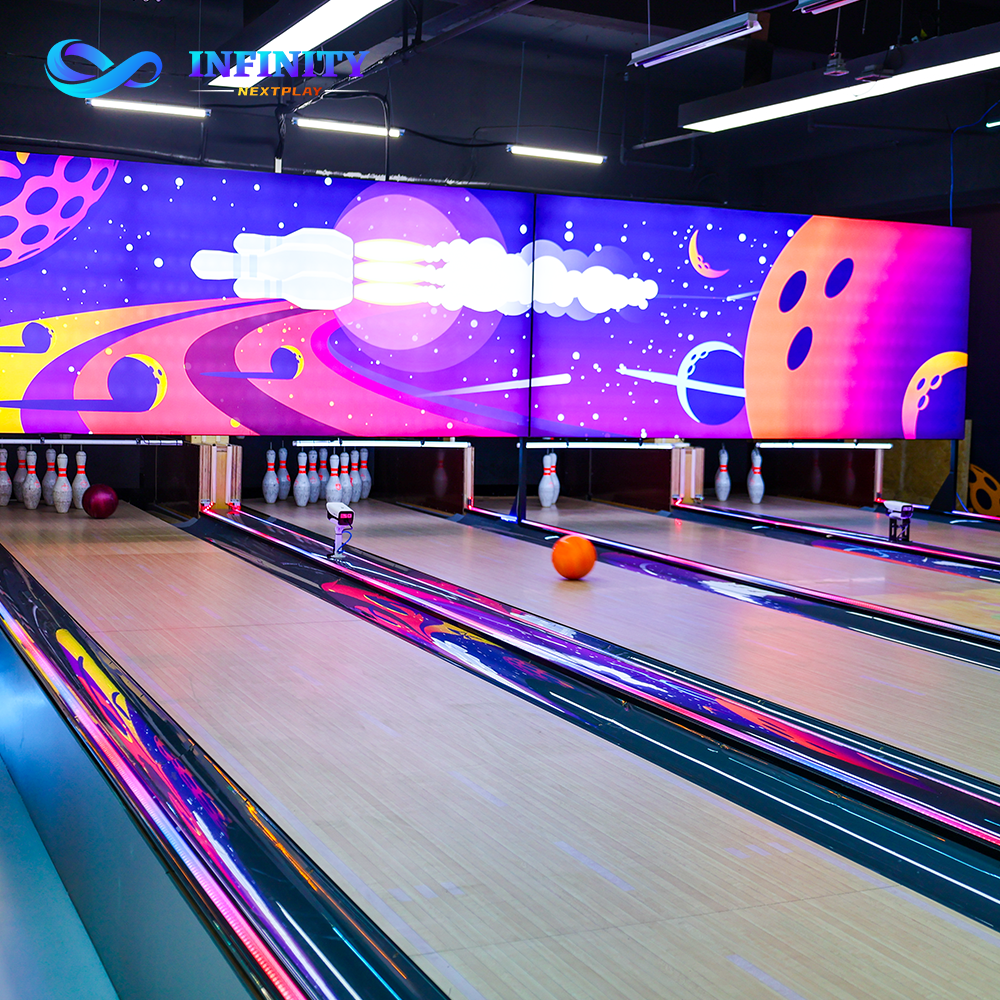
International Standard 26 m
Standard 10-Pin Bowling Alley
The full-length 26 m sport-standard 10-pin lane behind the classic adult bowling night. Accelerated ball return, heavy-duty sub-flooring and triple-lift pins give the authentic competitive experience players expect from a modern alley.
View Details ›
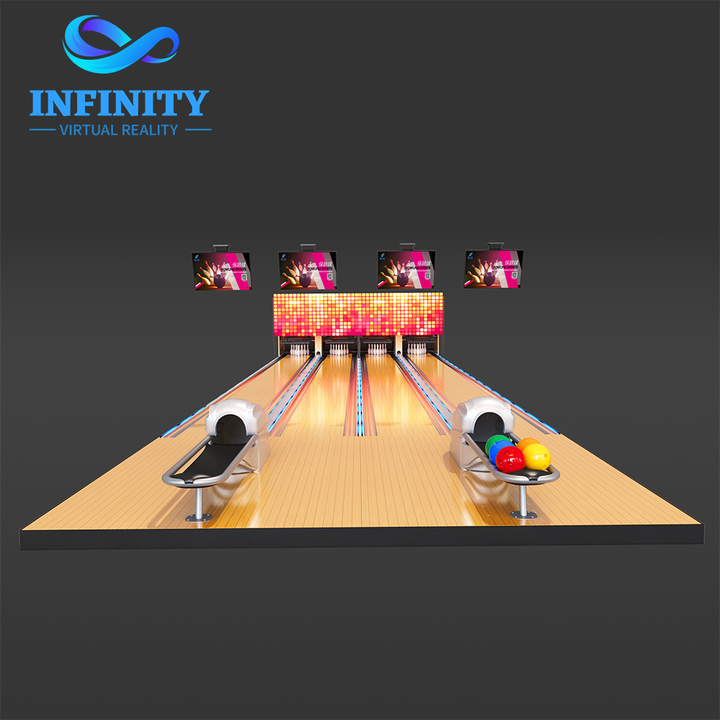
Compact Turn-Key Venue System
Commercial 2 Lane String Bowling
String bowling keeps the real 10-pin scoring while the mechanical string pinsetter runs quieter and lower-maintenance. The compact 9.7-13 m lane is the choice for bars, hotels and lounge-style venues that want bowling without a full-scale hall.
View Details ›
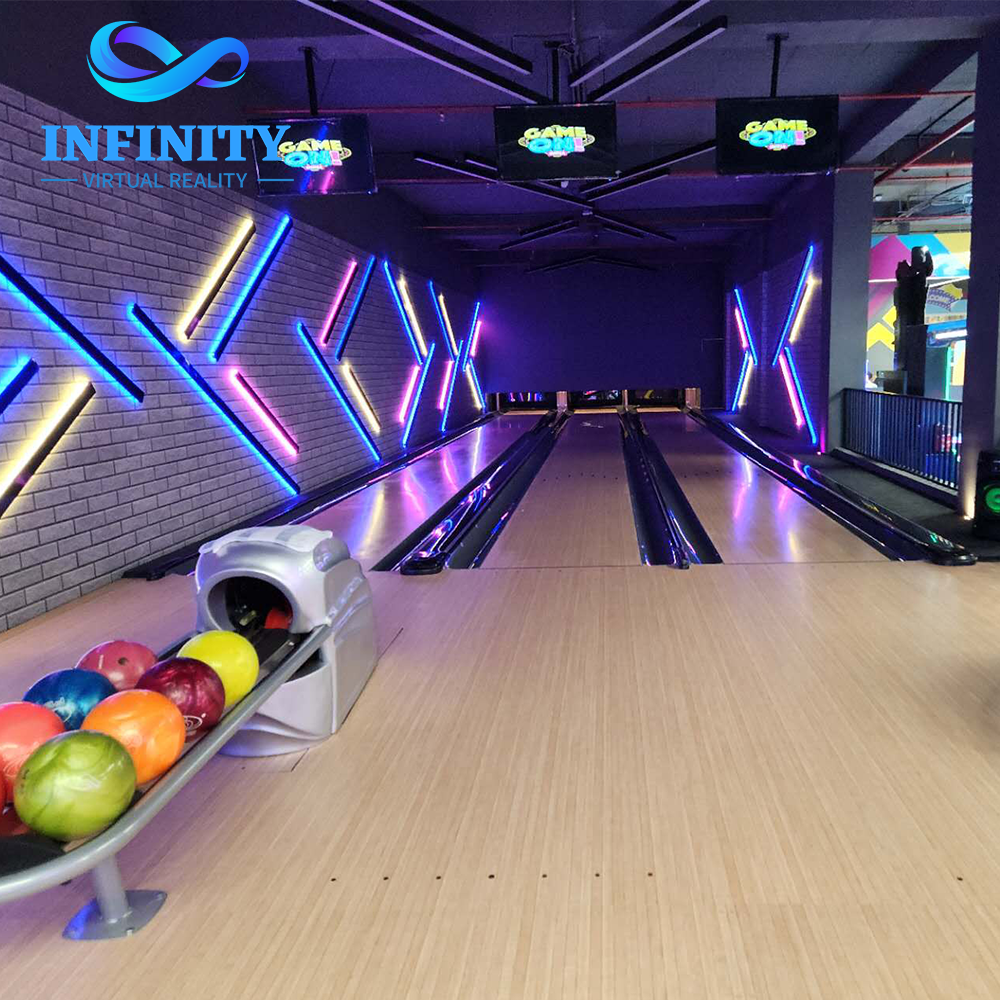
Compact Social Format
Duckpin Bowling System
Duckpin brings the small ball, the shorter pins and the casual three-roll social game to bars and boutique venues. Shallow foundation and lowered ceiling needs make it the most retrofit-friendly way to add bowling to a nightlife venue.
View Details ›
7. Frequently Asked Questions (FAQ)
How many rolls do you get per frame in bowling?
In classic 10-pin bowling you get two rolls per frame, in duckpin bowling you get three rolls per frame, and in string bowling the scoring follows standard 10-pin rules with two rolls per frame. A perfect 10-pin game of 300 requires twelve strikes in a row, one per frame plus two bonus rolls in the tenth.
How does scoring work in bowling for beginners?
Each game has ten frames. A strike, all ten pins on your first roll, counts ten plus your next two rolls. A spare, all ten pins in two rolls, counts ten plus your next one roll. Otherwise the frame scores the pins you knocked down. Automatic scoring does the math, so beginners just type their names and play.
What is a turkey in bowling?
A turkey is three strikes in a row. Because each strike is worth ten plus your following rolls, three consecutive strikes generate three high-scoring frames and are one of the classic milestones of an impressive bowling night.
Why is duckpin bowling different from 10-pin?
Duckpin uses a small ball of about 4.75 to 5 inches with no finger holes, and shorter, lighter pins on a shorter lane. Because the small ball makes strikes harder, duckpin gives three rolls per frame. Clearing all ten pins on the third ball scores ten with no bonus, and a perfect 300 has never been bowled in official duckpin competition, the record is 279.
Is string bowling the same as 10-pin bowling?
Yes on the player experience: string bowling keeps the traditional ten frames, two rolls per frame, and full strike and spare scoring, used in sanctioned competition. The difference is mechanical: a string pinsetter resets the pins, so the system is quieter, simpler and lower maintenance, which is why modern bars and hotels run it.
What is the easiest format for a beginner group?
Duckpin is the most forgiving for a casual group because three rolls per frame keeps everyone scoring and the shorter lane and small ball create an underdog, social energy. For people who want the authentic sport with the classic 26 m lane, choose a 10-pin or string venue and simply play a relaxed game.
How long does one bowling game take?
A single game for four adults typically lasts about 60 to 75 minutes, depending on strikes and spares. Most social players book one to three games, which makes bowling easy to fit before or after dinner on a night out.
Do I need my own bowling shoes?
No. Every commercial venue rents bowling shoes, and they are built to slide on the approach so you do not skid or damage the lane. Use the rented shoes for the lane surface, and any comfortable socks work underneath.
Do I need to know how to keep score?
No. Modern lanes run automatic scoring that tracks frames, marks strikes and spares, and adds the bonus rolls for you. Knowing the strike-and-spare rule still helps you appreciate the game and aim strategically in the final frame, but you can start playing in under a minute.
Why is bowling called a cheap night out?
Bowling packages a real shared activity, time together and easy competition for roughly the cost of a couple of fast-food meals per person, and it replaces sitting in a theater or bar with an hour or more of active, laugh-filled play. The equipment, shoes, scoring and pinsetter are all included in the lane price, so the only extras you typically add are food and drinks.
Plan Your Own Bowling Nights Now
Ready to bring the lanes to your bar, hotel or event space? See the 10-pin, string and duckpin systems behind the night out, and share your space to compare the format that fits your venue.

